Saturday, October 16, 2021

A Spoonful of Cashews a Day Will Keep the Doctor Away!

Cashews are beloved all around the world for their rich taste and versatility. Native to Central and South America, as well as several Caribbean Islands, these kidney-shaped seeds are sourced from the cashew tree Anacardium occidentale. Originating from Brazil, this topical tree produces large juicy fruits, with small cashew nuts attached at the bottom.
In their raw form, cashews are actually toxic. They contain a substance known as urushiol that's also found in poison ivy. Cashew kernels are processed to remove this toxic substance and access the tasty nuts inside. This is a labor-intensive process, which is the reason why these nuts are so expensive.
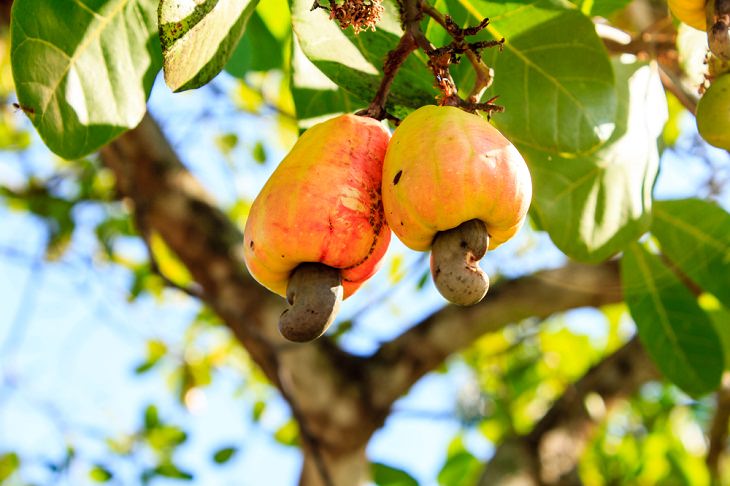
 Benefits Of Eating Cashews,
Cashews have been enjoyed for thousands of years for their rich nutty flavor and ease of storage. They’re consumed raw, roasted, or salted, and they're full of many beneficial nutrients too!
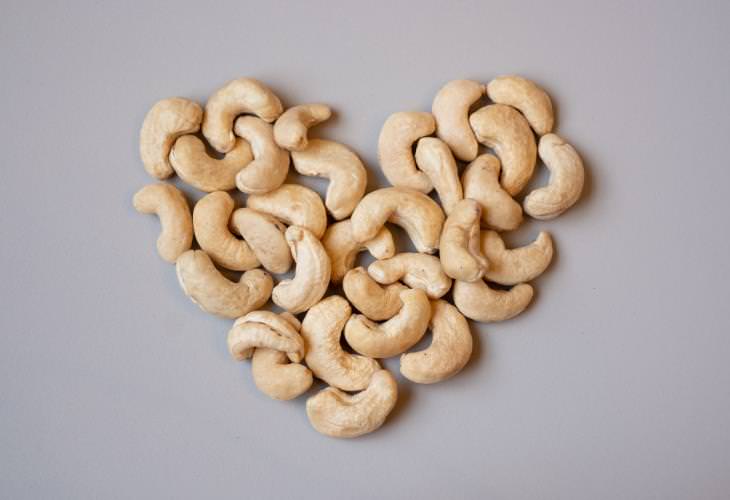
The Nutritional Profile of Cashews 
Curiously, there’s a perception among many that cashews are very high in fat, possibly because of their ultra-rich taste. However, these nuts are actually highly nutritious and have slightly less fat and calories than many other popular nuts, like almonds, peanuts, and walnuts.

Cashews are rich in a variety of nutrients. According to the US Department of Agriculture (USDA), 1 ounce of raw cashews (28.35 grams) contains: 
 
* 157 calories 
 
* 8.56 grams (g) of carbohydrate 
 
* 1.68 g of sugar 
 
* 0.9 g of fiber 
 
* 5.17 g of protein 
 
* 12.43 g of total fat 
 
* 10 milligrams (mg) of calcium 
 
* 1.89 mg of iron 
 
* 83 mg of magnesium 
 
* 168 mg of phosphorus 
 
* 187 mg of potassium 
 
* 3 mg of sodium 
 
* 1.64 mg of zinc. 
 
Cashews also contain vitamins C and B and are high in monounsaturated and polyunsaturated fats.  
  Benefits Of Eating Cashews, heart health
Health Benefits of Eating Cashews 
1. Can promote weight-loss 
Cashew nuts are high in calories, proteins, and fiber that make you feel fuller for longer. Studies show that people who follow a nut-rich diet have more success with weight loss and a lower body weight overall compared to those with a nut-free diet. They're also packed with Omega 3 fatty acids that provide a boost to the metabolism. 
 
Furthermore, while one serving of cashews may be high in calories, the human body can absorb only around 84% of these calories, research shows. This is because some of the fat these nuts contain stays wrapped within their fibrous walls. This means that eating raw cashews can help maintain a healthy weight.

2. May improve heart health
Research says that cashew nuts are beneficial for our heart health. One study found that people with type 2 diabetes who ate 30 grams of raw, unsalted cashews daily for 12 weeks had lower LDL (bad) cholesterol to HDL (good) cholesterol ratios than those who didn’t consume these nuts at all. HDL is responsible for absorbing the cholesterol from the heart and transferring it to the liver where it can be broken down. Having a low LDL to HDL ratio is considered good for heart health. 
 
Another study published in The American Journal of Clinical Nutrition found that adding cashews to your diet reduces total and LDL cholesterol levels. It’s believed that the presence of monounsaturated and polyunsaturated fatty acids in cashews helps reduce LDL cholesterol levels, which makes them ideal for reducing the risk of cardiovascular disease.

3. Can help people with diabetes  
For people with type 2 diabetes, adding cashews to their diet can be really helpful. We already explained above how these nuts help lower LDL cholesterol levels. In addition, the fiber-rich nut helps prevent blood sugar spikes by releasing glucose more slowly and steadily into the bloodstream. 
 
A 2019 study in the International Journal of Endocrinology and Metabolism revealed that people with type 2 diabetes who consumed 10% of their daily calories from cashews had overall lower insulin levels compared to those who didn’t eat these nuts. Keeping insulin levels down, as you might know, helps with blood sugar management. Hence, adding cashews to your diet might be a good idea. 
 
4. Great for the bones and prevents blood disease
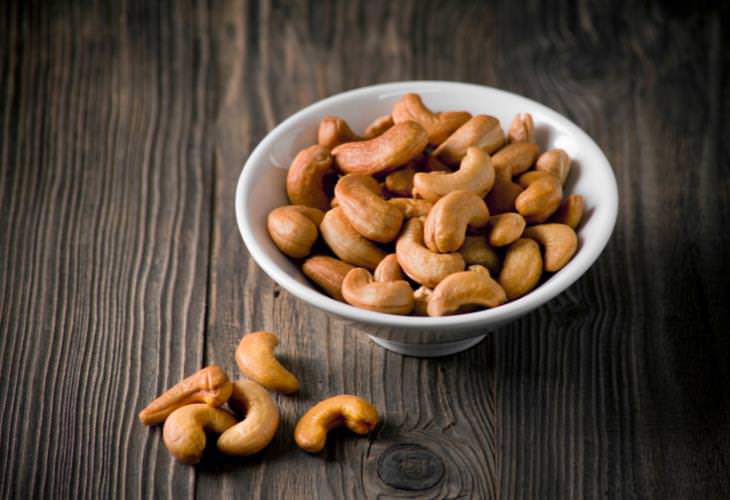
 Benefits Of Eating Cashews, bones
Having cashews daily can be great for your bones and can also help in avoiding blood diseases. This is because cashew nuts are rich in copper – one ounce (about 18 nuts) contains 622 micrograms of the nutrient. Copper deficiency is linked with lower bone mineral density and iron deficiencies like anemia. Also, copper helps in keeping your joints flexible by synthesizing collagen, a protein responsible for healthy joints and skin elasticity. 
 
The magnesium in cashews is also important for bone formation, as it promotes the absorption of calcium by the bones. Our diet should contain the recommended daily amount of copper (900 micrograms), and cashews can take care of almost 70% of it! 
 
5. Protects the eyes  
Cashews contain zeaxanthin and lutein, powerful antioxidants that can protect the eyes. Health experts say that zeaxanthin is a pigment that’s directly absorbed by our retina and is a vital defense against damaging light. These two compounds also inhibit the growth of cataracts and prevent age-related macular degeneration along with cellular damage to your eyes due to unstable molecules called free radicals. Thus, you must try and eat cashews daily for better eye health.
 
How to add cashews to your diet Benefits Of Eating Cashews, diet
Cashews are very easy to add to your diet. 
 
- Toss cashews in scrambled tofu, stir-fries, soups, and stews. 
 
- Add them to your salad, along with lettuce, tomatoes, and olive oil. 
 
- Soak them overnight with almonds and raisins and enjoy in the morning as a filling and healthy snack. 
 
- Prepare with rice in a slow cooker. Add chicken and soy sauce if you want. 
 
- Get cashew butter and spread it on toast. Or stir it into yogurt or oatmeal. 
 
- Combine cashew butter with oats and other dried fruits to prepare yummy energy balls.

Cashews are easily available in grocery stores and should be stored in an airtight container at room temperature. Do remember that these nuts are high in calories. Hence, they're best enjoyed in moderation. Also, roasted and salted cashews have considerable amounts of added oils and salt. So, if your goal is to keep your fat or sodium intake low, then your best option is to go with dry roasted or raw unsalted cashew varieties.


This is only for your information, kindly take the advice of your doctor for medicines, exercises and so on.   

https://gscrochetdesigns.blogspot.com. one can see my crochet creations  
https://gseasyrecipes.blogspot.com. feel free to view for easy, simple and healthy recipes    
https://kneereplacement-stickclub.blogspot.com. for info on knee replacement

Labels: , , , , , , , , , , , , ,

Monday, March 15, 2021

The Health Benefits and Recipe of Turmeric Coffee

Turmeric coffee, also known as golden milk latte, is the latest word in morning beverages. But can this trendy and admittedly delicious drink offer any real benefits? Those who drink it every morning swear by the energizing potential of turmeric coffee, whereas nutrition experts state that coffee and turmeric may actually work better together and enhance each other’s beneficial effects.

Find out why you should start adding turmeric to your morning cup of coffee, too. What is turmeric coffee? Turmeric Coffee latte Like Adding turmeric to hot drinks is not a new invention. For ages, turmeric was used all across Asia, and particularly in India, to prepare teas and herbal medicine concoctions. And just recently, the rest of the world also discovered these immune-boosting, energizing, and delicious drinks. 
 
Certainly, the most indulgent version of these hot drinks is golden milk, a flavorful and aromatic mixture of turmeric, ginger, and other spices mixed with milk and a dash of honey or maple syrup. Now imagine mixing this sweet, creamy, and aromatic drink with a shot of espresso, creating a truly complex and delightful flavor. 
 
But the pleasant taste of the golden milk latte is just one reason to order this drink in a coffee shop, or prepare it at home. A golden latte packs a punch in the nutrition department too - both turmeric and coffee contain several helpful nutrients that offer a range of health benefits, on which we elaborate below. Finally, a morning drink that’s both tasty and healthy! 
 
The Health Benefits of the Golden Latte 
As you’d expect, the two key ingredients in a golden latte are coffee and turmeric. The drink also contains milk and other spices, such as cinnamon, ginger, and honey, but these play a more supportive role. In order to understand how turmeric coffee can benefit your body, let’s remind you of the positive health effects of both coffee and turmeric: 
 
The Health Benefits of Turmeric 
Turmeric Coffee woman drinking Golden Latte
Turmeric is one of the spices with the most scientific studies backing its effectiveness. Several scientific articles have shown it to be a powerful antioxidant and anti-inflammatory ingredient, all thanks to the active ingredient in turmeric called curcumin.
 
Curcumin is a powerful antioxidant. Like all antioxidants, it helps prevent free radical damage to the DNA. Curcumin is also associated with the following highly promising health benefits: 
 
Reduces chronic inflammation, such as that caused by arthritis 
 
Helps people with diabetes regulate their blood sugar 
 
Improves digestion and aids heartburn 
 
May help prevent cancer 
 
Lowers the risk of heart disease 
 
Can help lift your mood and improve brain function 
 
Improved skin health, hydration, and plumpness. 
 
Overall, studies show that the best way to take turmeric is through foods. Adding turmeric to foods and drinks that contain some fats is especially beneficial because the fats help deliver and absorb curcumin. 
 
The Health Benefits of Coffee  
Turmeric Coffee beans
Caffeine, the active ingredient in coffee, needs no introduction. But the majority of people are only aware of caffeine’s ability to energize and keep you awake. In reality, however, caffeine is also a potent antioxidant, just like curcumin. In fact, the antioxidant content of coffee is more concentrated than many fruit and vegetables.
 
Like curcumin, the consumption of caffeine is associated with improved skin elasticity, better resistance to heart disease and certain cancers, particularly colorectal cancer. In addition, caffeine improves liver and brain function and protects the body from many other degenerative diseases. 
 
Apart from caffeine, coffee is also rich in flavonoid antioxidants and chlorogenic acid (CGA). The latter in particular boasts of having anti-cancer properties. Despite coffee's bad rep, recent studies have found that the antioxidants present in coffee could actually have a beneficial effect on cardiovascular health, too, capable of preventing stroke in women if consumed regularly. 
 
Lastly, don’t forget that coffee by itself (without the addition of sweeteners and milk) is a low-calorie drink. Given the multitude of antioxidants it contains, it’s a great choice of drink for those who intend to lose weight.

Why You Should Consider Mixing Turmeric and Coffee 
While drinking coffee and eating turmeric separately is certainly beneficial, it seems that combining the two in a delicious latte may actually make curcumin’s beneficial effects stronger according to a 2020 study. Even though the high acidity of coffee itself isn’t beneficial for the absorption of curcumin according to the study, the fats present in milk help increase the pH level of coffee and make our body absorb more curcumin.
Turmeric Coffee latte
This is exactly why it’s important to opt for whole milk and not low-fat milk when preparing turmeric coffee, as fats are the compound that will help enhance turmeric’s anti-inflammatory and other beneficial effects. You can even consider adding ½ teaspoon coconut oil to your coffee if you only have low-fat milk or you’re using plant milk. 
 
Furthermore, the potent antioxidant and phytonutrient content of both turmeric and coffee will help you get more antioxidants and other bioactive compounds with your morning drink. It’s important to note that turmeric and coffee contain different types of antioxidants, too, and their combination will ensure that you’re experiencing more benefits than drinking either ingredient alone. 
 
Ready to give turmeric coffee a go? It's super easy to make at home, just follow the recipe below. Not a fan of coffee? No worries, you can still get your daily dose of curcumin by drinking golden milk. 
 
How to Make Turmeric Coffee  
- 1 cup (8 oz/ 225 ml brewed coffee) 
- ½ cup dairy or plant milk 
- 1 tsp ground turmeric powder 
- 1 tsp honey or maple syrup (optional) 
- ½ tsp cinnamon 
- ¼ tsp ground ginger 
- A pinch of black pepper 
 
Directions 
1. Combine all the ingredients in a small saucepan. 
2. Over medium heat, bring the mixture to a simmer, constantly moving the mixture with a whisk. 
3. Simmer for 10-15 minutes. The longer you simmer the mixture, the spicier it will become. 
4. Strain and pour the mixture into a cup. Enjoy warm.

This is only for your information, kindly take the advice of your doctor for medicines, exercises and so on.     

https://gscrochetdesigns.blogspot.com. one can see my crochet creations  
https://gseasyrecipes.blogspot.com. feel free to view for easy, simple and healthy recipes    
https://kneereplacement-stickclub.blogspot.com. for info on knee replacement

Labels: , , , , , , , , , , , , ,