Saturday, October 16, 2021

A Spoonful of Cashews a Day Will Keep the Doctor Away!

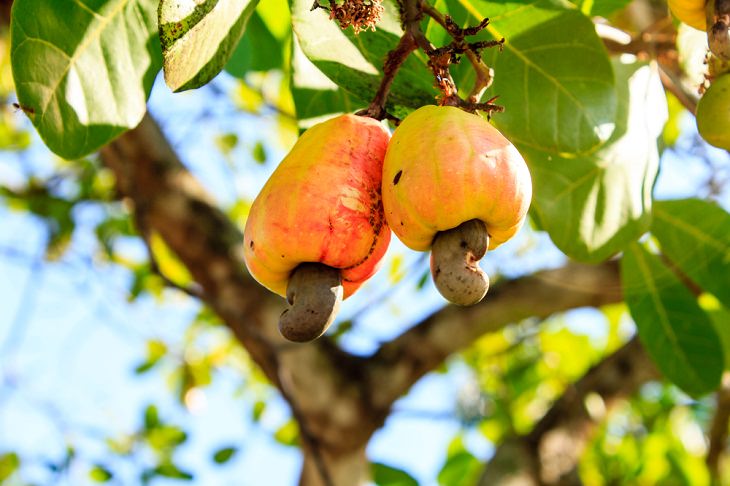
Cashews are beloved all around the world for their rich taste and versatility. Native to Central and South America, as well as several Caribbean Islands, these kidney-shaped seeds are sourced from the cashew tree Anacardium occidentale. Originating from Brazil, this topical tree produces large juicy fruits, with small cashew nuts attached at the bottom.
In their raw form, cashews are actually toxic. They contain a substance known as urushiol that's also found in poison ivy. Cashew kernels are processed to remove this toxic substance and access the tasty nuts inside. This is a labor-intensive process, which is the reason why these nuts are so expensive.
 Benefits Of Eating Cashews,
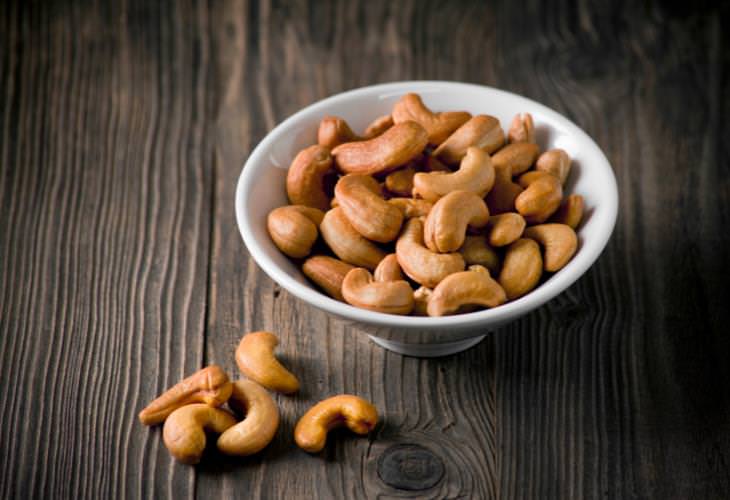
Cashews have been enjoyed for thousands of years for their rich nutty flavor and ease of storage. They’re consumed raw, roasted, or salted, and they're full of many beneficial nutrients too!
The Nutritional Profile of Cashews 
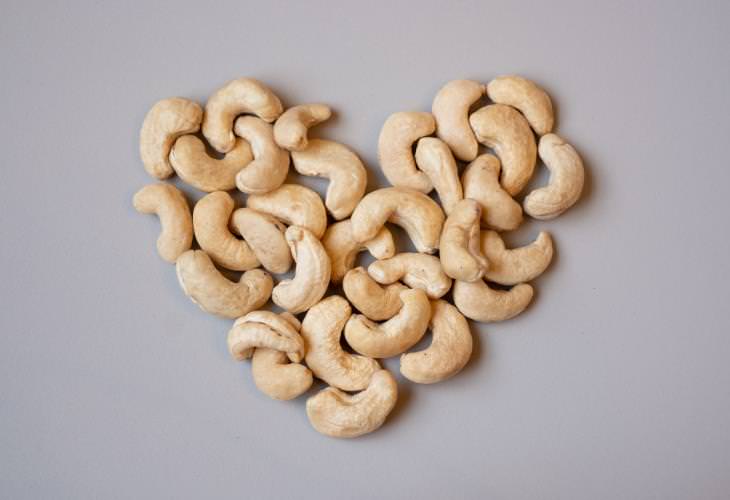
Curiously, there’s a perception among many that cashews are very high in fat, possibly because of their ultra-rich taste. However, these nuts are actually highly nutritious and have slightly less fat and calories than many other popular nuts, like almonds, peanuts, and walnuts.

Cashews are rich in a variety of nutrients. According to the US Department of Agriculture (USDA), 1 ounce of raw cashews (28.35 grams) contains: 
 
* 157 calories 
 
* 8.56 grams (g) of carbohydrate 
 
* 1.68 g of sugar 
 
* 0.9 g of fiber 
 
* 5.17 g of protein 
 
* 12.43 g of total fat 
 
* 10 milligrams (mg) of calcium 
 
* 1.89 mg of iron 
 
* 83 mg of magnesium 
 
* 168 mg of phosphorus 
 
* 187 mg of potassium 
 
* 3 mg of sodium 
 
* 1.64 mg of zinc. 
 
Cashews also contain vitamins C and B and are high in monounsaturated and polyunsaturated fats.  
  Benefits Of Eating Cashews, heart health
Health Benefits of Eating Cashews 
1. Can promote weight-loss 
Cashew nuts are high in calories, proteins, and fiber that make you feel fuller for longer. Studies show that people who follow a nut-rich diet have more success with weight loss and a lower body weight overall compared to those with a nut-free diet. They're also packed with Omega 3 fatty acids that provide a boost to the metabolism. 
 
Furthermore, while one serving of cashews may be high in calories, the human body can absorb only around 84% of these calories, research shows. This is because some of the fat these nuts contain stays wrapped within their fibrous walls. This means that eating raw cashews can help maintain a healthy weight.

2. May improve heart health
Research says that cashew nuts are beneficial for our heart health. One study found that people with type 2 diabetes who ate 30 grams of raw, unsalted cashews daily for 12 weeks had lower LDL (bad) cholesterol to HDL (good) cholesterol ratios than those who didn’t consume these nuts at all. HDL is responsible for absorbing the cholesterol from the heart and transferring it to the liver where it can be broken down. Having a low LDL to HDL ratio is considered good for heart health. 
 
Another study published in The American Journal of Clinical Nutrition found that adding cashews to your diet reduces total and LDL cholesterol levels. It’s believed that the presence of monounsaturated and polyunsaturated fatty acids in cashews helps reduce LDL cholesterol levels, which makes them ideal for reducing the risk of cardiovascular disease.

3. Can help people with diabetes  
For people with type 2 diabetes, adding cashews to their diet can be really helpful. We already explained above how these nuts help lower LDL cholesterol levels. In addition, the fiber-rich nut helps prevent blood sugar spikes by releasing glucose more slowly and steadily into the bloodstream. 
 
A 2019 study in the International Journal of Endocrinology and Metabolism revealed that people with type 2 diabetes who consumed 10% of their daily calories from cashews had overall lower insulin levels compared to those who didn’t eat these nuts. Keeping insulin levels down, as you might know, helps with blood sugar management. Hence, adding cashews to your diet might be a good idea. 
 
4. Great for the bones and prevents blood disease
 Benefits Of Eating Cashews, bones
Having cashews daily can be great for your bones and can also help in avoiding blood diseases. This is because cashew nuts are rich in copper – one ounce (about 18 nuts) contains 622 micrograms of the nutrient. Copper deficiency is linked with lower bone mineral density and iron deficiencies like anemia. Also, copper helps in keeping your joints flexible by synthesizing collagen, a protein responsible for healthy joints and skin elasticity. 
 
The magnesium in cashews is also important for bone formation, as it promotes the absorption of calcium by the bones. Our diet should contain the recommended daily amount of copper (900 micrograms), and cashews can take care of almost 70% of it! 
 
5. Protects the eyes  
Cashews contain zeaxanthin and lutein, powerful antioxidants that can protect the eyes. Health experts say that zeaxanthin is a pigment that’s directly absorbed by our retina and is a vital defense against damaging light. These two compounds also inhibit the growth of cataracts and prevent age-related macular degeneration along with cellular damage to your eyes due to unstable molecules called free radicals. Thus, you must try and eat cashews daily for better eye health.
 
How to add cashews to your diet Benefits Of Eating Cashews, diet
Cashews are very easy to add to your diet. 
 
- Toss cashews in scrambled tofu, stir-fries, soups, and stews. 
 
- Add them to your salad, along with lettuce, tomatoes, and olive oil. 
 
- Soak them overnight with almonds and raisins and enjoy in the morning as a filling and healthy snack. 
 
- Prepare with rice in a slow cooker. Add chicken and soy sauce if you want. 
 
- Get cashew butter and spread it on toast. Or stir it into yogurt or oatmeal. 
 
- Combine cashew butter with oats and other dried fruits to prepare yummy energy balls.

Cashews are easily available in grocery stores and should be stored in an airtight container at room temperature. Do remember that these nuts are high in calories. Hence, they're best enjoyed in moderation. Also, roasted and salted cashews have considerable amounts of added oils and salt. So, if your goal is to keep your fat or sodium intake low, then your best option is to go with dry roasted or raw unsalted cashew varieties.


This is only for your information, kindly take the advice of your doctor for medicines, exercises and so on.   

https://gscrochetdesigns.blogspot.com. one can see my crochet creations  
https://gseasyrecipes.blogspot.com. feel free to view for easy, simple and healthy recipes    
https://kneereplacement-stickclub.blogspot.com. for info on knee replacement

Labels: , , , , , , , , , , , , ,

Saturday, August 25, 2018

Health Benefits Of Chia Seeds

Who doesn't want to lose weight ( may be just a handful of those blessed with good genes, who never put on weight). But, losing weight is one of the toughest job, as it depends on so many factors- one's genes, hormones and if you've any other health issues. There are many diet plans, but one has to choose what will work for them and try it for 2-3 months to find the result, as there is no magic for the weight to disappear over night. There are few things which do help to lose weight, one of them is chia seeds. 
 Chia seeds are tiny black seeds from the plant Salvia hispanica, which is related to the mint.
Chia seeds were an important food for the Aztecs and Mayans back in the day.
They prized them for their ability to provide sustainable energy. In fact, "chia" is the ancient Mayan word for "strength."
Despite their ancient history as a dietary staple, chia seeds became recognized as a modern-day superfood only recently.

Don't be fooled by the size — these tiny seeds pack a powerful nutritional punch.
A one-ounce (28 grams) serving of chia seeds contains:
  • Fiber: 11 grams.
  • Protein: 4 grams.
  • Fat: 9 grams (5 of which are omega-3s).
  • Calcium: 18% of the RDI.
  • Manganese: 30% of the RDI.
  • Magnesium: 30% of the RDI.
  • Phosphorus: 27% of the RDI.
  • They also contain a decent amount of zinc, vitamin B3 (niacin), potassium, vitamin B1 (thiamine) and vitamin B2.
This is particularly impressive considering that this is just a single ounce, equaling 28 grams or about two tablespoons. This small amount supplies only 137 calories and one gram of digestible carbohydrate.
Interestingly, if you subtract the fiber — most of which doesn’t end up as usable calories for your body — chia seeds only contain 101 calories per ounce (28 grams).
This makes them one of the world's best sources of several important nutrients, calorie for calorie.
To top things off, chia seeds are a whole-grain food, usually grown organically. Plus, they’re non-GMO and naturally free of gluten.

Chia seeds give much more energy in less calorie which cuts your daily food needs and calories.
Cutting down 500 calories from our daily diet can help you to lose around 1 kg in a week. Means 4 kg in a month, may be you are looking for a big figure like 10 kgs in a month but if you want a permanent solution then it is better to shed slowly and maintain that weight loss, as in some diet plans, once you stop you regain all the lost weight and more.

Chia seeds and Sabja Seeds are different,  Both have different health benefits. But in some ways they are similar, as both look alike, both can be consumed in similar ways and both can be useful for weight loss.

If you want to lose weight with Chia Seeds, then add 1 tsp of soaked chia seed pearls in 1 glass of milk or in lemon honey drink.
  • Don’t add sugar to it, you can add little honey, or molasses in place of sugar.
  • With this drink best is ti have some fruits.
  • Like this you can get lots of energy & Fiber in morning which keeps you full and reduce the calorie intake. At the end of the day you can lose weight easily.                                       One should soak chia seeds over-night and use it in smoothies as a good breakfast drink.

Another area in which chia seeds shine is their high antioxidant content.
These antioxidants protect the sensitive fats in the seeds from going rancid.
Though the benefits of antioxidant supplements are debated, researchers agree that getting antioxidants from foods can have positive health effects .
Most importantly, antioxidants fight the production of free radicals, which can damage cell molecules and contribute to aging and diseases like cancer.antioxidant

One ounce (28 grams) of chia seeds has 12 grams of carbs. However, 11 of those grams are fibre, which your body doesn’t digest.
Fiber neither raises blood sugar nor requires insulin to be disposed of. Though it belongs to the carbohydrate family, its health effects are drastically different from those of digestible carbs like starch and sugar.
The digestible carb content is only one gram per ounce (28 grams), which is very low. This makes chia a low-carb friendly food.
Because of its high soluble fiber content, chia seeds can absorb up to 10–12 times their weight in water, becoming gel-like and expanding in your stomach .
Theoretically, this should increase fullness, slow absorption of your food and help you automatically eat fewer calories.
Fiber also feeds the friendly bacteria in your intestine, which is important — keeping your gut flora well fed is absolutely crucial for health .
Chia seeds are 40% fiber by weight, making them one of the best sources of fibre in the world.

Chia seeds contain a decent amount of protein.
By weight, they’re about 14% protein, which is very high compared to most plants.
They also have a good balance of essential amino acids, so your body should be able to make use of their protein content .
Protein has various health benefits and is by far the most weight loss friendly dietary nutrient.
A high protein intake lowers appetite and has been shown to reduce obsessive thoughts about food by 60% and the desire for night time snacking by 50% .
Chia seeds really are an excellent protein source — especially for people who eat little or no animal products.

Like flaxseeds, chia seeds are very high in omega-3 fatty acids.
In fact, chia seeds contain more omega 3s than salmon, gram for gram.
However, it’s important to keep in mind that the omega-3s in them are mostly ALA (alpha-linolenic acid), which is not as beneficial as you may think.
ALA needs to be converted into the active forms eicosapentaenoic acid (EPA) and docosahexaenoic acid (DHA) before your body can use it.
Unfortunately, humans are inefficient at converting ALA into these active forms.
Therefore, plant omega-3s tend to be vastly inferior to animal sources like fish oil .
Studies have shown that chia seeds — especially if they’re milled — can increase blood levels of ALA and EPA but not DHA.
This can be a problem.
Because they don't supply any DHA, which is the most important omega-3 fat, most experts consider chia seeds a lower-quality omega-3 source.
To get the DHA your body and brain needs, either eat fatty fish regularly or take fish oil or — if you are vegan or vegetarian — a plant-sourced DHA supplement.


Given that chia seeds are high in fiber, protein and omega-3s, they may reduce your risk of heart disease.
Their benefits have been examined in several studies, but the results have been inconclusive.
Rat studies have shown that chia seeds can lower certain risk factors, including triglycerides, inflammation, insulin resistance and belly fat. They may also raise “good “ HDL cholesterol .
However, one human study did not detect any improvements in risk factors .
A few studies show that chia seeds significantly reduce blood pressure in people with hypertension, which is a strong risk factor for heart disease .
Overall, it’s possible that chia seeds may benefit heart health, but they probably won't have a major effect unless accompanied by other beneficial lifestyle and dietary changes.

Chia seeds are high in several nutrients that are important for bone health.
This includes calcium, phosphorus, magnesium and protein.
The calcium content is particularly impressive — 18% of the RDI in a single ounce (28 grams).
Gram for gram, this is higher than most dairy products. As a result, chia seeds may be considered an excellent source of calcium for people who don't eat dairy.
However, chia seeds also contain phytic acid, which reduces calcium absorption to some extent.

High fasting blood sugar levels are a typical symptom of untreated type 2 diabetes.
Consistently high fasting blood sugar levels are associated with an increased risk of several chronic diseases, including heart disease .
But temporary spikes in blood sugar levels after meals may also have adverse health effects when they’re excessively high on a regular basis .
Animal studies have found that chia seeds may improve insulin sensitivity and blood sugar control, stabilizing blood sugar levels after meals .
A few human studies support this by showing that eating bread that contains chia seeds lowers the post-meal rise in blood sugar compared to bread that doesn’t include any chia .


Inflammation is your body’s normal response to infection or injury. Red and swollen skin is a typical example.
Although inflammation helps your body heal and fight off bacteria, viruses and other infectious agents, it can sometimes cause harm.
This mainly applies to chronic inflammation, which is associated with an increased risk of heart disease and cancer.
Chronic inflammation often doesn’t have any visible signs, but can be assessed by measuring inflammatory markers in your blood.
Various unhealthy lifestyle habits increase your risk of chronic inflammation, including smoking, lack of exercise or a poor diet.
On the other hand, certain healthy foods may reduce the blood levels of inflammatory markers.
One 3-month study in 20 people with diabetes showed that eating 37 grams of chia seeds daily reduced the inflammatory marker hs-CRP by 40%. In contrast, those who got wheat bran didn’t experience a significant benefit.
Other studies on chia seeds have failed to detect any significant effects on inflammatory markers.


Chia seeds are incredibly easy to incorporate into your diet.
The seeds themselves taste rather bland, so you can add them to pretty much anything.
They also don't need to be ground like flax seeds, which makes them much easier to prepare.
They can be eaten raw, soaked in juice, added to porridge, pudding, smoothies or added to baked goods.
You can also sprinkle them on top of cereal, yogurt, vegetables or rice dishes.
Because of their ability to absorb both water and fat, they can be used to thicken sauces and as egg substitutes in recipes.
They can also be mixed with water and turned into a gel.
Adding chia seeds to recipes will dramatically boost their nutritional value.
They do also seem to be well tolerated, but if you're not used to eating a lot of fiber, then there is a possibility of digestive side effects if you eat too much at a time.
A common dosage recommendation is 20 grams (about 1.5 tablespoons) of chia seeds, twice per day.

Chia seeds are not only rich in nutrients, omega-3 fat, antioxidants and fiber but also easy to prepare. People commonly add them to their porridge or smoothies.
Studies suggest that they have various health benefits, ranging from weight loss to reduced inflammation.
If you don’t eat chia seeds already, you should definitely consider adding them to your diet. They’re among the few super-foods worthy to be so-called.

THIS IS ONLY FOR INFORMATION, ALWAYS CONSULT YOU PHYSICIAN BEFORE HAVING ANY PARTICULAR FOOD/ MEDICATION/EXERCISE/OTHER REMEDIES.                                                                                                                                                                                                        PS- THOSE INTERESTED IN RECIPES ARE FREE TO  VIEW MY BLOG-                                                                                           https://gseasyrecipes.blogspot.com/  

FOR INFO ABOUT KNEE REPLACEMENT, YOU CAN VIEW MY BLOG-                                                                                        https:// kneereplacement-stickclub.blogspot.com/                              
FOR CROCHET DESIGNS                                                                                                                                                                                                                                 https://gscrochetdesigns.blogspot.com


Labels: , , , , , , , , ,