Monday, July 25, 2022

COVID-19 Nasal Sprays Will Be Essential to Tackle Variants

A little over a year after the emergence of COVID-19, scientists found a way to fight it with mRNA vaccines from Pfizer/BioNTech, Moderna, and other firms. Studies showed that these vaccines work against the initial strains of COVID-19, and the jabs are still effective in cutting down severe illnesses and hospitalizations. 
 
However, many of us aren’t comfortable with needles. For those, an inhalable version of the COVID-19 vaccine may soon be available. Scientists say that nasal sprays could become the next generation of COVID-19 vaccines and provide even more protection against the dangerous virus. In fact, new research has shown that intranasal vaccines can help provide protection from Omicron and its many subvariants – something mRNA vaccines haven’t quite been able to do. 
 
Nasal Vaccines for Fighting COVID and Its Variants
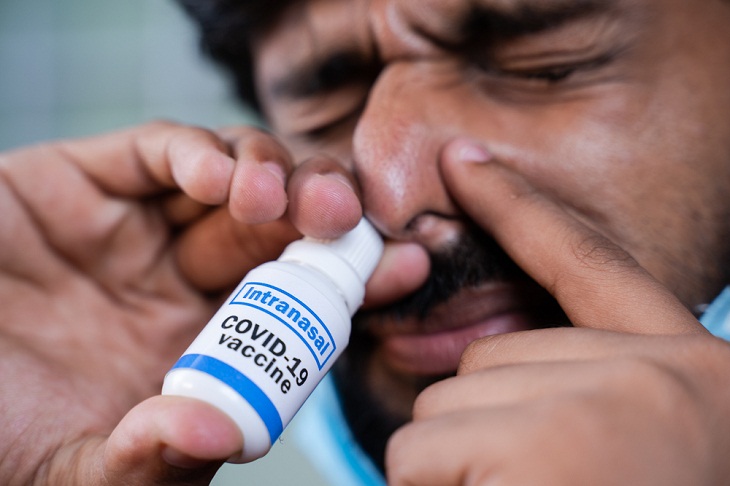
In a new study published in the journal Science Immunology, researchers from the University of Virginia (UVA) analyzed the foundering immune response in the airways of people with COVID-19 vaccinations compared to those with natural protection after infection. They note that intranasal vaccines for COVID-19 will be essential to protect people against the emerging variants of concern of the SARS-CoV-2 virus.

“The omicron variant almost completely escaped neutralization by mucosal antibodies in individuals who received mRNA vaccines and in previously infected individuals,” said Jie Sun, professor of medicine at UVA. “Our data showed that mRNA vaccination also did not induce sufficient tissue-residing cellular immunity in the airways, another arm of our immune system to prevent the entry of the virus into our bodies.” 
 
The mRNA vaccines like Pfizer, Moderna, and others take inspiration from messenger ribonucleic acid, the delivery system that drives biological reproduction. In the study, the researchers explained that the mRNA in these vaccines is not derived from a live virus but is instead synthesized in a lab to look like an invader. This is enough for the body to recognize the real virus in the future - they say. 
 
The researchers further noted that bloodstreams get strongly boosted by the mRNA vaccine while the mucosal lining – the moist, inner lining of some organs – experiences moderate or little neutralizing antibody response. They found that only the bodies of unvaccinated patients who were seriously ill were able to fight against the virus in both their airways and their bloodstreams. 
 
Meanwhile, mice that were administered a nasally delivered vaccine stemming from adenovirus – a group of common viruses that expresses the spike protein found in COVID – showed “robust neutralizing antibody responses” in combination with mRNA vaccine shots. 
 
The team states that the nasal vaccine provides a mucosal antigen boost to the pre-existing memory of T and B cells that direct the immune response. This results in higher cellular and humoral immunity. Importantly, the immune response was effective both against the ancestral virus and the Omicron variant. 
 
The uptick was found as an improvement over the bloodstream's normal vaccinated response, as well as in the bronchi of the lungs. 
 
Can Nasal Sprays Be the Future of COVID Vaccines?
 nasal vaccine
Scientists have been working on COVID-19 nasal vaccines for the past couple of years, but none have been approved for use so far. Leading experts believe that these inhalable vaccines do hold promise. Nasal vaccines induce antibody production just like traditional vaccines, but they do so in the mucosal tissue where the virus typically enters the body. Immunologists say that we need mucosal immune responses to get effective protection against infection, and this is where nasal vaccines have the advantage.
 
Currently, an “inhaled aerosol” version that targets the lungs and upper airways is in Phase I clinical trial. This vaccine candidate was developed by a team of scientists from McMaster University. However, adenovirus-based nasal vaccines are different and haven’t been approved for humans yet, primarily out of concerns about harmful side effects. 
 
The research team says that they now need a step-up trial from a mouse to a human study in the US. “A human trial has been performed in China already using nasal adenovirus spray, which suggests it is generally safe and can boost good immune responses, but mucosal immunity was not examined," Sun added.

This is only for your information, kindly take the advice of your doctor for medicines, exercises and so on.   

https://gscrochetdesigns.blogspot.com. one can see my crochet creations  
https://gseasyrecipes.blogspot.com. feel free to view for easy, simple and healthy recipes    
https://kneereplacement-stickclub.blogspot.com. for info on knee replacement


Labels: , , , , , ,

Thursday, October 21, 2021

Covaxin for kids to be rolled out in a phased manner: What are the side-effects we can expect?

How will the Covaxin roll out for kids be different?

As we await the surge of a third wave to come up in India, Covaxin has become one of the first vaccines to have been granted emergency use nod. As per recommendations by the SEC (Subject Expert Committee), the vaccine has been selectively approved for use in kids aged between 2-18 years of age, and currently awaits DCGI approvals.

While experts are currently also awaiting a clearance from the WHO (World Health Organisation), it is being reported that the vaccine, which is an indigenous, inactivated vaccine developed by Hyderabad-based Bharat Biotech will be rolled out for kids in a phased manner, with the shots being first available for kids who may have comorbidities. It has also been argued that the vaccine would work in a rather similar manner, as it does for the adults. But what could the side-effects be like?


We delve into what a Covaxin rollout for children could look like:

readmore

Would kids require a lesser dosage of the vaccine?

Covaxin works as a two-dose regimen to prompt a considerable immune response against the virus, delivered 28 days apart. While there have been some studies which have demonstrated that kids may require the use of a single dose, or a shorter-dose vaccine in comparison to adults, it's quite unlikely that kids in India will be given an altered dosage right now.


Nonetheless, while plans have been drawn up to make Covaxin doses available for kids' use in a phased manner, it is expected that kids, much like adults, would also need two doses of the vaccine to dole up an efficient immune response against the SARS-COV-2 and its variants.

readmore

What do we know about the side-effects of the vaccine?

While Covaxin has been seen to cause fewer side-effects than other vaccines, the most common side-effects recorded with the vaccine's clinical testing on kids include flu-like symptoms, which are expected, and considered reactogenic.

Since the side-effects are taken to be a way the body builds up immunity, some of the side-effects which can be expected include fever, pain at the injection site, drowsiness, redness, body pain and fatigue, which tend to go away in 2-3 days time.

So far, adverse side-effects and reactions haven't been recorded with Covaxin but a monitoring committee will be set up. Kids who have sensitivity, or prior bad reaction to the vaccines may require more care.

Is it safe for immunocompromised kids to get the shot?

Being immunocompromised could make some individuals vulnerable to having an inefficient response to the vaccine and not get the right kind of response. Certain comorbidities and sensitivities could also make some parents hesitant about getting the shots. However, it should be remembered that kids who are at risk should be inoculated at the earliest, since not getting the vaccine could put them at a greater risk of severe COVID and encountering complications like MIS-C.

Is Covaxin for kids a nasal vaccine?

Covaxin is an intramuscular vaccine injected through the skin. Bharat Biotech is also working on developing nasal vaccines, wherein the injection doses are directed through the nasal cavity. Since nasal vaccines are easier to administer, and said to create a first-line defense (and hence be more efficient in rooting out the virus), nasal vaccines are considered to be a better choice for kids. However, it's unlikely that nasal vaccines would be made available for public use before the end of next year, since they are yet to enter clinical trials.


Zydus Cadila, however, is working on rolling out nasal vaccines for kids, which may be available for kids early next year.

readmore

Should you wait for the WHO nod for Covaxin? Would it make a difference?

Should you wait for the WHO nod for Covaxin? Would it make a difference?

While Covaxin has been granted emergency nods, it's yet to be fully approved for use by the WHO. Currently, only the vaccines approved by WHO are accepted globally.

Although Covaxin has been found to be relatively safe and meet requisite standards of efficacy, getting approvals from the WHO will not just provide a lot of reassurance, but also pave the way for wider acceptance.


This is only for your information, kindly take the advice of your doctor for medicines, exercises and so on.   

https://gscrochetdesigns.blogspot.com. one can see my crochet creations  
https://gseasyrecipes.blogspot.com. feel free to view for easy, simple and healthy recipes    
https://kneereplacement-stickclub.blogspot.com. for info on knee replacement

Labels: , , , , , , , , , ,