COVID-19 Nasal Sprays Will Be Essential to Tackle Variants
A little over a year after the emergence of
COVID-19, scientists found a way to fight it with mRNA vaccines from
Pfizer/BioNTech, Moderna, and other firms. Studies showed that these
vaccines work against the initial strains of COVID-19, and the jabs are
still effective in cutting down severe illnesses and hospitalizations.
However, many of us aren’t comfortable with needles. For those, an
inhalable version of the COVID-19 vaccine may soon be available.
Scientists say that nasal sprays could become the next generation of
COVID-19 vaccines and provide even more protection against the dangerous
virus. In fact, new research has shown that intranasal vaccines can
help provide protection from Omicron and its many subvariants –
something mRNA vaccines haven’t quite been able to do.
Nasal Vaccines for Fighting COVID and Its Variants
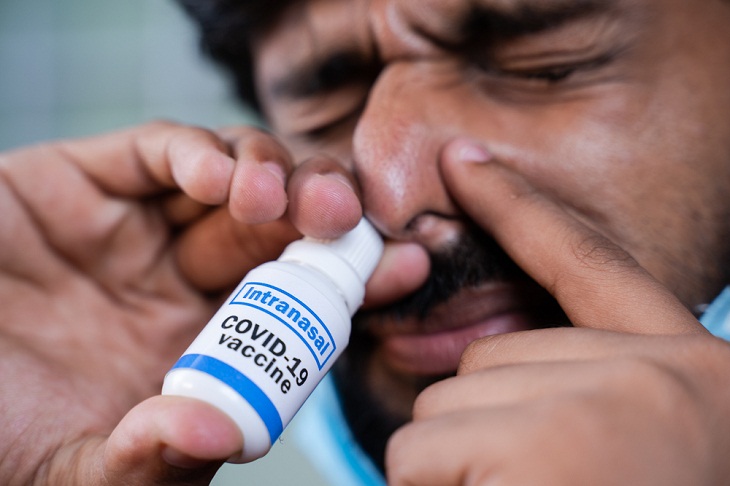
In a new study published in the journal
Science Immunology, researchers from the University of Virginia (UVA)
analyzed the foundering immune response in the airways of people with
COVID-19 vaccinations compared to those with natural protection after
infection. They note that intranasal vaccines for COVID-19 will be
essential to protect people against the emerging variants of concern of
the SARS-CoV-2 virus.
“The omicron variant almost completely escaped neutralization by mucosal
antibodies in individuals who received mRNA vaccines and in previously
infected individuals,” said Jie Sun, professor of medicine at UVA. “Our
data showed that mRNA vaccination also did not induce sufficient
tissue-residing cellular immunity in the airways, another arm of our
immune system to prevent the entry of the virus into our bodies.”
The mRNA vaccines like Pfizer, Moderna, and others take inspiration from
messenger ribonucleic acid, the delivery system that drives biological
reproduction. In the study, the researchers explained that the mRNA in
these vaccines is not derived from a live virus but is instead
synthesized in a lab to look like an invader. This is enough for the
body to recognize the real virus in the future - they say.
The researchers further noted that bloodstreams get strongly boosted by
the mRNA vaccine while the mucosal lining – the moist, inner lining of
some organs – experiences moderate or little neutralizing antibody
response. They found that only the bodies of unvaccinated patients who
were seriously ill were able to fight against the virus in both their
airways and their bloodstreams.
Meanwhile, mice that were administered a nasally delivered vaccine
stemming from adenovirus – a group of common viruses that expresses the
spike protein found in COVID – showed “robust neutralizing antibody
responses” in combination with mRNA vaccine shots.
The team states that the nasal vaccine provides a mucosal antigen boost
to the pre-existing memory of T and B cells that direct the immune
response. This results in higher cellular and humoral immunity.
Importantly, the immune response was effective both against the
ancestral virus and the Omicron variant.
The uptick was found as an improvement over the bloodstream's normal
vaccinated response, as well as in the bronchi of the lungs.
Can Nasal Sprays Be the Future of COVID Vaccines?
Scientists have been working on COVID-19
nasal vaccines for the past couple of years, but none have been approved
for use so far. Leading experts believe that these inhalable vaccines
do hold promise. Nasal vaccines induce antibody production just like
traditional vaccines, but they do so in the mucosal tissue where the
virus typically enters the body. Immunologists say that we need mucosal
immune responses to get effective protection against infection, and this
is where nasal vaccines have the advantage.
Currently, an “inhaled aerosol” version that targets the lungs and upper
airways is in Phase I clinical trial. This vaccine candidate was
developed by a team of scientists from McMaster University. However,
adenovirus-based nasal vaccines are different and haven’t been approved
for humans yet, primarily out of concerns about harmful side effects.
The research team says that they now need a step-up trial from a mouse
to a human study in the US. “A human trial has been performed in China
already using nasal adenovirus spray, which suggests it is generally
safe and can boost good immune responses, but mucosal immunity was not
examined," Sun added.