Wednesday, November 09, 2022

Myrrh Benefits for Both Mind and Body

Myrrh is most commonly known as one of the gifts the wise men had brought baby Jesus on his birthday, along with frankincense and gold. Have you ever stopped to think why they chose myrrh, of all things? My personal interpretation is that these gifts were meant to bring health and wealth. After you’ll learn about the spiritual and physical benefits of myrrh essential oil, you’ll understand why I claim it is synonymous with health.

What is myrrh?
 Myrrh - tree
Myrrh can be used both as resin and essential oil. It is derived from a tree botanically related to the frankincense tree, which is known to be able to grow and prosper in inclement conditions. The resin is harvested through a calculated process of cutting into the tree’s trunk in intervals of 15 days. When the tree's injured, it releases the sap which dries and hardens into a resin. 
 
Etymologically, the word "myrrh" came from the same word in Arabic, meaning “bitter.“ Myrrh essential oil is thicker and more viscous than the average essential oil, making it highly moisturizing. 
 
As it was mentioned in the Bible, you can infer that it has been used in traditional medicine for millennia. It has religious and spiritual properties. Myrrh has been used to clear the air and the mind, and in practical traditional medicine, it was used for treating fevers, inflamed cuts, and wounds, as well as an astringent to stop bleeding and an embalming agent.  
 
Antioxidant and anti-cancer properties
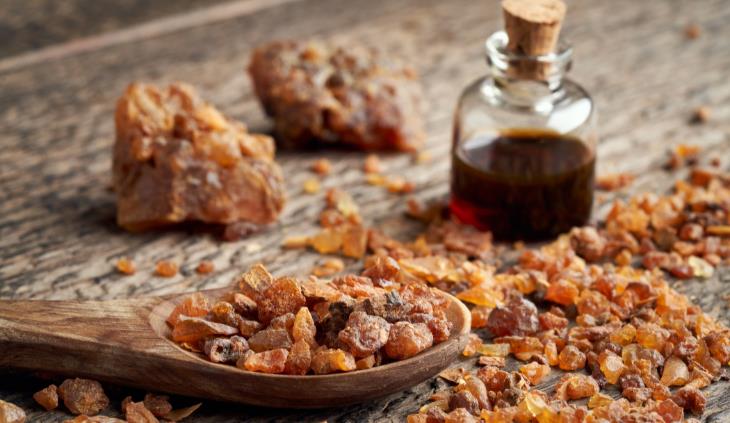
Myrrh - resin and oil
Many plants can be described as having antioxidant properties because they generate compounds that protect them from oxidative stress in nature. Myrrh is a powerful antioxidant, a property that is enhanced in the presence of frankincense. A recent study found that burning the two together as incense reduces airborne material counts by 68%. 
 
Several new studies have even found anticancer properties in myrrh. It was found effective against several types of gynecological cancers, as well as liver, prostate, breast, and skin cancer. 
 
Anti-fungal and anti-bacterial qualities
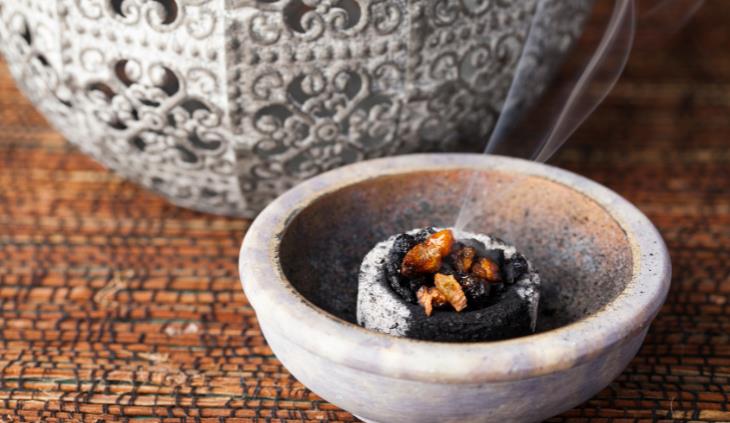
Myrrh - burning on coal
Myrrh is not only an antibacterial, but it also stimulates the immune system to produce more white blood cells - the body’s natural bacteria killers. Thanks to this property, it can also be used to treat oral infections (such as gingivitis) and functions as an antimicrobial additive to mouthwash or toothpaste. It has been found in several studies to reduce inflammation, kill parasites and fungus and reduce pain by interacting with opioid receptors in the brain. 
 
You can harness myrrh’s antifungal properties for the treatment of mild cases of athlete’s foot, bad breath, ringworm, and staph infections. 
 
Skin health

Myrrh - using oil for skin
Myrrh supports the fast healing of wounds. It can be applied topically, diluted in a carrier oil, as an ingredient in an herbal homemade paste, or in a bath or a soak to help heal even the most tender wounds, such as postpartum vaginal tears. It will also help soothe chapped or cracked skin and nails. Use it as a cuticle oil for brittle, splitting nails.  
 
Practical tips for home use:

Here are quick tips and recipes for applying myrrh in your homestead: 
 
1. Mold killer: there are many recipes for natural mold cleaners based on baking soda, vinegar, or lemon. You can add myrrh essential oil for its antifungal properties. 
 
2. Gingivitis remedy: add several drops of oil to 2 ounces of water or coconut oil and swish in the mouth for one minute. 
 
3. Cold compress for swelling: dilute myrrh in carrier oil (jojoba oil, grape seed oil, coconut oil) and use it as a cold compress for pain and swelling. 
 
4. Inhalation: use it in an electronic diffuser or just add it to boiling water and inhale. This helps a congested upper respiratory system and a troubled mind. 
 
5. Digestive tea: to aid digestion, add 2 drops to your tea. Make sure you use essential oil of the highest quality and drink it sporadically to avoid an upset stomach. 
 
6. Thyroid relief: massage 3 drops as a complementary treatment for hypothyroidism. 
 
A final word on side effects 
Unlike frankincense, which is considered to be one of the safest essential oils, there are some things to keep in mind when using myrrh. 
 
⁃ Pregnant women should avoid myrrh, as it may enhance contractions. 
 
⁃ Myrrh may lower and influence blood glucose, and therefore, it is not recommended for people with diabetes. 
 
⁃ Myrrh may interact with diabetes medication as well as anticoagulants. People on these medications should avoid myrrh.

This is only for your information, kindly take the advice of your doctor for medicines, exercises and so on.   

https://gscrochetdesigns.blogspot.com. one can see my crochet creations  
https://gseasyrecipes.blogspot.com. feel free to view for easy, simple and healthy recipes    
https://kneereplacement-stickclub.blogspot.com. for info on knee replacement

https://GSiyers home remedies.blogspot.com     is my latest addition to my blogs. I'm going to add posts there, do give me your valuable feed back on my blogs. Thanks a lot, take care, be healthy and be happy.


Labels: , , , , , , , , , , , , , ,

Friday, April 01, 2022

Reduce Gum Recession with These Natural Remedies

Three out of every four adults have some form of periodontal (gum) disease. This includes receding gums.

The numbers are indeed staggering! Receding gums is a condition whereby the gums pull back from the tooth surface, exposing the root surfaces of the teeth. It is a serious consequence that often arises due to poor oral health, and may lead to tooth loss. Yet, many people are unaware that their gums may be receding until they have reached a noticeable level. Fortunately, it can be treated, preventing any further damage. Below are eight natural home remedies you can try for receding gums, helping to stop the problem and promote better overall gum health.  
 
Green Tea
Packed with antioxidants, green tea helps in the prevention of a multitude of diseases. Consuming green tea regularly may also decrease the damage caused by receding gums, by reducing gum inflammation and aiding in killing bacteria in the oral cavity. 
 
Use: Drink one cup of green tea each morning. 
 
Coconut Oil 
Coconut oil's microbial properties make it an excellent remedy for receding gums, while also fighting bacteria-related gum diseases. It helps rid the teeth and gums of germs and food particles, preventing tooth decay and further gum issues. 
 
Use: Use virgin coconut oil on a daily basis as you would a regular mouthwash, swishing it around in your mouth for 30 seconds after brushing.

Sesame Oil
gum recession
Plaque buildup and toxins often cause receding gums. To minimize these effects, sesame oil can be used to help reduce plaque and remove toxins in the oral cavity. To encourage better absorption, heat the oil slightly. Warmed sesame oil helps to prevent dental decay and gum recession, providing a protective coating on the gums. 
 
Use: Use a quarter of a cup as a mouthwash, swishing the oil around in your mouth for 30 seconds before brushing your teeth. 
 
Myrrh 
Myrrh is a well known essential oil that helps stop gum recession, preventing damage to the gums and teeth and preventing root exposure. It is also helpful in strengthening the gums.  
 
Use: Myrrh can be made into a paste by adding a couple of drops to some aloe vera gel, or it can be used as a rinse, combining a couple of drops in some water.  
 
Aloe Veragum recession
This healing gel is best known for its antibacterial and anti-inflammatory benefits, preventing infections and damaged gums.  
 
Use: Brush your teeth with the gel. You may opt for an aloe vera base toothpaste, or simply apply the gel to your teeth and gums after regular brushing and flossing. 
 
Eucalyptus 
This essential oil prevents gum disease and tooth decay. Eucalyptus oil kills germs and helps prevent gum recession. It is also beneficial in reducing gum swelling due to its anti-inflammatory properties.

Use: Dilute the oil in water. Dip a soft-bristled toothbrush into the mix using it to massage the gums for a couple of minutes. Doing so will reduce gum recession and stimulate new tissue growth. 
 
Clove
gum recession
Since time immemorial, cloves have been used as a remedy to reduce the effects of oral infections and damaged or decaying teeth. Clove oil is a potent antimicrobial, antiseptic and antifungal agent that cleanses the oral cavity and stimulates the repair and growth of any damaged tissues, including receding gums. 
 
Use: When used frequently, clove oil, stops bacterial action and disinfects the mouth. Massage into the gums once a day using a soft-bristled toothbrush. 
 
Lemon Oil 
Lemon oil is best known for its antibacterial and mild antiseptic properties. In its ability to kill off bacteria, lemon oil works exceptionally well in preventing tooth decay and gum recession. Due to its acidic properties, however, lemon oil cannot be used frequently.  
 
Use: Combine an ounce of virgin olive oil and the juice from one-fourth of a fresh lemon. The mixture can be used twice a day. Swish in your mouth once in the morning and once in the afternoon.


This is only for your information, kindly take the advice of your doctor for medicines, exercises and so on.   

https://gscrochetdesigns.blogspot.com. one can see my crochet creations  
https://gseasyrecipes.blogspot.com. feel free to view for easy, simple and healthy recipes    
https://kneereplacement-stickclub.blogspot.com. for info on knee replacement


Labels: , , , , , , , , , , ,