Kefir is a fermented milk drink with many benefits to your digestive
health because it contains probiotics. Kefir milk is traditionally made
by putting kefir grains in cow, sheep, or goat’s milk to create a
yogurt-type drink, although nowadays there are versions with non-dairy
milks. Kefir drink is good for your immune system, bone health,
digestion, and managing symptoms of diabetes.
The health benefits of drinking kefir come from the fact that it is
full of healthy bacteria and yeasts. These microorganisms help to
balance the microbiota in your gut which improves your overall health.
Kefir probiotic drink is also virtually lactose-free and is a good
source of calcium and other minerals and vitamins for people who are
lactose intolerant.
In this article, you will find out about what science says as to the
proven benefits of kefir and why drinking kefir milk is good for you.
What Is Kefir?
Kefir is a probiotic drink that is most commonly made from cow’s milk
(whole milk gives a better flavor than skim or semi-skim milk). Kefir
is prepared by letting kefir grains soak in milk for 24 hours.
The term “kefir” is from the Turkish word “keif” which literally
means “good feeling.” Kefir milk is a popular drink in Eastern Europe,
Russia, and some central Asian countries where people consume kefir
daily.
Research into the health benefits of kefir has found that
microorganisms in kefir have an antimicrobial, anti-carcinogenic,
probiotic, and prebiotic activity. The healthy bacteria in kefir also
help to alleviate many digestive complaints such as diarrhea,
gastroenteritis, and inflammatory bowel disease.
Milk kefir has a slightly acidic taste that is similar to yogurt, but
a bit stronger. For some people, the sour taste of kefir takes getting
used to. However, many people quickly acquire the tangy, yogurt-like
taste of kefir milk.
You can also add honey, berries, fruits, or other flavorings to give kefir a sweeter taste.
Kefir should have a slightly thick consistency – not a thin
consistency like milk and not a thick consistency like yogurt. Depending
on the fat content and the type of milk used, the consistency of kefir
can vary.
Kefir milk vs. kefir water vs. kombucha
Kefir water is produced in a similar way to kefir milk but is dairy
free. Water kefir is produced by adding water kefir grains to a sugary
liquid (sugar water, coconut water,
or fruit juice) and allowing fermentation to take place. Kefir water
also contains a range of probiotic bacteria that have many benefits for
your health.
Kombucha is another type of fermented drink. The difference between
kefir and kombucha is that kombucha is a type of fermented tea drink
(black tea, oolong tea or green tea) using a symbiotic culture of bacteria and yeast (SCOBY) for fermentation. 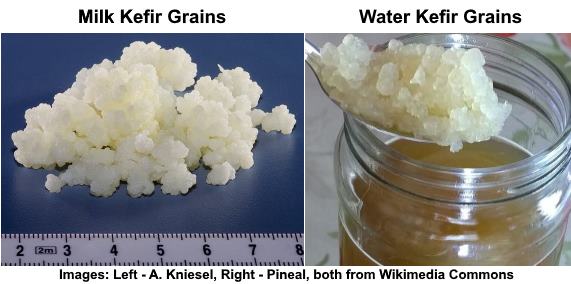
What Are Milk Kefir Grains?
Milk kefir grains are a lumpy, gelatinous substance that is the starter culture for producing kefir milk.
The journal Frontiers in Microbiology reports that kefir
grains are a mixture of lactic acid bacteria, acetic bacteria, fungi,
and yeasts. These produce healthy probiotic bacteria from the Lactobacillus and Bifidobacterium species in the kefir drink.
Kefir grains look like tiny cauliflower heads that vary in size from
0.3 to 3.5 cm in diameter and grow after each fermentation.
When not using kefir grains, you can store them in the fridge to preserve the live bacteria in the culture.
Milk Kefir: Nutrition Facts
The nutritional benefits of kefir depend greatly on the type of milk used to create kefir.
The journal Nutritional Research Reviews reports that kefir generally contains 3.5% fat. Kefir also contains many of the essential amino acids your body requires. Kefir is rich in vitamins, with vitamin C, vitamin A, and vitamin K being the main ones.
Fermented kefir also has more vitamin B12, riboflavin, thiamine, and folic acid than regular milk.
According to information provided by the United States Department of Agriculture, one cup of low-fat kefir (243 g) contains just 104 calories, and 9.2 g protein. Kefir is also a good source of calcium, potassium, phosphorus, and zinc.
Another benefit of kefir is that most of the lactose in kefir milk is
broken down by enzymes during fermentation. This means that kefir is a
good, healthy drink if you are lactose intolerant or have diabetes.
Because kefir contains virtually no lactose or sugars, many people
view kefir as a paleo-friendly drink, and even keto-friendly drink.
One glass of low-fat kefir contains 11.6 grams of carbohydrates and has a glycemic load of 8.
The main benefits to your health of consuming kefir regularly are due
to the amazing array of probiotics and prebiotics it contains.
Researchers have found that kefir milk contains far more bacteria
strains than yogurt. Kefir contains healthy bacteria strains from Acetobacter, Lactobacillus, Lactococcus, and Leuconostoc species. Kefir also contains a number of healthy yeast strains.
Scientific studies into the nutritional value of kefir have found
that kefir drink has antibacterial, antifungal, and antimicrobial
activities.
Kefir vs. Yogurt
Which is better for you: kefir milk or yogurt? While both of these
dairy products contain beneficial bacteria, kefir has a unique and
diverse nutritional makeup that gives it an advantage.
Kefir contains far more strains of good bacteria and yeasts. For
example, scientists have discovered that certain types of kefir milk can
have up to 61 different strains of bacteria and yeasts.
Also, kefir contains a unique strain of bacteria not found in other fermented dairy products – Lactobacillus kefiri. Studies have shown that L. kefiri strains can protect the gastrointestinal tract from infections and help boost the immune system.
Another benefit of drinking kefir is that it contains a unique type of carbohydrate (polysaccharide) called kerifarn. This antimicrobial compound has been shown to be good for fighting candida infections.
Kefir Vs. Probiotic Supplements
When compared to probiotic pills, kefir is a much better choice. The
main problem with probiotic supplements is that they vary in potency and
in quality. Keffir, delivers live active bacteria and it is also high
in vitamins and minerals. The bacteria in probiotic pills is not
protected and it’s hard to know if it’s viable.
One study
evaluated the quality of 25 different probiotic supplements. The
researchers concluded that “only 2 of the 25 evaluated products were
considered acceptable when both the label and contents are considered,
something that is of great concern.” The researchers also found that
some of the bacteria in the probiotic supplements was inactive and not
viable.
Is Kefir Good for You? The Proven Health Benefits of Kefir
Let’s look in more detail at how consuming kefir every day is good
for your digestion, immunity, weight management, and strengthening your
bones.
Kefir Has Antimicrobial Properties and Can Improve Your Digestive Health
The main kefir health benefit is due to the abundance of probiotics which help to improve the microbiota in your gut.
Many studies show that consuming kefir milk products increases the
number of healthy bacteria and help to lower the number of harmful
microbes in the intestines. Drinking kefir can help to reduce the
severity of various gastrointestinal problems such as salmonella, E. coli, and Giardia infections.
Other studies highlight the fact that regular consumption of kefir is good for improving your overall digestive health.
One study found that drinking 100 ml of probiotic kefir also helps to relieve constipation. Kefir has a laxative effect and can improve the time food takes to pass through your digestive tract.
Kefir Is Good If You Have Lactose Intolerance
One of the benefits of drinking kefir every day is that it is easily digested by people who are lactose intolerant.
Enzymes in kefir grains break down lactose in kefir, making it easier
to digest. Studies repeatedly show that people who have lactose
intolerance can consume kefir milk and kefir smoothies.
In fact, daily consumption of kefir may even help improve your
symptoms of lactose intolerance. One study found that kefir products
even helped to improve lactose tolerance. Drinking kefir reduced excess gas, diarrhea, and abdominal cramping that usually occurs after consuming dairy products.
Kefir Milk Strengthens Your Immune System
Kefir boosts the number of healthy bacteria in your gut and has
antimicrobial properties that can all help to boost your immunity.
Many researchers point to the fact that the health of your gut and digestive system is closely linked to your immune system.
A review of how kefir benefits your health found that regularly
consuming kefir milk is good for your gut health and your immune system.
Kefir contains vital nutrients that help to boost your body’s defenses.
Other studies have shown that probiotic products that contain Lactobacillus strains of bacteria stimulate the immune system and inhibit the growth of bacterial infections. The fact that kefir contains L. kefiri makes the yogurt-type drink especially beneficial for your immune system.
Kefir Drink Can Help Manage Diabetes Symptoms
If you suffer from diabetes, kefir is a good probiotic drink to help keep symptoms of diabetes under control.
One randomized clinical trial involving 60 diabetic persons found
that consuming 600 ml of kefir daily helped to significantly lower the
average blood glucose levels (HbA1c). Scientists concluded that
fermented milk drinks such as kefir can be a good complementary therapy
for diabetes.
Kefir Has Anti-Inflammatory Properties
Another reason that kefir milk is extremely good for your health is
that anti-inflammatory kefir compounds help to reduce inflammation.
One study using mice found that kefiran extracts from kefir
grains helped to inhibit inflammatory processes. Kefir milk also reduced
inflammation, but not to the same degree as kefiran extracts. Scientists concluded from this experiment that kefir has anti-inflammatory prebiotic compounds.
Another study found that milk fermented with kefir grains can help to
reduce gastrointestinal inflammation and alleviate symptoms of colitis.
Reducing inflammatory responses in your body is important to prevent
long-term inflammation which can lead to various chronic diseases.
Kefir Consumption May Help Lower Blood Pressure
If you suffer from hypertension, the probiotics in kefir milk can help to improve your cardiovascular health.
One trial involving hypertensive rats found that treating high blood
pressure with kefir was effective after 2 months of daily consumption.
Researchers noted that kefir helped to reduce oxidative stress and
inflammation, which has a positive outcome in reducing high blood
pressure. Scientists also found that the kefir probiotic L. kefiranofaciens has particular cardiovascular benefits.
While there is no research on the blood pressure-lowering effects of
kefir on humans, consuming kefir daily will certainly benefit your
overall health.
Kefir Has Shown the Potential to Lower Cholesterol
It may be possible that drinking kefir daily could have benefits for your health if you have high cholesterol.
However, there are mixed results on the cholesterol-lowering effects of fermented milk products such as kefir.
One study found that a kefir probiotic L. plantarum Lp27 from kefir grains helped to lower cholesterol in rats.
However, a study on 13 men who had elevated cholesterol levels found
that consuming 500 ml of kefir daily for 4 weeks had no effect on
cholesterol levels.
Kefir Has Calcium That Improves Bone Health and May Prevent Fractures
Milk kefir probiotic drink can help prevent osteoporosis and brittle
bones because it has certain bacteria strains that increase calcium
metabolism.
The journal PLoS One reported that fermented milk products
using kefir grains have a positive effect on bone health. In one trial,
people with osteoporosis took 1,600 mg of kefir daily with a calcium
supplementation. After the end of 6 months, researchers found that kefir
boosted the effects of calcium supplements, and bone mineral density
increased. Another study involving postmenopausal women found that kefir
consumption helped reduce bone resorption which can lead to
osteoporosis.
One glass of kefir contains about 316 mg of calcium and 100 IU of
vitamin D, so drinking kefir daily can add toward meeting your daily
recommended intake of calcium and vitamin D. These nutrients are essential to prevent osteoporosis in later life.
Kefir Can Assist in Losing Weight
One of the many benefits of kefir milk is that drinking kefir
regularly can actually help you lose excess pounds and reduce your
waistline.
One randomized controlled trial involving 144 overweight adults found
that increasing kefir drinks helped women lose weight and reduce their
waistline in an 8-week period. Consuming 4 servings of kefir milk daily
resulted in greater weight loss than those persons on a similar diet who
didn’t consume kefir.
Other studies on mice have found that compounds in kefir help to prevent fat accumulation and can prevent obesity.
Kefir Grains Have Wound-Healing Properties
Kefir contains antimicrobial properties that can help wounds heal quicker and prevent infections while wounds are healing.
One trial involving animal subjects used a kefir gel (prepared from
an extract of cultured kefir grains) to treat infected wounds. Kefir gel
was applied 2 times a day to some of the rats, and silver sulfadiazine
to the other. At the end of 2 weeks, scientists noted that inflammation
and scar tissue was lower in the wounds treated with kefir gel.
Other studies have shown that kefir has antimicrobial properties that help heal skin and boost wound healing.
Kefir Can Help Improve the Symptoms of Allergies
If you suffer from asthma, then you could benefit from drinking kefir
milk regularly due to probiotics in kefir having an anti-allergic
effect.
The journal Immunobiology reported that kefir has the
potential to suppress allergic reactions in the respiratory tract.
Scientists said that kefir could be used as a natural treatment for
allergic bronchial asthma.
The fact that kefir can benefit people with allergic respiratory
symptoms was shown in a study on probiotics. Many probiotic strains help
produce antigens that help to improve the body’s immune response to
allergens.
Kefir Has Anticancer Properties
Kefir contains bioactive compounds such as peptides and
polysaccharides that have the potential to inhibit the spread of
cancerous cells.
The journal Medical Oncology reported in 2017 that fermented
milk products like kefir contain antibacterial, anti-inflammatory, and
anti-carcinogenic properties. Enzymes in kefir and probiotics help
strengthen immune response and reduce inflammation. This can help to
reduce the effects of oxidative stress and prevent cell damage that can
lead to cancer.
Compounds extracted from kefir have been linked to treating or
preventing skin cancer, breast cancer, colon cancer, and gastric cancer.
The researchers say that many studies discovered promising results,
using kefir both in vivo and in vitro as an anti-cancerous agent.
Side Effects of Consuming Kefir
Kefir is a naturally fermented milk drink that is very good for
boosting the condition of your health. Most people enjoy drinking
fermented milk products every day without any adverse effects.
Doctors from WebMD say that kefir can cause some gastrointestinal
discomfort when first using it. So, if you decide to take kefir for its
health benefits, you could start by consuming small amounts. Gradually,
you can increase the amount you consume.
Another way to improve your digestion and avoid any potential effects
of bloating, abdominal discomfort, or nausea is to consume kefir with
your meals.
How to Make Your Own Kefir Milk Drink at Home
Many supermarkets and health stores sell kefir. You can usually find
kefir in the dairy product section or yogurt section. Always read the
product label to see what it contains.
If you can’t buy kefir locally, it is very easy to make your own fermented kefir milk at home.
How to make your own homemade kefir:
- Buy milk kefir grains from a reputable health store or online.
- Put a tablespoon of kefir grains in a large glass jar.
- Pour 2 cups of full-fat milk in the jar.
- Cover with a cloth and leave at room temperature for 24-36 hours to allow the kefir grains ferment the milk.
- Kefir should have a buttermilk consistency when the lactose sugars have broken down.
- Strain the liquid into another jar so that you are left with the kefir grains in the strainer.
- Consume the kefir milk or place in the refrigerator to consume later.
You can immediately make your next batch of kefir by repeating the
steps above. If you plan on making kefir later, cover the grains with
milk and store in the refrigerator.
