Five foods that can help keep children hydrated during a heatwave
“Have another drink.” It can become a familiar refrain for parents during a heatwave, particularly when a child is busy playing and has little interest in stopping for a glass of water.
Keeping up fluid intake becomes more important as temperatures rise because heat increases water loss, particularly through sweating. But a child’s fluid intake does not have to come solely from a cup or water bottle – the water in food also counts.
That contribution can be substantial. An analysis of Australian dietary data found that moisture in food supplied 29% of total water intake among children and adolescents. And research involving children aged four to ten found that those who ate more fruit and vegetables tended to have better measures of hydration.
Water-rich foods should supplement regular drinks rather than replace them. But if getting children to drink enough feels like a battle, food can provide another way of adding fluid to their day.
Here are five options.
1. Watermelon and other juicy fruits
Many fruits and vegetables are around 90% water, which is why foods such as watermelon, strawberries, oranges, peaches and melon can contribute to fluid intake.
There is child-specific evidence for this. In a study of 442 children aged four to ten, solid fruit and vegetables provided around 12% of their total water intake. Children who ate more fruit and vegetables also had better measures of hydration.
So offering watermelon, berries or sliced fruit during hot weather provides another source of water alongside regular drinks.
2. Homemade ice lollies
If repeatedly offering a drink is getting you nowhere, changing how it is served may help.
Reusable ice-lolly moulds can be filled with milk, yoghurt, blended fruit or diluted fruit juice. Water consumed through foods and other fluids still contributes to total water intake, so a homemade lolly offers another way to provide fluid.
Making them yourself also gives you control over the ingredients. Although homemade lollies are not automatically healthier, you can choose what goes into each lolly, making it easier to create lower-sugar versions while also involving children in deciding which combinations they would like to try.
3. Cucumber, tomatoes and peppers
Fruit may be the obvious choice when you think about juicy foods, but vegetables can contribute to water intake too.
Cucumber has a particularly high water content, while many other vegetables also contain a large proportion of water. More importantly, research in children has directly linked greater fruit and vegetable consumption with higher water intake and better hydration.
Cucumber, tomatoes or pepper strips can be served alone or alongside familiar foods such as hummus or cream cheese. They also work well in lunchboxes and snack plates when nobody particularly wants to cook or eat a large hot meal.
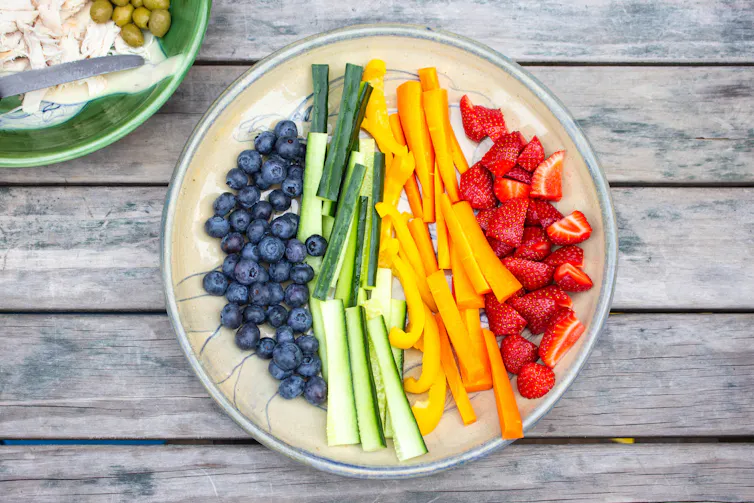
Juicy fruits & vegetables which can keep children hydrated when hot.
4. Yoghurt, milk and dairy foods
Fruit and vegetables are not the only foods that can add fluid to the diet. Milk and dairy products also contribute to children’s overall intake of water and nutrients.
In British children, yoghurt consumption has been associated with higher intakes of nutrients including calcium, iodine and riboflavin. The study was observational, so it cannot show that eating yoghurt caused those differences, but it demonstrates that yoghurt can fit into a nutrient-rich diet.
Yoghurt can be eaten cold with fruit, blended into a smoothie or frozen into a lolly. Milk can also contribute directly to fluid intake, and research comparing different drinks has shown that milk can support fluid balance.
Fortified dairy alternatives are another option, although their nutritional composition varies between products.
5. Build a hydrating ‘picky tea’
You do not have to serve each water-rich food separately. A snack-style meal can bring several together.
A plate could contain melon or berries, cucumber and pepper sticks, yoghurt, cheese, hummus and bread or crackers. Fruit, vegetables and other moisture-containing foods can collectively make a meaningful contribution to total water intake.
It can also be worth being flexible about what constitutes dinner during exceptionally hot weather.
On holiday recently, my nephew asked for a bowl of cereal for dinner because he did not fancy anything else. I thought that was a perfectly sensible choice. It was cool, familiar, contained milk and, crucially, he wanted to eat it.
Would I suggest cereal for dinner every night? Probably not. But we do not usually have heatwaves every night in the UK, although recent summers sometimes seem determined to test that proposition.
Food helps, but keep offering drinks
Water-rich foods can contribute appreciably to children’s total water intake, but studies suggest that differences in how much people drink still account for most of the variation in overall water consumption. So fruit, yoghurt and ice lollies are useful additions rather than replacements for regular drinks.
Parents should also take possible dehydration seriously. A study of dehydration in children found that no single symptom is sufficient to diagnose it reliably, so a combination of changes in a child’s appearance, behaviour and fluid intake may be more informative than watching for one particular sign.
The useful principle is simple: keep offering drinks, but remember that hydration can arrive on a plate as well as in a glass.