Friday, August 14, 2026

Five foods that can help keep children hydrated during a heatwave

“Have another drink.” It can become a familiar refrain for parents during a heatwave, particularly when a child is busy playing and has little interest in stopping for a glass of water.

Keeping up fluid intake becomes more important as temperatures rise because heat increases water loss, particularly through sweating. But a child’s fluid intake does not have to come solely from a cup or water bottle – the water in food also counts.

That contribution can be substantial. An analysis of Australian dietary data found that moisture in food supplied 29% of total water intake among children and adolescents. And research involving children aged four to ten found that those who ate more fruit and vegetables tended to have better measures of hydration.

Water-rich foods should supplement regular drinks rather than replace them. But if getting children to drink enough feels like a battle, food can provide another way of adding fluid to their day.

Here are five options.

1. Watermelon and other juicy fruits

Many fruits and vegetables are around 90% water, which is why foods such as watermelon, strawberries, oranges, peaches and melon can contribute to fluid intake.

There is child-specific evidence for this. In a study of 442 children aged four to ten, solid fruit and vegetables provided around 12% of their total water intake. Children who ate more fruit and vegetables also had better measures of hydration.

So offering watermelon, berries or sliced fruit during hot weather provides another source of water alongside regular drinks.

2. Homemade ice lollies

If repeatedly offering a drink is getting you nowhere, changing how it is served may help.

Reusable ice-lolly moulds can be filled with milk, yoghurt, blended fruit or diluted fruit juice. Water consumed through foods and other fluids still contributes to total water intake, so a homemade lolly offers another way to provide fluid.

Making them yourself also gives you control over the ingredients. Although homemade lollies are not automatically healthier, you can choose what goes into each lolly, making it easier to create lower-sugar versions while also involving children in deciding which combinations they would like to try.

3. Cucumber, tomatoes and peppers

Fruit may be the obvious choice when you think about juicy foods, but vegetables can contribute to water intake too.

Cucumber has a particularly high water content, while many other vegetables also contain a large proportion of water. More importantly, research in children has directly linked greater fruit and vegetable consumption with higher water intake and better hydration.

Cucumber, tomatoes or pepper strips can be served alone or alongside familiar foods such as hummus or cream cheese. They also work well in lunchboxes and snack plates when nobody particularly wants to cook or eat a large hot meal.
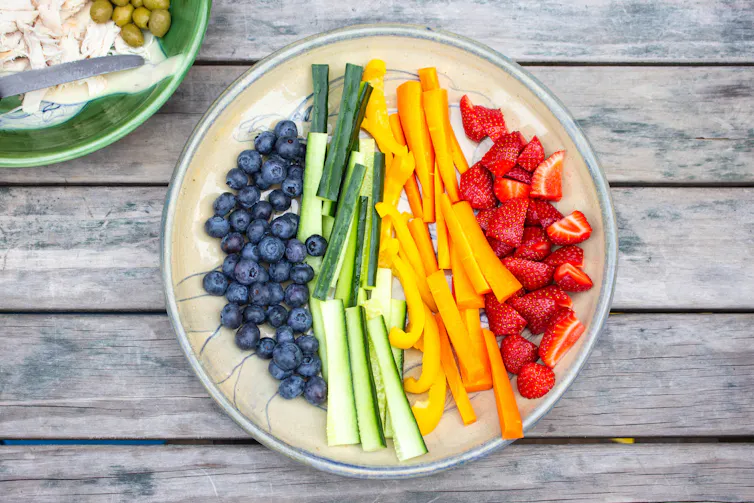
 Close up of a plate of brightly coloured fruit and vegetables cut up for a child's snack

Juicy fruits & vegetables which can keep children hydrated when hot.

4. Yoghurt, milk and dairy foods

Fruit and vegetables are not the only foods that can add fluid to the diet. Milk and dairy products also contribute to children’s overall intake of water and nutrients.

In British children, yoghurt consumption has been associated with higher intakes of nutrients including calcium, iodine and riboflavin. The study was observational, so it cannot show that eating yoghurt caused those differences, but it demonstrates that yoghurt can fit into a nutrient-rich diet.

Yoghurt can be eaten cold with fruit, blended into a smoothie or frozen into a lolly. Milk can also contribute directly to fluid intake, and research comparing different drinks has shown that milk can support fluid balance.

Fortified dairy alternatives are another option, although their nutritional composition varies between products.

5. Build a hydrating ‘picky tea’

You do not have to serve each water-rich food separately. A snack-style meal can bring several together.

A plate could contain melon or berries, cucumber and pepper sticks, yoghurt, cheese, hummus and bread or crackers. Fruit, vegetables and other moisture-containing foods can collectively make a meaningful contribution to total water intake.

It can also be worth being flexible about what constitutes dinner during exceptionally hot weather.

On holiday recently, my nephew asked for a bowl of cereal for dinner because he did not fancy anything else. I thought that was a perfectly sensible choice. It was cool, familiar, contained milk and, crucially, he wanted to eat it.

Would I suggest cereal for dinner every night? Probably not. But we do not usually have heatwaves every night in the UK, although recent summers sometimes seem determined to test that proposition.

Food helps, but keep offering drinks

Water-rich foods can contribute appreciably to children’s total water intake, but studies suggest that differences in how much people drink still account for most of the variation in overall water consumption. So fruit, yoghurt and ice lollies are useful additions rather than replacements for regular drinks.

Parents should also take possible dehydration seriously. A study of dehydration in children found that no single symptom is sufficient to diagnose it reliably, so a combination of changes in a child’s appearance, behaviour and fluid intake may be more informative than watching for one particular sign.

The useful principle is simple: keep offering drinks, but remember that hydration can arrive on a plate as well as in a glass.


This is only for your information, kindly take the advice of your doctor for food, medicines, exercises and so on.   


Labels: , , , , , , , , ,

Tuesday, November 18, 2025

6 nutritionist secrets to stop a cold in its tracks and boost your immune system

If you’re reading this, you’re likely feeling a little under the weather or at least, you know you will be soon. Be it a lingering tiredness, a tickle in the back of your throat or a nose that resembles an open tap, sick season is officially upon us, which means it’s time to think about how to boost your immune system before symptoms set in.

Outside of stocking up on zinc-rich foods (an essential mineral for healthy immune function) and getting enough sleep, there are a couple of other expert-approved ways to boost your immune system and ward off the winter lurgy.

Here, three nutritionists share their best advice to boost your immune system and stay well, from smart supplements to fortified gut health.

1. Prioritise antioxidants

“Some nutrients support the optimal functioning of immune cells – like vitamin C,” says W-Wellness nutritional therapist Maz Packham. “It’s a powerful antioxidant that’s needed for our white blood cells to defend the body against infection.”

Her suggested sources of vitamin C include:

  • Kiwis
  • Citrus fruits like lemons and limes
  • Berries
  • Peppers

2. Think colour

When in doubt, heap as much (natural) colour as possible into your daily diet. Fruits, vegetables and plants like red cabbage, pumpkin and squash are rich in immune-supporting nutrients like vitamin C, beta carotene and zinc, nutritionist and functional medicine practitioner Farzanah Nasser tells British Vogue.

She likes to mix things up by incorporating pumpkin into delicious loaves of bread, adding root vegetables to soups made with bone broth and taking advantage of the antiviral nature of matcha.

3. Stock up on vitamin D

Low levels of Vitamin D are linked to increased susceptibility to infection, along with low mood and fatigue, Packham describes. “Include oily fish and eggs in your diet and consider supplementing with a vitamin D supplement,” she advises. Because of winter’s limited sunlight and the fact that we get very small amounts through our diet, a good quality supplement can be an efficient way to boost levels.

4. Focus on fibre

For top marks, aim to eat 30g of fibre per day. “Fiber helps nourish our gut microbiome that trains our immune cells and keeps us healthy,” Nasser explains. “Up to 80 per cent of the immune system lives in the gut – including more fibre is a really simple way to look after your immunity.”

One very easy way to eat more fiber is to start eating seeds. Chia and flax are two options that work well stirred into yoghurt or sprinkled onto porridge. Beans, like chickpeas, are rich fibre sources, too. The goal is consistent, adequate fibre throughout the day – it helps with blood sugar control, satiety and efficient elimination.

5. Include fermented foods

Fermented foods contain good microbes (which add to the microbes already present in the gut), creating a varied environment for a healthy gut environment to flourish. “One study showed that the lactic acid bacteria and fermentation metabolites in kimchi can even inhibit the flu virus,” Nasser suggests.

Her best advice is to include some form of fermentation in each of your meals. This could look like eating yoghurt or kefir for breakfast, mixing some apple cider vinegar into your salad dressing at lunch and sipping a kombucha at your evening meals. Sauerkraut, pickles, miso and tempeh are all worthy options, too.

6. Sleep and nature are medicinal

Our immune health is hinged largely on how well we rest and how much we stress. Reducing the latter and improving the former can help protect the body against an influx of bugs by lowering inflammation and bringing the nervous system and body back from the brink.

The other trick, Nasser says, is to get outside. “When we go for walks or spend time in nature, we actually breathe in immune-supporting chemicals released by the trees and plants.” These chemicals, phytoncides, trigger the body’s parasympathetic nervous system (rest and digest) and help to lower cortisol levels. They also increase the number of Natural Killer cells, which target virus-infected or abnormal cells, explains Nasser.


This is only for your information, kindly take the advice of your doctor for medicines, exercises and so on.   


Labels: , , , , , , , , , , , , ,

Thursday, December 26, 2024

Our Guide to Proper Eye Care and Avoiding Cataracts!

A cataract is a clouding that develops in the lens of the eye and blurs our vision, causing near-sightedness (myopia) and decreasing our ability to detect the color blue. Left untreated, it may even cause full blindness. Many people develop cataracts later in life, but there are ways to avoid developing it, especially at an earlier age. Adhere to these tips and you may prevent a cataract ever forming on your lens!

Protect the eyes from the potential side effects of certain medications. Prolonged use of steroids, tranquillizers, and psoriasis medication may cause cataracts when taken in large doses over a long period of time.

Those suffering from diabetes should keep their blood sugar under control. This is because diabetics tend to develop cataracts faster and at an earlier age than other adults. 
Protect your eyes from ultraviolet sun rays as these rays speed up the development of cataracts. Whenever out in the sun, wear sunglasses.

Studies have shown that antioxidant vitamins such as vitamin C, vitamin E and beta carotene slow the development of cataracts. Make sure your body doesn't lack any of these vitamins and if it does, take supplements.

If there is uncontrolled diabetes, injury to the eye, or visual symptoms of decreased reading vision, consult an ophthalmologist to evaluate the problem to help restore sight and prevent blindness.

Foods like butter, oils (except olive oil) and salt, and increased fat consumption in general has been associated with a higher risk of developing cataracts. So, avoid using or limit the intake of such foods.
 
A diet rich in spinach, cruciferous vegetables (like broccoli), tomatoes, peppers, citrus fruits and melons help prevent cataracts.

Avoid exposure to heavy metals, particularly cadmium, copper, lead, iron and nickel as they may also increase cataract formation as these metals have been found in cataractous lenses.

Cataracts that occur due to the ageing process cannot be prevented as the ageing process itself cannot be prevented, but they can be delayed and fought against, so that you may not have to deal with them when you get older.


This is only for your information, kindly take the advice of your doctor for medicines, exercises and so on.   

https://gscrochetdesigns.blogspot.com. one can see my crochet creations  
https://gseasyrecipes.blogspot.com. feel free to view for easy, simple and healthy recipes    
https://kneereplacement-stickclub.blogspot.com. for info on knee replacement
https://cancersupportindia.blogspot.com  for infor on cancer and health related topics
https://GSiyers home remedies.blogspot.com   is the latest addition to my blogs. I'm going to add posts there, do give me your valuable feed back on my blogs. Thanks a lot, take care, be healthy and be happy.

Labels: , , , , , , , , , , ,