Reduce Pain in Your Wrists & Hands with these 7 Exercises
THIS IS ONLY FOR INFORMATION, ALWAYS CONSULT YOUR PHYSICIAN BEFORE
HAVING ANY PARTICULAR FOOD/ MEDICATION/EXERCISE/OTHER REMEDIES.
FOR CROCHET DESIGNS- http://My Crochet Creations.blogspot.com/
FOR INFO ABOUT KNEE REPLACEMENT, YOU CAN VIEW MY BLOG
HTTP://KNEE REPLACEMENT-STICK CLUB.BLOGSPOT.COM/FOR CROCHET DESIGNS- http://My Crochet Creations.blogspot.com/
When
daily tasks get difficult due to stiffness, swelling, or pain in your
hands, the right exercises can help get your hands back in motion. In
fact, it is vital that you do not neglect exercising your hands during
your workout regimes (the fingers, palms and wrists should be given
priority while warming up). Doing so will help improve your range of
motion and ease aches and pains.
Painful Hands: The Cause
When dealing with hand pain,
arthritis is often the cause. It wears away at the cartilage of a joint
(the cushioning material between bones). Consequently, this can cause
inflammation and irritation of the synovial lining, which produces the
synovial fluid that helps protect and lubricate the joint. The pain can
get worse, particularly when used frequently for repetitive tasks, such
as typing on a computer keyboard, or gripping kitchen utensils. Strength
in your hands may also be diminished, making them weak, which
consequently can make it hard to perform even the simplest of tasks.
Treating Hand Pain
Medicinal options are available for treating hand arthritis, such as taking pain-relieving medicines orally. Injections and steroid medicines, which decrease swelling in the joints, can also support and protect your hands. If a joint is actually damaged, surgery may be your best option. However, regardless of whether you have arthritis in your hands or not, one easy and non-invasive way to keep your hands pain-free is to do hand exercises to increase flexibility in the joints and improve their range of motion. Exercising your wrists, palms and fingers will help strengthen the muscles that support the hand joints, enabling you to perform hand movements with less discomfort. Exercise will also help keep ligaments and tendons flexible, as well as increase the production of synovial fluid, improving joint function.
7 Exercises to Alleviate Hand Pain
Exercise 1: Make a Fist
Treating Hand Pain
Medicinal options are available for treating hand arthritis, such as taking pain-relieving medicines orally. Injections and steroid medicines, which decrease swelling in the joints, can also support and protect your hands. If a joint is actually damaged, surgery may be your best option. However, regardless of whether you have arthritis in your hands or not, one easy and non-invasive way to keep your hands pain-free is to do hand exercises to increase flexibility in the joints and improve their range of motion. Exercising your wrists, palms and fingers will help strengthen the muscles that support the hand joints, enabling you to perform hand movements with less discomfort. Exercise will also help keep ligaments and tendons flexible, as well as increase the production of synovial fluid, improving joint function.
7 Exercises to Alleviate Hand Pain
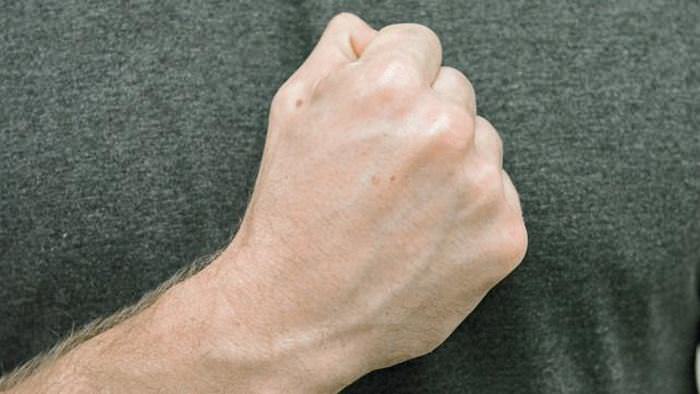
Exercise 1: Make a Fist
Here's How:
This easy exercise can be done anywhere and any time your hand feels
stiff. Hold your hand out straight and slowly bend it into a gentle
fist, placing your thumb on the outside of your hand. Do not squeeze
your hand tightly. Repeat the exercise 10 times, then repeat the whole
sequence with the opposite hand.
Exercise 2: Finger Bends
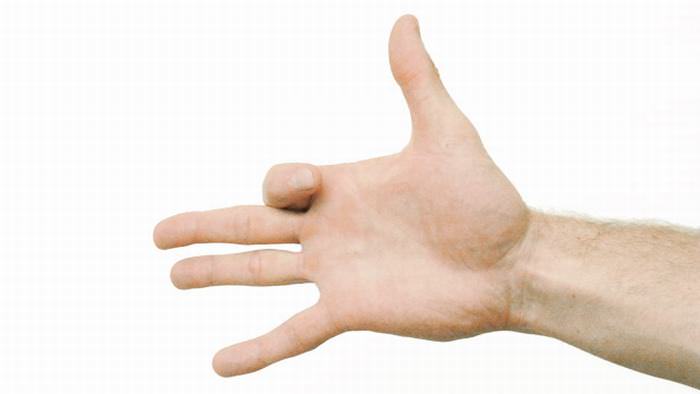
Here's How:
Hold your hand up straight. Bend your thumb down toward your palm,
hold it for a couple of seconds, then straighten it back up. Bend your
index finger toward your palm, hold it for a couple of seconds and
release back into its neutral position. Repeat the process with each
finger on your hand, then repeat the entire sequence on your opposite
hand.
Exercise 3: Thumb Bend
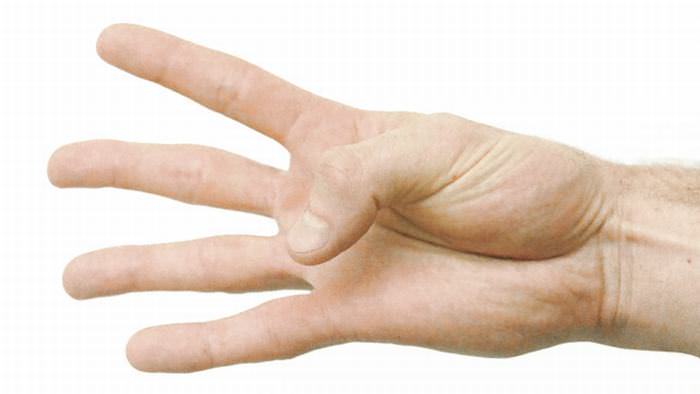
Here's How:
Hold your hand out straight. Bend your thumb inward toward your palm.
Stretch out your thumb, as much as you can, toward the bottom of your
pinky finger. Hold this position for a couple of seconds and return your
thumb to the starting position. Repeat 10 times, then repeat the
exercise on your right hand.
Exercise 4: Make an 'O'
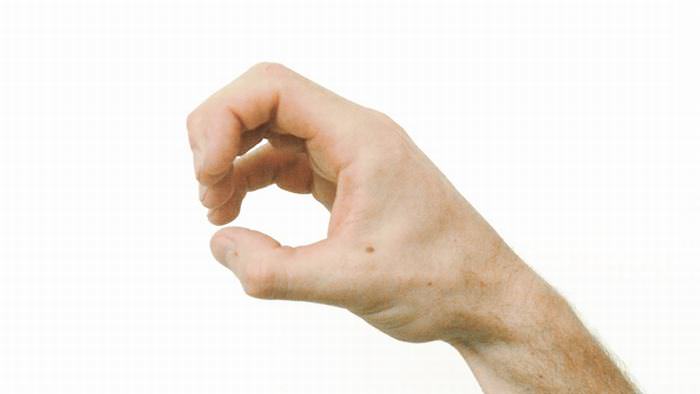
Here's How:
Start with your hand in the starting position (straight out). Then,
curve all of your fingers, forming an 'O' shape. Hold for a couple of
seconds, then straighten your fingers out again. Repeat the exercise a
couple of times on each hand, and whenever it feels achy or stiff.
Exercise 5: Table Bend

Here's How:
Place the side of your hand (the pinky finger) on a table, pointing
your thumb upward. Bend the other four fingers until your hand makes an
'L' shape. Hold the position for a couple of seconds, then straighten
your fingers, moving them back into the starting position. Repeat for a
total of 10 times, and repeat the sequence on the opposite hand.
Exercise 6: Finger Lift
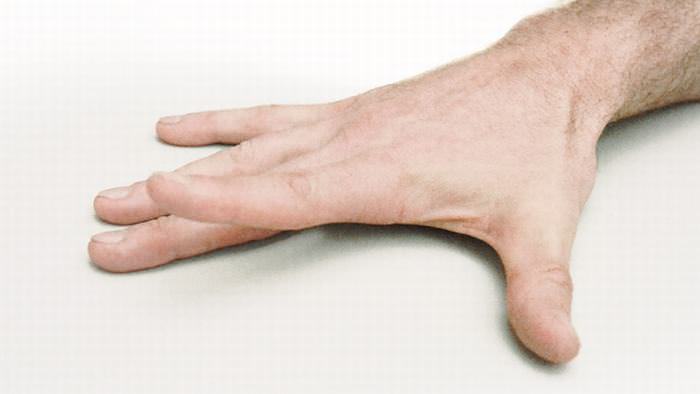
Here's How:
Place your left hand, palm down, on a flat surface. Lift your thumb
slowly off the table, holding for a couple of seconds, then lower.
Repeat this process with each finger, then repeat the entire sequence on
your opposite hand.
Exercise 7: Wrist Stretch
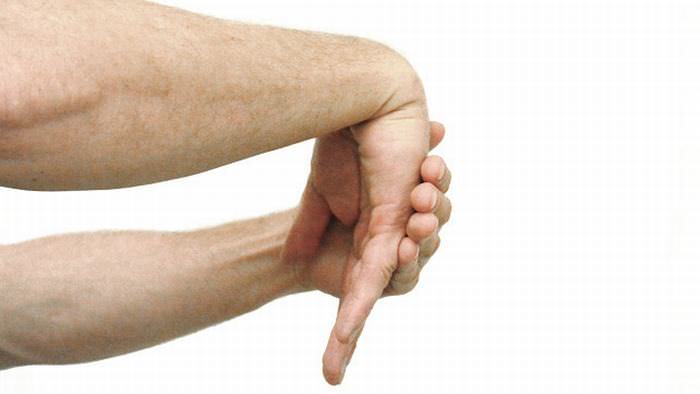
Here's How:
Exercising your wrists is just as important, because arthritis tends to
make them sore and stiff. Hold your right arm out in front of you, palm
facing down. With your left hand, press down on your right one as
indicated in the image, until you feel a stretch in your wrist and arm.
Hold the position for a couple of seconds and repeat the process 10
times. Once done, repeat the entire sequence on your opposite hand.
Labels: Arthritis, bend, fingers stretch, flexibility, hand pain, stretch, wrists
posted by G S Iyer at 2:17 AM
0 comments