Friday, May 23, 2025

What Does the Spleen Do and How Do We Take Care of It?

The spleen is an important part of your body, but many people don’t even know what it is or where it’s located. In fact, many of us can go through our entire life without even thinking about it. This little organ is located on the left side of your abdomen under the rib cage. It weighs about 6 ounces (170 gm) in healthy adults and looks somewhat like a fist-sized purple sponge with holes in it. Since it’s tucked under the rib cage, the spleen usually isn’t felt on exam. However, if your spleen enlarges, it might need to be treated or surgically removed.


What does Spleen Do?
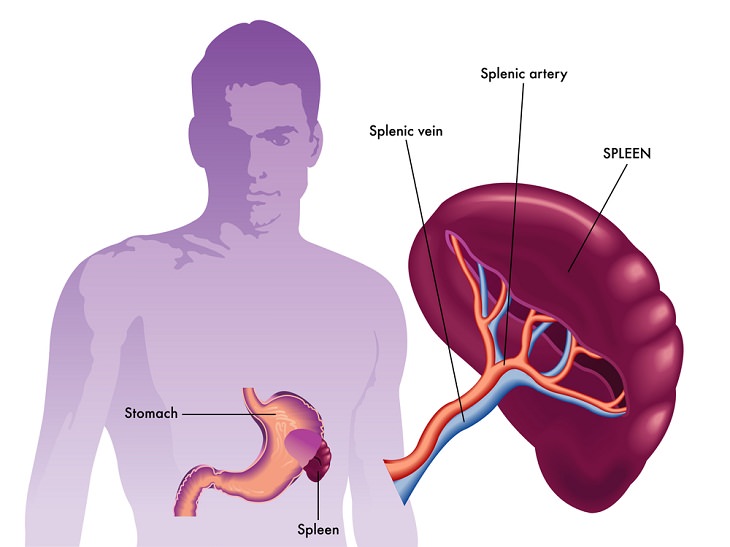
 
 The Spleen, functions
 
 
The spleen has a few vital functions:  
 
Its primary job is to filter or remove "junk" from the bloodstream. It does so by getting rid of cellular waste and removing old, malformed, or damaged blood cells. 
 
The spleen contains infection-fighting white blood cells, called lymphocytes, as well as antibodies that help the body combat invading germs in the blood including bacteria or viruses. This makes the organ crucial for our immune system response. 
 
The spleen affects the level of white blood cells, red blood cells, and platelets
 
It maintains the levels of fluid in your body.  
 
Apart from containing white blood cells, the spleen also stores red blood cells and platelets. 
 
The spleen is also responsible for analyzing the quality of our red blood cells. So, for instance, a red blood cell is damaged or unable to move through the blood system properly, the spleen removes it from circulation. Further, if the spleen finds anything in the red blood cells that shouldn't be there, it gets rid of it.


Conditions That Affect the Spleen 
 If your spleen doesn't work properly, you are at a bigger risk of being infected with bacteria. In addition, you may suffer certain medical conditions. For starters, it may start removing healthy blood cells, which may lead to anemia or an increased risk of infection from a reduced number of white blood cells. 
 
Some of the other conditions that cause an enlarged spleen include: 
 
Sickle cell disease: With sickle cell disease, a group of disorders, the red blood cells become misshapen and get trapped in the spleen. This ultimately causes the spleen to expand. If more and more red blood cells continue getting trapped in the organ, it will keep getting larger. This can cause anemia. 
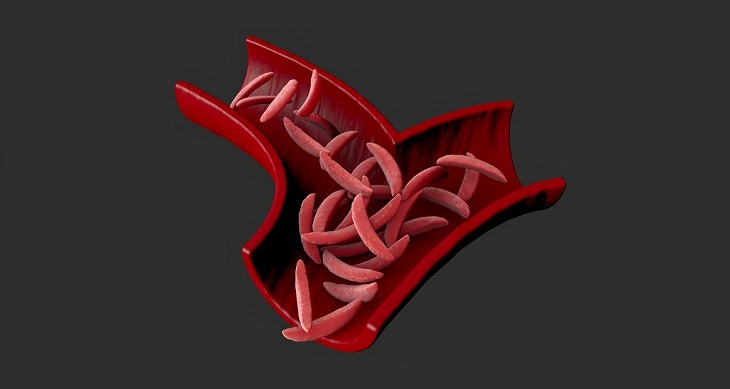
The Spleen, Sickle cell disease
Sickled red blood cells also harm the spleen tissues and disrupt their normal functions. People with this disease are hence at a higher risk of infection.
 
Hereditary spherocytosis: It’s a condition that affects red blood cells. People with hereditary spherocytosis experience a shortage of red blood cells as they are destroyed earlier than normal by the spleen. The gene mutations that cause red blood cells to be misshapen are called spherocytes that are taken out of circulation and sent to the spleen to be removed. When this keeps happening, it causes a shortage of red blood cells and too many in the spleen. 
 
Cancer: The spleen is the largest lymphatic organ in the body and is surrounded by a connective tissue capsule. It can also be connected with lymphomas or cancer of the lymphatic system as well as blood cancers such as Hodgkin’s disease and leukemia. 
 
Thalassemia: The spleen helps produce blood cells before birth. In people with thalassemia, an inherited blood disorder, the bone marrow is unable to make red blood cells normally. This causes the spleen to enlarge to produce more red blood cells. 
 
Bacterial, viral, and parasitic infections: If the spleen does not function properly, you are at a bigger risk from bacterial, viral, and parasitic infections. This is simply because the spleen is responsible for getting rid of harmful bacteria from the blood. In many viral infections, the spleen becomes enlarged which can cause infections such as syphilis, tuberculosis, endocarditis, mononucleosis (mono), and malaria.


An enlarged spleen
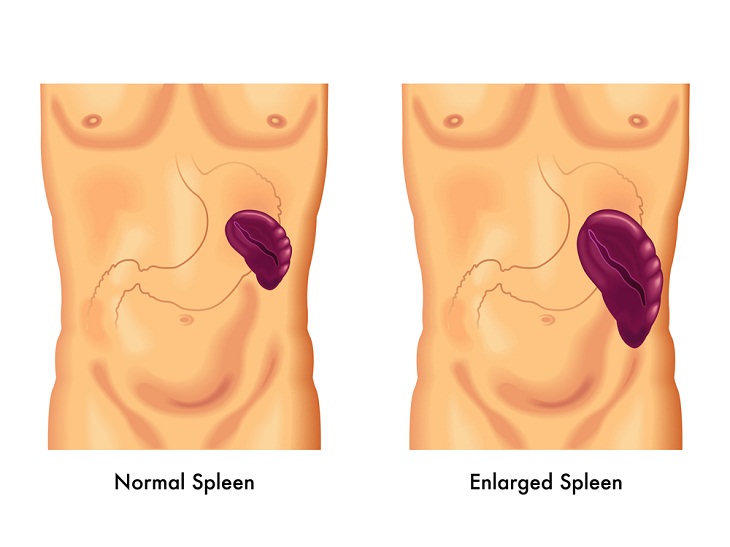
 
 The Spleen, Enlarged Spleen
 
Your spleen may become enlarged (a condition called splenomegaly) if it can’t filter your blood as efficiently as it’s used to. This primarily happens due to several different medical conditions or diseases that cause blood cells to break down too quickly such as cirrhosis, leukemia, or rheumatoid arthritis. 
 
An enlarged spleen traps an excessive amount of blood cells and platelets and may start destroying healthy red blood cells as well. This condition can lead to a significant reduction of healthy blood cells and platelets in your blood as your spleen becomes clogged. 
 
An enlarged doesn’t always show symptoms at first. But you should look out for these signs: 
 
* Feeling discomfort or pain behind your left ribs 
* Feeling too full quickly without eating too much. This happens because an enlarged spleen can press on the stomach. 
* Frequent infections.
* Fatigue or anemia. 
* Easy bleeding 
 
If it enlarges too much without being detected, the spleen can be damaged or ruptured after a forceful blow to the abdomen. This may cause acute pain behind your left ribs and you would require your spleen to be removed. 
 
This How to Treat an Enlarged Spleen

Your doctor can often tell if you have an enlarged spleen by touching the area around your abdomen. A blood test, CT scan, or MRI scan would verify the diagnosis. 
 
If you are diagnosed with an enlarged spleen, you are likely to be first given antibiotics to treat the underlying condition that may have caused the issue. However, a severe infection may not respond to antibiotics and can lead to inflammation and a buildup of pus. In such a scenario, your spleen may need to be removed. 
 
Surgery may also be needed if doctors are unable to find out the cause of your spleen enlargement. The surgery to remove your spleen is called a splenectomy. Sometimes just part of your spleen can be removed if needed, which is called a partial splenectomy. Recovery from this surgery usually takes around four and six weeks.

Can You Live Without Your Spleen?
After your spleen is removed, you are left with a compromised immune system and are at greater risk of bacterial infections. Does that mean you can’t live normally without a spleen? 
 
While the spleen is an important part of the body, you can indeed live without your spleen if it’s damaged by disease or injury. Your liver and lymph nodes take over the job of the spleen after it’s removed from your body. That being said, you may develop certain infections quickly and are likely to take longer than usual to recover after getting sick without your spleen. 
 
Your doctor may ask you to get vaccinated against certain infections to lessen your risk. Some of these include: 
* Influenza 
* Meningitis
* Chickenpox 
* Tetanus, diphtheria, and whooping cough 
* Measles, mumps, and rubella 
* Pneumonia
 
If you are an otherwise healthy adult, you can lead a normal life even without your spleen. Consult with your doctor to devise a long-term plan to stay healthy after your spleen is removed. 
 
 How Do I Keep My Spleen Healthy?
 Currently, there's not much research on how your diet can affect your spleen. There are also no recommendations on specific foods you should avoid to reduce the risk of developing an enlarged spleen. However, a healthy diet affects your overall health and keeps your immune system robust. Therefore, to keep your spleen and immune system in good shape, you should exercise regularly, maintain a healthy weight, and drink plenty of water, health experts say. Eating a balanced diet abundant in fruits and vegetables will be beneficial as well.


This is only for your information, kindly take the advice of your doctor for medicines, exercises and so on.   


Labels: , , , , , , , , , , ,

Thursday, April 09, 2020

What Is the Best Material for a Reusable Face Mask? Here's What an Expert Says

Will Laundry Detergent Kill the Virus?

“If light easily filters through, the filtration is likely not as good,” says Dr. Segal. “If it blocks more of the light, it likely performs better.”

The study found that so-called “quilting cotton” was generally much better than the sort of printed fabric available in discount fabric stores. “It tends to have the characteristics we found most effective:  thicker, heavier yarn, higher thread count, tighter weave,” says Dr. Segal. So if you know any quilters, now’s the time to call in that favor.

If you do have to use lower-end cotton on the outside, Dr. Segal suggests using flannel as an inner layer. “Two-layer masks performed better than single layer masks,” he says. “This is probably because the small particles would have to find their way through both layers to pass through the mask. In our hands, cloth, single-layer masks did not perform well.”

Just as important as filtration is breathability. Remember, you need to wear this thing. “If you can’t comfortably breathe through the material for several minutes, it won’t make a good mask, no matter how effective it is in filtering,” adds Dr. Segal.

If you can get your hands on quilting cotton, great. If not, don’t panic. “The CDC recommendation is based on preventing the wearer from infecting others if they are infected and don’t know it, not so much on offering protection to the wearer,” says Dr. Segal. “Anything that prevents the spread of respiratory droplets is better than nothing—this is why we’re asked to cough or sneeze into our elbows.”

So if all you have is an old T-shirt or a bandana, you shouldn’t shy away from making a mask. And whatever material you use, make sure you wash it after each wear. “A homemade mask should be kept as clean as possible,” says Dr. Adalja. “Contaminating yourself with an infected mask is a real risk.”

Finally, never think a mask gives you immunity against the coronavirus. It’s crucial to continue to follow all other guidelines. “No mask is as good as social distancing and good hygiene,” advises Dr. Segal. “That’s still the number one way to protect yourself and others."

The information in this story is accurate as of press time. However, as the situation surrounding COVID-19 continues to evolve, it's possible that some data have changed since publication. While Health is trying to keep our stories as up-to-date as possible, we also encourage readers to stay informed on news and recommendations for their own communities by using the CDC, WHO, and their local public health department as resources.


This is only for your information, kindly take the advice of your doctor for medicines, exercises and so on.     

https://gscrochetdesigns.blogspot.com. one can see my crochet creations  
https://gseasyrecipes.blogspot.com. feel free to view for easy, simple and healthy recipes    
https://kneereplacement-stickclub.blogspot.com. for info on knee replacement

Labels: , , , , , , , , ,

Monday, January 06, 2020

Researchers test novel approach for injecting gene therapy vectors into kidney

A mouse-experiment conducted by the researchers to better understand the ways to treat renal diseases has identified that before gene therapy is implemented to treat, targeted delivery of the therapeutic genes to the kidney should be the 1st necessary step.

In a novel approach devised by a group of scientists, 3 different gene delivery vectors were injected intravenously and directly into the kidneys of mice. 


As the kidney filters out large compounds from the bloodstream, the researchers chose to study the ability to deliver 3 different sized vectors via an intravenous route: small adeno-associated virus (AAV) vectors (25mm), larger adenovirus vectors (100mm) and lentiviral vectors (120mm).


To bypass this filtering mechanism, they also tested 2 different direct injection routed into the kidney and found these to be superior to intravenous injections.


However, some of the vectors were able to leak out of the kidney, creating the possibility for off-target tissue effects.


The potential for direct injections opens new possibilities for treating kidney diseases with gene therapy, but additional improvements are needed.


The great burden of kidney diseases in the U.S. and Europe has yet to be impacted by gene therapy, said one of the researchers.


The researchers have performed an important head-to-head comparison of currently available gene therapy technology, to identify which may best be used to address this important group of diseases.


this is only for your information, kindly take the advice of your doctor for medicines, exercises and so on.     
https://gscrochetdesigns.blogspot.com. one can see my crochet creations  
https://gseasyrecipes.blogspot.com. feel free to view for easy, simple and healthy recipes    
https://kneereplacement-stickclub.blogspot.com. for info on knee replacement
 

Labels: , , , , , , , ,

Sunday, December 01, 2019

Avoid high protein diets


 An actor was on a protein-heavy diet in order to get the body of an athlete. Many actors follow similar diets to bulk up for a particular role.

However, according, to new studies from the Netherlands and Korea, published online in Nephrology Dialysis Transplantation, a high-protein diet may harm kidney function, and this is why doctors recommend kidney patients a low-protein diet. The high-protein culture (Atkins, Zone, South Beach, and Ketogenic diets) involve daily protein intake of 20% to 25% or more of the total daily energy intake.

Without protein, our bodies would be unable to heal from injury, stop bleeding or fight infection. That’s why eating protein is so important to staying healthy. “The average person needs between 40 to 65 grams of protein each day,” says a Senior Consultant Nephrologists & Transplant Physician,  and adds, “Ideal protein for chronic kidney disease patients who are not on dialysis is 0.6 -0.8 grams and for Dailysis dependent patients is 1.2 grams.”

When protein is ingested, protein waste products are created. Healthy kidneys have millions of nephrons that filter this waste. It’s then removed from the body in the urine.

Unhealthy kidneys lose the ability to remove protein waste and it starts to build up in the blood. “Those with Chronic Kidney Disease (CKD) will benefit with a low protein diet, as low as 0.8 grams per kg body weight. It has been now found that a vegetarian source of protein is better than animal sources in CKD,” says  Sr. Consultant – Nephrologist & Complex Kidney Transplant Expert.

Protein and the stages of CKD
The five stages of CKD are defined by the glomerularfiltration rate (GFR), a measure of how well your kidneys are functioning. “Although stage four indicates a severe decrease in kidney function, you’re still able to live without dialysis.

Because there’s no cure for kidney disease, the primary focus is keeping you nourished and reducing protein waste build up. Excess protein waste can cause nausea, loss of appetite, vomiting, weakness, taste changes and itching. If you’re in stages 1, 2, or 3, your protein intake may be limited to 12 to15 percent of your calorie intake each day. This is the same level recommended by the Dietary Reference Intakes (DRIs) for a healthy diet for normal adults. If you’re in stage 4 of CKD, your dietitian may advise you to reduce protein to 10.percent of daily calorie intake,” says a Dr.

Are some proteins better than others?
High protein foods like meat, milk and eggs can be high in fat and cholesterol. “If you have high cholesterol or cardiovascular disease, your doctor and dietitian may recommend eating more heart-friendly proteins. Good choices include fish, chicken breast, and low-fat soy products as well as low-fat dairy products.

Phosphorus is a mineral that builds up in the blood as kidney failure progresses. You may be advised to reduce high protein foods that are high in phosphorus, if your level goes above normal. Milk, yogurt, cheese, dried beans and peas, nuts and seeds, peanut butter and some soy products are high in protein and phosphorus,” says the Dr.

How is protein managed?
To make sure one is getting the right amount of protein, Dr. says, “Speak with your  dietitian to get specific guidelines regarding your protein intake. This number will depend on your CKD stage, lab results, body size and other health conditions. If you’re prescribed a low protein diet, your portions of protein containing foods will be smaller than usual.”

If not protein, then what?
Although diet may be limited in high protein foods, one can still eat a variety of foods, such as eggs, milk, meat, poultry, fish,fruits, vegetables and grains. “Eating adequate calories is important to prevent muscle breakdown and weight loss. It is advised to eat more healthy fats, such as olive oil, or take supplements to help  get enough calories,” says Dr.

Doctors also have concerns about the long-term effects of maintaining a high protein diet. “One should have have a balanced diet consisting of carbohydrates, fat and proteins. Restrict supplemental proteins and minimum intake is 0.8 gm to maximum 1.2 gm per day. It is proved beyond doubt that vegetable proteins are safe and has more advantages,” says a lead consultant.


this is only for your information, kindly take the advice of your doctor for medicines, exercises and so on.     
https://gscrochetdesigns.blogspot.com. one can see my crochet creations  
https://gseasyrecipes.blogspot.com. feel free to view for easy, simple and healthy recipes    
https://kneereplacement-stickclub.blogspot.com. for info on knee replacement


Labels: , , , , , , , , , , , ,