Everyday Habits That Promote Tooth Decay
Our
teeth are one of the most fragile parts of our body: most damage done
to them cannot be reversed and has to be mended by a dentist. Teeth are
sensitive to changes in temperature, certain foods, and even the
slightest pressure during brushing can lead to enamel damage.
Apart from their role in digestion, straight, white and healthy teeth are, in many ways, about beauty, as we instinctively associate beautiful teeth with health. Still, maintaining our pearly whites can be difficult, and sometimes, we can’t put a finger on what’s causing a dental problem, be it discoloration, cavities or gum problems. To make things easier for our readers, we made a list of 11 everyday habits that could be the ones ruining your smile. I know I’m definitely guilty of a few of these myself, particularly drinking coffee and not choosing the right kind of mouthwash.
Apart from their role in digestion, straight, white and healthy teeth are, in many ways, about beauty, as we instinctively associate beautiful teeth with health. Still, maintaining our pearly whites can be difficult, and sometimes, we can’t put a finger on what’s causing a dental problem, be it discoloration, cavities or gum problems. To make things easier for our readers, we made a list of 11 everyday habits that could be the ones ruining your smile. I know I’m definitely guilty of a few of these myself, particularly drinking coffee and not choosing the right kind of mouthwash.
1. Taking Vitamins In Gummy Form Promotes Tooth Decay
If
something tastes like candy, it’s probably bad for your teeth, even if
it’s marketed to be good for you. Yes, we’re talking about the multitude
of vitamins and supplements sold for both kids and adults in gummy
form.
Though
these vitamins are fun, colorful, and beneficial to your nutritional
needs, many dentists point out that they’re one of the worst things you
could do to your oral health, as parts of the sweet gummy can get stuck
between your teeth and provide excellent nutrition to different
bacteria, including those that cause cavities and gum disease.
Luckily,
you can easily fix this problem by simply brushing your teeth after
chewing on the gummy vitamin. Another alternative is, of course, to
switch to traditional vitamins packaged in capsule or pill form.
2. Biting Nails Affects Your Enamel, Teeth & Jaw
 As
it is the case with acidic drinks, harsh, over-the-counter toothpastes,
whitening strips or pastes can damage your enamel, which may make your
teeth look whiter at first, but will also make them look worse in the
long run.
As
it is the case with acidic drinks, harsh, over-the-counter toothpastes,
whitening strips or pastes can damage your enamel, which may make your
teeth look whiter at first, but will also make them look worse in the
long run.
According to the recommendations by the American Dental Association, you should store your toothbrush in an upright container so that it is exposed to the open air. This will let it dry freely and minimize bacterial growth, because a dry and clean toothbrush is equal to a healthy mouth and teeth.
It is definitely true that biting your nails can cause split nails, but did you know that it can affect your teeth as well?
In
mild cases, biting your nails will make the enamel, the outermost
protective coating of your teeth, crack and splinter, which provides an
entryway for bacteria and can promote cavities.
Furthermore, the teeth of patients that constantly bite their nails can
sometimes shift over time, which creates an unsightly gap between the
teeth.
In severe cases, nail-biting was even associated with jaw pain and headaches caused by jaw tension, so biting your nails is definitely more serious than it may seem at first glance.
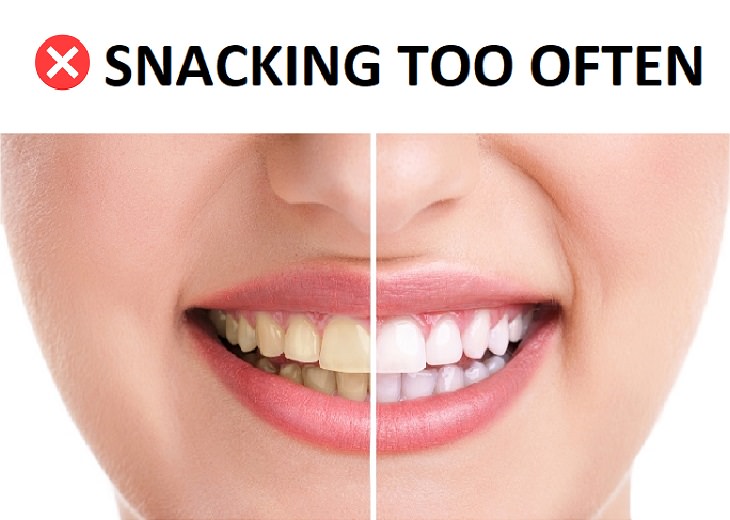
3. Snacking too Often Increases the Risk of Cavities
Eating
small meals often is beneficial for weight loss and general digestive
health, but dentists caution that doing it too often may make you more
likely to develop cavities.
This
is because eating increases the pH level in your mouth and creates a
more acidic environment in the mouth, which remains for another 20-30
minutes after you eat until your saliva neutralizes it. An acidic
environment is bad for your teeth, as it was linked to tooth decay.
4. Drinking Sparkling Water can Make your Teeth Sensitive
All
carbonated beverages, be it soda, sparkling water or sparkling wine can
affect your tooth health. Though unsweetened drinks may be less
damaging than soda, they are still worse for your teeth than regular
water because it creates an acidic environment that leads to
demineralization, a process during which your tooth enamel breaks down.
An absence or lack of teeth enamel, in turn, can lead to discoloration, staining, and cavities.
5. Smoking Can Stain Your Teeth & Promote Cavities
We’re
all aware of the adverse effects of smoking on respiratory and heart
health, but smoking can also be a threat to your oral health, affecting
your teeth, mouth, and gums. Dentists point out that both the soft
tissues and teeth can be affected by smoking, with smokers being more
likely to have yellow, stained teeth, gum problems and recurrent infections.
6. Brushing Your Teeth Immediately After a Meal May Fracture Your Enamel
As
we discussed above, your teeth are more vulnerable to damage right
after you eat because of the acidic environment in the oral cavity. If
you brush your teeth right after eating, you’re more likely to cause
micro fractures in the enamel, especially if you already brush your teeth too harshly.
Instead, wait for at least 30 minutes after a meal before brushing your teeth.
7. Drinking Wine & Coffee Can Stain Your Teeth
Anything
capable of staining your clothes can also stain your teeth: coffee,
wine, soda, tea, balsamic vinegar, fruit juices, and even tomato sauce
can all alter the color of your teeth. Dark-colored drinks are the first
ones to blame, of course.
For example, red wine contains a lot of tannins that, despite being excellent antioxidants, can stain your teeth.
Sadly, the more pigmented beverages are not the only ones to blame, as
even white wine or rose, as well as herbal teas, contain fruit acids
capable of discoloring the teeth.
A
special mention goes to lemon water or other citrus-infused drinks.
Though an occasional splash of lemon juice won’t affect your teeth,
drinking highly-acidic drinks like lemon water, vinegar detox drinks and
even tomato juice can deteriorate your tooth enamel.
Luckily,
minimizing the damage is easy: it’s enough to rinse your mouth with
water after you had one of these drinks. This will restore the pH and
should get rid of the pigmented ingredients.
8. Using a Mouthwash Containing Alcohol can Increase the Likelihood of an Infection
Many
mouthwash varieties contain alcohol, which can dry out your mouth and
gums, wipe out the healthy bacteria that live in your mouth and,
therefore, promotes infection. And though the sensation of dryness can feel satisfying at first, ultimately, it wreaks havoc in the mouth.
This
doesn’t mean, however, that all mouthwashes are bad, as a good
mouthwash can help saturate your teeth with fluoride (that helps fight
cavities), plus it keeps your breath fresher throughout the day.
To
choose the right kind of mouthwash, opt for the alcohol-free varieties
and those that contain xylitol, an ingredient capable of stimulating the
oh-so-necessary saliva production.
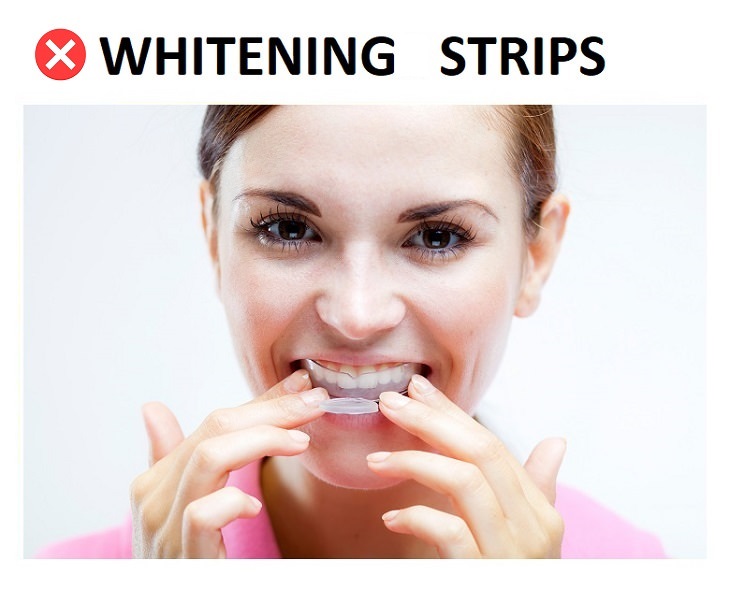
9. Whitening Products Can Wear Away Your Enamel
As
it is the case with acidic drinks, harsh, over-the-counter toothpastes,
whitening strips or pastes can damage your enamel, which may make your
teeth look whiter at first, but will also make them look worse in the
long run.
This
is because by wearing off the enamel, it exposes the next layer of the
tooth, the dentin, which, even when healthy, has a yellow tint to it.
Remineralizing the enamel is a very long and difficult process, and your
enamel may never fully restore.
All
of this doesn’t mean that all whitening products are bad, but rather
that you should be very careful with teeth-whitening products,
especially when you decide to use them without professional oversight.
10. Storing Toothbrushes In a Cabinet or Drawer Exposes You to Infection
Do you store your toothbrushes stashed deep in a container, a drawer or a bathroom cabinet to protect them from all the nasty germs flying around in the bathroom? If germ protection is your major concern, you might want to reconsider your decision, as it turns out that storing your toothbrush in a closed container may lead to more bacteria on your toothbrush.According to the recommendations by the American Dental Association, you should store your toothbrush in an upright container so that it is exposed to the open air. This will let it dry freely and minimize bacterial growth, because a dry and clean toothbrush is equal to a healthy mouth and teeth.
T