Thursday, July 11, 2024

Melanoma: All about the risks, symptoms, and common myths

 Melanoma is a type of skin cancer that develops in the cells called melanocytes, which produce melanin, the pigment responsible for skin color. Melanoma, a type of skin cancer, often arises on sun-exposed areas, but can also occur elsewhere that are not typically exposed. Generally, people have many misconceptions regarding this disease. Understanding the risks, symptoms, and dispelling common myths is crucial for early detection and effective treatment. In this article, we delve into the complexities of melanoma to provide clarity and awareness.

Understanding Melanoma

Melanoma originates in the melanocytes, the cells responsible for producing melanin, the pigment that gives skin its color. While it can develop anywhere on the body, melanoma typically occurs on areas exposed to the sun, such as the face, neck, arms, and legs. However, it can also appear on areas not exposed to sunlight, like the palms of the hands, soles of the feet, and under the nails.

Risk factors: Several factors increase the risk of developing melanoma, including:

1. Excessive sun exposure: Extended sun or tanning bed exposure to ultraviolet (UV) radiation is a major risk factor.

2. Fair skin: Individuals with fair complexion, light-colored eyes, and freckles are more vulnerable because they have lower melanin levels, which offer some UV protection.

3. Family history: People who have a personal or family history of skin cancer or melanoma are more vulnerable.

4. Weak immune system: Melanoma risk is increased in those with immunocompromised immune systems, such as organ transplant patients.

5. Moles: The risk of melanoma is higher in individuals with several moles or atypical moles (dysplastic nevi).

Symptoms: Early detection of melanoma is crucial for successful treatment. Signs and symptoms of melanoma include:

1. Changes in moles: Look for changes in size, shape, color, or texture of existing moles, or the appearance of new moles.

2. Asymmetry: One half of the mole does not match the other half.

3. Border irregularity: The edges of the mole are irregular, blurred, or jagged.

4. Color variation: The mole has uneven coloring, with different shades of brown, black, blue, red, or white.

5. Diameter: Melanomas are typically larger than 6 millimeters in diameter, but they can be smaller.

6. Evolution: Any change in size, shape, color, elevation, or any new symptom such as bleeding, itching, or crusting should be evaluated by a dermatologist.

Common myths: Myths around Melanoma often creates misconceptions about its causes and risks. Some of the common myths are-

1. Only fair-skinned individuals get melanoma: While fair-skinned individuals are at higher risk, people of all skin tones can develop melanoma.

2. Sunscreen completely protects against melanoma: Sunscreen helps reduce the risk, but it does not provide complete protection. It is essential to seek shade, wear protective clothing, and avoid peak sun hours.

3. Melanoma only affects older adults: Melanoma can occur at any age, including in children and young adults.

4. Only moles can turn into melanoma: While some melanomas develop from existing moles, others can arise on seemingly normal skin.

5. Melanoma is only skin deep: Advanced melanoma can spread to other parts of the body, including the lymph nodes, lungs, liver, bones, and brain.

Identifying the risks, symptoms, and dispelling common myths surrounding melanoma is critical for early detection and prevention. Regular skin examinations by a dermatologist, self-examinations at home, and sun-safe practices are essential for maintaining skin health and reducing the risk of melanoma. By increasing awareness and promoting education, we can save lives and reduce the burden of this deadly disease.


This is only for your information, kindly take the advice of your doctor for medicines, exercises and so on.   

https://gscrochetdesigns.blogspot.com. one can see my crochet creations  
https://gseasyrecipes.blogspot.com. feel free to view for easy, simple and healthy recipes    
https://kneereplacement-stickclub.blogspot.com. for info on knee replacement
https://cancersupportindia.blogspot.com  for infor on cancer and health related topics
https://GSiyers home remedies.blogspot.com   is the latest addition to my blogs. I'm going to add posts there, do give me your valuable feed back on my blogs. Thanks a lot, take care, be healthy and be happy.


Labels: , , , , , , , , , , ,

Thursday, June 10, 2021

Home Remedies for Knee Aches and Pains

As we age, we notice more aches and pains than ever before. The most common complaints doctors and physical therapists hear about are knee pains. The knee is particularly vulnerable to pain and damage due to its high wear and tear factor. The knee takes the full impact of a person’s body weight, or any added force from running or jumping. However, there are plenty of natural treatments and alternative therapies that can stop you from living at the doctor’s reception room

Assess your pain 
For any moderate to severe pain, you should get medical help because some injuries require physical therapy, a brace or even surgery. Successful home treatments can be done for mild to moderate knee pain. This can be for both pains caused by sprains or arthritis. If you think the pain is due to inflammation, arthritis or minor injury, you can choose from several effective home remedies. 
 
How to treat pain due to injury 
If you have suffered a twisted leg, fallen or strained your knee in other ways, a useful mnemonic to remember is ‘RICE’.

Rest - Stay off your feet. 
 
Ice - Apply a bag of ice or a cold compress (a bag of peas also works).  
 
Compression - Wrap a compression bandage around your knee. This prevents swelling. Make sure it’s not too tight otherwise you might cut off circulation. 
 
Elevation - Lie on a bed or keep your foot elevated with a foot stool or ottoman. 
 
How to treat pain due to arthritis  
As people age, the lubrication and padding around their joints deteriorates. Without cartilage cushioning the joints, they will suffer bone-on-bone contact and can become inflamed, causing much pain. This is known as Osteoarthritis. For more severe cases, doctors might suggest replacing joints or inserting artificial cartilage. While there is no way of reversing the damage, there are ways to treat mild to moderate pain with natural dietary supplements or alternative therapies. 
 
Try willow bark 
You wouldn’t think that a piece of tree bark could offer so much relief, but research has found that willow bark’s active ingredient is salicin, which acts similarly to aspirin. This natural painkiller has been commonly used since the time of Hippocrates. It is used to treat fever and inflammation, as well asheadaches, muscle pains, spine disease, arthritis, and osteoarthritis.  
 
Use ginger extract

Another pain relief option that grows naturally is ginger, which can be ingested in several different ways. You can use the fresh root, drink it as a tea, eat it as a dried spice or take prepackaged supplements. Research has discovered that the phytonutrients in ginger reduce the production of chemicals in the body that promote joint inflammation. Together with prescription arthritis medication, ginger can greatly reduce joint pains, since it acts as a natural anti-inflammatory. Be cautious if you take blood thinners, as ginger has the risk of increasing bleeding. 
 
 
Apply herbal ointment 
A salve made from cinnamon, ginger, mastic, and sesame oil was found to be just as effective as over the counter medicine, in a study published in the Pakistan Journal of Biological Sciences. Traditional over the counter ointments used to treat arthritis usually contain salicylate, which is used topically to relieve pain.
 
Heat and cold therapy 
It’s worthwhile investing in a heating pad, gel-style cold pack or cool compress for chronic pain. These can easily be found at a drug store, or ordered online. Heat is used to keep joints from stiffening while cold therapy can reduce pain and swelling.

Practice Tai Chi 
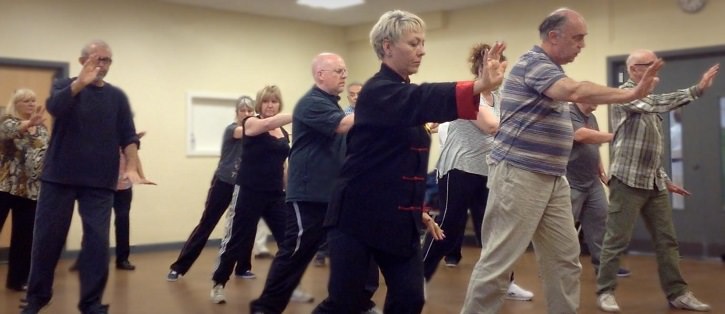
This ancient Chinese practice is a mind-body exercise, which helps improve balance and flexibility, works twofold for those who suffer from arthritis. A study published in Arthritis and Rheumatism (a journal), highlights that the mental aspect of the practice promotes coping mechanisms for chronic pain, and the physical exercise helps reduce pain and increases range of motion.

Consider exercise and weight management  
For some people, knee pain is reduced by moving the joint, so daily exercise is recommended. Keeping a leg stationary can stiffen the joint, and reduce the range of motion. Consider swimming or water walking as these exercises have less of an impact, together with offering countless other health benefits. Carrying excess weight can also aggravate the impact on joints, so it’s important to try and keep off any unnecessary weight. Here are some weight loss management tips. 
 
Finding care - final note  
Your health is important, and sometimes dietary supplements and alternative therapies can conflict with any other medication you might be taking. It’s important to talk to your doctor and find the cause of any pain. Sometimes this might involve X-rays and blood work, but it’s necessary to get on the road to recovery.

This is only for your information, kindly take the advice of your doctor for medicines, exercises and so on.   

https://gscrochetdesigns.blogspot.com. one can see my crochet creations  
https://gseasyrecipes.blogspot.com. feel free to view for easy, simple and healthy recipes    
https://kneereplacement-stickclub.blogspot.com. for info on knee replacement

Labels: , , , , , , , , , ,

Thursday, September 29, 2016

HOW TO TAKE CARE OF THE KNEE JOINT

1) Build muscle strength- building adequate strength in the muscles helps to support the knees and will take some pressure of the joints. Do exercise that focuses on the quadriceps, hamstring, lower back muscles and glutes.

2) Don't ignore pain- If you experience pain in the knee joint, try to rest  for several days.
RICE- rest, ice, compression and elevation. If pain persists see your doctor.


3) maintain healthy weight- being overweight puts additional strain on your knee joints. To ease the pressure on the knees, do regular exercise and follow a healthy diet.


4) Don't rest too much-
it is important that we exercise or move our joints regularly to prevent stiffening of the joints. You'ld learn to exercise and also learn to relax them from time to time. Do such exercises that will strengthen your muscles and ligaments around the joint.


5) Warm up and stretch-
prevent injury by warming up and stretching your muscles before exercise. focus on your hamstrings, quadriceps, followed by 5 minutes of slow walking. Warm, flexible muscles will not injure easily.


6) Wear correcting fitting shoes
- to reduce stress on your knees, wear the right shoes- low heel, well fitting running shoes with soft, thick soles for support.


7) Cold packs should be used for 15-20 minutes- 3-4 times a day, within the 1st 48 hours after a knee injury. Manipulating the temperature will help ease the swelling and stiffness. As well as the pain after you can use a heating pad.


8) Avoid high impact sports
which involve sudden starts, stops and turns, as well as jumping should be avoided, as they're hard on the knees.
this is only for your information, kindly take the advice of your doctor for medicines, exercises and so on.

https://gscrochetdesigns.blogspot.com. one can see my crochet creations
https://gseasyrecipes.blogspot.com. feel free to view for easy, simple and healthy recipes

https://kneereplacement-stickclub.blogspot.com. for info on knee replacement


Labels: , , , , , , , , , , , , ,