Saturday, October 23, 2021

How long are you contagious when you have the flu?

What's the contagion period for a flu-like infection?
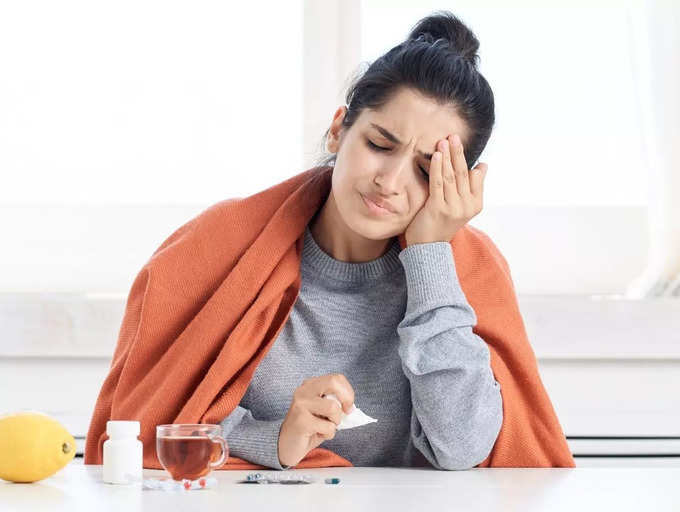
Flu and viral ailments are steeply rising during the COVID-19 timelines. While on one hand, we are awaiting a possible third wave of COVID-19, flu cases have been skyrocketing across India and the world in a way which hasn't been witnessed before.

What's also so unlikely about the flu infections seen right now is the intensity, and the duration of the infection. Flu symptoms, which were considered to be mild and bearable, unlike that of COVID-19 are tending to linger on for longer, and just as transmissible too. Without proper knowledge or testing, flu can also be easily passed onto others right now.

So, when are you the most contagious, when you have the flu?

How long does the flu last? Are there similarities with COVID-19?

The flu is a respiratory infection spread by the influenza virus. While a COVID-19 infection is considered to be one of the longer lasting infections (with a prolonged isolation time as well), a flu infection can last for up to a week's time. Even with the flu, just like COVID-19, there can be some post-viral symptoms, which can linger on and make one feel like they are going through a long case of flu-like symptoms.

What we need to remember is that even as flu is a very different illness than COVID-19, both are respiratory infections which also present very different symptoms, and hence, at a time when we are already facing considerable threats from the pandemic, differentiating between the two infections could be daunting.

Having said that, there can be quite a few notable differences. 

What's making flu cases linger for long? What's the contagion period?

With the current strain of flu infections, one of the reasons why the symptoms can last for longer is the deficient exposure risk. While flu infections were milder last year, we were also taking proper hygiene measures. Now, not only has our exposure to the flu virus become low, the incubation period of the virus is also something we must consider, which refers to the time between contracting the virus and symptoms developing. For the flu, a typical incubation period can be 2 days, but it can remain for upto 4 days as well.

Since, with the flu, there's a risk of spreading the infection more prevalent than COVID (as right now we are more cautious about COVID right now, and may dismiss off flu symptoms to a routine cold), it can be highly risky and easier to spread the infection to others. Experts also say that when a person has the flu, they are the most contagious in the first 3-4 days, when there's a higher likelihood of experiencing symptoms like coughing and sneezing, which could release respiratory droplets. The risk of contagion, like with COVID can also be high a day before you start to experience symptoms.

Which is more infectious: COVID or the flu?

Given that COVID and flu are similar infections which present common symptoms (including a fever, cough and sometimes, cold), which spread from one person to another in similar manners, i.e. through release of respiratory droplets in the air, touching contaminated surfaces, it's considered that both the viral infections can just be equally infectious. However, COVID-19 right now, is a more dangerous threat right now since it has a higher transmission rate, and can spread on to other people even in the presymptomatic phase. While the flu can spread, the risk is a little lower, and much less likely to affect someone right now, who has had the flu vaccine.

Should you wear masks and stay at home?

Even with the flu, since there runs the risk of respiratory droplets and symptoms spreading, it's always advisable to stay at home till the time your symptoms start to settle down (5-7 days after contracting the virus). A fever's reduction, without medicines, can be taken as a sign that you are fit to be around other people.

Having said that, while a flu requires ample rest and recovery, masks can be used by an individual to limit the spread of respiratory droplets to people around you, who may be at risk. Even if it's less concerning than COVID-19, and may not have the same set of particular protocols (like quarantine and self-isolation), following basic measures will help you recover faster, and safeguard the ones around you. 


This is only for your information, kindly take the advice of your doctor for medicines, exercises and so on.   

https://gscrochetdesigns.blogspot.com. one can see my crochet creations  
https://gseasyrecipes.blogspot.com. feel free to view for easy, simple and healthy recipes    
https://kneereplacement-stickclub.blogspot.com. for info on knee replacement

Labels: , , , , , , , ,

Saturday, September 05, 2020

Nine important things we've learned about the coronavirus pandemic so far

Six months after Covid-19 was declared a pandemic, this story is being republished as a reminder of the many things scientists have learned about the disease and how it spreads.

We’re in a terrifying and confusing pandemic, with new and sometimes conflicting information about Covid-19 emerging all the time. In the early days, a lot of public health advice was based on what we knew about previous disease outbreaks. But this new coronavirus behaves in unexpected ways, and it’s hard to keep up. What’s more, people tend to remember the first things they learn about a new subject, a phenomenon called "anchoring bias," and it’s psychologically challenging to replace old information with new knowledge. Here are nine of the most important things we’ve learned about SARS-CoV-2 in the past seven months and why we didn’t fully understand or appreciate them at first.

Outbreaks of Covid-19 can happen anywhere. There was a lot of wishful thinking (as in: it’s those other people’s problem) in the first months of the pandemic: Chinese people got it because of where they buy their groceries. Italian people got it because they greet each other with kisses on the cheeks. People on cruise ships got it because of the buffets. People in nursing homes got it because they are frail. People in New York got it because the city is crowded. Now we know that outbreaks can happen in urban areas, rural areas, suburbs and any culture around the world.

Covid-19 can sicken and kill anyone. The first victims of the pandemic were disproportionately older or had existing health conditions. Age and frailty are still risk factors for serious disease and death, but we now know the disease can kill young and healthy people. It can kill young adults. It can kill teenagers. It can kill children.

Contaminated surfaces are not the main danger. Early on, public health experts advised people to wash their hands frequently (while singing “Happy Birthday” twice), disinfect surfaces and avoid touching their face. This was based on studies of how other diseases spread, such as norovirus and viruses that cause common cold. It's still a good idea to wash your hands regularly ( and avoid handshakes), but now we know that surfaces aren't the main vector for SARS-CoV-2.

It is in the air. At first, experts thought the virus was spread primarily through globs of mucus and saliva expelled when people cough or sneeze. They thought these droplets were heavy enough to drop out of the air fairly quickly. Based on early cases of hospital spread, the virus seemed to be aerosolized—that is, lofted into the air in particles small enough to float—only by certain medical procedures such as placing someone on a ventilator. But we now know that the virus is expelled in a range of droplet sizes, with some particles small enough to persist in the air, especially in indoor, poorly ventilated spaces.

Many people are infectious without being sick. Other respiratory diseases make people cough and sneeze. The original SARS outbreak made people so sick, so quickly, that most of them went to the hospital. Temperature checks and telling sick people to  stay home can stop symptomatic diseases from spreading,and in the first months of the pandemic, many countries started screening people at their borders to detect these cases. But the biggest challenge for stopping SARS-CoV-2 is that many apparently healthy people spread the disease without symptoms or before symptoms start, simply through talking and breathing.

Warm summer weather will not stop the virus. Influenza is a seasonal respiratory disease that peaks in the winter, and some experts hoped the spread of Covid-19 would show a similar pattern and slow in the Northern Hemisphere during the spring and summer. Now, we know that people's behaviour, regardless of season, is the strongest predictor of whether the disease will spread.

Masks work. When the pandemic began, experts worried that mass mask-buying could exacerbate shortages of personal protective equipment for health care workers and others who needed them. They also warned that masks might make people complacent about social distancing, and that cloth or paper masks ( unlike N95 surgical masks) can’t stop the smallest aerosolized viral particles. Now we know that masks can greatly reduce the amount of virus that people expel into the air while speaking, and that masks protect people who are wearing them—not perfectly, but enough to reduce transmission of the disease.

Racism, not race, is a risk factor. The pandemic should put an end to the common misconception that race, a social construct, is a biological explanation for health disparities. Covid-19 has disproportionately killed people of color in the United States.  This is not because of genetic differences but because of systemic racism that has isolated and impoverished many Native American people and made Black and Latinx people more likely to have “essential” jobs that expose them to infection, a greater burden of stress and less access to high-quality healthcare.

Misinformation kills. The president of the United States, other politicians, anti-vaccine activists, and members of the right-wing media, to their everlasting shame, have used the pandemic to stoke racism, spread misinformation and amplify conspiracy theories. Their followers have threatened health officials, including Tony Fauci and his family; refused to wear masks; refused to cooperate with contact tracers; and rejected proven basic public health advice about social distancing. Representative Louie Gohmert, who refused to wear a mask in the Capitol and reportedly discouraged his staff and interns from wearing masks, tested positive for SARS-CoV-2 and is being treated with hydroxychloroquine, a drug that Trump has endorsed but that has failed in clinical trials. Trump supporter Herman Cain died of Covid-19 on July 30, weeks after attending a rally in Tulsa without a mask. Calls to poison-control centers spiked after Trump speculated that injecting or ingesting disinfectants could protect against the coronavirus. Early evidence suggests people who watched Fox News were more likely to downplay the pandemic, worsening the spread .


The most important public health measure during a pandemic of a disease with no cure or vaccine—as many countries around the world that have controlled the virus have shown—is to help experts share clear, trustworthy, accurate, actionable information based on the best evidence. Spreading lies has spread this disease.


This is only for your information, kindly take the advice of your doctor for medicines, exercises and so on.     

https://gscrochetdesigns.blogspot.com. one can see my crochet creations  
https://gseasyrecipes.blogspot.com. feel free to view for easy, simple and healthy recipes    
https://kneereplacement-stickclub.blogspot.com. for info on knee replacement


Labels: , , , , , , ,

Wednesday, May 13, 2020

Can You Contract COVID-19 Through the Eyes?

We continue learning more about the dynamics of the COVID-19 pandemic and the Novel Coronavirus that’s causing it. Previously, we’ve explained how long Sars-CoV-2 can last on different surfaces and the more unusual symptoms of the virus, to name a few. In this article, we feature one of the most important latest findings regarding the virus.

As you know, the Novel Coronavirus can be spread through inhaling contaminated water droplets in the air or by touching tainted surfaces with your hands and then touching your nose or mouth. New research articles report another way the virus can enter the body - your eyes. There are a few ways your eyes can be involved in a COVID-19.


First of all, a recent preprint study by the Johns Hopkins University School of Medicine showed that the virus may be capable of entering the body through the eyes by combining with the ACE2 receptor and using the receptor as a way to travel deeper into the body.

This means that simply rubbing your eyes with hands that came in contact with the virus or having someone sneeze or cough near you (even when you’re wearing a mask that doesn’t cover the eyes) could potentially cause a COVID-19 infection. Keep in mind, however, that this was a post-mortem study, and though the researchers found traces of the virus in all the specimens they tested, researchers need an epidemiological study to confirm these findings.

In addition to being capable of getting into your body through the eyes, recent research confirms that the virus may be infecting your eyes as well as the respiratory system and the heart. The most prominent study was published in the prestigious JAMA journal in March. This Ophthalmological research reported that conjunctivitis, or pink eye, is widespread among Coronavirus patients, affecting nearly 30% of COVID-19 subjects the study looked at. We are yet to find out whether there are any possible long-term effects of the virus on eyesight or eye health. 


Finally, both of the studies mentioned previously report that it’s possible to transmit the virus through tears, much like one can do so through saliva or nasal secretions. These findings should be taken into account both by doctors who work with COVID-19 patients and the society at large, and you may want to start protecting your eyes in addition to your nose and mouth when going outside or coming in contact with people, especially if you’re in the high-risk group or environment.


This is only for your information, kindly take the advice of your doctor for medicines, exercises and so on.     

https://gscrochetdesigns.blogspot.com. one can see my crochet creations  
https://gseasyrecipes.blogspot.com. feel free to view for easy, simple and healthy recipes    
https://kneereplacement-stickclub.blogspot.com. for info on knee replacement

Labels: , , , , , , , , , , , ,