What Makes Your Wrists Hurt? 7 Medical Causes
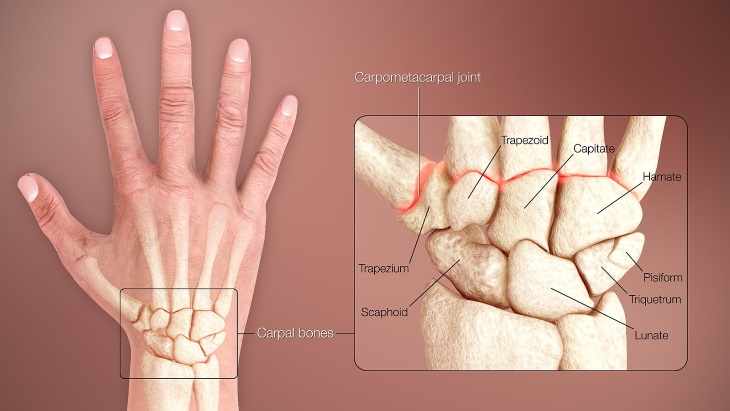
The wrist may be only a small part of your
musculoskeletal system, but it’s one of the most complex and delicate
structures in the human body. The wrist anatomy consists of several
joints, eight bones, tendons, ligaments, nerves, and blood vessels all
crammed in a very narrow area.
That’s why diagnosing wrist pain can be quite tricky. This is not to say
that it is not necessary, as we use our wrists a lot - from grabbing
and holding onto objects to complex movements like writing and typing.
Therefore, wrist pain can be quite debilitating and certainly interferes
with one’s daily life.
We review several major causes of wrist pain in this informative guide.
The Symptoms of Wrist Pain
Researchers suggest that around 10% of all people suffer from wrist pain. Depending on the underlying cause, the type of wrist pain one can experience varies from tightness and lack of mobility to sharp pain: Sharp and sudden pain in the hand
Researchers suggest that around 10% of all people suffer from wrist pain. Depending on the underlying cause, the type of wrist pain one can experience varies from tightness and lack of mobility to sharp pain: Sharp and sudden pain in the hand
Difficulty moving the wrist or gripping objects
Swollen wrist or fingers
Redness or warmth around the wrist
Numbness or a pins and needles sensation in the hand
Symptoms that get worse at night.
Read on to learn about the common medical causes of wrist pain.
1. Arthritis
Arthritis refers to joint inflammation that
leads to swelling, stiffness, and pain. It's a very widespread issue,
and contrary to popular belief, arthritis can affect adults of any age.
There are many types of arthritis, but three particular forms known to
affect the wrists are:
Rheumatoid arthritis - an autoimmune disease that damages and wears
down the joints, typically in both wrists. Painful swelling and reduced
mobility are common symptoms.
Gout - a form of arthritis where sharp uric acid crystals build up
in joints and cause pain and swelling.
Osteoarthritis - the degenerative type of arthritis associated with
wear and tear and advanced age. When the cartilage that surrounds the
joints degrades, bones rub against each other, leading to pain and
swelling.
Depending on the form of arthritis, causes and treatments vary
tremendously. Read more in-depth information about these and other forms
of arthritis here - This Guide Will Teach to Identify 8 Types of
Arthritis.
2. Carpal tunnel syndrome 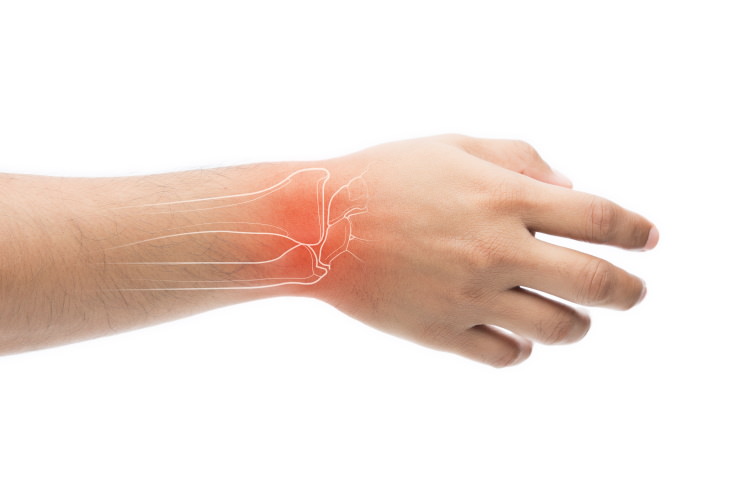
Carpal tunnel syndrome is an extremely
painful disease that affects 5% of the population. Anyone, particularly
office workers, artists, and manual laborers can be affected by the
condition. Carpal tunnel syndrome occurs when the median nerve (the
nerve connecting the wrist and the palm) is compressed as a result of
friction or inflammation. Symptoms can develop in one or both wrists and
tend to get worse at night. One can experience pain, weakness,
numbness, or a pins and needles sensation in the palms and fingers
(except for the pinkie).
Mild cases of carpal tunnel syndrome are treated by wearing a wrist
brace, applying hot or cold compresses, and taking over-the-counter
anti-inflammatory (NSAID) medications (e.g. ibuprofen, acetaminophen, or
naproxen) to reduce the pain. More serious cases may require steroid
medication or even injury.
3. Ganglion cysts
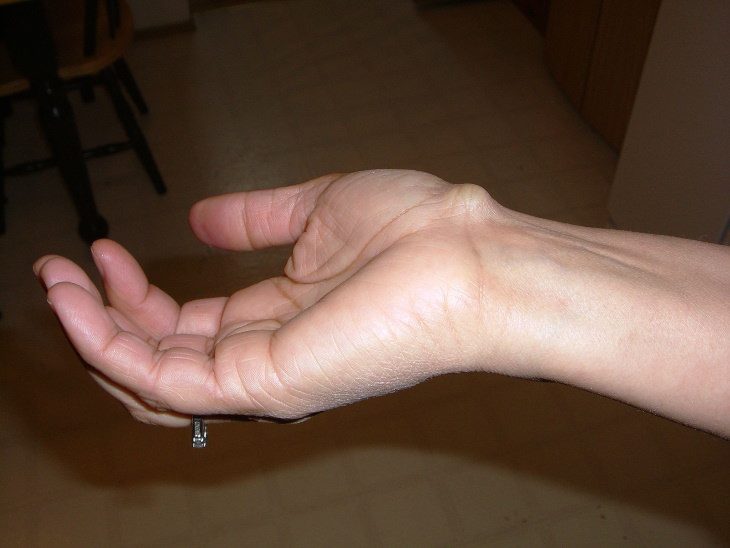
If the wrist pain you’re experiencing is
accompanied by an apparent bump on your wrist, a ganglion cyst could be
to blame. Ganglion cysts are benign lumps filled with fluid. These cysts
typically appear on the back of the wrist or hand, and they can either
be painless or quite bothersome. The cause of these cysts is unknown,
but the American Academy of Orthopaedic Surgeons points out that they
appear more often in individuals aged 15-40, women, and gymnasts.
Ganglion cysts can sometimes go away on their own, so your doctor may
instruct you to wait and observe. Wearing a splint, draining the
ganglion cyst, or surgically removing it may also be instructed by a
doctor.
4. Carpal boss
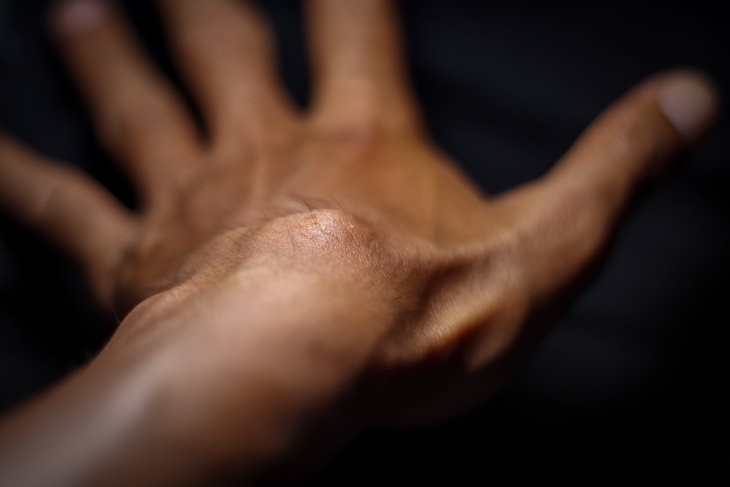
A bump on the back of your hand or wrist
that’s accompanied by wrist pain may also be a sign of a carpal boss.
Also known as a carpometacarpal boss, this is a bony lump that forms
where your finger bones meet the bones of the forearm. Unlike a ganglion
cyst that’s mobile and somewhat squishy, carpal bosses are firm and
immobile bumps.
The causes of a carpal boss are yet to be discovered. It usually occurs
in younger adults - between 20 and 40 years of age - according to the
American Society for Surgery of the Hand. Apart from at-home treatments
like wearing a splint and taking over-the-counter pain relievers, your
doctor may recommend steroid injections into the boss or even surgery if
the condition is extremely bothersome.
5. Wrist injuries
A wrist injury is one of the most
widespread causes of wrist pain. Protective yourself with your hands as
you fall is a common way to injure this area of the body. Swelling,
bruises, or disfigured joints in the area are all known symptoms of
injury. But remember that an injury can occur even if pain following the
fall is the only symptom; this is because nerves and other soft tissues
can become injured too.
Sprains are a common ligament injury of the wrist. When a ligament is
overly stretched or partially torn, you will experience pain while
moving the wrist, as well as swelling, bruising, or tingling. Wearing a
splint, keeping your wrist elevated, resting, cold compresses, and
taking NSAIDs to relieve pain can all help heal the sprain faster.
That being said, we highly recommend that you see a doctor and get an
X-ray when you experience pain after a fall or any other potentially
traumatic event to the wrists. As we already mentioned, the wrist is a
very delicate area, and even seemingly-minor trauma could lead to
fractures and other serious injuries. If the bones or ligaments don’t
heal well, you may be left with chronic wrist pain.
6. Wrist tendonitis

Inflammation of the tendons, also known as
tendonitis, is another extremely common cause of wrist pain. In the
wrist area, tendons connect the muscles of the forearms with the hand
and finger bones. It is these tendons that allow the hands to flex and
extend. When any of these tendons become inflamed, the result is
tendonitis.
The symptoms of tendonitis are:
Morning stiffness
Dull pain
Grinding sensation when moving the wrist
In some cases, minor warmth or swelling.
Tendonitis usually occurs with overuse of the wrists. This can happen
with repetitive wrist movements (like typing, writing, playing golf, or
tennis) or as a result of injury. At-home care of tendonitis is similar
to other conditions that cause wrist pain: rest, immobilization with a
splint, icing, hand exercises, and taking NSAIDs.
When these home treatments are not effective, a professional may advise
you to get steroid injections directly into the wrist or, in rare cases,
surgery.
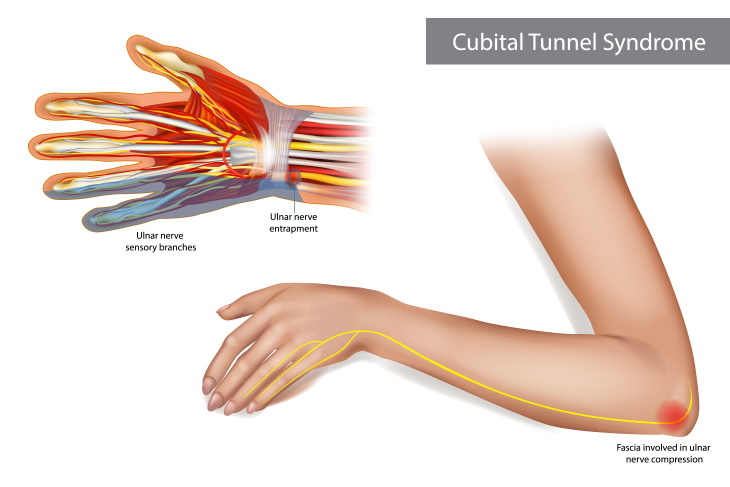
7. Cubital tunnel syndrome
So you’ve heard about carpal tunnel syndrome already, but what is this
cubital tunnel syndrome? Also known as ulnar neuropathy, this condition
occurs when the ulnar nerve that goes through your arm gets pinched at
the bend right behind the elbow. Sufferers describe the pain they
experience when the ulnar nerve is compressed as “being hit in the funny
bone,” but the pain may also extend downward and cause pain, numbness,
and tingling in the wrist or even the ring and pinky fingers.
Wrist Pain Causes Cubital tunnel syndrome
There are many causes of cubital tunnel
syndrome, but the treatment is mainly symptomatic: rest, immobilization
with a splint, icing, hand exercises, and NSAIDs. Those suffering from
cubital tunnel syndrome are advised against leaning on the affected
elbow, as this may increase the pain. Padding the elbow with a soft
cushion may also be helpful. Depending on the severity of the condition,
symptoms may go away quickly. But in some cases, they never fully
resolve on their own, and surgery is required.
There are several less common causes of wrist pain too. Here are just a
few:
De Quervain’s tenosynovitis - a painful condition caused by
inflammation in the tendons surrounding the thumb.
Kienbock's disease - an illness that affects young adults and
triggers the destruction of one small bone in the wrist.
Benign or cancerous tumors in the wrist.
Wrist bursitis - the inflammation of the liquid-filled sacs that
protect the joints.
Systemic lupus erythematosus - a systemic autoimmune disease that
can affect the joints.
Minor wrist pain can go away on its own, but you consult your physician
if you’re experiencing signs of an infection (fever, warmth, redness),
injury (swelling, bruising, deformity, and inability to move the joint),
neuropathy (tingling, numbness, sharp pain) or you become gradually
less and less capable of using the wrist to carry objects and completing
everyday tasks.
In some cases, wrist pain can be a medical emergency. If you have a high
fever, your wrist feels warm to the touch, and looks red, seek
emergency medical help immediately. This could be a sign of septic
arthritis, which is a quickly-developing infection that requires
hospital care. Extreme pain and a bluish color to your hand or fingers
are also symptoms that require emergency care.
As you can see, quite a wide range of medical conditions can potentially
cause wrist pain. Your doctor will be able to arrive at a specific
diagnosis with the help of imaging and a variety of medical tests. Take
care!