Saturday, January 09, 2021

4 Foods That Are the Worst Offenders For Your Gut Health

All of us know we should drink more water and eat more vegetables and fruit, as well as more whole grains and yogurt if want to have a healthier gut. According to recent research, an occasional glass of red wine, too, can benefit your digestive system. But do you know which food types are the most harmful of all, and if so, do you know why they are so harmful? Of course, the types of foods that you tolerate well and don’t tolerate at all will depend on your unique biology, but some foods have a long record of irritating our guts and harming our digestive system, whereas others are much milder and better tolerated.

Below are the 4 worst offenders when it comes to one’s digestive health: 
 
1. Fried Foods
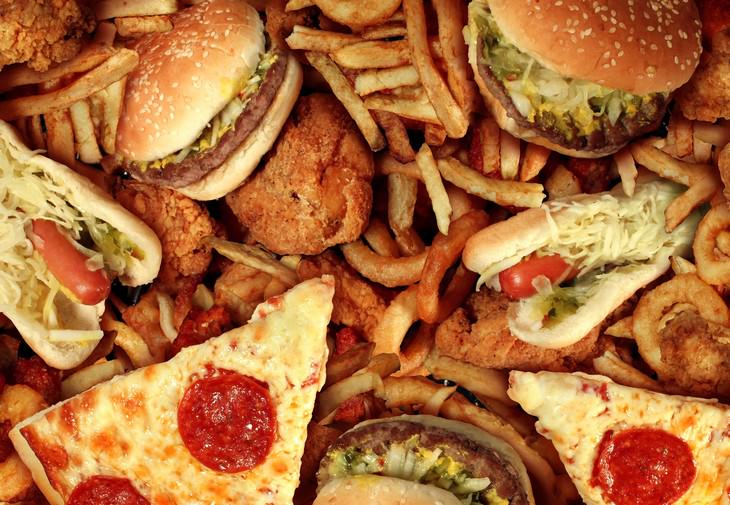
gut health bad foods Fried Foods
There are two issues with fried foods that make them the number one offender on our list. Firstly, fried foods are soaked in oil, and such high quantities of fats are quite difficult for the body to digest and put a heavy workload on the liver. This is why patients suffering from liver disease are often asked to cut out fried foods from their diet completely. 
 
Cutting out oils and fats from your diet is never a good thing, but avoiding fried foods will help you prevent liver disease. 
 
But it’s not only the quantity of oil in fried foods that’s so alarming, the kind of oil you or the restaurant you ordered a meal used to fry the food that matters as well. Oils that contain a lot of saturated and trans fats, such as partially hydrogenated vegetable oils often used in fried foods can by their very nature irritate the stomach lining and be the cause of diarrhea, gas, and abdominal pain.

2. Foods Treated with Antibiotics
Large animal farms routinely treat the animals they grow with antibiotics to prevent mass infections, as the animals usually live in crowded facilities where the spread of infections would be inevitable. And while this may be a good business tactic, this practice may be harming your gut health and contributing to the problem of global antibiotic resistance, which is why antibiotic use today is harshly regulated in most European countries. 
 
As of now, scientists aren’t sure what’s causing antibiotic resistance on a global scale and factors other than preventative antibiotics given to farm animals, such as overprescription to patients, may contribute to the cause. Still, the antibiotic residues we consume in our meat and dairy products may affect our gut. 
 
This is because antibiotics, by definition, kill all bacteria they come in contact with, not only the harmful ones, including the good ones you need in your gut. The lack of good gut bacteria, in turn, makes it more difficult for you to digest food and can result in many digestive issues.

3. High FODMAP foods
The FODMAP diet has been created specifically for people suffering from irritable bowel syndrome (IBS) and other bowel issues to help them find the trigger foods that are irritating their digestive system. The typical irritants are certain kinds of carbohydrates, for which the diet got its name: Fermentable Oligo-, Di-, Mono-saccharides and Polyols. 
 
Foods containing these irritants (called high FODMAP foods) are suggested to be eliminated one by one, with the goal of finding the culprit behind the issue.

Common high FODMAP foods include: 
 
Processed foods containing high fructose corn syrup and other artificial sweeteners 
Fruit juices 
Condiments, e.g. jam, ketchup, and hummus 
Certain fruits, e.g. mangos, cherries, apricots, etc. 
 
You can learn more about the diet and what foods are beneficial for IBS patients and patients with digestive issues by clicking on the following link: The Low-FODMAP Diet for People with GI Problems. 
 
4. Animal Protein
Like most things, animal proteins become harmful when consumed in excess. Studies looking at the effects of high animal protein diets have confirmed countless times that too much red meat, processed meat, and even dairy can affect the gut bacteria, increase the risk of bowel cancer and even heart issues. 
 
One study even showed that as little as 1 strip of bacon a day can increase one’s risk of bowel cancer by 20%. Limit your intake of red meat and cut out processed meats from your diet if possible, but don’t cut out animal proteins altogether, as they offer essential nutrients, particularly proteins, vitamins, and choline.

This is only for your information, kindly take the advice of your doctor for medicines, exercises and so on.     

https://gscrochetdesigns.blogspot.com. one can see my crochet creations  
https://gseasyrecipes.blogspot.com. feel free to view for easy, simple and healthy recipes    
https://kneereplacement-stickclub.blogspot.com. for info on knee replacement

Labels: , , , , ,

Friday, September 06, 2019

Vegetarians and vegans may have a higher risk of stroke than meat eaters, but carnivores have a higher risk of heart disease

As meatless diets are becoming increasingly popular, researchers are studying whether they may have unexpected health risks. Case in point: Vegetarians and vegans, while they have lower rates of heart disease, may face a greater risk of stroke, according to a new study.

For the study, researchers  looked at the dietary habits and health of 48,188 adult men and women in the UK over the course of 18 years. 

They found that participants with a plant-based diet, including both vegetarians and vegans, had lower rates of heart disease but higher rates of stroke than meat eaters. 

Non-meat-eaters were at a significantly higher risk for a particular kind of stroke — a hemorrhagic stroke, which occurs when a blood vessel ruptures and begins bleeding into the brain. 

People who avoided meat but ate fish, however, had a lower risk of heart disease without increasing their risk for stroke. More research is needed to understand just what kind of diet is best for protecting your health.

Low cholesterol from eating less meat may mean better overall heart health

The results of this study are consistent with previous research that found a significantly lower risk of heart disease among vegetarians — as much as 24% lower death rates from heart disease, according to one study. 

Researchers suspect this is partly caused by lower levels of cholesterol in the blood, which typically come from a meat-free diet. However, that doesn't entirely explain the difference, and data suggests eating more fruits, vegetables, legumes, and fiber also provide health benefits. 

Researchers also found that vegetarians and vegans were less likely to smoke and more likely to exercise regularly. They also reported lower rates of high blood pressure, cholesterol problems, diabetes, and long-term illnesses. 

But even after adjusting for lifestyle factors like smoking, exercise, and body mass index, vegetarians and vegans still had lower rates of heart disease.

Cholesterol and other nutrients in animal protein may protect against brain hemorrhage

This new research supports earlier findings that low cholesterol levels, though typically thought of as a healthy thing, may somehow cause a higher risk of hemorrhagic stroke. 

In addition to low cholesterol levels, vegetarians and vegans also had lower levels of vitamin B12, vitamin D, and amino acids than meat eaters, which may be related to their higher stroke risk. 

Researchers concluded that more studies are needed to test how those nutrients might play a role in preventing strokes.

People who ate fish, but not meat, seemed to fare best

Pescatarians — who avoid animal meat but may eat fish, dairy, and eggs — had the best of both worlds, according to the data. They showed a lower risk of heart disease than meat eaters, but without the higher stroke risk associated with plant-based diets. 

If you're looking to improve your health overall, consider swapping out your steak for salmon, or just incorporating more vegetables overall into your menu. 

this is only for your information, kindly take the advice of your doctor for medicines, exercises and so on.   
https://gscrochetdesigns.blogspot.com. one can see my crochet creations 
https://gseasyrecipes.blogspot.com. feel free to view for easy, simple and healthy recipes    
https://kneereplacement-stickclub.blogspot.com. for info on knee replacement
     

Labels: , , , , , , , , , , ,

Sunday, April 23, 2017

WHY MUST ONE AVOID ANIMAL PROTEIN ?

Liver damage is often linked to excessive consumption of alcohol by most people. However, there is also something called non-alcoholic fatty liver disease (NAFLD), a condition in which fat builds up in the liver, in overweight people.
 
To avoid this from occurring, a change in diet and lifestyle is required. But, a new study has suggested doing away with excessive intake of animal protein, since it puts the person at a high risk of NAFLD.

Non-alcoholic fatty liver disease is a major health concern as it can lead to permanent scarring (cirrhosis) and subsequently to cancer and malfunction of the liver.

This may result in life-threatening complications for which a liver transplant is needed.

"A healthy lifestyle is the cornerstone of treatment in patients with NAFLD, but specific dietary recommendations are lacking," said led author of the study Louise Alferink from the Erasmus Medical Centre, Rotterdam, The Netherlands.

"The results from this study demonstrate that animal protein is associated with NAFLD in overweight elderly people," Alferink said.

These findings presented at The International Liver Congress 2017 in Amsterdam also showed that fructose consumption per se might not be as harmful as previously assumed.

A total of 3,440 people were included in the study of whom 30 percent were lean and 70 percent were overweight (body mass index [BMI] of 25 kg/ square metre or greater).

The average age was 71 years and NAFLD, as assessed by abdominal ultrasound, was present in 35 percent of the participants.

Macronutrient intake was recorded using an externally validated 389-item food frequency questionnaire and analysed in quartiles using the nutrition density method (energy percentage).

Furthermore, analyses were stratified for BMI to account for BMI-related differences in eating habits and dietary measurement errors.

Significant associations between macronutrients and NAFLD were found predominantly in overweight individuals.

The results showed that total protein was associated with higher odds of NAFLD and this association was mainly driven by animal protein.
  this is only for your information, kindly take the advice of your doctor for medicines, exercises and so on.   
  https://gscrochetdesigns.blogspot.com. one can see my crochet creations 
  htps://gseasyrecipes.blogspot.com. feel free to view for easy, simple and healthy recipes    
https://kneereplacement-stickclub.blogspot.com. for info on knee replacement   


Labels: , , , , , ,