Tuesday, October 07, 2025

Man with terminal cancer running length of India- This story should inspire all cancer survivors, BE POSITIVE, BE HAPPY
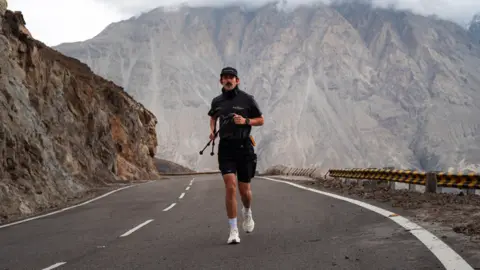
Devin Paisley Picture of Jack running on a mountain-side road. Large mountains sit behind whilst he runs in an all black outfit towards the camera. 


A 32-year-old man living with a rare form of terminal brain cancer said he was determined to become the first person to run the entire length of India within 80 days.

Jack Faint, originally from Northwich in Cheshire, was diagnosed with a grade 2 oligodendroglioma - a slow-growing brain tumour - while living in Australia in 2019.

Doctors, who said Jack would likely only have 10 to 15 years to live, advised him to quit smoking, give up alcohol and to adopt a plant-based organic diet while keeping active.

He started his 2,408-mile (3,876km) run deep in the Himalayan mountains of northern India on 1 September and hopes to arrive in Kanyakumari on India's southernmost tip on 14 November.

Jack said: "After my diagnosis, I went through a big health and fitness transformation [and] running became one of my core purposes."

The keen traveller said he always found himself running 5km - wherever he was in the world.

Once the Covid lockdowns hit he started to take on even more running challenges.

By the end of October 2021 he had completed his first major race - the London Marathon.

The endurance running bug had truly bitten.

A year later, Jack took part in even more gruelling challenges like the 250km desert race in Jordan and a 650km run across the South African coast.

It was this final challenge that inspired Jack, who now lives in South Africa, to set his sights on India.

The trip is expected to cost about £70,000, funded by sponsors, a series of money-raising events and Jack's own savings.


Jack is being joined by a band of volunteers for the run - some of whom have left their jobs or taken sabbaticals in order to join him in his mission to run the length of the world's seventh biggest country.

On his team is Jordan Fairclough, former physical performance coach for Liverpool FC.

Jack's support team, which consists of five volunteers, has been providing everything from logistical support to videography, supplying food and drink and massages.

After a bit of tweaking in the first month, Jack said he had cracked the "winning formula" to get the most out of his days in India.

Starting at 05:00, he runs 8-9km before having some food and water.

By 08:00 each day, Jack hopes to have completed 20km before taking on more food and water.

After a massage, he's back on the road before taking another break at about midday.

Once he has had a two-hour nap, the trainers are back on and Jack keeps running until about 17:00.

'No symptoms'

Jack has come a long way in six years - in every sense.

In 2019, while cycling to work in Melbourne, he had a seizure and fell unconscious.

Jack said: "I was waiting just chatting to one of the doctors when another doctor ran in and said 'we have a code stroke'.

"They had found a spot at the back of my brain.

"Prior to diagnosis I had no symptoms, no nothing - nothing out of the ordinary at all."

Jack, who was 25 at the time, was given three options - to have a biopsy, have surgery to remove the mass, or watch and wait it out.

Devin Paisley Landscape shot of Jack in his running gear on a snow-covered mountain pass. He is wearing gloves, a hat and holding a coffee mug in his right hand  

"Unfortunately the tumour has slowly continued to grow," he said.

"The thing with brain tumours is you could get rid of 100% of what you can see, but you can't get rid of 100% of the cells. The reality is that it can always come back."

Despite this knowledge, Jack is determined to remain positive as he runs 12 hours a day in 30C temperatures.

"Trauma isn't a choice - that doesn't mean people don't deserve compassion.

"It means we have a choice, whether we sit in bed and feel sorry for ourselves or not.

"We all go through hard things, losing loved ones, health issues - but how you respond is in your control."


My dear survivors, this story should inspire all, NEVER GIVE UP. IF YOU'RE POSITIVE, OUR CELLS CHANGES, MORE GOOD CELLS TO FIGHT CANCER. REMEMBER OUR DESTINY IS ALREADY DECIDED ON THE DAY WE'RE BORN. WHY WORRY ABOUT IT. MAKE THE MOST OF EACH DAY WHAT YOU LOVE DOING. BE HAPPY, BE HEALTHY. TRUST YOURSELF, BRAIN OVER MATTER, IF YOUR MIND WANTS ANYTHING IS ACHIEVABLE.

GOD BLESS ALL OUT THERE WITH GOOD HEALTH. HAVING SURVIVED 14 SURGERIES FROM HEAD TO FOOT, 3 ANGIOGRAPHY, LUCKILY, NO ANGIOPLASTY, WITH MULTIPLE HEALTH ISSUES- FIBROMYALGIA, COPD, KIDNEYS AND LUNGS WORKING JUST 60%, OSTEOPOROSIS, HYPERTENSION. BEING HAPPY, WITH A BUSY BODY AND MIND KEEPS ME GOING. YESTERDAY HAD A SHOT TO ARREST BONE SPURS IN MY LEFT FOOT, THERE IS ONE SPUR ON THE LEG, AT THE BOTTOM. AS FOOT HURTS MORE WHEN I PUT MY FOOT DOWN, PREFER TO GET THE SHOT THERE. ABOUT 5 YEARS AGO, HAD A SIMILAR PROBLEM IN LEFT ANKLE, GOT A SHOT THERE, IT IS DONE AS OPD PATIENT ITSELF. WENT ALONE, LIVING ALONE, TRUST IN GOD KEEPS ME GOING. GOOD LUCK TO ALL, IF YOU WANT TO CHAT WITH ME, ALWAYS WELCOME. 


This is only for your information, kindly take the advice of your doctor for medicines, exercises and so on.   


Labels: , , , ,

Thursday, August 26, 2021

Expand your understanding of brain tumor biology and unleash new treatment options

Researchers at the Princess Margaret Cancer Center have made new discoveries that provide a deeper understanding of the most common but under-studied types of brain tumors, opening up new treatment routes for patients.

Studies conducted by Dr. Gerareh Zadeh’s lab, senior scientist at the Macfeeters-Hamilton Neuro-Oncology Program, provide broad insight into the biology of meningiomas. Brain tumor. Meningiomas are the most common brain tumors, but they are very well studied. In fact, knowledge of meningiomas and their current three-stage classification (known as World Health Organization grade) has remained largely unchanged for 30 years.

Treatment options have been primarily limited to surgery and some uses of radiation therapy. New findings from the PM team indicate that there are actually four different subtypes of meningiomas, based on the integrated and epigenome characteristics of the tumor.

This study identified unique tumor features that lead to other viable medical treatments. Treatment options for the first time, based on the biological drivers of these tumors.

“This is a real change in our understanding of meningiomas,” says Dr. Zade. “For years, patients often had to undergo multiple surgeries and radiation therapy with very limited sustained effects.

“Careful treatment options change the patient’s situation.”

Dr. Zadeh, Medical Director of UHN’s Krembil Brain Institute, Head of Neurosurgery at UHN, and Chair of Neurosurgery at the University of Toronto, is the senior author of the study. Nature August 25th. Dr. Farshad Nassiri, a graduate student in Banier, Canada and chief of neurosurgery in Toronto, is the first author of this study.

“The first classification we discovered gives us insight into the biology of a wide range of meningiomas,” says Dr. Nasiri. “Previously, no one really knew how these tumors would become invasive.

“Biology is very closely related to treatment sensitivity and personalized medicine, which, for the first time, provides a more tailored treatment, as opposed to a comprehensive type of treatment for patients. Can be seen in. “

Dr. Zade says her team has taken the findings of the new tumor classification and, with the help of Princess Margaret’s senior scientist, moved them towards clinically usable tests. Thomas Kislinger, Daniel de Carvalho, Gary Bader, and Dr. Ken Aldape of the National Cancer Institute.

“we, Meningioma It expresses highly specific proteins and has shown that these proteins can be assayed using conventional techniques already available at the Institute of Neuropathology, “said the Dan Family Chair of Neurosurgery and Neurology. Dr. Zade, who holds both Wilkins Family Chairs for Brain Tumor Research, said. This means that this classification is readily available at almost every cancer center in the world. “

The group also discovered for the first time new evidence-based treatment options for meningiomas.

“We have found that a group of the most aggressive meningiomas, called proliferative meningiomas, can be treated with drugs already approved by the FDA for other cancers,” said Dr. Nassiri. increase.

Dr. Nasiri says the study was made possible by the power of the meningioma consortium led by him and Dr. Zade, as well as UHN’s vast brain tumor biobank of over 5,000 brain tumor samples with matching clinical data. ..

“This is where Princess Margaret really stands out. We have this valuable resource for this very poorly studied rare disease,” he says.

“This study truly reflects the strength of Princess Margaret and the UHN environment, and can combine talent and expertise,” said Dr. Zade.

The second co-author of the Zadeh Lab, Dr. Jeff Lui, Vikas Patil, and Mamatjan Yasin, are Dr. We worked closely with Nassiri and Zadeh to create these genomic datasets. This series of work serves as a valuable resource and is built by the scientific community using current discoveries.

“By creating a tool similar to the Cancer Genome Atlas for meningiomas, we can place us on a map of brain tumor detection,” says Dr. Nasiri.


This is only for your information, kindly take the advice of your doctor for medicines, exercises and so on.   

https://gscrochetdesigns.blogspot.com. one can see my crochet creations  
https://gseasyrecipes.blogspot.com. feel free to view for easy, simple and healthy recipes    
https://kneereplacement-stickclub.blogspot.com. for info on knee replacement


Labels: , ,

Saturday, October 12, 2019

Virus-inspired method to deliver drugs to brain

In a first, researchers have engineered small particles, similar to the size of viruses, to cross the protective border separating the circulating blood from the brain, an advance that may pave the way for improved drug delivery to the organ.

The study, noted that the new method allowed for combination drug delivery, through intravenous injections to cross the blood-brain-barrier(BBB).


The researchers, synthesised and modified components from a virus that targets the brain- a bacteriophage fd-- to deliver drugs across the BBB.


When the " small, hairy particle" that they developed was injected into mice, the system crossed the BB and targeted the brain, reaching neurons and other special brain cells, the study noted.


According to the researchers, most drugs are excluded from the brain by the protective blood-brain-barrier and current treatment options aimed at crossing this barrier were risky.


Crossing the BB has hindered the industry from effectively addressing central nervous system diseases, including brain tumours and many neurological diseases like Parkinson's, Alzheimer's and Huntington's, said the lead author of the study.


However, he added that some viruses have found ways to bypass the BB and enter the brain.


" We are very excited by our research-- our delivery system is versatile and  amenable to modifications, so, in principle, we can hopefully address shortfalls in drug delivery to the brain through intravenous injection, said the author.


The new delivery system, based on more than a decade of research, has significant implications for developing drugs that can cross the BB, and other biological barriers, the researchers said.


The researchers said that the method may open up several opportunities to address neuro-degenerative diseases with modern therapeutics.


this is only for your information, kindly take the advice of your doctor for medicines, exercises and so on.   
https://gscrochetdesigns.blogspot.com. one can see my crochet creations  

https://gseasyrecipes.blogspot.com. feel free to view for easy, simple and healthy recipes    
https://kneereplacement-stickclub.blogspot.com. for info on knee replacement


Read more at: https://www.deccanherald.com/science-and-environment/virus-inspired-method-to-deliver-drugs-to-brain-study-767866.html

Labels: , , , , , , , , , , , , , ,

Saturday, June 08, 2019

Non-surgical therapy to treat brain tumors

Brain tumour is one of the most aggressive forms of malignant tumors and the survival period for a patient is mostly 14 months. Every year about 8,50,000 new cancer cases are diagnosed in India, of which 5,80,000 cancers result in death. More than 60% of these affected patients are in the prime of their life between the ages of 35 and 65 years.

The standard treatment options of cancer include surgery, chemotherapy and radiotherapy which mostly result in partial cure with multiple side effects, deterioration of quality of life which further compounds the emotional and psychological distress associated with cancer patients.

Glioblastoma Multiforme (GBM) is one of the most common type of brain tumors that are known to occur majorly in adults and also in children to some extent. Despite the variety of treatment options available today, malignant gliomas consistently remain a high-mortality disease characterized by a swift and disastrous clinical progression.

Sequentially Programmed Magnetic Field (SPMF) Therapy pioneered and patented by Dr. V G Vasishta have successfully saved and revived lives of over 500 brain tumor cancer patients.With SPMF Therapy, such patients have been treated successfully who have survived for more than five years on average.

SPMF is a unique type of treatment that is non-invasive and safe, painless, affordable, scientifically proven and most effective treatment for brain tumor. A patient’s condition is evaluated using MRI and the Karnofsky Performance Score (KPS) which are the gold standards for evaluating the efficacy of a therapy. This treatment is administered through an advanced medical device called AKTIS SOMA. This therapy is conducted over a 28-day period (one hour a day).

SPMF is a non-surgical treatment that helps degenerate cells in cancer. It has proved to be effective in the treatment of different types of cancer. This technology produces highly complex sequentially programmed magnetic fields, which are computer-controlled and can be precisely focused on to the target tissues with the help of laser guides.

THIS IS ONLY FOR INFORMATION, ALWAYS CONSULT YOU PHYSICIAN BEFORE HAVING ANY PARTICULAR FOOD/ MEDICATION/EXERCISE/OTHER REMEDIES.                                    PS- THOSE INTERESTED IN RECIPES ARE FREE TO  VIEW MY BLOG-                                                                                           https://gseasyrecipes.blogspot.com/                                                                                                                                                FOR INFO ABOUT KNEE REPLACEMENT, YOU CAN VIEW MY BLOG-                                                  https:// kneereplacement-stickclub.blogspot.com/  

                            FOR CROCHET DESIGNS                                                                                                                                                                                                https://gscrochetdesigns.blogspot.com

Labels: , , , , , , , , , ,