Wednesday, July 16, 2025

Are Wrinkles Your Body’s Way of Telling You Something?

In the majority of cases, face wrinkles are just a reflection of our natural age, lines that we deserve to wear proudly, as they show our rich life experiences, both good and bad. However, in some cases, wrinkles can be a sign of something more serious, especially if these appear only on one side or part of your face, emerge or deepen suddenly, or show up at a young age. More specifically, wrinkles can be an early sign of dangerous health conditions or a hint that you’re putting yourself through too much stress. Here are 6 things your wrinkles can tell about you:

1. Cardiovascular problems wrinkle causes bald man with deep forehead wrinkles

 
Although this may come as a surprise, research shows that wrinkles can point to cardiovascular problems, particularly to atherosclerosis and hypertension. More specifically, deep forehead wrinkles may indicate atherosclerosis (blocked blood vessels), according to a 2018 study. 
 
The study looked at 3,200 adults over the course of 20 years and found that the participants who had deep forehead wrinkles were 10 times more likely to die of heart disease. The researchers suggest that the correlation, though observational, can point to atherosclerosis, the leading cause of heart disease because blood vessels in our forehead are much finer, and so they are the first to be blocked by plaque buildup.

A different study drew a correlation between face wrinkles and hypertension, though only in women, pointing out that the participants who looked younger than their age had an overall lower blood pressure than their counterparts with worse skin.

2. Stress
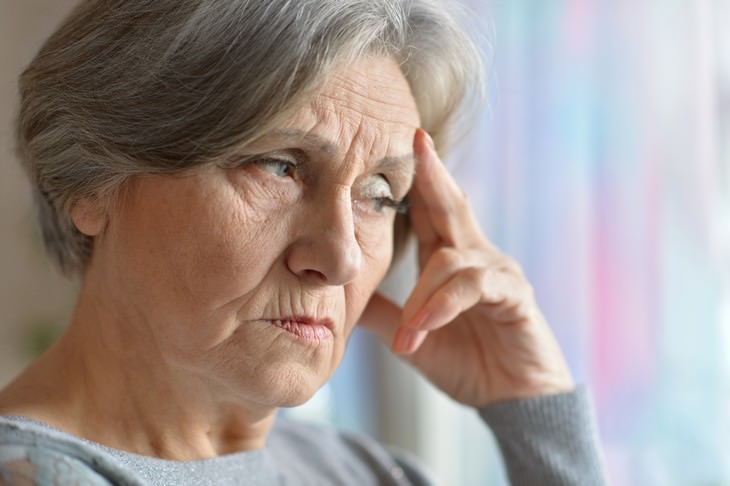
wrinkle causes stressed out sad troubled woman elderly senior 
Is there any function or organ in our body that isn’t affected by stress? The answer is likely no, and our skin is no different and is often the first to take the fall. Younger adults swear that the so-called “stress breakouts” are a thing, and people who have been through a lot of stress do seem to age faster than the rest of us.

Of course, the frowning, the crying, and the poor lifestyle choices don’t help (yes, we’re talking about all that junk food we eat after a hard or sad day), but stress also affects our hormones, which play a key role in our skin health, among other things. Try not to submit to stress when you can, or at least try to avoid the harmful habits that we mentioned, your skin will thank you.

3. Skin cancer risk
 One of the major contributing factors of skin cancer (particularly melanoma) is excessive sun exposure. But skin cancer isn’t the only unwanted and non-refundable gift we get from the sun, wrinkles, and sunspots are part of the package as well.
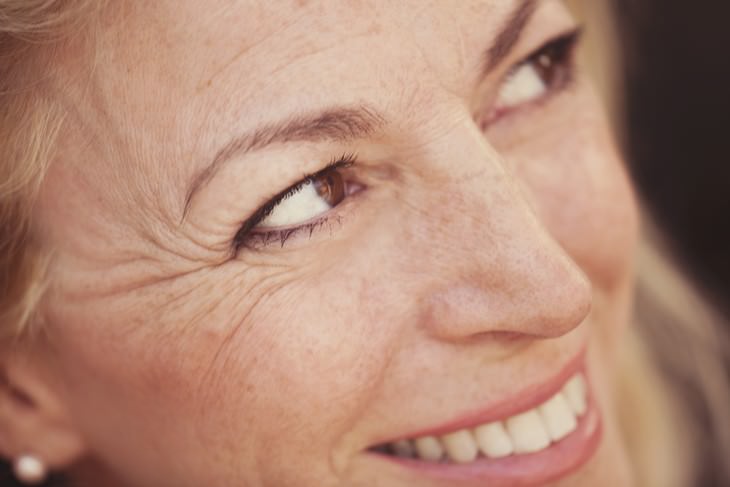
Crepey wrinkles on the cheeks and wrinkles only on one side of the face (from UVA light exposure through the car window) are especially risky. Also, remember that even if you have no sunspots on your face, this doesn’t mean you’re safe, as we now know that the majority of wrinkles are the result of sun exposure. The bottom line is: how much and how often we wear sunscreen will show, whether we like it or not.

4. Weak bones
Both our skin and our bones rely on this one protein to keep them healthy and strong. You guessed it, we mean collagen, the most common protein in the human body. Knowing this, researchers at Yale looked at the correlation between the presence of deep wrinkles on the face and bone density in 40-50-year-old women and found that deeper wrinkles were linked to lower bone density, irrespective of the age. 
 
Though limited to postmenopausal women only, the results of the study let you estimate the health of your bones and your risk of fractures based on the appearance of your skin. 
 
5. Too Much Screen Time
 
wrinkle causes woman young blonde smiling closeup portrait
Remember the frowning we mentioned in the section about stress? Well, it turns out that many people do a lot of that, as well as a lot of squinting and eyebrow-raising while they’re using computers and mobile devices. Predictably, this causes premature wrinkles on the forehead, around the eyes, and especially between the eyebrows.

These have nothing to do with the light your devices emit and everything to do with the grimaces you make when you’re deeply concentrated on the task at hand. 
 
 
6. Your Personality
Sometimes, it’s not a dangerous disease or bad habit that’s showing through your wrinkles, it’s just your personality. Do you have smile lines, crows feet, and bunny lines? Well, it might be just because you’re a happy person that smiles a lot. The opposite is also true, unfortunately, and lip lines, the so-called eleven-shaped wrinkles on your forehead and frown lines can point towards you often being serious or looking grumpy when your face is relaxed (the latter is also called a “resting bitch face” in youth slang). 
 
In the end, your wrinkles may just be showing that you’re an expressive person and like to wear your heart on your sleeve, a character trait many people really appreciate.


This is only for your information, kindly take the advice of your doctor for medicines, exercises and so on.   


Labels: , , , , , ,

Monday, January 13, 2020

Too much screen time linked to an epidemic of myopia among young people

Ask anyone about the benefits of technology and it probably won’t take them long to rhyme off a list of examples: it helps broaden your knowledge, connect with friends, both new and old, and allows you to see things you’ve never seen before.

But what about the drawbacks? Here’s a major one: increased screen time is hard on your eyes.

In fact, more and more young people are wearing glasses to correct their nearsightedness. This trend has prompted optical health experts to determine if the use of electronic devices such as computers, tablets and smart phones is leading to a deterioration in sight that is reaching epidemic proportions.

Let’s take the example of Pauline — although she could just as easily be a David or a Jason. She is 10 years old and a studious child, doing well in school. Like any young person her age, she loves to use her tablet computer to study or have fun. She’s on it two hours a day, plus weekends.

Pauline may be in for a change, however. She has recently been diagnosed with nearsightedness and her optometrist has strongly recommended that she — and her parents — limit her use of electronic devices and spend more time playing outside.

Pauline isn’t happy. She thinks it’s not fair.

But her case raises the question: what is the link between the use of electronic devices and the appearance of myopia?


A public health issue


Forty per cent of North Americans are affected by myopia. The number of cases doubled between 1972 and 2004 and continues to grow at a rate that qualifies the phenomenon as an epidemic.

In Europe, myopia is prevalent among 42.2 per cent of adults aged 25 to 29 years, almost twice that of adults aged 55 to 59 years.

This suggests there is a real public health issue facing us — and not just the common problem of an error in the refraction of the eye which shows up as blurred vision when looking into the distance.

In fact, high amounts of myopia significantly increases the risk of major ocular health disorders such as retinal tearing (21 times greater), glaucoma (40 times) or cataracts (six times).

An eye that becomes short-sighted becomes longer. The stretching is proportional to the increase in myopia. The more the eye stretches, the more the retina, which lines the inside of the eye, becomes thinner. Symptoms such as cracks, abnormal development of subretinal blood vessels and bleeding may appear.

Ultimately, the very nearsighted patient has a more than 50 per cent risk of spending the rest of his or her life legally blind — in other words living with vision reduced by 60 per cent. This means that the length of their eye exceeds 28 mm (the normal length is 23 mm) or that the myopia levels exceeds six diopters. (Diopters is a unit of measurement used to calculate eyesight — the further away from zero indicates a worsening in vision.) It is important to intervene before this happens to avoid these levels.

(In Canada, legal blindness is defined by a visual acuity of less than 20/200 in the best eye with the help of glasses or contact lenses. A legally blind person therefore sees, at best, 20 times worse than a person with normal acuity.)


What’s behind the epidemic?

There are many causes of onset myopia. Genetics plays an important role but epigenetics — the environment in which the child evolves — is a more important factor.

And what has changed in our environment to explain the recent myopia epidemic? The impact of technology, which has seen a boom in recent years, is being closely examined.

For example, a rapid increase in visual problems has been noted since the introduction of the smartphone in 2007. While the device itself does not emit harmful radiation, it requires the user to read its screen at a distance of 20 cm rather than the normal distance of 45 cm to 50 cm. It has been suggested that this close distance boosts the risk of developing myopia by eight times, especially if both parents are myopic.

Ambient lighting also plays a role because the use of fluorescents, such as in classrooms, also promotes myopia. When a tablet is used in such an environment, the effect is multiplied tenfold.

Unlike books printed on paper, tablet and computer screens are optically associated with so-called chromatic aberrations. The shortest wavelengths (blue light) are perceived in front of the others by the eye, which generates a myopia stimulus. There is a dose and response effect here, suggesting that prolonged use leads to more negative effects.

Today’s young people don’t play outside as much as their predecessors and are heavy users of electronics. However, exposure to daylight has a protective effect against myopia. These beneficial effects are decreased, but not negligible, during less sunny months or when myopia is already present.
Possible solutions

The purpose of myopia treatment is to reduce the rate of progression of the dioptric, but above all to slow down the elongation of the eye. If, obviously, we cannot play with genetics, it is imperative to influence epigenetics and therefore the environment in which the child evolves.

Therefore, using any electronic media before the age of two should be avoided, even if it’s only for a few minutes. A limit of one hour per day should be the rule for those between two and five years of age and the emphasis should be put on educational sites or applications that promote interactions between the parent and child.

While school requests should be taken into consideration, the use of electronic media should continue to be limited as the child gets older. A maximum of one hour, besides school work, must be observed for good eye health. A two-minute break after every 30 minutes of device use will also lessen harmful effects and exposure to a device should be avoided at least one hour before sleep.

Children should also get a minimum of 45 minutes of daylight per day. They can get this by walking to school or participating in such activities as regular outdoor sports.

The next step is to ensure the co-ordination of both eyes, from far away but especially close up. An optometrist will need to perform an orthopic check-up and correct, by exercise or optical means, any anomaly that may have been detected.

Finally, optical correction must be chosen with the goal of slowing down the progression. In rare cases, glasses with anti-myopia lenses may be prescribed. They provide a deceleration rate of about 30 per cent . Specialized contact lenses are often preferred and offer control ranging from 50 per cent to 80 per cent. The contact lens treatment is available from the age of seven, and will be periodically reassessed according to the child’s changing needs.

In short, myopia is not just a commonplace vision defect. It is a significant risk factor for serious eye disease. We must therefore do everything possible to slow its progress and protect our children’s vision — and that means also reviewing their relationship with electronic devices.


this is only for your information, kindly take the advice of your doctor for medicines, exercises and so on.     
https://gscrochetdesigns.blogspot.com. one can see my crochet creations  
https://gseasyrecipes.blogspot.com. feel free to view for easy, simple and healthy recipes    
https://kneereplacement-stickclub.blogspot.com. for info on knee replacement


Labels: , , , , ,

Thursday, August 01, 2019

What Your Face Wrinkles Can Reveal About You

In the majority of cases, face wrinkles are just a reflection of our natural age, lines that we deserve to wear proudly, as they show our rich life experiences, both good and bad. However, in some cases, wrinkles can be a sign of something more serious, especially if these appear only on one side or part of your face, emerge or deepen suddenly, or show up at a young age. More specifically, wrinkles can be an early sign of dangerous health conditions or a hint that you’re putting yourself through too much stress. Here are 6 things your wrinkles can tell about you:

1. Cardiovascular Problems

wrinkle causes bald man with deep forehead wrinkles
Although this may come as a surprise, research shows that wrinkles can point to cardiovascular problems, particularly to atherosclerosis and hypertension. More specifically, deep forehead wrinkles may indicate atherosclerosis (blocked blood vessels), according to a 2018 study.
The study looked at 3,200 adults over the course of 20 years and found that the participants who had deep forehead wrinkles were 10 times more likely to die of heart disease. The researchers suggest that the correlation, though observational, can point to atherosclerosis, the leading cause of heart disease because blood vessels in our forehead are much finer, and so they are the first to be blocked by plaque buildup.
A different study drew a correlation between face wrinkles and hypertension, though only in women, pointing out that the participants who looked younger than their age had an overall lower blood pressure than their counterparts with worse skin.

2. Stress

wrinkle causes stressed out sad troubled woman elderly senior
Is there any function or organ in our body that isn’t affected by stress? The answer is likely no, and our skin is no different and is often the first to take the fall. Younger adults swear that the so-called “stress breakouts” are a thing, and people who have been through a lot of stress do seem to age faster than the rest of us.
Of course, the frowning, the crying, and the poor lifestyle choices don’t help (yes, we’re talking about all that junk food we eat after a hard or sad day), but stress also affects our hormones, which play a key role in our skin health, among other things. Try not to submit to stress when you can, or at least try to avoid the harmful habits that we mentioned, your skin will thank you.

3. Skin Cancer Risk

wrinkle causes man profile smiling wrinkles on the sides of the face
One of the major contributing factors of skin cancer (particularly melanoma) is excessive sun exposure. But skin cancer isn’t the only unwanted and non-refundable gift we get from the sun, wrinkles, and sunspots are part of the package as well.
Crepey wrinkles on the cheeks and wrinkles only on one side of the face (from UVA light exposure through the car window) are especially risky. Also, remember that even if you have no sunspots on your face, this doesn’t mean you’re safe, as we now know that the majority of wrinkles are the result of sun exposure. The bottom line is: how much and how often we wear sunscreen will show, whether we like it or not.

4. Weak Bones

wrinkle causes woman senior grey hair eye wrinkles
Both our skin and our bones rely on this one protein to keep them healthy and strong. You guessed it, we mean collagen, the most common protein in the human body. Knowing this, researchers looked at the correlation between the presence of deep wrinkles on the face and bone density in 40-50-year-old women and found that deeper wrinkles were linked to lower bone density, irrespective of the age.
Though limited to postmenopausal women only, the results of the study let you estimate the health of your bones and your risk of fractures based on the appearance of your skin.

5. Too Much Screen Time

wrinkle causes woman young blonde smiling closeup portrait
Remember the frowning we mentioned in the section about stress? Well, it turns out that many people do a lot of that, as well as a lot of squinting and eyebrow-raising while they’re using computers and mobile devices. Predictably, this causes premature wrinkles on the forehead, around the eyes, and especially between the eyebrows.
These have nothing to do with the light your devices emit and everything to do with the grimaces you make when you’re deeply concentrated on the task at hand.

6. Your Personality

Sometimes, it’s not a dangerous disease or bad habit that’s showing through your wrinkles, it’s just your personality. Do you have smile lines, crows feet, and bunny lines? Well, it might be just because you’re a happy person that smiles a lot. The opposite is also true, unfortunately, and lip lines, the so-called eleven-shaped wrinkles on your forehead and frown lines can point towards you often being serious or looking grumpy when your face is relaxed (the latter is also called a “resting bitch face” in youth slang).
In the end, your wrinkles may just be showing that you’re an expressive person and like to wear your heart on your sleeve, a character trait many people really appreciate.
 
 
THIS IS ONLY FOR INFORMATION, ALWAYS CONSULT YOU PHYSICIAN BEFORE HAVING ANY PARTICULAR FOOD/ MEDICATION/EXERCISE/OTHER REMEDIES.                                    PS- THOSE INTERESTED IN RECIPES ARE FREE TO  VIEW MY BLOG-                                                                                           https://gseasyrecipes.blogspot.com/                                                                                                                                                FOR INFO ABOUT KNEE REPLACEMENT, YOU CAN VIEW MY BLOG-                                                  https:// kneereplacement-stickclub.blogspot.com/                                                                      FOR CROCHET DESIGNS                                                                                                    
                                https://gscrochetdesigns.blogspot.com

Labels: , , , , , , ,