Wednesday, July 16, 2025

Are Wrinkles Your Body’s Way of Telling You Something?

In the majority of cases, face wrinkles are just a reflection of our natural age, lines that we deserve to wear proudly, as they show our rich life experiences, both good and bad. However, in some cases, wrinkles can be a sign of something more serious, especially if these appear only on one side or part of your face, emerge or deepen suddenly, or show up at a young age. More specifically, wrinkles can be an early sign of dangerous health conditions or a hint that you’re putting yourself through too much stress. Here are 6 things your wrinkles can tell about you:

1. Cardiovascular problems wrinkle causes bald man with deep forehead wrinkles
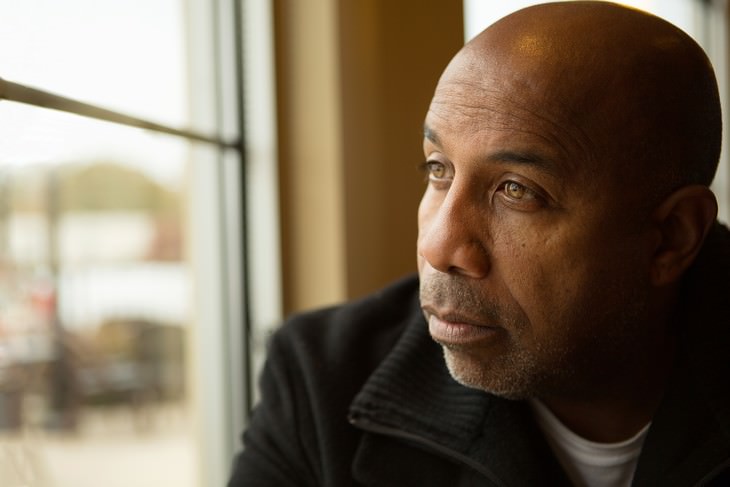
 
Although this may come as a surprise, research shows that wrinkles can point to cardiovascular problems, particularly to atherosclerosis and hypertension. More specifically, deep forehead wrinkles may indicate atherosclerosis (blocked blood vessels), according to a 2018 study. 
 
The study looked at 3,200 adults over the course of 20 years and found that the participants who had deep forehead wrinkles were 10 times more likely to die of heart disease. The researchers suggest that the correlation, though observational, can point to atherosclerosis, the leading cause of heart disease because blood vessels in our forehead are much finer, and so they are the first to be blocked by plaque buildup.

A different study drew a correlation between face wrinkles and hypertension, though only in women, pointing out that the participants who looked younger than their age had an overall lower blood pressure than their counterparts with worse skin.

2. Stress
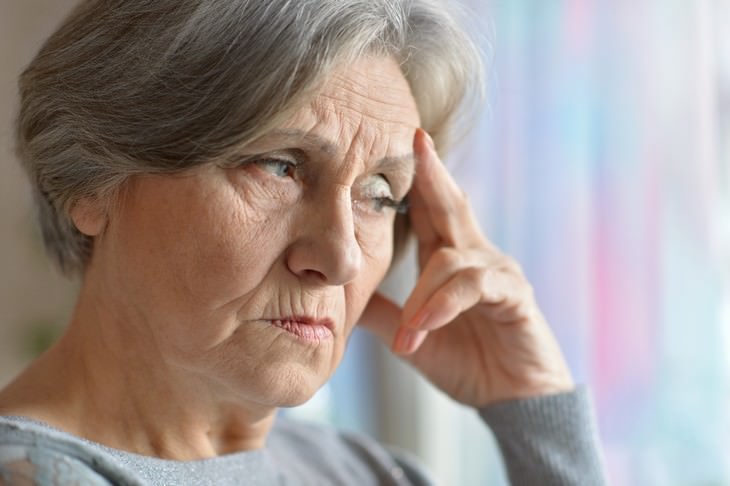
wrinkle causes stressed out sad troubled woman elderly senior 
Is there any function or organ in our body that isn’t affected by stress? The answer is likely no, and our skin is no different and is often the first to take the fall. Younger adults swear that the so-called “stress breakouts” are a thing, and people who have been through a lot of stress do seem to age faster than the rest of us.

Of course, the frowning, the crying, and the poor lifestyle choices don’t help (yes, we’re talking about all that junk food we eat after a hard or sad day), but stress also affects our hormones, which play a key role in our skin health, among other things. Try not to submit to stress when you can, or at least try to avoid the harmful habits that we mentioned, your skin will thank you.

3. Skin cancer risk
 One of the major contributing factors of skin cancer (particularly melanoma) is excessive sun exposure. But skin cancer isn’t the only unwanted and non-refundable gift we get from the sun, wrinkles, and sunspots are part of the package as well.
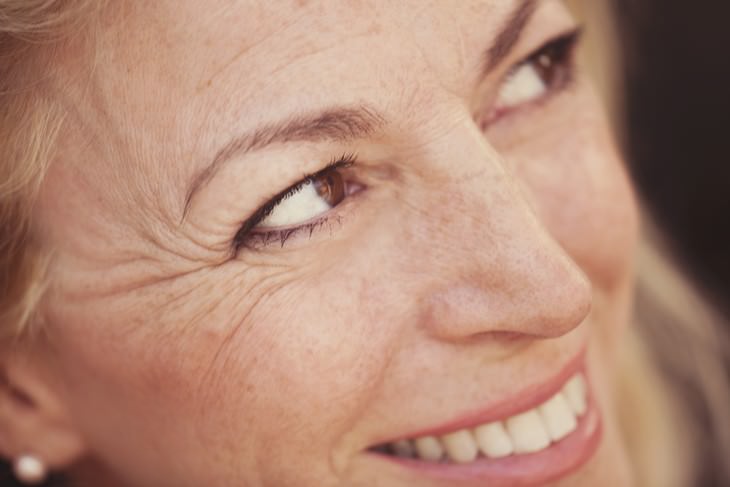
Crepey wrinkles on the cheeks and wrinkles only on one side of the face (from UVA light exposure through the car window) are especially risky. Also, remember that even if you have no sunspots on your face, this doesn’t mean you’re safe, as we now know that the majority of wrinkles are the result of sun exposure. The bottom line is: how much and how often we wear sunscreen will show, whether we like it or not.

4. Weak bones
Both our skin and our bones rely on this one protein to keep them healthy and strong. You guessed it, we mean collagen, the most common protein in the human body. Knowing this, researchers at Yale looked at the correlation between the presence of deep wrinkles on the face and bone density in 40-50-year-old women and found that deeper wrinkles were linked to lower bone density, irrespective of the age. 
 
Though limited to postmenopausal women only, the results of the study let you estimate the health of your bones and your risk of fractures based on the appearance of your skin. 
 
5. Too Much Screen Time
 
wrinkle causes woman young blonde smiling closeup portrait
Remember the frowning we mentioned in the section about stress? Well, it turns out that many people do a lot of that, as well as a lot of squinting and eyebrow-raising while they’re using computers and mobile devices. Predictably, this causes premature wrinkles on the forehead, around the eyes, and especially between the eyebrows.

These have nothing to do with the light your devices emit and everything to do with the grimaces you make when you’re deeply concentrated on the task at hand. 
 
 
6. Your Personality
Sometimes, it’s not a dangerous disease or bad habit that’s showing through your wrinkles, it’s just your personality. Do you have smile lines, crows feet, and bunny lines? Well, it might be just because you’re a happy person that smiles a lot. The opposite is also true, unfortunately, and lip lines, the so-called eleven-shaped wrinkles on your forehead and frown lines can point towards you often being serious or looking grumpy when your face is relaxed (the latter is also called a “resting bitch face” in youth slang). 
 
In the end, your wrinkles may just be showing that you’re an expressive person and like to wear your heart on your sleeve, a character trait many people really appreciate.


This is only for your information, kindly take the advice of your doctor for medicines, exercises and so on.   


Labels: , , , , , ,

Monday, April 07, 2025

10 Differences Between Alzheimer's and Natural Aging

Our memory capacity changes as we get older, but memory loss that adversely affects everyday life is not an ordinary sign of aging and may actually be a symptom of the onset of dementia. This phenomenon causes a slow deterioration of memory, reasoning, and logic, with the most common type known as "Alzheimer's" - a serious disease that disrupts the functioning of brain cells and even stops their activity. 

So how can you tell whether the source of memory problems is the natural aging process or the development of dementia when signs appear that may indicate both? Using the information in the next article you will be able to distinguish between a situation that requires attention and natural processes that affect everyone.

What is the difference between natural aging and Alzheimer's? 
 
We all know that as we get older, our brain and body become weaker. In a natural aging process, it means that we may experience a slowdown in thinking and movement, but our intelligence is not be affected. On the other hand, in the case of Alzheimer's disease, damage to nerve cells in the brain will cause memory changes to worsen as more cells are damaged. Although it is possible to develop Alzheimer's at the age of 30, 40 and 50, in most cases it affects people aged 65 and over. 
 
Changes in memory caused by old age will be related to the names of people or places, but changes caused by Alzheimer’s are expressed through forgetfulness that severely affects one’s ability to work and even engage in a social life and hobbies. It is recommended that you familiarize yourself with the following 10 sections to help you determine whether what you’re experiencing is a natural aging process or the development of Alzheimer's disease. If you notice these signs in your parents or even in yourself, it is recommended that you see your doctor to confirm or refute your concerns.

1. Memory loss that interferes with everyday life  
One of the most common signs of Alzheimer's, especially in the early stages of the disease, is the forgetting of recently learned information. Other signs include forgetting important dates or events, repeating the same question, again and again, relying heavily on memory aids (e.g. notes) or family members for things that one would normally be able to take care of themselves until recently. 
 
Age-Related Changes: If occasionally you or your parents forget or miss a meeting, but you remember it after some time, it's a sign that it's just old age and not Alzheimer's. As long as the memory problem does not interfere with your normal functioning and doesn’t makes you forget many things and feel confused, you don’t have to worry too much.

2. Difficulty in planning ahead or solving problems 
Some people with Alzheimer's sometimes feel a change in their ability to plan and follow clear instructions, especially when working with numbers. For example, they find it difficult to cook using recipes or keep track of monthly bills. In addition, many also suffer from concentration difficulties and take a long time to do things that they previously performed in a shorter time. 
 alzheimer's and normal aging
Age-Related Changes: 
 If you or your parents make mistakes in calculating your bills from time to time, this is not a sign of Alzheimer's disease, but simply a lack of attention from the aging process. This is natural, and if you go over the numbers again you’ll probably notice your mistakes.


3. Difficulty completing tasks at home, at work, or even at leisure 
 People with Alzheimer's often have difficulty completing simple daily tasks. They may have difficulty traveling to a place they've traveled to dozens of times before, working with numbers or even keeping track of the rules of a favorite game. 
 
Age-Related Changes: 
If you or your parents occasionally need help getting their TV to work, or fixing a computer or smartphone problem, it is not necessarily a sign of Alzheimer's, but simply a difficulty working with constantly changing technology, which is hard even for a person who doesn’t have Alzheimer's. 
 
4. Confusion about time and place 
People with Alzheimer's can completely forget today's date, what day it was yesterday, and even what season of the year we are in. In addition, they may have difficulty in understanding processes that aren’t taking place immediately and sometimes even forget where they are going, where they are, and how they got there. 
 
Age-Related Changes: 
If you or your parents forget which day of the week it is, but then remember at some point, it's a sign of old age and not Alzheimer's. Keep in mind that sometimes even young people forget the day and date, and the reasons sometimes include a lack of weekly routine. This may be caused, for example, by retirement and losing the sense of the weekend compared to the rest of the week. 
 
5. Difficulties in vision and understanding of images and spatial relations 
For some people, vision problems are a sign of Alzheimer's. These people will have difficulty reading, measuring distances, or noticing the differences between certain shades or colors. In addition, they may suffer from problems in spatial perception, such as not recognizing themselves when they pass a mirror, leading to them thinking someone is in the room with them. 
 
Age-Related Changes: 
It is known that vision is impaired by aging and therefore blurred vision is not necessarily an early sign of Alzheimer's disease. In addition, a problem with vision can be related to other diseases, such as cataracts or diabetes, so once you notice these changes, you should consult your doctor to rule out the variety of possible problems.


6. Development of difficulties in using words orally and in writing 
 People with Alzheimer's may find it difficult to join a conversation, stop talking in the middle of a conversation, lose their thread of thought while talking, and repeat themselves several times without noticing. They can also experience difficulty using rich vocabulary or even finding the right name for objects and people they are familiar with. This includes calling their children or their friends by incorrect names.

Age-Related Changes:
If you or your parents find it difficult to find the right word for what you want to say, it does not necessarily indicate the development of Alzheimer's disease. Aging causes many brain processes to slow down and memory itself no longer functions as it did in the past. As long as you don’t confuse words and call things by a name that does not belong to them, such a memory problem is not necessarily a sign of Alzheimer's disease. 
 
7. Misplacing things and inability to retrace steps 
A person with Alzheimer's is able to place objects in places they don’t belong without noticing, and often lose objects and fail to retrace the steps they took to help them find them. Sometimes Alzheimer's patients may even blame another person for stealing and as the years go by and the disease worsens, this may occur more frequently. 
 
Age-Related Changes: 
If you or your parents find it difficult to remember from time to time where you’ve put your glasses or the remote control, it’s not necessarily a sign of Alzheimer's disease. It is possible that these are problems that you’ve already dealt with in the past and are exacerbated only by old age. As long as this is not an unreasonable case, such as leaving your shoes in the refrigerator, there is no reason to worry much. 
 
8. Poor judgment and difficulty in making decisions 
People with Alzheimer's may feel a change in their judgment or decision-making abilities. For example, they may make poor decisions about money, being quick to hand out large amounts of money to telemarketers. In addition, they may pay less attention to cleanliness and grooming. 
 
Age-Related Changes: 
Making wrong decisions from time to time does not necessarily mean you have Alzheimer's disease. Telemarketers are often professionals who know how to "milk money" by using emotions rather than turning to logic. So even in this case, as long as you or your parents can still say "no thanks" and know that you don’t need a product that is being sold, you have no reason for concern.


9. Avoiding social activities or work 
People with Alzheimer's may stop engaging in past hobbies and avoid social gatherings and anything related to work. They may even stop loving watching football because they aren’t able to follow their favorite team. The reason for these changes is the perception of all the difficulties that accompany them, which makes them realize that something is wrong with them and that they can’t function as they did in the past. 
 
Age-Related Changes: 
If you or your parents feel exhausted from work or you want to avoid social interaction, it is not necessarily a sign that Alzheimer's disease is involved. Exhaustion at an older age from work you’ve taken part in over many years makes sense, and avoiding contact with friends, especially when you feel obligated, is only a sign that your body and mind need some rest. 
 
10. Changes in mood and personality 
People with Alzheimer's may become completely different people and respond to situations differently than they would normally. They may be confused, suspicious, depressed, anxious or stressed. It may also be easy for them to succumb to sadness in the home and work environment, or experience depression while they are outside their comfort zone. 
 
Age-Related Changes: 
If you or your parents feel nervous or insecure after a change someone or something creates in the routine you have created for yourself, it only means that you have adapted your own ways of doing things and are not ready to change them at this point in your life. Changes in routine at an older age would irritate and disturb anyone, so it is not necessarily a sign of Alzheimer's disease. Note that mood swings can also be signs of other illnesses, so you may want to check with your GP.

A few words to finish... 
Distinguishing between natural aging processes and Alzheimer's may sometimes be difficult, but if you or your parents experience some of the symptoms that are not age-related changes, you should consult your doctor for proper testing and treatment. It is also important to note that any such radical change alone may indicate other diseases, and therefore it is recommended not to rush to think that you might have Alzheimer's but to consult a doctor for a professional opinion.


This is only for your information, kindly take the advice of your doctor for medicines, exercises and so on.   

Labels: , , , , , , , , , ,

Tuesday, January 14, 2020

Is it impossible for you to lose weight? Your personality may be to blame

Is it a problem for you to lose weight? Sometimes, you try everything from exercising to restricting your food intake. Yet, you don’t seem to be successful in losing those extra kilos. This can be very frustrating and annoying. You are often at a loss to understand as to why this happening. You may try changing your diet and shift to a different exercise regime. But nothing works. This may also, at times, send you running to a doctor’s clinic to figure out if there is any underlying health condition  that is preventing your weight loss. But here again you may find no answers.

Now it has come to light that personality affects the weight of a person. There is often a close connection between a person’s personality and various psychological disorders, but do you think these traits can cause weight gain?

Personality Types and Weight Gain

The Myers-Briggs test is one of the most popular personality tests available that is used vastly by psychologists to understand an individual’s personality traits.
There are 16 basic personality types that are typically denoted by alphabets. The basic traits include:
Extroversion (E) or Introversion (I) – Based on where your attention is focused
Sensing (S) or Intuition (I) – Based on how you accept information
Thinking (T) or Feeling (F) – Based on how you make a decision
Judging (J) or Perceiving (P) – Based on your outlook of the world

Studies have found that people with certain trait combinations may be more impulsive than others. These individuals stand a higher chance of gaining weight because of this impulsiveness. A specific study, of 500,000 individuals, reported that impulsive people may have a higher chance of succumbing to temptations and this could cause a 10 per cent increase in weight. This is not good if you are trying to lose weight.

Out of all the personality types, research shows that those with the ESTP type may be the most impulsive and could be more prone to reaching out for sugar-laden and high-calorie foods. People with this trait are connoisseurs of good food and they have more snacks.

Control the Impulses and Curb Weight Gain

Weight loss can be a difficult journey, especially if you have trouble controlling your impulsive eating. But nothing is impossible; here are a few steps to consider when trying to curb your temptations and lose weight:

Be kind to yourself

Don’t criticize the choices you made in the past, instead focus on the right ones you are going to take in the future. This is an important step because if you start off by being harsh to yourself, it will only lead to further complications like mood disorders that could also lead to eating disorders and weight gain.

Set reachable goals

Setting realistic goals are important because they provide you with an increased chance of achieving them, in contrast to those that are too far-fetched. Start out by ignoring a box of enticing doughnuts, maybe.

Understand your triggers

In many instances, hunger is not the only reason why someone eats, it could be a stressful situation at work or a fight with a loved one. Once you know the causes of your emotional binge eating, work toward handling those triggers more efficiently. This will help you lose weight.

Keep your friends and family informed

Keep your loved ones close because they can provide all the emotional support and encouragement you need to reach your goals.

Try a detox diet or intermittent fasting

Challenge the body to a stringent detox diet or intermittent fasting practices. This will help you understand your triggers while supporting your weight-loss goals.

Keep a journal/food log

Being mindful of what you put into your body plays an important role in getting to a healthy weight and even avoiding weight gain. It may also help to note the different emotions you feel, the situations that cause it and your reactions, especially if they are food related.

Weight gain is a common problem and regardless of whether you fall under the ESTP personality type or not, simple lifestyle changes can help you curb weight gain and even lose weight.

this is only for your information, kindly take the advice of your doctor for medicines, exercises and so on.     
https://gscrochetdesigns.blogspot.com. one can see my crochet creations  
https://gseasyrecipes.blogspot.com. feel free to view for easy, simple and healthy recipes    
https://kneereplacement-stickclub.blogspot.com. for info on knee replacement


Labels: , , , , , , , , , , , , , , , ,

Friday, September 06, 2019

Wearing Silver ring in your little finger can do wonders in your life, know how?

As per Vedic Astrology, silver is related to the planet Jupiter and Moon and it balances the water and Kapha in our bodies. If Shastras are to be taken into consideration, it is believed that silver brings abundance and luck for the bearer. It brings in a lot of beauty and happiness in your life.

For reaping the benefits of Jupiter and Moon
As per the Vedic Astrological science to reap the full benefits from planet Jupiter and Moon, silver is the most effective metal. It also flushes out all the toxins from your body and has major health benefits.

Positive Reflections in Life

Using Silver at home in different areas of life - decoration, kitchen or wearing it as an accessory ushers in a lot of positivity in your life. It also acts as a calming drought in case you are panic-stricken or have response issues. This said let's throw some light on wearing a silver ring in your little winger which has been kept in a water bowl for healing and energy clearing.

Treating the silver ring in water overnight

In three simple steps, get a silver ring of your choice from the market or buy online, choose a Thursday and keep the ring in water overnight for energy clearance. You can either place the ring in your worship space and perform a pooja or you can meditate with the ring and mold the metal to help serve you the way you want to.
Dip the ring in sandalwood for the finality of clearing it of all prior energies and truly make it your own and then wear it on the little or pinkie finger of your right hand. As you wear it, consciously notice your intentions working wonders on it.

Positive Aspects

among the list of the positives of wearing a silver ring, the foremost is it really increases your beauty and enhances your personality as it is connected with the planet Jupiter and the Moon. It calms down your anger and cools down your mind.


If your moon is weak it effects the mental status of a person and weakens it. A silver ring has immense power to strengthen the moon - it helps treat your cough, cold, arthritis and all your joint related problems.

Silver Chain

In case you do not want to wear a ring, you can also wear a silver chain. It is delicate, beautiful and will have the same effect as a silver ring. Also, it will strengthen your throat chakra - if done with a right intent it has the power to heal stammering and other speech-related problems.

Silverware

As we talk about the silver ring and chain, it goes without saying that silver utensils are equally important. If you consume honey in a silver bowl with a silver spoon it can cure sinus and cold. This said Silver as a metal is very healthy for today's lifestyle.

this is only for your information, kindly take the advice of your doctor for medicines, exercises and so on.   
https://gscrochetdesigns.blogspot.com. one can see my crochet creations 
https://gseasyrecipes.blogspot.com. feel free to view for easy, simple and healthy recipes    
https://kneereplacement-stickclub.blogspot.com. for info on knee replacement
    

Labels: , , , , , , , , , , , , ,

Thursday, August 01, 2019

What Your Face Wrinkles Can Reveal About You

In the majority of cases, face wrinkles are just a reflection of our natural age, lines that we deserve to wear proudly, as they show our rich life experiences, both good and bad. However, in some cases, wrinkles can be a sign of something more serious, especially if these appear only on one side or part of your face, emerge or deepen suddenly, or show up at a young age. More specifically, wrinkles can be an early sign of dangerous health conditions or a hint that you’re putting yourself through too much stress. Here are 6 things your wrinkles can tell about you:

1. Cardiovascular Problems

wrinkle causes bald man with deep forehead wrinkles
Although this may come as a surprise, research shows that wrinkles can point to cardiovascular problems, particularly to atherosclerosis and hypertension. More specifically, deep forehead wrinkles may indicate atherosclerosis (blocked blood vessels), according to a 2018 study.
The study looked at 3,200 adults over the course of 20 years and found that the participants who had deep forehead wrinkles were 10 times more likely to die of heart disease. The researchers suggest that the correlation, though observational, can point to atherosclerosis, the leading cause of heart disease because blood vessels in our forehead are much finer, and so they are the first to be blocked by plaque buildup.
A different study drew a correlation between face wrinkles and hypertension, though only in women, pointing out that the participants who looked younger than their age had an overall lower blood pressure than their counterparts with worse skin.

2. Stress

wrinkle causes stressed out sad troubled woman elderly senior
Is there any function or organ in our body that isn’t affected by stress? The answer is likely no, and our skin is no different and is often the first to take the fall. Younger adults swear that the so-called “stress breakouts” are a thing, and people who have been through a lot of stress do seem to age faster than the rest of us.
Of course, the frowning, the crying, and the poor lifestyle choices don’t help (yes, we’re talking about all that junk food we eat after a hard or sad day), but stress also affects our hormones, which play a key role in our skin health, among other things. Try not to submit to stress when you can, or at least try to avoid the harmful habits that we mentioned, your skin will thank you.

3. Skin Cancer Risk

wrinkle causes man profile smiling wrinkles on the sides of the face
One of the major contributing factors of skin cancer (particularly melanoma) is excessive sun exposure. But skin cancer isn’t the only unwanted and non-refundable gift we get from the sun, wrinkles, and sunspots are part of the package as well.
Crepey wrinkles on the cheeks and wrinkles only on one side of the face (from UVA light exposure through the car window) are especially risky. Also, remember that even if you have no sunspots on your face, this doesn’t mean you’re safe, as we now know that the majority of wrinkles are the result of sun exposure. The bottom line is: how much and how often we wear sunscreen will show, whether we like it or not.

4. Weak Bones

wrinkle causes woman senior grey hair eye wrinkles
Both our skin and our bones rely on this one protein to keep them healthy and strong. You guessed it, we mean collagen, the most common protein in the human body. Knowing this, researchers looked at the correlation between the presence of deep wrinkles on the face and bone density in 40-50-year-old women and found that deeper wrinkles were linked to lower bone density, irrespective of the age.
Though limited to postmenopausal women only, the results of the study let you estimate the health of your bones and your risk of fractures based on the appearance of your skin.

5. Too Much Screen Time

wrinkle causes woman young blonde smiling closeup portrait
Remember the frowning we mentioned in the section about stress? Well, it turns out that many people do a lot of that, as well as a lot of squinting and eyebrow-raising while they’re using computers and mobile devices. Predictably, this causes premature wrinkles on the forehead, around the eyes, and especially between the eyebrows.
These have nothing to do with the light your devices emit and everything to do with the grimaces you make when you’re deeply concentrated on the task at hand.

6. Your Personality

Sometimes, it’s not a dangerous disease or bad habit that’s showing through your wrinkles, it’s just your personality. Do you have smile lines, crows feet, and bunny lines? Well, it might be just because you’re a happy person that smiles a lot. The opposite is also true, unfortunately, and lip lines, the so-called eleven-shaped wrinkles on your forehead and frown lines can point towards you often being serious or looking grumpy when your face is relaxed (the latter is also called a “resting bitch face” in youth slang).
In the end, your wrinkles may just be showing that you’re an expressive person and like to wear your heart on your sleeve, a character trait many people really appreciate.
 
 
THIS IS ONLY FOR INFORMATION, ALWAYS CONSULT YOU PHYSICIAN BEFORE HAVING ANY PARTICULAR FOOD/ MEDICATION/EXERCISE/OTHER REMEDIES.                                    PS- THOSE INTERESTED IN RECIPES ARE FREE TO  VIEW MY BLOG-                                                                                           https://gseasyrecipes.blogspot.com/                                                                                                                                                FOR INFO ABOUT KNEE REPLACEMENT, YOU CAN VIEW MY BLOG-                                                  https:// kneereplacement-stickclub.blogspot.com/                                                                      FOR CROCHET DESIGNS                                                                                                    
                                https://gscrochetdesigns.blogspot.com

Labels: , , , , , , ,