Saturday, January 13, 2024

Knowing the Signs of a Brain Tumor Can Save Your Life.

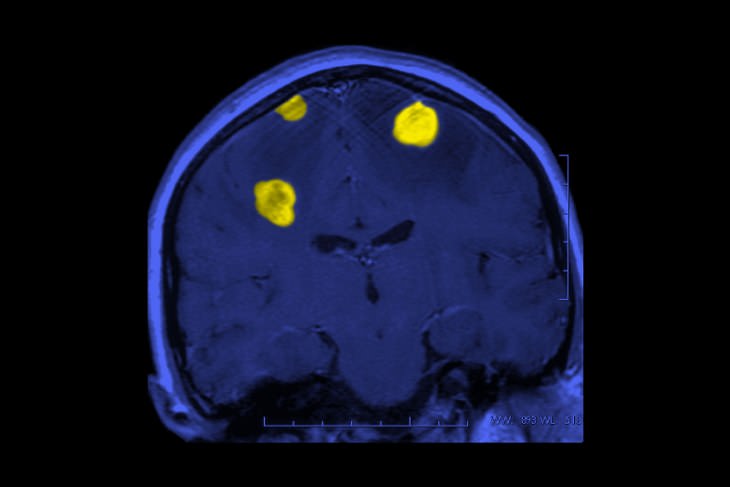
Being diagnosed with cancer will always be a terrifying and devastating thing, but cancer of the brain is said to be the scariest and most serious of them all. That's why it is vital that everyone is aware of the symptoms of this terrible disease so that it can be picked up and treated before it's too late.

1. Short-term memory loss 
 Brain Tumor
If you're finding it difficult to remember what you ate for breakfast or what your best friend's phone number is, then this may be a sign of a brain tumor. If this is the case, you may also discover that you're finding it more difficult to multitask or that you're becoming far more easily confused.


2. Persistent headaches  
One of the most commons signs of a brain tumor is the development of persistent headaches. In fact, according to the American Brain Tumor Association, about half of all people with a brain tumor experience such headaches. These headaches typically don't respond to pain medication and are usually the worst in the mornings and when sudden movements are made.


3. Sudden onset of seizures  
If you've never had a seizure before, experiencing one may be one of the first signs of a brain tumor. This occurs because a tumor may apply pressure to the brain's nerve cells, which can end up triggering a seizure. Around 50% of people with a brain tumor experience at least one brain seizure, according to the American Cancer Society. 
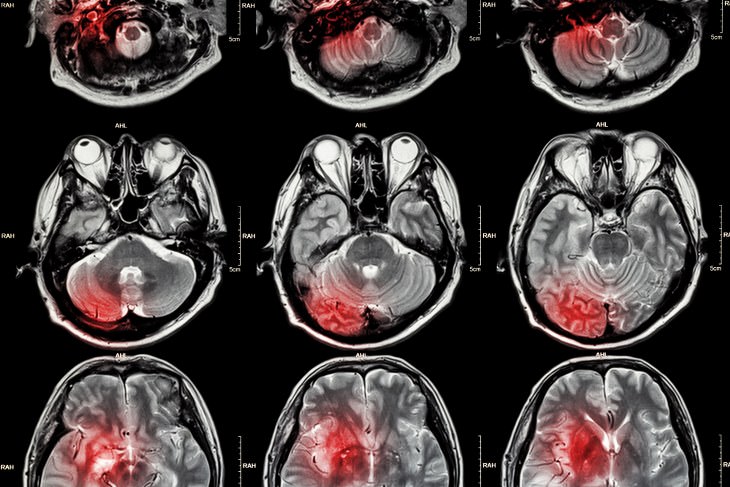
 Brain Tumor
 
4. Depression 
At least 25% of brain tumor sufferers experience a major depressive disorder, which can include prolonged feelings of indescribable misery, which can interfere with day-to-day living. Many often feel as if there is no hope or that their existence has no value.


5. Mood swings 
According to Mike Chen, MD, Ph.D., associate professor in the division of neurosurgery, department of surgery, at City of Hope in California, "a large, slowly growing tumor in the frontal lobe can alter personality and judgment so far as to be mistaken for criminal behavior or psychiatric problems.” If you notice that your personality seems to rapidly alter itself from one moment to the next, it might be a good idea to get yourself checked. 
 Brain Tumor
 
6. Extreme fatigue 
If you're utterly exhausted all day every day, then this may be a sign of a cancerous brain tumor. Some sufferers report a complete loss of focus, and even falling asleep at their desks while at work. Others say that their limbs sometimes feel very heavy and that they feel a lot physically weaker than usual.


7. Hearing problems 
Sudden hearing problems can also be a sign of a brain tumor. According to Dr. Christopher Carruba, MD, co-director for medical education at Med School Tutors, "if you’re experiencing hearing loss from one side or a constant ringing sensation, known as tinnitus, you’ll want to make an appointment with your doctor, who can determine whether your symptoms are severe enough to see a neurologist.” Make sure you share this post to help raise some awareness about brain tumor symptoms. You might just save somebody's life.


This is only for your information, kindly take the advice of your doctor for medicines, exercises and so on.   

https://gscrochetdesigns.blogspot.com. one can see my crochet creations  
https://gseasyrecipes.blogspot.com. feel free to view for easy, simple and healthy recipes    
https://kneereplacement-stickclub.blogspot.com. for info on knee replacement
https://cancersupportindia.blogspot.com  for infor on cancer and health related topics
https://GSiyers home remedies.blogspot.com   is the latest addition to my blogs. I'm going to add posts there, do give me your valuable feed back on my blogs. Thanks a lot, take care, be healthy and be happy.

Labels: , , , , , ,

Monday, August 01, 2022

The BEST Tinnitus Remedies and Treatments

Tinnitus refers to hearing ringing, buzzing, or any other persistent sounds in your ears. Even though most have experienced brief tinnitus at some point, 10% of all Americans have persistent tinnitus. These annoying buzzing sounds can affect either one or both ears, they vary in volume, and can either be constant or reappear from time to time. For those with severe tinnitus, the ringing in the ears can interfere with daily activities, may reduce hearing, makes it difficult to fall asleep, or can even wake you up at night. 
 
What causes tinnitus?

Tinnitus ear pain

Finding out the root cause of your tinnitus is the first step in treating the condition. You’d be surprised by how many conditions can make the buzzing sounds appear in your ears. Anything from a temporary blockage to more alarming conditions is a possible explanation. In many cases, tinnitus just shows up for no identifiable reason, a condition known as “idiopathic tinnitus.”

There are two types of tinnitus - subjective tinnitus and objective tinnitus: 
 
Subjective Tinnitus  
Subjective tinnitus is more common, and it’s actually not a problem with your ear. Instead, the condition occurs due to abnormal nerve activity in the brain's auditory cortex. This can be due to a variety of reasons, such as: 
 
Chronic exposure to loud noises at work or any other circumstances 
 
Ototoxic medications - chemotherapy, some antibiotics, and anti-inflammatory meds 
 
Presbycusis (age-related hearing loss) or other types of hearing loss, such as fluid build-up in the ears, blockages, and eustachian tube dysfunctions 
 
Ménière’s disease 
 
Head and neck problems and injuries 
 
Sinus pressure and trauma caused by pressure changes 
 
Traumatic brain injury and neurological disorders. 
 
 Objective Tinnitus
Tinnitus pain falling asleep
Less commonly, a person experiences ringing in the ears as a result of a physiological problem in or near the middle ear. This condition is called objective tinnitus, probably because this type of noise can occasionally be heard by the doctor examining the patient's ear. Patients suffering from objective tinnitus often describe the noise as a pulsing sound. 
 
Objective tinnitus can be caused by: 
 
A muscle spasm in the ear area 
 
Loud noises 
 
An infection of the ear or the sinuses 
 
Atherosclerosis and other problems with blood vessels 
 
Brain tumors 
 
Hormonal issues. 
 
How is tinnitus diagnosed? 
 
If your tinnitus persists for more than a few seconds or interferes with your daily life, see your primary care doctor (they will also help rule out any serious conditions that could be causing tinnitus). During the meeting, the doctor will examine your ears, head, and neck, ask you to describe the sounds, and inquire if any injuries or occupational trauma may have contributed to your symptom.  
 
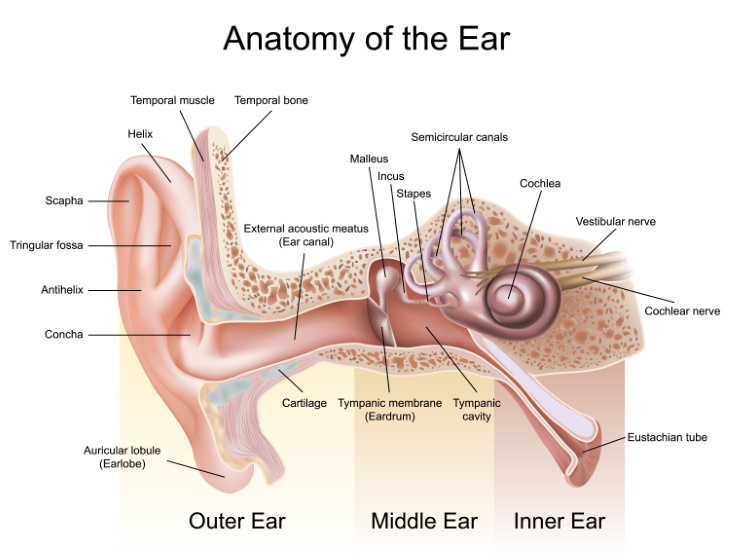
  Tinnitus ear anatomy

Not all doctors will conduct a hearing or movement test. Usually, a patient is referred to a trained audiologist. The specialist may use speech recognition tests, auditory tests, and other medical tests, such as CT or MRI imaging or blood work to diagnose the cause of your tinnitus properly. 
 
Although tinnitus is rarely a symptom of a medical emergency, see your doctor if you experience any of the following symptoms: 
 
Sudden hearing loss 
 
Facial paralysis 
 
Discharge and odors from your ear 
 
A pulsing sound that matches your heartbeat. 
 
How to find relief from tinnitus  
The good news is that tinnitus can often be either fully or largely resolved through treatment and lifestyle changes. We list the most effective treatments and remedies for tinnitus in this section. Please be aware that it will take some time for the symptom to go away, so hang in there! 
 
Sound-masking 
Sound masking is widely regarded as one of the most effective devices for tinnitus patients. These are devices that create a background noise that, although temporarily, cancels out the ringing in the ears. Sound masking devices are particularly effective for those whose tinnitus prevents them from falling asleep or concentrating on work.

So what devices work for sound masking? Different approaches and sounds seem to be best for different people, but anything from white noise machines to ordinary fans, a television, sound machines, headphones, and in-ear masking devices can work. Even your own laptop or phone can become a sound-masking device, so we recommend that you start there because it’s free. We link two excellent smartphone apps for sound masking below: 
 
myNoise (Android and iOS) 
 
NatureSpace (Android and iOS). 
 
Note that some people find that listening to music, audiobooks, and podcasts may be more beneficial for masking because they both muffle the sound and distract you by holding your attention. Others conclude that white noise helps them more, and a 2017 study also found that white noise is more helpful than nature sounds. The volume of the sound is up to you. 
 
Hearing aids
For many people, tinnitus can be an early sign of hearing loss. That is because hearing loss usually comes with changes in your brain that have to do with recognizing sounds. For patients with hearing loss and tinnitus, a hearing aid can make a world of difference. These are small in-ear devices that increase the volume of what you hear.
 
But even those who don’t experience noticeable hearing loss can benefit from a hearing aid. The better you hear, the less attention you pay to your tinnitus. And once the tinnitus is gone, you can stop using the hearing aid altogether. A survey found that 60% of tinnitus patients find some relief with a hearing aid and 22% report significant improvement.

Treat the underlying cause
Tinnitus ear test
The American Tinnitus Association reports that most tinnitus cases are the result of hearing loss. However, if your tinnitus is caused by something like a blockage, infection, or a condition like temporomandibular joint (TMJ) disorder, then addressing the condition will almost certainly make your tinnitus go away as well. 
 
Simply dissolving the excess earwax may be enough to fully resolve a mild case of tinnitus. That’s another reason why you shouldn’t rely on your own intuition as to the cause of tinnitus. Your physician, an audiologist, or an ENT specialist can match you up with the best treatment. 
 
Habituation
If you have chronic or recurrent tinnitus, habituating is one of the key skills to learn. Habituating, or ignoring tinnitus, is one of the best ways to find relief for good. This is done by breaking the stress cycle and essentially distracting your brain from noticing the tinnitus. 
 
This can be done by engaging in mindfulness meditation, yoga, or any other activity that helps shift your focus off the noise in your ears. There are even mindfulness-based stress reduction courses that aim to give people skills to control and shift their attention away from tinnitus. 
 
Relaxation is important in treating tinnitus for two reasons. Firstly, it helps prevent ringing in the ears, as stress is a common trigger of tinnitus. And secondly, knowing how to calm your mind is a key tool to preventing tinnitus from affecting your daily life. 
 
Be mindful of your diet
Some tinnitus sufferers find relief from adjusting their diet. Particularly, Meniere's disease sufferers - a condition that causes hearing loss, tinnitus, and dizziness - find that reducing salt intake in their diet is helpful. Consuming more foods rich in zinc (e.g., poultry, fish, pumpkin seeds, beans, and peanuts) and vitamin B12 (e.g., meat, milk, cheese, eggs) may also be beneficial. 
 
Reducing caffeine, tobacco, and alcohol consumption may also be helpful for some tinnitus sufferers. And last but not least, anecdotal reports suggest that the herb supplement Ginkgo Biloba reduces tinnitus in some people. 
 
Don’t forget about hearing protection
If your work involves spending hours upon hours in noisy city spaces, around loud machinery, or next to speakers, you may be hopeless about getting rid of tinnitus. To manage the condition, such people must wear foam earplugs, earmuffs, or both. Remember that noise exposure can both trigger and worsen tinnitus, and it also damages your hearing. 
 
High-fidelity earplugs, also called musician’s earplugs, are the best for most people. The advantage of these earplugs is that instead of simply blocking all sounds, they reduce the decibel level of outside noises. This allows you to have conversations and go on with your daily life while you’re wearing earplugs. Such earplugs can be purchased at pharmacies or custom-ordered by your audiologist. 
 
Instant relief 
There's a variety of massages and moves that can help temporarily relieve tinnitus. The move in the video below can reduce or make tinnitus completely go away for several hours.


This is only for your information, kindly take the advice of your doctor for medicines, exercises and so on.   

https://gscrochetdesigns.blogspot.com. one can see my crochet creations  
https://gseasyrecipes.blogspot.com. feel free to view for easy, simple and healthy recipes    
https://kneereplacement-stickclub.blogspot.com. for info on knee replacement

Labels: , , , , , , , , , ,