Wednesday, March 24, 2021

How to Meditate at Home

Meditation has many known health benefits, such as increasing longevity and reducing stress. People have been practicing meditation for over two millennia, with Hindu texts describing meditative forms as early as the 6th-century BCE. In my youth, if I heard the word ‘meditation’, all I could think about was a person in the Far East, sitting with his legs crossed and humming to himself. A couple of years ago I was introduced to real meditation and discovered the calming and healing properties it has, and now I’d love to share them with you.
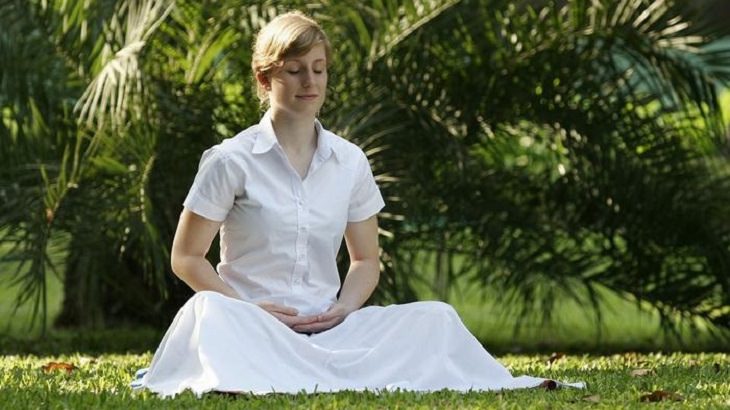
What is meditation 
The Webster dictionary defines meditation as “the act or process of spending time in quiet thought: the act or process of meditating”. Many people meditate without even knowing that they’re doing it. A person sitting and fishing for a few hours in silence is performing a type of meditation, the same as another who might be jogging with their headphones on. It involves dedicating 100% of your attention to one subject. Meditation has also been a key factor in Eastern religions such as Buddhism and Hinduism, as well as Western religions like Christianity and Judaism.

Health benefits of meditating  
Meditation has many proven health benefits, such as silencing your internal chatter, calming and grounding one’s self, and getting in touch with yourself, to name a few. A recent Harvard University study discovered that daily meditation can rebuild the brain’s gray matter in as little as eight weeks. Participants also reported a reduction in stress - a prime factor in the decrease in gray matter density. 
 
Who can meditate?
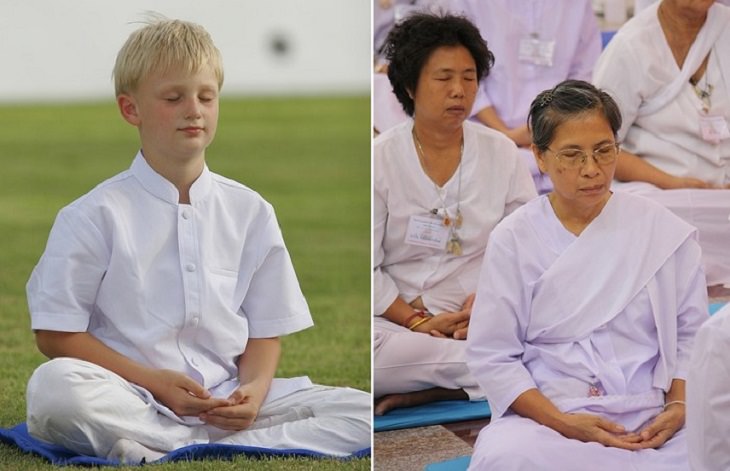
From young children to elderly people, everyone can meditate. There are many forms of meditation, some more suitable for people of different ages, so don’t be daunted if one form doesn’t work for you. Finding the meditation that suits you best is very gratifying. 
 
Before you start meditating 
The first thing you need to do is decide on the purpose of your meditation: You may want to calm down, get to know yourself better or even make an important business decision. Knowing why you’re meditating is the first step to a useful meditation. You don’t need special clothes (but comfortable ones make it easier) or equipment. All you need is a quiet spot and to reserve some time for it. 
 
When you begin your meditation, don’t lay down or sit in a slumped position – these positions do not help you stay alert and focused. Sit up straight, either on a chair, on your heels or cross-legged. Find the position that is comfortable for you, sitting in the lotus position is not mandatory in meditation. 
 
Don’t meditate after eating, digestion can be very distracting during a session. If you've just had a meal, wait for 2 hours and let your stomach calm down. You should avoid smoking for at least 30 minutes before the meditation.
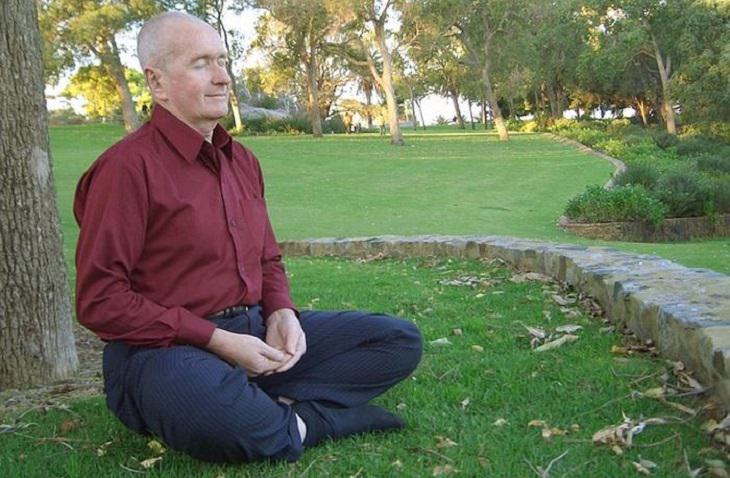
Find a quiet spot that you will be comfortable in, this is essential for the first few times you meditate. Once you are comfortable with meditation, you’ll be able to do it in noisier places. Remember to switch off your cell phone - it’s a distraction. Consider lighting a scented candle or some incense to help your meditation and switch off or dim the lights – bright lights may also be a distraction. 
 
How to meditate 
Do some basic stretching before you start, it will loosen up your muscles and help you be more attentive to your body later on. 
 
Breathing is the most important factor in meditation, we use each breath as a focal point. Close your eyes and deeply inhale through your nose, then slowly exhale through your mouth. Feel how your chest expands and contracts with each breath. Listen to the silence between breaths - notice how everything becomes still and quiet. You may even notice your heartbeat slowing down. If your thoughts begin to scatter, concentrate on your breathing.

As a beginner, focusing might not come naturally. Give it time and be patient with yourself. Some people find that focusing on their breathing won’t quiet their minds, and may need to try other methods: 
 
• Counting your breaths may help – count each breath and when you reach ten, start over. However, if you become focused on the numbers and not on the breathing, stop. 
 
• Another alternative is repeating a mantra – there’s a reason some people say “Om” when they meditate – it helps drown out the outside world and focus on the sound. You can repeat any other word that helps you calm down if Om is not for you. 
 
• Try visualizing a calm place – it can be anything: the beach, a forest, your childhood home, etc. as long as it’s your sanctuary. When you find your sanctuary, don’t be afraid to explore it – there's no need to try and “create” your surroundings, they’re already there.

Set aside at least fifteen minutes a day for meditation (more is welcome). Remember: short daily repetitions are better than one long weekly session because they form a habit. Eventually, the practice of meditation will find its way into your everyday life. You’ll find yourself considering your food choices more carefully, making decisions more consciously and focusing on things you read, watch or listen to with greater attention. 
 
One last thing  
Learning to silence your inner thoughts takes practice, but managing to attain inner peace is a huge reward. Remember – “practice makes perfect”, so keep meditating regularly. It may take you a few weeks or even a couple of months to learn to properly focus, so don’t get frustrated or disheartened if you’re not a meditation guru overnight.

This is only for your information, kindly take the advice of your doctor for medicines, exercises and so on.     

https://gscrochetdesigns.blogspot.com. one can see my crochet creations  
https://gseasyrecipes.blogspot.com. feel free to view for easy, simple and healthy recipes    
https://kneereplacement-stickclub.blogspot.com. for info on knee replacement

Labels: , , , , , , , ,

Tuesday, March 31, 2020

SILENCE, NOT AN ABSENCE OF WORDS BUT A PRESENCE OF AWARENESS !

Pleasant morning 🦚

~"I will make my Inner environment perfect through meditation, that it be impervious to all adverse outside influences. I will begin each day with meditation on the Supreme Being." - Yogananda Paramahamsa.

~"Your sincerity will guide you. Devotion to the goal of freedom and perfection will make you live by wisdom, intelligence and active love." - Swami Chinmayananda.

The real meditation is how we live our life. Now is the time not to accept any idea before bouncing it off our intuitive wisdom (Pashyanthi)...
 
-Does it create acceptance, accommodative-ness, and blessings? Or does it create fear, anxiety, worry, restlessness and helplessness?
 
-Does it encourage love, kindness, peace, and unity? Or does it encourage separateness, division, hate, self-centeredness and violence? 
 
...If we are vigilant and make a stern effort to SEE every thought when it rises, we will soon find that we are going deeper and deeper into our own inner self, where there is no need for our effort to reject thoughts that are unhealthy & unnecessary! 

Let's not blame our karma. Instead, be someone who purely and flawlessly practices the Dharma. Let's not blame temporary negative circumstances. Instead, be someone who remains steadfast in the face of whatever circumstances may arise. There is nothing outside of us. It's all an inside game. If we get the inside right, the outside will fall into place. Becos whatever we do, we do to ourselves. 

The main thing is to be free of negative emotions - desire, anger, etc., the 'six enemies' of the mind. Once the mind is free of them, the rest will come easily. The psychological mind likes drama--because its existence is dependent on conflict with WHAT IS...Opinions, expectations, likes, dislikes, wants, aversions. An unaware mind is drawn to drama...Awareness- is drama free.

A life filled with joy and peace, free of suffering, is a spiritual choice. It has little to do with the circumstances of our lives, and much to do with how we choose to relate to those circumstances. Our beliefs are what create our experiences. As we change our beliefs, we alter our perception, our version of reality. It is not our circumstances that limit us. Rather it is our own beliefs and perceptions that either imprison us...or grant us unbounded freedom.

Have a peaceful week ahead
🌹 
 
This is only for your information, kindly take the advice of your doctor for medicines, exercises and so on.     

https://gscrochetdesigns.blogspot.com. one can see my crochet creations  
https://gseasyrecipes.blogspot.com. feel free to view for easy, simple and healthy recipes    
https://kneereplacement-stickclub.blogspot.com. for info on knee replacement

Labels: , , , ,

Tuesday, December 25, 2018

Tips for Staying Calm When Everyone Else Is Nervous

In recent years, life has become stressful and tense, leading to short fuses and quite a few unnecessary and angry arguments, especially if the behaviors of a particular person or group don’t meet our expectations. When we are in this situation and think that everyone is doing the opposite of what we expect them to do, we sometimes react in an exaggerated manner that is expressed in anger, frustration, stress, arguments, shouting and so forth. Is there anything you can do to calm yourself down? The answer is yes and the ways to do so are easy, but the first thing to do is breathe. Breathe deeply and remember that we can’t control other’s behavior, however, we can control our reaction to them - this power can neutralize many situations that result from anger and frustration. There are other ways to control hostile situations, which you can read in the following 9 tips to help you live a happy, relaxed and stress-free life, even when everyone around you is on pins and needles.

1. Stop everything

Thinking about the worst can cause many of us to behave irrationally, to the point that even generally good and calm people can behave erratically when stressed. The smart thing to do is not to imagine the worst even when others around you are stressed and being negative, and instead stop and take a deep breath. Stopping creates a pause and a momentary break from everything that’s happening around you and allows you to think clearly. All you need in cases of stress is air and breathing space. Just pausing for a second will bring you back to tranquility.

2. Be tolerant

You must learn to respect the opinions of others and know that even if they don’t do something the way you wanted them to, doesn’t mean they did it wrong - know that there are many right ways in this world and everyone has the right to choose their own. Even if there is disagreement about something, it's okay to disagree or not think like others, just make sure that you’re speaking respectfully and staying calm. If you feel that the argument is getting out of control, take a deep breath and try not to freak out. Think to yourself, that if everyone thought the same way, we would be living in quite a boring world.

3. Be compassionate

In our busy and stressful daily lives, we tend to be concerned, fearful, and sensitive and distracted from almost everything, while at the same time the ability to empathize is reduced. When a person sees others and relates to their distress, they develop compassion for the person. The word compassion means "concern for the suffering of others," so if we put ourselves in the shoes of the other who needs help if only for a moment, we can understand them and help them free themselves from their stress. We have to remember that we don’t always know what’s going on in other people’s lives and therefore we must try to support and help, not add stress or rush to judge. Being compassionate will create a calm and peaceful environment that will reduce anger.

4. Be kind and generous

Many suffer disappointment and irritation and as a result, lose their patience, but if we can tell ourselves that humans have quite a lot of things in common, we can move from judging the other’s behavior to understanding it. For example, if you are witnessing an embarrassing event, try to get yourself used to saying "just like me sometimes". For instance this person is really rude, just like me sometimes; or this person is so impatient, just like me sometimes and so on. Choose not to judge the other in moments of crisis, stress or confusion, let these moments pass you by without regard and you’ll see that nothing will upset you.

5. Don’t take things to heart

There’s no need to take everything personally and you shouldn’t be offended by everything people say or think about you. You need to understand that you are worth more than everyone else and not underestimate yourself, and when you are insulted, try not to pay attention, you can’t control the thoughts and behaviors of other people. If you take it to heart, you’ll stay angry and hurt your whole life, is that what you want? Of course not! After all, most people think only about themselves and less about you, so if they do something they probably aren’t thinking about how it will affect you, rather only how it will affect them. 

6. Speak less and learn to appreciate silence

Some people say silence is one of the main factors that motivate them to argue, and not because they are bad, but because it's just hard for them to be quiet. If you encounter a person who starts arguing with you for no reason, the best and simplest way to avoid being dragged into an argument is to take a deep breath several times to relax. It is true that sometimes doing so is difficult, but this simple action really helps. Once you breathe, you gain time to think, calm yourself, and make the other side understand that you are not interested in getting into an argument.
When that hurt person realizes that they aren’t getting a response, they’ll stop. However, if you do respond and get into an argument, you really don’t know what the reaction of the other side might be. They may just be trying to trap you in an argument hoping to get an outrageous response from you. Be careful not to play into these people’s hands and remember, one moment of silence can save you from a hundred moments of regret. Being silent will put the power in your hands. 

7. Start the day right

There is a phrase that says, "you made your bed now sleep in it," but what about the way we wake up in the morning? Does it have no effect on the course of the day? The answer is yes! The fast and busy life we have today makes us sleep less and become unnecessarily stressed. Many begin their daily routine from the moment they open their eyes by checking messages, emails and recent news update, unnecessarily stressing for someone else, and then wonder why they are angry and nervous. In order to make your day calm and peaceful, you must adapt to another way of waking up. Try to start the morning calmer, for example, sitting on your bed and taking three deep breaths, combined with 3 minutes of meditation. Doing this for 30 days, as a start, will give you the ability to start your day on the right foot.

8. Use healthy alternatives

Stressful situations cause different people to behave in irrational ways, and ways of coping vary between people. Some events cause some people to want to distract themselves and try to escape the situation through unhealthy choices, such as drinking alcohol, snacking, smoking, and the like. If you’re reading this and nodding your head because this is how you respond to such situations, know that there are different ways to cope, and if you try them not only will you benefit, but those around you will too.
  • Take a walk in nature - the more you walk the better.
  • Make a cup of tea, sit still with your thoughts and don’t let anything distract you.
  • Listen to your favorite music.
  • Write a diary or talk to a close friend.
  • Know that healthy coping habits make angry and stressed people - happy, relaxed, and comfortable.

9. Do as much good as possible

Think positive thoughts about others and let the negative things around you go by, help those who are less fortunate and do good deeds every day. Every time you do a good deed, the feeling of self-satisfaction will delight you, and the person you’ve helped might be inspired to pay it forward, thereby creating a chain of good in the world. If you want to see that this method works, start it today! At the end of each day, write a list of the good deeds and successes of the day, for which you are grateful, for example, "My family and I got home safely from work and school today," "I managed to make my family happy." At the end, you’ll see that these actions bring you joy, distance, anger from you and your loved ones, and keep you calm and happy.


THIS IS ONLY FOR INFORMATION, ALWAYS CONSULT YOU PHYSICIAN BEFORE HAVING ANY PARTICULAR FOOD/ MEDICATION/EXERCISE/OTHER REMEDIES.                                                                                
 PS- THOSE INTERESTED IN RECIPES ARE FREE TO  VIEW MY BLOG-                                                                                           https://gseasyrecipes.blogspot.com/                                                                                                                                                                             FOR INFO ABOUT KNEE REPLACEMENT, YOU CAN VIEW MY BLOG-                                               
     https:// kneereplacement-stickclub.blogspot.com/                                                                                     
  FOR CROCHET DESIGNS                                                                                                                                                                                                             https://gscrochetdesigns.blogspot.com


Labels: , , , , , , , , , ,

Monday, November 04, 2013

Words Of Wisdom

Labels: , , ,