Tuesday, December 16, 2025

Why do people put bay leaves under their pillow at night?
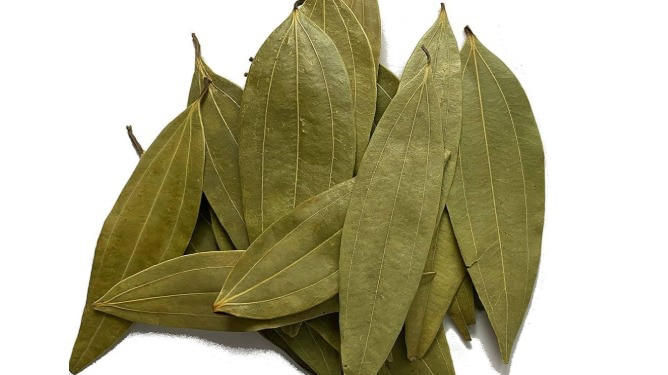
Why do people put bay leaves under their pillow at night? 

 Bay leaves are a common ingredient in Indian cooking, known for their warm aroma and subtle flavour. But beyond the kitchen, these leaves have played an important role in traditional beliefs, folklore, and household rituals for thousands of years. In recent years, many social media trends have revived the old practice of placing a bay leaf under the pillow at night.

People follow this ritual for different reasons, from hoping for better sleep to believing it attracts good dreams or positive energy. While these benefits are mostly traditional or symbolic, the practice continues to gain attention because it feels calming and meaningful.

This article explores why people place bay leaves under their pillows and what these beliefs say about cultural practices across the world.

THE ANCIENT HISTORY BEHIND THE BAY LEAF RITUAL

  • In ancient Greek and Roman cultures, bay leaves were seen as symbols of protection, wisdom, and guidance.
  • Placing them near the bed was believed to keep away negative thoughts and bring mental clarity.
  • Many people think bay leaves can help prevent nightmares and promote peaceful sleep.
  • This belief comes from old traditions where fragrant herbs were used to calm the mind at bedtime.
  • On the internet, bay leaves are often linked to manifesting wishes or positive outcomes.
  • Placing one under the pillow is believed by some to attract good energy or help strengthen intentions set before sleep.

DO BAY LEAVES REALLY HELP YOU SLEEP BETTER?

  • There is no scientific proof that bay leaves directly improve sleep or change dreams.
  • However, people often feel comforted by bedtime rituals, which can naturally help the mind relax.

ARE BAY LEAF BEDTIME RITUALS SAFE TO TRY?

  • Yes, it is generally safe as long as the leaf is kept dry and placed inside a small cloth pouch to avoid a mess.

Putting bay leaves under the pillow is a cultural and symbolic practice rather than a scientifically proven one. People follow it for comfort, relaxation, and positive intention, a small nighttime ritual that connects modern life with ancient traditions.


This is only for your information, kindly take the advice of your doctor for medicines, exercises and so on.   

Labels: , , , , , , ,

Tuesday, September 07, 2021

Here’s Where Our Minds Sharpen in Old Age

Many have noted that the big contenders in the last two American presidential elections were well into their 70s, raising questions of the mental capacity, going forward, of these potential leaders. “Starting after middle age, say around 60 or so, memory and other abilities decline,” says Dilip Jeste, professor of psychiatry and neuroscience at UC San Diego and director of the UCSD Center for Healthy Aging. But what actually declines—and what abilities might improve, as well as when, how, and at what speed—is a complex issue. 

It turns out, according to a new study in Nature Human Behavior, that many things improve with age, including some cognitive aspects that had previously been thought to get worse. John Verssimo, of the University of Lisbon, and his colleagues, looked at a large sample of people between the ages of 58 and 98 and measured their performance on a broad range of cognitive tasks to get a more detailed picture of cognitive aging. They controlled for participants’ sex and education, as well as declines in general thinking speed, motor control, and perception, and found some surprising and hopeful results. 

The broad strokes of the traditional thinking on lifespan psychology is that people improve in all kinds of cognition until their early 20s. After that, " fluid intelligence , which includes thinking about new things, thinking quickly, and abstract reasoning, gradually declines until the end of life.  " Crystalized" intelligence, on the other hand, which is characterized by wisdom, knowledge, and expertise at things one practices often, continues to improve with age, but with slower returns as we get older. This continues into your 70s, after which things begin to decline.

But, as cognitive psychologists have suggested some of the aspects of fluid intelligence, such as attention, can be broken down into component parts—like alerting, orienting, and executive control. Alerting covers one’s vigilance and preparedness for responding to information coming in. This is important for driving, for example. Orienting is one’s ability to select some perceptual information over others based on what’s important. Executive control refers to one’s ability to inhibit all the information that orienting deemed unimportant, such as the  conversations at other tables in a restaurant. These abilities are somewhat independent, and even involve different neural substrates. “Given that these attention/executive functions show neurocognitive differentiation,” Verssimo and his colleagues write, “we suggest that they may also show distinct susceptibilities to aging.”

Does age affect fluid intelligence broadly, as has been traditionally believed? Or, given that these components are anatomically distinct, might aging affect each one differently?

To find out, Verssimo and his colleagues used a common measurement tool, the Attention Network Test, which provides individual scores for alerting, orientation, and executive function. As expected, older people are slower in general, as measured by their response time in the task (how fast they hit a button in response to something on the screen), at the rate of an average increase of 6.3 milliseconds per additional year of age. But there were differences in the components: alerting got worse with increasing age but orienting, and the ability to inhibit irrelevant information, got better. There are ways we get smarter with age, even in the domain of fluid intelligence.

“Thus, our findings, together with other data, argue against theories positing general age-related declines in attention and executive function,” the researchers write. “Even though aging is widely viewed as leading to cognitive declines, it in fact yields multifaceted outcomes, including a range of benefits.”

Many decisions a president has to make require careful thought, and the important decisions never need to be made so fast that milliseconds make a difference. These days, presidents don’t even drive themselves. And given that age tends to increase abilities in vocabulary, language comprehension, reading others’ emotions, and knowledge, perhaps American candidates being in their 70s shouldn’t worry us too much. At least as far as brain power goes.

This is only for your information, kindly take the advice of your doctor for medicines, exercises and so on.   

https://gscrochetdesigns.blogspot.com. one can see my crochet creations  
https://gseasyrecipes.blogspot.com. feel free to view for easy, simple and healthy recipes    
https://kneereplacement-stickclub.blogspot.com. for info on knee replacement


Labels: , , , ,