Saturday, June 13, 2026

Can Coconut Oil Be Used to Help Promote Weight Loss?

If you're looking to lose that last ten pounds or maintain the weight you're at, using coconut oil in your diet can be just the thing to help you lose weight. Initially, coconut oil hadn't been favored by health advocates because of its high saturated fat content. Though it has since been deemed healthier and can successfully help people shed a couple of pounds over time. Coconut oil may consist of 90% saturated fat, though scientists state that its fat is largely made up of lauric acid - a medium-chain saturated fatty acid (MCT) that has a better effect on the heart than other saturated fats.
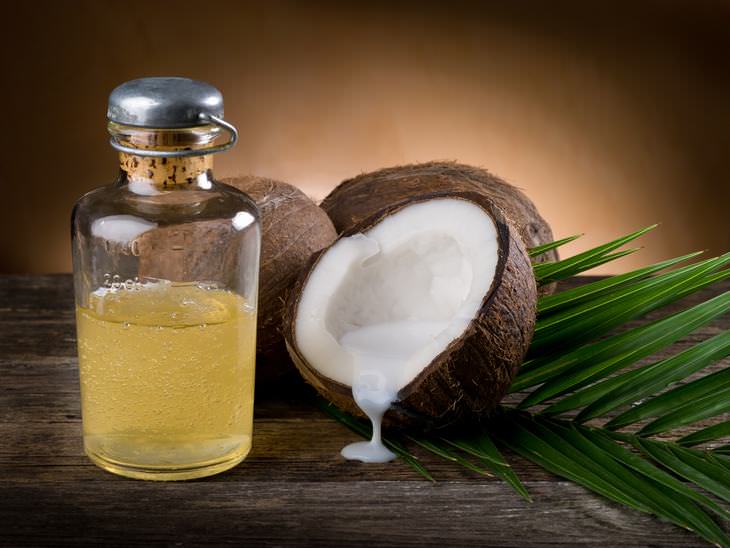
coconut oil for weight lossCoconut oil is comprised of 90% saturated fat, though scientists say that its fat is mostly made up of lauric acid, a medium-chain saturated fatty acid (MCT) which has a better effect on the heart than other saturated fats. So, in order to promote better health and lose weight, it's better to use coconut oil. 

To support these claims, countries like India and the Philippines whose diets prominently feature coconuts and coconut products have conducted reports. It was found that citizens from such countries tend to have fewer weight issues and also have minimal rates for cardiac diseases in comparison to individuals from the developed world.

But how can coconut oil, be beneficial for weight loss? 

According to studies, when it comes to losing weight, your metabolism plays a big role. So, the faster you can get your metabolism to rise, the more calories your body will burn. Coconut oil is also different from most other fats we consume in our diet. While most oils mostly contain long-chain fatty acids (LCT), coconut oil consists predominantly of medium chain fatty acids (MCT). However, when it comes to these medium chain fatty acids (MCTs) they are generally metabolized differently than the longer chain fats. Reduced chain lengths mean that MCTs are absorbed by the body quicker, and are therefore metabolized (burned) as fuel. Consequently, a quicker metabolism is established. Therefore, as opposed to fat being stored, the calories in MCTs are very efficiently converted into fuel for immediate use by organs and muscles in our body.

In one particular study, it was found that the effects of MCT oil on weight when compared between rats who were overfed with either long chain or medium chain fats, found that the rats fed the medium chain fats gained 20% less weight and 23% less body fat. In addition, coconut oil has also been considered 'thermogenic'. This essentially means that when you eat it, it tends to increase the amount of fat burning going on in your body more so than the other oils you could be consuming. 

Other studies about MCT oil and weight loss found that relatively low-to-moderate intact of MCT (15-30g per day) as part of a person's diet may play a role in controlling human body composition by enhancing daily energy expenditure by 5% which equates to 120 calories per day. In another study conducted on obese women, it was found that long-term consumption of MCT enhances energy expenditure when compared to long chain fatty acids consumption. Other studies also discovered that coconut oil helps reduce appetite. In fact, in the Journal of Nutrition, animal studies of rats fed on MCT. The rats felt more satisfied, which lead to a reduction in calorie intake. 

In another smaller study, this time conducted on men, it was found that consuming high amounts of MCTs caused them to automatically consume fewer calories per day. Another study found that men who ate MCTs at breakfast delayed their need for lunch. It was also found that their lunch was significantly smaller compared to the low-fat breakfast.

How to Use Coconut Oil for Weight Loss 

Essentially, there are two types of coconut oil - virgin and refined. Virgin coconut oil is made from pressing coconut meat, milk or milk residue. Refined coconut oil is made from the coconut copra or dried kernel and may be chemically treated. For this reason, it's always best to use virgin coconut oil because it is prepared with no chemicals in the process. You can use coconut oil in several ways, these include: 

1. Nut butters: Nuts are healthy for the body and nut butter is good for your health and weight loss. To prepare this, grind two cups of cashews or almonds with two tablespoons of coconut oil until smooth and buttery. For added taste, you can add some honey, ground coffee, cinnamon or maple syrup to add more flavor. Then you can spread over toast, English muffins, or bagels - making a delicious and healthy breakfast. 

 2. Baked foods: Coconut oil can be used under high temperatures and can be used to replace butter when baking foods like cookies, muffins, cakes, and brownies. It can also be used to substitute other oils (as well as butter) in nearly all baking recipes. To bake with coconut oil, all you need to do is replace the oil in the other recipe with coconut oil using a 1:1 ratio. Virgin coconut oil has a long shelf life and takes a few years to go off. 

3. Roasted vegetables: Vegetables like zucchini, beets, sweet potatoes, and butternut squash can be brushed with a mixture of thyme, lemon juice, coconut oil, salt, and pepper giving them a desirable coconut flavor. you can saute them using coconut oil or brushing them with it and cooking them on the grill. 

 4. Popcorn: Coconut oil can be used to pop corn-kernels instead of the normal vegetable fat. Just hold off on the butter to maximize your weight loss regimen. 

5. Smoothies: Coconut oil can be added to your smoothies and other beverages including your morning coffee.

General guidelines when using coconut oil 

1. When you use coconut oil you may notice that after some time, it has solidified. This is due to the fact that the oil usually solidifies at 76 degrees Fahrenheit. In its solid state, it is completely safe to use. 

2. If you wish to consume coconut oil by tablespoon, the recommendation is to take up to 3 tablespoons daily per adult. 

3. Be aware that coconut oil is fat. It contains 9 calories per gram. So, if you want to use coconut oil to lose weight you need to take into consideration the added calorie intake of the coconut oil, especially if you consume a fixed amount of calories. 

 4. If you don't count calories, adding coconut oil to your diet will reduce your appetite and make you eat less. 

5. What is recommended is that you replace some of your other cooking fats with coconut oil.


This is only for your information, kindly take the advice of your doctor for food, medicines, exercises and so on.   


Labels: , , , , , , , ,

Sunday, June 08, 2025

Brain Tumour in Kids: Expert shares what every parent needs to know; symptoms, diagnosis and more

 Every human being can have a tumour at any stage of life, and similarly, children are not spared. Brain tumours can occur in children of all ages. It is said that tumours in the extreme of ages are more often malignant or cancerous.

Dr Rahul Gupta, Senior  Neuro and Spine Surgeon, explains that in children, tumours can be located in any part of the brain. These tumours lie within the brain tissue more often than in adults. Hence, the chance of having cancer is higher. Some tumours, like brain-stem glioma, can be benign but behave aggressively like a cancer. Some of these may be associated with syndromes that are due to genetic mutation, and multiple problems are detected in that child. Life is very uncertain for these patients.

What are the symptoms suggestive of a brain tumour?

These tumours most commonly have headache with vomiting, increasing head size, or seizure as the first symptom. In infants, due to blockage of the flow of fluid within the ventricles of Brain, there is increased water collection known as hydrocephalus, which leads to a disproportionate increase in head size.

Young children have headaches with vomiting, irritability, reduced appetite, and loss of weight. Focal or generalised seizures are seen in most tumours and need preventive medicines. Some patients present with eye symptoms/signs like a decrease in vision, double vision, a downward fixed gaze of the eyes known as the sun-setting sign, etc.

Limb weakness or facial asymmetry can also be a feature of a brain tumour in a child. Some patients present with frequent tonic posturing due to raised pressure inside the skull. If not treated in time, these symptoms can lead to coma or even death.

What are the methods of diagnosing brain tumours in children?

Ultrasound can detect tumours or hydrocephalus in infants or even before birth. The most important and harmless investigation to detect a brain tumour is MRI. But in children, sedation or anaesthesia is required to keep the child still for 15 to 20 minutes during the scanning. A CT scan is advised in an emergency to look for hydrocephalus or signs of raised intracranial pressure. Patient is also evaluated for functions of other parts of the body by blood tests, chest X-rays, or ultrasounds of the abdomen.

What are the treatment options for a brain tumour detected in a kid?

Surgery is the main treatment needed in the majority of cases. It helps to establish the tissue diagnosis, reduce the pressure effect of the tumour, and also debulk the mass, making it more suitable for other modalities like radiotherapy. A few children may need an additional VP shunt to divert extra fluid from the brain to the abdominal cavity. It's a relatively simple procedure with good results. Some patients with cancer need radiotherapy and chemotherapy at follow-up.A few of them may be subjected to direct radiotherapy without surgery if the risks of surgery are too high.

Is the surgery difficult?

Anaesthesia during Surgery and postoperative care in ICU is very difficult and complex. Trained paediatric neuroanesthetists are required to handle children. Surgical procedures are also quite demanding and need high-end gadgets and delicate instruments.

Can these kids be cured of Brain tumor?

Quality and longevity of life are quite compromised in cancer patients. However, patients with benign tumours live a long, healthy life if the tumour has been removed safely and completely.

What can be done by parents to prevent or deal with such a situation?

Brain tumours cannot be prevented, as there is no clear reason behind their occurrence.

Parents have a crucial role to play in dealing with these patients. They should recognise early symptoms or signs and report to their family physician asap. MRI or CT scans of the brain should be done at the slightest suspicion. If a brain tumour is detected, then they should visit a well-equipped hospital capable of dealing with such cases. Such hospitals have in-house MRI, an active pediatric Department and Pediatric ICU. Senior neurosurgeons and neuroanesthetists who have experience dealing with children with brain tumours will do a good job. Parents have to be optimistic and emotionally strong. They should follow the advice of the Neurosurgeon and oncologist and refrain from delaying the treatment. Some Parents try alternative therapy, but we have seen them coming back with treatment failure.

The news of having a brain tumour in their child is devastating and disheartening. But parents should keep their morale high and support the child physically, emotionally, and financially. They should be ready for frequent visits to the hospital and timely investigations.


This is only for your information, kindly take the advice of your doctor for medicines, exercises and so on.   


Labels: , , , , , , , , , , , ,

Friday, May 09, 2025

New Study Shows Effect of Diet Drugs on Fatty Liver Disease

A new clinical trial has found that the weight-loss drug Wegovy significantly improves a serious form of fatty liver disease in nearly two-thirds of patients — a potential breakthrough for millions affected worldwide.

The study, published in the New England Journal of Medicine, focused on metabolic dysfunction-associated steatohepatitis (MASH), an advanced form of what’s now called metabolic dysfunction-associated steatotic liver disease (MASLD), formerly known as non-alcoholic fatty liver disease. MASLD affects roughly a third of U.S. adults, with about 5–7% progressing to MASH — where fat accumulation leads to inflammation and scarring. Left untreated, it can result in cirrhosis, liver failure, or cancer. 
 
Insulin resistance is a key driver of both MASLD and MASH, making individuals with obesity or type 2 diabetes especially vulnerable. Dr. Lior Neuman, a family medicine and obesity specialist, described fatty liver as “one of the most common metabolic complications of excess weight,” and emphasized how often the disease remains silent, even in its advanced stages. Diagnosis typically starts with blood tests showing elevated liver enzymes, followed by imaging like ultrasound. 
 
According to the National Institutes of Health, up to 75% of overweight adults and 90% of those with obesity have MASLD. Of these, roughly 17 million Americans are believed to have MASH. Globally, over 1 billion people may be affected by MASLD, and MASH cases in the U.S. are projected to rise by 56% by 2030. 
 
Dr. Neuman stressed the importance of early detection: “Fat in liver cells can lead to inflammation and scarring. That scarring was once considered permanent — now we know weight loss can reverse it.” He added that while FibroScan is a useful tool for assessing liver fat and fibrosis, it’s not yet publicly available in Israel. 
 
Study Design and Results 
 
The trial, led by Prof. Philip Newsome (King’s College London) and Dr. Arun Sanyal (Virginia Commonwealth University), involved 1,195 people with MASH across 253 sites in 37 countries. Participants had an average age of 56 and an average BMI of 34.6; about half had type 2 diabetes. 
 
Patients received weekly injections of semaglutide — the active compound in Wegovy and Ozempic — or a placebo over a 72-week period, gradually increasing to the standard 2.4 mg weight-loss dose. All participants also received lifestyle counseling. 
 
The results were compelling:
 
62.9% of those on semaglutide showed significant improvement in liver fat and inflammation, compared to 34.3% on placebo. 
 
6.8% had fibrosis improvement, versus 22.4% in the placebo group. 
 
Nearly one-third of semaglutide patients showed both benefits, double the placebo group’s 16.1%. 
 
Most participants had moderate to severe fibrosis (stage 2 or 3) at the study’s start. Prof. Newsome called the outcomes “crucial for patients.”

Semaglutide mimics GLP-1, a natural hormone that reduces appetite and boosts insulin secretion. Patients on the drug lost an average of 10.5% of their body weight, compared to just 2% in the placebo group. While weight loss itself can improve liver function, researchers suspect the drug may also act directly on the disease. “GLP-1 drugs may help reduce inflammation through immune system effects,” said Newsome, though more studies are needed to confirm this. 
 
The treatment was generally well tolerated. Common side effects included nausea, diarrhea, constipation, and vomiting. Only 2.6% of semaglutide users and 3.3% of placebo users dropped out due to side effects. 
 
A Turning Point 
 
Experts view the findings as a significant step forward, though questions remain about long-term results. “This is impressive weight loss — but will patients sustain it?” said Dr. Sobia Laique, a hepatologist at the Cleveland Clinic. “Managing obesity requires a long-term strategy.”
 
Dr. Jeffrey Lazarus of the CUNY School of Public Health called the study “a breakthrough,” noting that the FDA had already approved another drug, resmetirom (Rezdifra), for fatty liver disease and fibrosis in 2023. “We finally have drug options alongside lifestyle changes,” he said, though he emphasized that medications should supplement — not replace — healthy habits. Rezdifra is not yet approved in Israel. 
 
Dr. Susan Spratt, an endocrinologist at Duke University who wasn’t involved in the study, found the semaglutide results “particularly promising,” given how difficult it is to reverse fibrosis. “This is meaningful progress,” she said. 
 
Dr. Neuman agreed: “These findings confirm what we’ve long believed — that losing just 5% or more of your body weight can significantly improve liver health.”
 
Novo Nordisk, the manufacturer of Wegovy, said the FDA has granted the drug “priority review” for treating MASH, with a decision expected within six months. Wegovy was already approved in 2023 to reduce cardiovascular risk in people with obesity. Other GLP-1 drugs like Zepbound (Mounjaro) and Ozempic have also expanded into areas such as sleep apnea and chronic kidney disease. 
 
These results mark another major step in expanding the potential of GLP-1 drugs beyond weight loss and diabetes — giving new hope to millions with serious liver disease.


This is only for your information, kindly take the advice of your doctor for medicines, exercises and so on.   


Labels: , , , , , , , , , , ,