Is It Eczema or Just Dry Skin? How to Tell the Two Apart
Winter is the season of snow, holiday
cheer, and… dry skin. Indeed, the cold weather isn’t kind to the face
and body, and for those who suffer from certain skin ailments, it’s also
the time for annual flare-ups. This is the case with eczema, a skin
condition that affects over 31 million people in the US.
In fact, eczema can manifest itself through itchy and dry skin or scalp,
as evident by the alternative name of the condition, which is “the itch
that rashes.” This uncomfortable condition isn’t as easy to treat as
regular dry skin, so knowing how to tell the difference between these
two conditions is crucial.
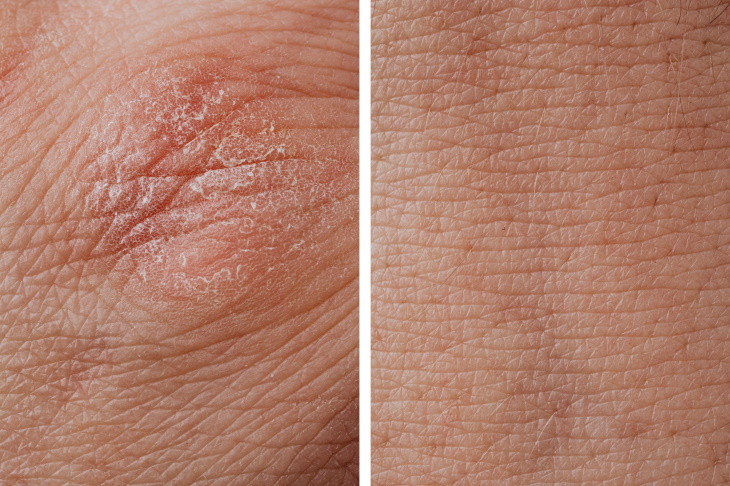
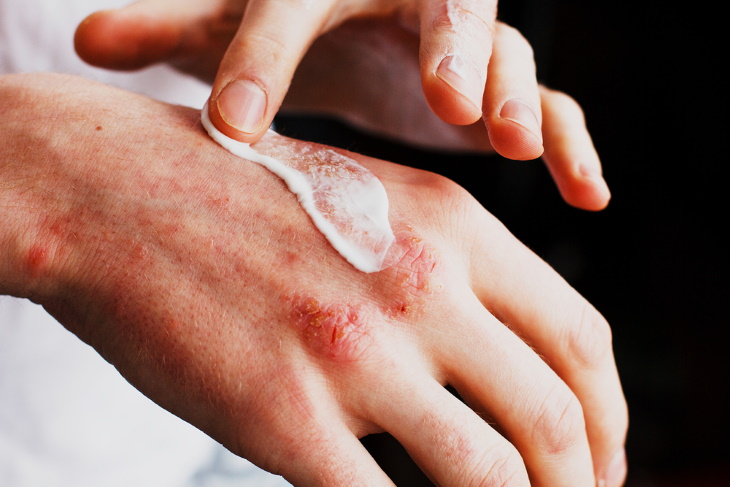
Dry skin and eczema – how are they
different?
Eczema makes your skin itchy and flaky, so isn’t it the same as dry
skin? This is a common question people have, especially in the winter
when the dry and windy weather turns the skin red and itchy. While it’s
certainly true that some forms of eczema (like contact- or seborrheic
dermatitis) are more likely to appear in the winter, there’s a principal
difference between the two.
Dry skin is a skin type, whereas eczema is a
chronic inflammatory skin condition. Even when eczema is triggered by
an environmental cause, such as wearing woolen socks or taking a walk in
cold weather, it won’t go away when we change the environment back to
the baseline.
Unlike your itchy feet or dry hands that can be easily remedied by a
layer of thick cream and a change of attire, an eczema flare-up will
probably take longer to go away. The dry patches won’t always respond to
moisturizing and may start developing thicker, darker, and itchier
plaques.
If this pattern sounds familiar, and you experience some of the other
symptoms we’ll mention, your “dry skin” may actually be an eczema
flareup.
What is eczema?
Eczema is an inflammatory skin condition
that causes one’s skin to become dry, bumpy, and extremely itchy. The
name of the condition comes from the Greek word ekzein, meaning “to
boil,” which alludes to the itching and burning sensations that often
accompany the condition.
Individuals with eczema have a weakened skin barrier, which means that
their skin is less effective at retaining moisture and protecting itself
from germs and other environmental stressors.
In the past, it was thought that eczema was a condition that mainly
affected children. Upon closer inspection, demographic studies reveal
that anyone can develop eczema. In fact, the National Eczema Association
reports that 10% of all people develop eczema in their lifetime.
In a percentage of the population, eczema
only appears later in life. Though the causes are difficult to pin down,
medical experts suggest that it may have something to do with
post-menopausal changes in older women, as well as the general tendency
of skin becoming drier in late adulthood.
Eczema occurs in people of all skin tones, but it may look different
depending on your skin tone. On pale skin, the rash usually appears in
red patches. On medium or dark skin tones, it can take a darker brown
hue or even look ashy or purplish.
General symptoms of eczema include
Dryness
Sensitive and inflamed skin
Itchiness - eczema can be so itchy that people scratch the skin until it bleeds
A rough, scaly, and raised rash
Oozing or crusting bumps
Hyperpigmentation.
Since eczema ranges from mild to severe, not every individual with eczema will experience all these symptoms.
Types of eczema
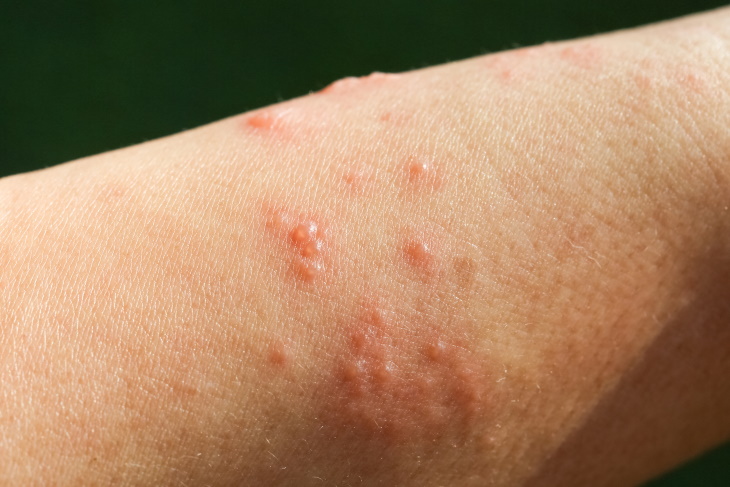
The terms eczema and atopic dermatitis are
often used interchangeably, but the latter is merely one of seven
different forms of this condition. Each type appears differently and
comes with slightly different symptoms and treatments. Here’s a brief
rundown of them all:
Atopic dermatitis (AD) is the most common form of eczema. It often
begins in childhood and lessens or disappears by adulthood. AD manifests
itself as a rash consisting of small itchy bumps filled with fluid. It
often appears inside the elbows and behind the knees. Sometimes, AD
turns into seborrheic or contact dermatitis in adulthood.
Neurodermatitis looks like AD. The patchy rash can appear anywhere on
the body, scalp, and the back of the neck. Neurodermatitis is extremely
itchy, to the point that people with this condition are known to scratch
in their sleep until the skin starts bleeding and becomes infected.
Contact dermatitis occurs when the skin
gets in contact with an irritant, like bleach, nickel earrings, or latex
gloves. The irritant causes itchy hives or pus-filled blisters to
appear on the skin. Over time, the blisters heal, but the skin may
remain leathery or scaly for some time.
Nummular eczema is easier to identify because it causes round,
ring-shaped spots on the skin. It can be triggered by dry skin and
insect bites, and it’s more common in people who already have another
kind of eczema.
Seborrheic dermatitis causes dandruff or a rash to form in an area of
the body with a lot of oil glands, like the scalp, eyebrows, or nose.
Oftentimes, seborrhea is triggered by stress or hormonal changes in the
body.
Stasis dermatitis occurs on the lower legs
and the tops of the feet. It happens in people with blood flow issues
and varicose veins, especially after a whole day of walking. When fluids
ooze through weakened blood vessels in the skin, they cause an itchy
rash to appear on the legs or feet. This type of eczema is more common
in older adults.
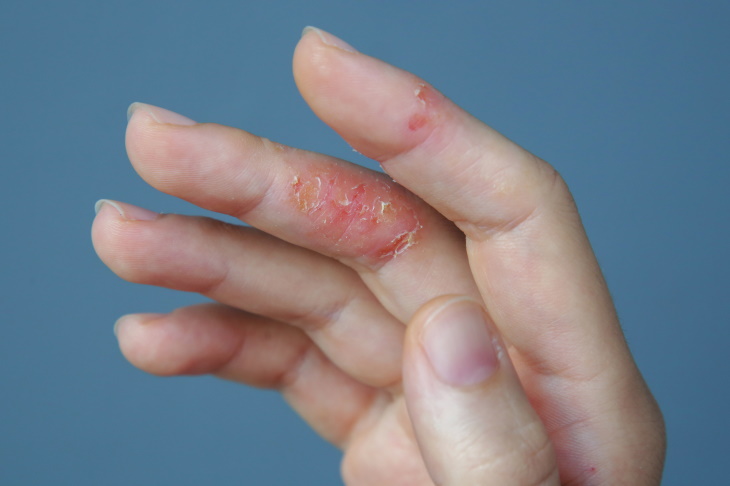
Dyshidrotic eczema is also known as hand eczema, although it can also
appear on the soles of the feet. In patients with this condition, itchy
and painful blisters form on the hands and feet, including between the
fingers. Professionals who often get their hands wet and are frequently
exposed to chemicals, such as hairdressers, are more likely to have this
condition.
What causes eczema?
Eczema doesn’t have a single cause; it’s a complex condition that
develops when several risk factors intersect.
First and foremost, the skin condition has a well-known link to
allergies or asthma. Oftentimes, eczema flare-ups occur as an
inflammatory immune reaction to a known allergen, such as dust, certain
metals, fragrance, bleach, certain foods, etc. These allergic triggers
are different for each person, so detecting your irritant does require a
bit of detective work.
People who have asthma also have a
significantly higher risk of eczema, which brings us to the second
prominent factor in the development of eczema – genetics. To be brief,
people who have family members with asthma, allergies, eczema, or
dermatitis are more likely to suffer from eczema themselves. Scientists
have also identified a specific genetic mutation that contributes to
eczema. This mutation is linked to a protein known as filaggrin that
weakens the skin’s ability to retain moisture.
Last but not least, one’s environment is also a factor. We often think
that our environment plays a minor role in our physical health, but this
is not the case with eczema. People who live in extreme climates, those
who work with irritating chemicals and pollutants, those who wear and
try a wide variety of beauty products, as well as those under massive
stress are all more likely to suffer from eczema. That’s why you often
need to consider your life holistically when addressing a chronic
condition like eczema.
How is eczema treated?
Diagnosing the condition is the first step
to success, and that is best done by a dermatologist, who will be able
to tell it apart from similar-looking skin conditions like psoriasis or
fungal skin infections.
Just like dry skin, most mild cases of eczema can be effectively treated
at home. However, if you notice that the rash doesn’t go away on its
own, you may need medicine to resolve the flare-up.
For home remedies for eczema kindly view my home remedies blog, thanks.
For home remedies for eczema kindly view my home remedies blog, thanks.