Wednesday, March 17, 2021

Meditation Techniques and Neurological Effects

Perhaps your life has become too tough to handle. You may be feeling run-down, stressed and anxious and cannot wait to find some time to wind down and relax. Your mind could be preoccupied, thinking about financial worries, deadlines, work, kids and health issues. Consequently, you have found it impossible to switch off.

One of the solutions you may have come across is meditation, the benefits of which include reduced stress levels and better sleep. However, the benefits do not just end there. Tuning inwards can actually make lasting physical changes, and not just in the way you feel. Meditation can literally change your brain. Let's take a look: meditation 
 
An overview:The brain on meditation 
The brain is divided into various segments, each having its own role. The frontal lobe (located at the front end of the brain), helps us plan, reason, emote and be aware of ourselves. MRI scans have shown that during meditation, the frontal lobe slows down and tunes off. 
 
Meditation can also have an impact on the thalamus. This area of the brain coordinates our senses and channels them from different parts of the body to the brain. During meditation, this processing slows down. 
 
The reticular formation is also affected during meditation. It is responsible for keeping the brain alert, based on the stimuli it receives.
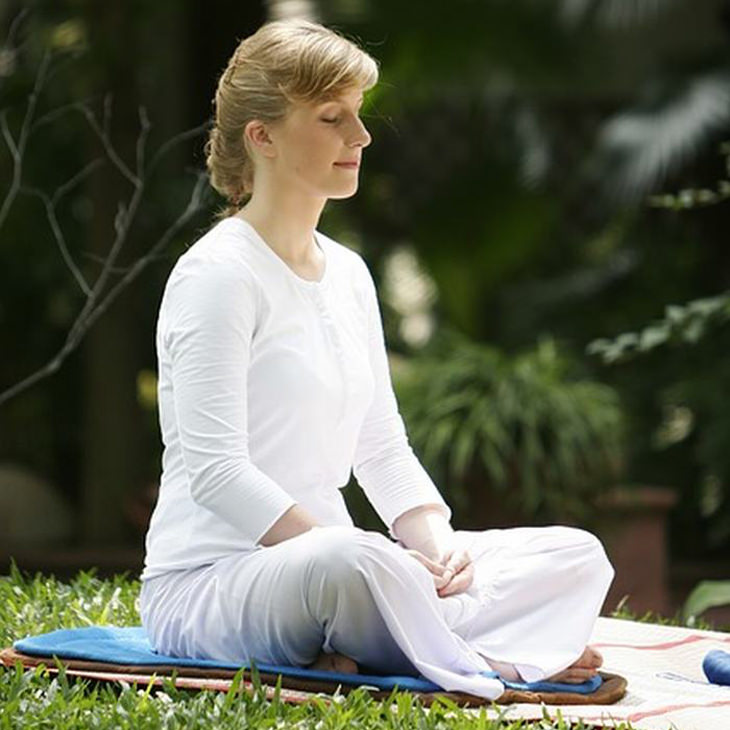
meditation
7 ways meditation affects the brain 
1. Meditation promotes new connections in the brain  
Meditation stimulates the growth of new brain cells, promoting more gray matter (the part of the brain whereby neurons connect to one another and which is activated in the process of learning new skills). As we age, we naturally begin to lose some of the mass of the grey matter. However, meditation can help slow this process down. 
 
2. Meditation improves your memory 
 Due to the effects that meditation has on gray matter, it has also been found to affect the hippocampus, the area of the brain that focuses on memory, helping us learn and internalize new skills and information. Furthermore, research conducted by Osher Research Center and Martinos Center for Biomedical Imaging, illustrated that people practicing mindful meditation have the ability to adjust their brain waves, tuning out distractions. Consequently, this increases productivity and boosts memory. 
 
3. Meditation helps control emotions 
Meditation affects the pre-frontal cortex, the part of the brain responsible for regulating emotions, by increasing the amount of gray matter in this area. As a result, meditation enables us to deal better with our emotions and feelings. 
 
4. Meditation diminishes stress 
Meditation affects the amygdala center - most commonly associated with fear and stress. When we feel stressed, this part of the brain becomes activated, triggering the fight or flight response. Meditation can reduce the activity of the amygdala, enabling us to control our anxiety and stress levels that come about for no apparent reason. Furthermore, a study conducted to discover the benefits of meditation in 2012, analyzed three groups to test which of the three can handle stress better. The first group practiced mindful meditation; the second focused on body relaxation training and the third were given no training whatsoever. A multi-tasking, stress-inducing test portrayed that those who meditated showed less stress than the group that didn't. 
 
5. Meditation promotes a relaxed state of mind 
 In its aroused state, your brain releases alpha waves, keeping you alert and hyped up. However, MRI scans have shown that during meditation, your brain predominantly releases theta waves - associated with a relaxed state of mind. 
 
6. Meditation reduces anxiety 
In an upsetting situation, the prefrontal cortex causes you to feel anxious. This response can be controlled with regular meditation. Meditating enables a lesser reaction in the prefrontal cortex, reducing pangs of anxiety, enabling you to evaluate the situation in a rational way. 
 
7. Meditation increases resilience 
Researchers at Wisconsin Madison University analyzed MRI images of Tibetan monks and discovered that meditation and resilience have a deep-rooted connection. meditation 
 
Picking the right meditation for you 
Meditation can be practiced in a variety of ways. Methods vary in the same way that people vary in their attitudes, character, and nature. Therefore, picking the right method of meditation for you comes down to fitting the right method of meditation to your nature, as opposed to trying to fit your character to a certain technique. Doing so will only cause you to feel frustrated after some time. However, when you find the right meditation for you, you will feel a certain ease and comfort in your practice, and you will flourish.
 
 
4 ways beginners can meditate 
 
1. Breathing: 
Following the breath is a great way to start your meditation practice, before moving on to more in-depth meditations. Focusing on the breath brings about a restful and calm nature. Here are three breathing techniques you could try. 
 
2. Gazing:  
This method of meditation uses our sense of sight to silence the mind. You can practice it anywhere, focusing your mind on something specific. In the yoga tradition, trataka is often practiced. This form of meditation focuses on gazing at a still candle flame in the dark. Practicing this method of meditation enables your mind to become focused. 
 
 3. Visualization: 
In this meditation, your eyes are closed. It requires the use of your inner eyes or your mind's eye. While there are many forms of visualization meditation, it often focuses on connecting with and visualizing an object, such as your heart - serving as an object of meditation. Alternatively, you may also visualize a calm space, such as a beach, creating your surroundings in your mind's eye. 
 
4. Chanting mantras: 
Mantras are believed to be a powerful sound or vibration that can be used to enter a deep state of meditation. Repeating mantras can help the mind become calm and more focused.

This is only for your information, kindly take the advice of your doctor for medicines, exercises and so on.     

https://gscrochetdesigns.blogspot.com. one can see my crochet creations  
https://gseasyrecipes.blogspot.com. feel free to view for easy, simple and healthy recipes    
https://kneereplacement-stickclub.blogspot.com. for info on knee replacement

Labels: , , , , , , , ,

Saturday, April 25, 2020

What Are the Long Term Health Consequences of COVID-19?

Typical news coverage of the COVID-19 pandemic will likely list the latest death and recovery rates among patients, which is certainly enough to see the bigger picture. However, life and death are not precisely opposites. No one can tell you that better than a COVID-19 patient who has been hooked up to a ventilator for weeks.  You can also hear from the patient who has been put into a medically induced coma and managed to recover.

For these people who have experienced the darkest side of this dangerous new virus, of whom there are thousands upon thousands, the disease didn’t end the day they were discharged from the hospital. Many will experience long-term physical and mental consequences of the disease. Although scientists still don’t know much about these residual effects of severe SARS-CoV-2 infections, it’s essential to be aware of the things we do know. Below, we examine the possible long term health effects of COVID-19 and the populations most susceptible to them.


Which COVID-19 Patients Have the Highest Risk of Experiencing Long Term Health Effects?
As you’re likely aware, not all patients experience a SARS-CoV-2 infection the same way; some may even be asymptomatic. They never know where they got it. So, it’s only logical that those who are asymptomatic and those who have recovered from a mild form of the virus may notice very few if any changes in their well being.


Patients suffering from a mild case of COVID-19 may experience weakness and fatigue for some time, or have a cough and chest pains for a few weeks after recovery, but that’s pretty much it. Generally speaking, the people who have the highest risks of developing any long term effects are those who had pneumonia and required oxygen. At the same time, they tested positive for the virus.


High-risk populations include:

    People over the age of 65
    Diabetic patients
    Patients with chronic diseases - liver, lung, heart, and kidney
    People with compromised immune systems
    Morbid obesity sufferers.

The Physical Long Term Effects of COVID-19
COVID-19 in a viral respiratory infection, so one of the main residual effects of the disease will involve the respiratory system. Those who had a moderate to severe case of the virus may have asthma or suffer shortness of breath and rough breathing for a prolonged time.
Severe Coronavirus patients may also develop Acute Respiratory Distress Syndrome (ARDS) in the course of the disease, which is a life-threatening lung injury. What occurs is that fluids leak into the lungs. ARDS is a medical emergency, and patients who have overcome the condition often need long-term treatment and a lengthy rehabilitation process.


In addition, COVID-19 increases the level of inflammation in the body dramatically, which can lead to damage in other organs and tissues.


 Doctors know that some severe patients may suffer from long-term brain, kidney, and heart damage as a result of lung failure. There are studies from China that found a higher-than-normal incidence of kidney and heart damage among Coronavirus patients.


A similar picture appears to follow in the western world, too, with a recent Washington Post article concluding that “clinicians around the world are seeing evidence that suggests the virus also may be causing heart inflammation, acute kidney disease, neurological malfunction, blood clots, intestinal damage and liver problems”.

Lastly, weeks spent under the ventilator, or simply in a bed, with no appetite or strength to move, may weaken the musculoskeletal system. This means that many patients may be weak and experience impaired mobility in the aftermath of the disease.


Neurological and Mental Effects of SARS-CoV-2 Infections


The Long Term Effects on the Brain.

 The human brain is dependent on a steady supply of oxygen, and respiratory infections of the lungs like the Novel Coronavirus may be significantly reducing oxygen supply to the brain. As a result, patients can feel neurological symptoms both during and after the disease. Confusion, inability to concentrate, memory problems, and mood swings are just some of the cognitive symptoms COVID-19 patients may experience. Researchers are not sure yet how long these symptoms can persist.

Another way the virus may be affecting the brain is rather direct. A recent Chinese study published in the prestigious JAMA journal suggests that the virus may be attacking the brainstem (the area of the brain that connects the spinal cord and the brain hemispheres), and is responsible for several essential bodily functions, including breathing and sense perception.


Long Term Health Consequences of COVID-19 man not feeling good at work coronavirus

The authors of this study suggest that one of the earliest symptoms of COVID-19 patients is often the loss of the sense of smell, which, as the authors suggest, means that the virus is damaging the brainstem and possibly even the breathing centers in the brainstem. We are yet to find further confirmation of that theory in future studies.


Mental Effects. For some people, the physical after-effects of COVID-19 aren’t the worst, but it is the psychological trauma that will continue affecting their lives in the long run. It is no secret that severe illnesses come with certain mental repercussions, with many intensive care patients, hospitalized with COVID-19 or not, and those who have spent a lot of time in the hospital often experiencing symptoms of trauma, anxiety, depression and even PTSD as a result.


Knowing the stigma and mass fear of the Novel Coronavirus we all observe on a worldwide level, one can only imagine how traumatizing it may be to suffer from the disease. Apart from that, the lives of many patients change dramatically when they are discharged from the hospital.  Many can no longer sustain a lifestyle they used to be part of, so any adverse mental reactions of COVID-19 patients are completely justified. Unfortunately, validation of these symptoms doesn’t make their life any easier.


The bottom line is that there are still so many things we do not know about the Coronavirus and its long term effects on the human body and mind. That said, it seems that most people with a mild form of the condition seem to fully recover from the infection in a matter of a few weeks. For those who have suffered through a severe form of COVID-19, however, it will take a long time to recover, both physically and mentally.


This is only for your information, kindly take the advice of your doctor for medicines, exercises and so on.     

https://gscrochetdesigns.blogspot.com. one can see my crochet creations  
https://gseasyrecipes.blogspot.com. feel free to view for easy, simple and healthy recipes    
https://kneereplacement-stickclub.blogspot.com. for info on knee replacement


Labels: , , , , , , , , , , ,