What Your Eyes Can Reveal About Your Intelligence
According to folk wisdom, the eyes are the
window to the soul. Indeed, a glimpse at one’s eyes and gaze can reveal a
great deal about a person’s emotional state: one’s hopes, interests,
worries, or a sleepless night. But there’s one more surprising quality
you can tell by looking at someone’s eyes - intelligence. Recent
research drew a surprising link between pupil size and intelligence,
claiming they can predict a person’s approximate IQ by simply measuring
their pupils.
The intelligence and pupil size connection 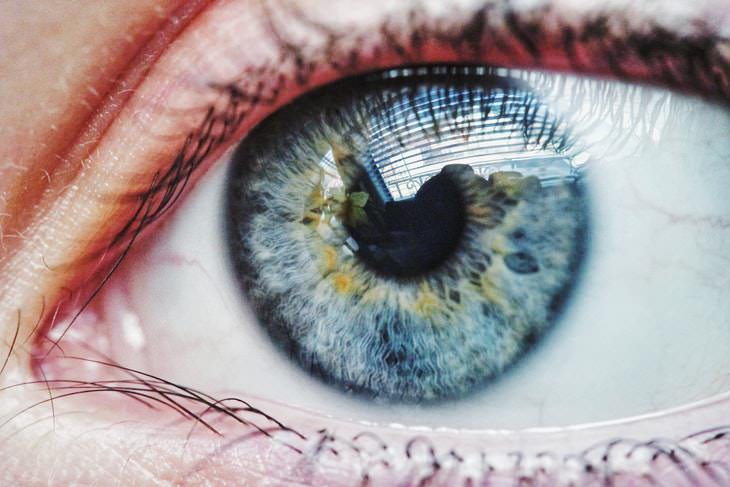
The research was conducted at the Georgia Institute of Technology.
Initially, the researchers intended to measure pupil dilations as a sign
of mental effort in 500 people aged 18-35, but they soon noticed that
the participants with a larger pupil diameter also performed better on
memory tasks. This made them suspect that there’s more behind the story,
so they started measuring the participants’ pupil diameter and had them
do reasoning, memory, and attention tasks to see if there’s any
correlation between pupil size and cognitive performance.
Interestingly, pupil diameters vary a lot
from person to person, ranging from 2-8 millimeters. But how do you
measure someone’s pupil, to begin with? To make sure that the pupils are
in a relaxed state, participants are asked to stare at a blank screen
for a couple of minutes. They wear eye trackers that are used in
calculating the diameter of the pupil. The test results showed a clear
connection between one’s intelligence and pupil size.
The authors of the study proceeded to observe the same relationship in
two other experiments they conducted, and they state that the effect is
so clear and easy to notice you could do it with the naked eye. “You
should be able to tell who scored the highest or the lowest on the
cognitive tests just by looking at them,” the researchers state.
The authors conclude that having a larger pupil means you also have
higher fluid intelligence, which is the ability to reason and think in a
flexible way, often when confronted with new tasks. Larger pupil
diameter was also correlated with better focus and working memory.
How are pupil size and intelligence connected?
Since this is the first study to establish
the connection between pupil size and intelligence, it’s difficult to
say how the two are connected. The study authors have a theory that the
connection may lie in the brain. Previous studies have noticed that a
larger pupil is associated with an improved function in an area of the
brain that helps consolidate information.
This brain area is called the locus coeruleus, and its job is to make
the hormone noradrenaline (norepinephrine in the brain). It is the same
hormone that makes us jump into action and think more efficiently in
stressful situations. Scientists know that the locus coeruleus
influences our memory, attention, and learning, all of which are
important measures of fluid intelligence. Moreover, it helps different
parts of the brain work together, and the impaired functioning in the
locus coeruleus is related to depression, Alzheimer's disease,
Parkinson's, and attention deficit hyperactivity disorder (ADHD).
The researchers suggest that people with a larger pupil diameter may
have a larger or better functioning locus coeruleus, and they will
hopefully confirm that in future studies.
One last interesting observation of the study is that the pupil size and
intelligence correlation holds even in older participants. This is
important because pupil size tends to decrease with age, and older
participants did have more constricted pupils than younger ones. Still,
once the researchers looked at the pupil size correlation in the older
age group, they still saw a correlation between cognitive prowess and
pupil size.
Hopefully, the authors will explore the fascinating correlation between
pupil size and cognitive abilities in future studies - we’ll definitely
keep you posted.