Monday, February 28, 2022

Are You Low in Calcium?

Calcium, best known for its important role in bone health is an essential mineral. Calcium is needed to stabilize blood pressure, regulate hormone secretion and conduct nerve signals properly. When you don't get enough calcium you could suffer from calcium deficiency which could be identified by certain symptoms. Here's a list of the most common signs your body is lacking in calcium:  
 
1. Dry skin

calcium
The lack of calcium, also known as Hypocalcemia, may be visible in your skin. This condition will likely make your skin look scaly and dry. It has also been found that calcium deficiency has a close link to the development of skin problems including eczema and psoriasis. 
 
2. Fatigue 
An inadequacy of calcium can affect your overall physical health. So if you experience extreme fatigue, lethargy, lack of energy, or a constant feeling of sluggishness, ease up on the energy drinks. Instead, focus on something positive like balancing your diet.

3. Depression 
calcium
Calcium is also essential for regulating your mood. Calcium is a natural sedative that produces calming and relaxing effects. Generally, the less calcium you consume, the more depressed and irritable you may feel. 
 
4. Insomnia 
As you sleep your levels of calcium rise and fall with higher levels occurring during deep sleep. If your body lacks calcium, you'll likely fail to have a sufficient deep night's sleep. This problem is related to calcium's role in the creation of melatonin, a hormone that helps us fall asleep. 
 
5. Paresthesia

calcium
Paresthesia includes neurological symptoms related to severe calcium deficiency. You may experience tingling and numbness around the mouth or in the fingers and toes, muscle tremors, an impaired sense of touch and also a poor memory and hallucinations. 
 
6. Frequent illness 
Calcium plays an important role in maintaining a healthy immune system as it helps your body fight against viruses and bacteria. A deficiency of calcium reduces your body's resistance against pathogen attacks, consequently giving you colds, coughs, and sneezes more often.

7. Brittle nails 
Just like your bones your nails need a certain amount of calcium to maintain their integrity. So, when you suffer from a deficiency in calcium your nails become dry, weak and are prone to peeling and splitting. Weak nails are not thick enough to withstand an impact and may, therefore, break during the simplest daily activities. 
 
8. Difficulty swallowing 
While it may sound surprising, calcium deficiency can lead to dysphagia or difficulty in swallowing. This feeling of tightness is caused by poor contractions of the muscles in your throat. When severe, it can even lead to spasms in the larynx causing unusual changes in your voice. 
 
 9. Toothaches
Most calcium is stored in our bones and teeth, so they are usually the first to suffer from calcium deficiency. Because of this vital element, your teeth may start to turn yellow, decay and may even hurt you. In addition, your risk of suffering from a periodontal disease may also increase. 
 
10. Muscle cramps 
If you suffer from muscle cramps in your thighs, calves, arms, and underarms that mostly occur at night, it may be one of the early symptoms of a calcium deficiency. Cramps may also be followed by muscle aches while moving and walking and may progress into spasms in muscles all over your body with time. 
 
How to treat calcium deficiency
calcium
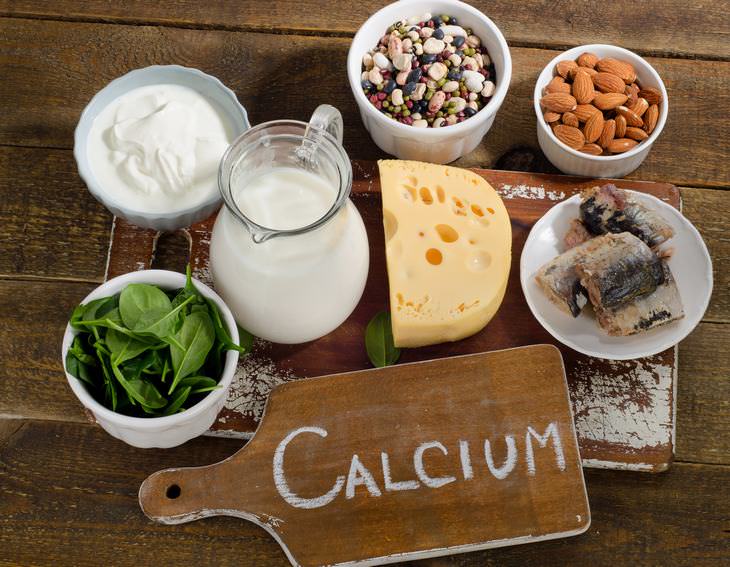
All adults should consume around 1000mg of calcium a day. In order to maintain a proper calcium intake, your diet should include dark leafy greens including kale, collards, as well as broccoli and turnip greens. For other calcium-rich foods, it is necessary to eat more fatty fish including salmon, sardines, mackerel, and tuna, as well as cheese, milk, soybeans, almonds and sesame seeds. Furthermore, to help your body absorb calcium better you should increase your vitamin D intake which is found in foods like egg yolks, oysters, shrimps, mushrooms as well as fortified foods like cereal, oatmeal, and orange juice.

This is only for your information, kindly take the advice of your doctor for medicines, exercises and so on.   

https://gscrochetdesigns.blogspot.com. one can see my crochet creations  
https://gseasyrecipes.blogspot.com. feel free to view for easy, simple and healthy recipes    
https://kneereplacement-stickclub.blogspot.com. for info on knee replacement


Labels: , , , , , , , , , ,

Monday, May 13, 2019

Role of Vitamin D in neonatal health

Babies who do not get enough amount of Vitamin D tend to have its deficiency. Here, we help you to understand the role of Vitamin D in neonatal health, the symptoms to watch out for in babies and how to overcome the deficiency.

Babies require Vitamin D for healthy growth and development and it also helps them build strong, healthy bones and teeth. Babies who do not get enough amount of it are said to be deficient in Vitamin D. It is common in our population and therefore in pregnant women. To prevent Vitamin D deficiency in infants, pregnant women who are at risk should be screened and treated for it in the 1st trimester. Screening of the newborn's vitamin D status is not essential as it is the mother's status which should be evaluated.


What is Vitamin D deficiency in newborns?

 
According to WHO, Vitamin D plays a pivotal role in bone metabolism through the regulation of calcium and phosphate homeostasis and in regulating the immune system. Vitamin D is produced by the body during exposure to sunlight but is also found in oily fish, eggs and fortified food products. Infants are born with low Vitamin D in the 1st few months of life. As the Vitamin D content of breast milk is dependent on maternal vitamin D status and is often low and sun exposure may be restricted for infants living at higher latitudes for various reasons. Vitamin D deficiency in infants can lead to bone malformation ( rickets), seizures and difficulty breathing. Since, vitamin D is required for building strong, healthy bones and teeth. Parents can make sure your baby has enough vitamin D by giving a daily supplement ( a dose of drops every day) after consulting the expert. This should be done as soon as the baby is born. Tons of research suggests that a routine, vitamin D  supplementation programme should be seriously considered starting from the neonatal period extending  right through the childhood into adolescence. Oral Vitamin D3 supplementation as an oil emulsion has been shown to be associated with significant and sustained increases in 25 (OH)D from baseline in fully breastfeeding infants through 7 months. Whereas, few studies also revealed that newborns with vitamin D deficiency had 44% increased risk of being diagnosed with schizophrenia as young adults, compared with newborns with normal levels of Vitamin D.


Incidences of Vitamin D deficiency in newborns in India


Vitamin D deficiency has emerged as a significant public health problem throughout the world. Even in the Indian context, it has been reported to be present in many children in spite of the wide availability of sunlight. The manifestations of deficiency may vary from hypocalcemic seizures, tetany in infancy and adolescence to florid rickets in toddlers. Also, various studies suggest that women who lack Vitamin D will give birth to such children. Ideally, both the mother and children should go out in the sun by wearing half-sleeve cotton clothes, which tend to allow absorption of the required vitamin. In the case of neonatal babies are also hardly out in the sin. Hence, it is essential to address it at the right time.


Symptoms of vitamin D deficiency in infants
Craniotabes ( softening of skull bones)
Other osseous signs ( such as rickets) are not seen in the newborn but classical signs in the older infant include a broadening of the metaphyses, bowing of the long bones once weight bearing
Hypocalcaemic seizures


How to know if your baby is at risk of Vitamin D deficiency?
If they're breastfed

If mothers don't have enough Vitamin D
Babies born prematurely


Know how low Vitamin D can be harmful to babies
Some children with low vitamin D get bone and muscle pain. As mentioned earlier, very low vitamin D can lead to soft bones and raise the risk of rickets in children. Rickets only occurs when children are growing - if a child has softer bones from low Vitamin D, the bones can bend and cause bow legs or knock knees, and other changes too. Low Vitamin D can cause low calcium, which can invite muscle cramps in children. Not only this, but low calcium levels may also cause seizures ( convulsions or fits), mainly in young babies.


Diagnosis of Vitamin D deficiency
Serum 25-OHD concentration os the most excellent indicator of vitamin D status.
The normal adult concentration is > 50 nmol/L, although several sources use > 75 nmol/L for pregnant women.


How should the vitamin D deficiency be tackled in newborns
According to the WHO, vitamin D supplements may be effective in preventing rickets, particularly for infants and children, who may be at higher risk due to limited sun exposure or those with darker skin pigmentation.  Also, it recommends that newborn babies must be supplied with Vitamin D through sunlight or supplements in the 1st few months of life. An infant between the ages of 1-2 years requires 400 IU per day, while older children need 600 IU. Regular sunlight exposure can help keep vitamin D deficiency at bay. But, you should speak to your expert before exposing children to the sun.


Breast milk is the best food that you can offer to  your frowing baby. Ecen if you make your baby eat other foods, you can continue to breastfeed until 2 years. As discussed earlier, breast milk has only small amounts of vitamin D ( 4-40 IU per litre), which may not be sufficient for your newborn. That's why babies who are breastfed should receive a daily supplement of vitamin D from birth until they get enough from their diet. This should also be strictly done under the guidance of the expert.


Treatment of vitamin D deficiency involve giving ergocalcified or cholecalciferol for 3 months.
High dose bolus therapy ( 300,000- 500, 000 IU) should be given to children over 12 months of age. If compliance or absorption issues are suspected.

THIS IS ONLY FOR INFORMATION, ALWAYS CONSULT YOU PHYSICIAN BEFORE HAVING ANY PARTICULAR FOOD/ MEDICATION/EXERCISE/OTHER REMEDIES.                                    PS- THOSE INTERESTED IN RECIPES ARE FREE TO  VIEW MY BLOG-                                                                                           https://gseasyrecipes.blogspot.com/    
                                                                                                                                                     FOR INFO ABOUT KNEE REPLACEMENT, YOU CAN VIEW MY BLOG-                                                  https:// kneereplacement-stickclub.blogspot.com/  
         
                   FOR CROCHET DESIGNS                                                                                                                                                                                                  https://gscrochetdesigns.blogspot.com

Labels: , , , , , , , , , , ,