Monday, May 09, 2022

All You Need to Know About Using Loofahs

We all enjoy a pleasant shower or a relaxing soak in the tub. But what do you usually grab to clean yourself up with? Chances are you use a loofah. It's the easiest and most relaxing way to clean yourself up. But, the loofah is actually not as clean as we would have hoped. It is a breeding ground for bacteria and has the potential to harbor pathogens like Staphylococcus, stenotrophomonas maltophila and group B streptococcus. While they may sound like big, fancy words, you cannot just brush it off.
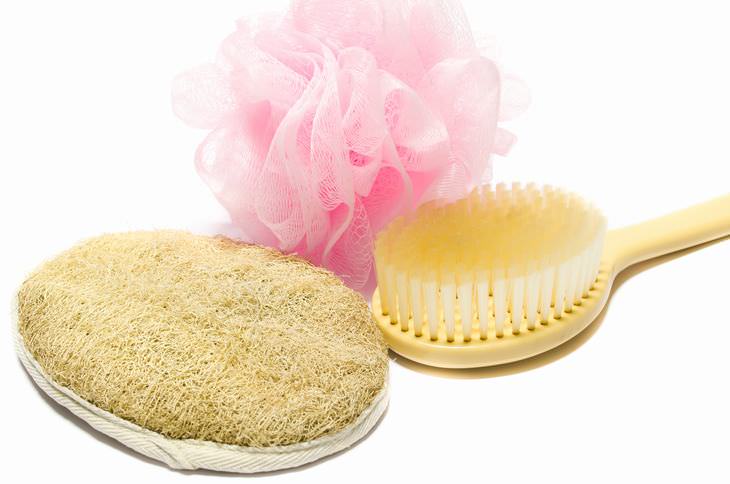
loofahs


For starters, staphylococcus causes acne, stenotrophomonas matophila can result in a respiratory infection and group B Streptococcus which can cause pneumonia, bone, and joint infections. While this may not sound right, these nasty bacteria are lingering on your loofah. But, you may be wondering, how does this occur? 
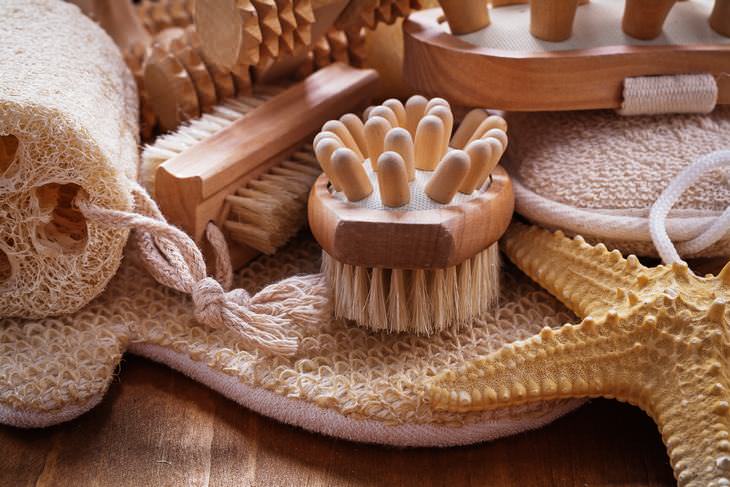
loofahs
Ironically, it is us who make our loofahs infested with bacteria. These bacteria are lingering on your body and have been picked up somewhere we've been. When we shower, we rub off what we have collected onto our loofah. While this leaves us clean, it leaves our loofahs dirty.

While it will unlikely cause you a life-threatening infection, it could infect others if you share your loofah or something else that has touched it, like your soap. How do you know if your loofah is infected? For starters, it will start to smell of mold. When you notice this, you can do two things: either toss it, or clean it. While it might seem difficult to clean something that is typically supposed to do the cleaning, there is a way you can get this done. And it isn't as tricky as you might imagine. 
 
The best way to clean your loofah is to submerge it in a mixture that is made of one part bleach and nine parts water for about ten minutes. Then remove the loofah and let it air dry completely. If this is too time-consuming for you, your best option would be to toss the loofah away. If you don't choose to dispose of the loofah, your only other option is to use a bar of soap instead, giving it a good rinse with water.
 

This is only for your information, kindly take the advice of your doctor for medicines, exercises and so on.   

https://gscrochetdesigns.blogspot.com. one can see my crochet creations  
https://gseasyrecipes.blogspot.com. feel free to view for easy, simple and healthy recipes    
https://kneereplacement-stickclub.blogspot.com. for info on knee replacement

Labels: , , , , , ,

Wednesday, August 28, 2019

If much like me, you don’t fancy getting expensive in-office peels that make your skin look terrible and irritated for a month, then this article is for you. Exfoliating can be done at home and doesn’t have to be scary or painful. And the results are a refreshed, glowing, smooth and soft complexion at any age or with any skin condition. In order to become an at-home facialist and exfoliate like a pro, you need to understand your exfoliating goals and condition, which is exactly what this article is about.

Disclaimer: When incorporating a new product into your skincare routine, always do a patch-test (on your neck beside your ear) a day before using it on a larger area. This is important because there is always the possibility of you being allergic to a new product.

Why You Should Exfoliate Your Skin

As we age, dead skin cells on the skin’s surface begin to pile up unevenly, which can lead to a lack-luster appearance and dry patches. Through the process of exfoliation, we remove those redundant skin cells from the surface of the skin, revealing the glowing young skin underneath.

By exfoliating, you will be able to achieve the following:

Smooth out your skin and increase blood circulation, which will make your skin look more youthful and fresh.
Clear out the pores, thereby preventing inflammation and acne.
Let your skincare products be more effective because they will
How You Can Exfoliate Your Skin

Exfoliators come in all shapes and sizes: moisturizers, toners, exfoliating pads, scrubs, muslin cloths, cleansing brushes, and even the good old loofah are all exfoliators. All of these products and tools work in two major ways:

Chemical exfoliation: Exfoliating moisturizers and toners usually contain a little amount of man-made or naturally-derived acids, which dissolve the dead skin cells off your skin without any scrubbing.

Physical exfoliation: Scrubs, cloths, and brushes work differently, as they peel away the dead skin cells by physically massaging them off the skin.

Exfoliating pads are usually a mix of the two methods: they both massage the skin and contain a chemical agent that stays on the skin and exfoliates it.


Harsh brushes, salt scrubs, and scrubby loofahs are to be used only on the body, and not on the face. The rest can be used anywhere you get dry: nose, elbows, chest, you name it.

Now, depending on your skin type, you should use a different exfoliator, which is exactly what the following sections are about. No matter if you’re oily, sensitive or anything in between, we’ve got you covered.
How To Exfoliate Sensitive Skin
If you find that your skin gets very easily irritated, red, and sensitized, you need to pamper your skin and be very picky about the products you apply. That is why people with sensitive skin often stay away from exfoliants. They are afraid that they will aggravate their skin even more, which, in all honesty, is a myth.


While it is true that sensitive skins should stick to gentler products, even they can benefit from exfoliation. The rule of thumb is as follows: you need to exfoliate less often and pick a product that is suited for sensitive skins.


Here are some tips:

    Don’t exfoliate more than 1-2 times a week. If you exfoliate only once a week and still see that your skin is becoming more irritated, do it even less. You get the gist...
    Look for keywords such as “calming” or “hypoallergenic” in the exfoliators of your choice.
    Avoid harsh, beady scrubs, salt-based scrubs, strong acids, harsh washcloths and exfoliating brushes like fire. These will aggravate and burn your already sensitive skin.

a woman applying cream to her hands
Like
If you want to use a physical scrub, opt for something gentle and calming, such as an oatmeal or rice-based scrub or mask. Be very gentle when using it and don’t rub your face.


Sensitive skin benefits from mild acid exfoliants, preferably one containing lactic, azelaic or mandelic acid. All of these ingredients will dissolve the dead skin cells without physically damaging or irritating the skin. Instead, they nourish and hydrate your skin. Azelaic and mandelic acid can also calm irritation and have an antibacterial effect, which means that it will improve acne or rosacea.

Bonus! Here is a soothing oatmeal face mask recipe that will gently exfoliate even the most sensitive skins.
DIY Oatmeal Face Mask

1. Whizz ⅓ cup oatmeal in a food processor until it becomes a coarse powder.

2. Add about ¼ cup lukewarm water, just enough to form a thick paste. If you know that your skin is not allergic to milk or honey, use milk instead of the water and add 1 tsp of honey.

3. Apply the mask onto clean, dry skin and leave on for 10-15 minutes, then add a little lukewarm water to liquify the mask and gently massage your skin before washing off completely.


4. Follow up with your usual moisturizer.


jar of diy oatmeal scrub with loofahs and brushes

How To Exfoliate Dry and Aging Skin
As many dry-skinned people will know, having dry skin can turn into a flaky nightmare in no time. A change in weather or climate can instantaneously whack your skin out of balance, and literally the next morning you can wake up with tight-feeling and flaky skin.


When that happens, you need to exfoliate, and to do it as effectively as possible. At the same time, you can’t afford to lose any more moisture, which is why you should follow the following tips:

Note! The same advice applies for aging skin, as with time skin tends to become dry. If your skin is mature but still oily, see the next section.

Skin that leans more towards the drier side will need to exfoliate 2-3 times a week.
To spot products that suit your skin type, look for the keywords “glow” or “radiance” on them.
If you are looking for a scrub, try using something that will hydrate your skin while exfoliating it, such as a sugar or honey-based scrub or mask. Oatmeal and rice scrubs are moisturizing as well, so you can use them as well.


Avoid drying scrubs that contain clay or salt. Salicylic acid can be drying for some people as well.

For chemical exfoliants, look for those that contain glycolic and lactic acids. Both of these acids are affordable, common and non-drying. Exfoliating moisturizers that contain one of these acids are a good idea for those who have dry skin, as they will moisturize your skin while exfoliating.

Bonus! A moisturizing honey and sugar scrub recipe, perfect for dry skins.
At-home Honey and Sugar Scrub

1. Combine 1 tbsp raw honey, 1 tbsp sugar (white or brown) and 1 tbsp sweet almond oil (avocado, jojoba or sea buckthorn work just as well).

2. Apply onto dry, clean skin and gently massage your skin for 1-2 minutes, then wash off completely, until no oily residue remains.

3. Follow up with your favorite moisturizer.
How To Exfoliate Combination to Oily Skin
While sensitive and dry skin craves hydration, combination to oily skin has a different goal. Namely, us oily-skinned people dream to balance out the skin and urge it to produce less oil, but without drying it out.


Fortunately, a good exfoliation routine can achieve that goal with no problem. In general, combo and oily skins benefit from a deeper exfoliant and can use exfoliating products more often.
Here are some exfoliating tips for combo/oily skin:

You can exfoliate more often than other skin types, up ‘til 3-4 times a week. If your skin is very combination, however, consider exfoliating your oily areas more often than the dry areas.
Look for the keyword “balancing”, “perfecting” or similar on the packaging of products.

 a cleansing face brush

Use cleansing brushes and washcloths when washing your face. This will provide a gentle exfoliation and clean out your pores better, which will regulate your oil production.
 

If you favor scrubs, I would still avoid drying products such as salt scrubs, at least for your face and neck. Opt for clay-based, coffee-based scrubs or peeling gels that are gentler and they minimize the appearance of pores.
 

In terms of chemical exfoliators, look for those that contain glycolic or salicylic acids. Salicylic acid is particularly good at deep-cleaning the pores and so it is very effective for clearing out acne. 

Glycolic acid is particularly beneficial for those with combination skins, as it doesn’t dry out the normal areas of combo skin.

Bonus! A balancing DIY coffee and clay scrub recipe for combo-to-oily skin.
Coffee and Clay Scrub/Mask

1. Combine 2 tsp bentonite clay, ½ tsp ground coffee and 1-1½ tsp lukewarm water (or rose water). Mix until it forms into a thick paste.
2. Apply to dry, clean skin and massage your skin for a few minutes, then rinse off. Alternatively, leave it on for 5 minutes as a mask, and then massage and rinse.
3. Moisturize as usual.


THIS IS ONLY FOR INFORMATION, ALWAYS CONSULT YOU PHYSICIAN BEFORE HAVING ANY PARTICULAR FOOD/ MEDICATION/EXERCISE/OTHER REMEDIES.                                    PS- THOSE INTERESTED IN RECIPES ARE FREE TO  VIEW MY BLOG-                                                                                           https://gseasyrecipes.blogspot.com/                                                                                                                                                FOR INFO ABOUT KNEE REPLACEMENT, YOU CAN VIEW MY BLOG-                                                                       https:// kneereplacement-stickclub.blogspot.com/                                                                                                                     FOR CROCHET DESIGNS                                                                                                   
                                https://gscrochetdesigns.blogspot.com

Labels: , , , , , , , , ,

Monday, June 24, 2019

Loofahs can be breeding grounds for germs

Warm, moist environments are a breeding ground for germs. Using a loofah practically provides the bacteria for a place to multiply and easy access to your skin. 

Loofahs are supposed to be the Holy Grail for daily exfoliation. They scrub dirt and dead skin off your body and are used with body washes. But we often overlook the fact that all the dead skin off our bodies gets deposited in the loofah’s delicate weave.

Every time the loofah is not dried properly, the organisms trapped in it grow and multiply. "You spread the bacteria that you washed off your body the last time," said a dermatologist. "The loofah is spreading yesterday's dirt back on your body," he said.

A study also found that loofahs can transmit infection causing bacteria, which is harmful for those who are sick and having weak immune systems.

“I wouldn’t recommend using a buff puff or loofah,” adviced another dermatologist. “Loofah sponges are intimate with many unclean areas of the body and then sit around allowing bacteria to multiply within the nooks and crannies of the sponge,” he warned.

Warm, moist environments are a breeding ground for germs. Using a loofah practically provides the bacteria for a place to multiply and easy access to your skin. If you absolutely cannot do without a loofah, make sure to thoroughly clean it before every use. After each use, take it from the damp bathroom and hang it in sunlight or a place with enough airflow for it to completely dry. If you notice a change in colour or it emanating a foul smell, replace it immediately.


THIS IS ONLY FOR INFORMATION, ALWAYS CONSULT YOU PHYSICIAN BEFORE HAVING ANY PARTICULAR FOOD/ MEDICATION/EXERCISE/OTHER REMEDIES.                                    PS- THOSE INTERESTED IN RECIPES ARE FREE TO  VIEW MY BLOG-                                                                                           https://gseasyrecipes.blogspot.com/                                                                                                                                                FOR INFO ABOUT KNEE REPLACEMENT, YOU CAN VIEW MY BLOG-                                                  https:// kneereplacement-stickclub.blogspot.com/                                                                      FOR CROCHET DESIGNS                                                                                                                                                                                     https://gscrochetdesigns.blogspot.com

Labels: , , , , , , , , , , ,