Saturday, March 20, 2021

You should only drink water when you are thirsty, says study

We are not kidding!

It is a popular notion that we should drink at least 2 liters or eight glasses of water every day to stay healthy and fit. About 60 per cent of your body is made up of water, which makes it essential for human beings. It helps to carry nutrients to the cells and different parts of the body. It allows the body to absorb minerals, vitamins, amino acids, glucose and flushes out toxins and waste. But many people find it hard to drink the recommended amount of water every day. A recent study revealed why it is such a mountainous task to gulp 2 liters of water.

The study
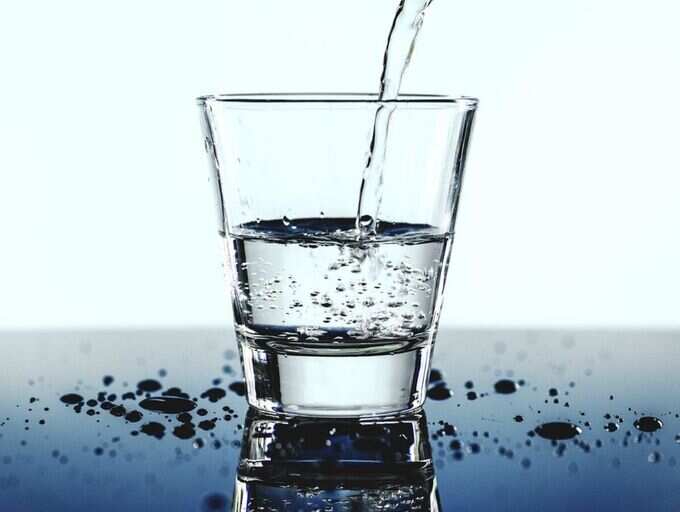
A study carried out in 2017 suggests that one should drink water only when feeling thirsty. They concluded this after discovering a mechanism that makes drinking excess water a challenging task. The findings were published in the Proceedings of the National Academy of Sciences.

For the study, the team enrolled several participants and asked them to drink a large amount of water under two conditions. First immediately after their workout, when they were thirsty and secondly later in the day when they were not that thirsty. In both situations, they asked the participants to rate how difficult it was to swallow the water.

In the end, it was revealed that participants found it three times more difficult to guzzle water when they were not thirsty.

Later, the researchers used functional magnetic resonance imaging (fMRI) on each of the participants to measure brain activity just before they swallowed water in both circumstances. They found out that some areas of the right prefrontal cortex of the brain were highly active when participants forcefully drank the water. This suggests that this region of the brain repeal the swallowing inhibition to allow excess water consumption. 

What to do

The study suggests that you should drink according to your thirst. Drinking too much water can lead to hyponatremia (A condition in which the level of sodium in the blood is too low). It is important to listen to your body's need.

The ideal amount of water one should drink
Analysing different kinds of studies carried out on this matter, the Institute of Medicine (IOM) recommends that women should try to drink around 2.2 liters of fluid daily and men should consume around 3 liters liquid.


Labels: , ,

Friday, March 06, 2020

6 Little-Known Dangers of Restricting Sodium Too Much

Sodium is an important electrolyte and main component of table salt.

Too much sodium has been linked to high blood pressure, and health organizations recommend that you limit your intake .

Most current guidelines recommend eating less than 2,300 mg per day. Some even go as low as 1,500 mg per day.


However, even though too much sodium causes problems, eating too little can be just as unhealthy.

Here are 6 little-known dangers of restricting sodium too much.


1. May increase in insulin resistance
A few studies have linked low sodium diets to increased insulin resistance .


Insulin resistance is when your body’s cells don’t respond well to signals from the hormone insulin, leading to higher insulin and blood sugar levels.

Insulin resistance is believed to be a major driver of many serious diseases, including type 2 diabetes and heart disease .

One study involving 152 healthy people found that insulin resistance increased after only 7 days on a low sodium diet .

Yet, not all studies agree. Some have found no effect, or even a decrease in insulin resistance .

However, these studies varied in length, study population, and degree of salt restriction, which may explain the inconsistent results.

    summary

    Low sodium diets have been associated with increased insulin resistance, a condition that causes higher blood sugar and insulin levels. This may lead to type 2 diabetes and other serious diseases.

2. No clear benefit for heart disease

It’s true that reducing your sodium intake can reduce your blood pressure.

However, blood pressure is only a risk factor for disease. What’s really significant is hard endpoints like heart attacks or death.

Several observational studies have looked at the effects of low sodium diets on heart attacks, strokes, and the risk of death .

One study found that less than 3,000 mg of sodium per day is linked to an increased risk of dying from heart disease, including heart attacks and strokes .

Disturbingly, another study reported a higher risk of dying from heart disease at the lower sodium levels that many guidelines currently recommend .

However, other studies have reported conflicting results, so this matter is far from settled .


In a 2011 review, reducing sodium didn’t reduce the risk of dying from heart attacks or strokes, and it increased the risk of death from heart failure .

    summary

    Although the evidence is mixed, some observational studies show that low salt diets are linked to an increased risk of death from heart attacks or strokes. Controlled trials show no clear benefit.

3. Increased risk of death from heart failure

Heart failure is when the heart is not able to pump enough blood around the body to meet its needs for blood and oxygen.

This doesn’t mean that your heart stops working completely, but it’s still a very serious health issue.

Interestingly, low sodium diets have been linked to an increased risk of death in people with heart failure.

One review found that for people with heart failure, limiting sodium intake increased the risk of dying .

In fact, the effect was strong — people who restricted their sodium intake had a 160% higher risk of death. This is concerning, as people with heart failure are often told to limit their sodium intake.

Yet, the results were strongly influenced by only one study, so more research is needed.

    summary

    There’s some evidence that people with heart failure may have a higher risk of dying on a low sodium diet. However, more studies are needed to confirm this.

4. May raise LDL (bad) cholesterol and triglycerides

Many factors can increase the risk of heart disease, including elevated LDL (bad) cholesterol and triglycerides.

Some studies have found that low sodium diets may increase both LDL (bad) cholesterol and triglyceride levels.

In a 2003 review of studies in healthy people, low sodium diets caused a 4.6% increase in LDL (bad) cholesterol and a 5.9% increase in triglycerides .

A more recent review reported a 2.5% increase in cholesterol and a 7% increase in triglycerides .

What’s more, these studies found that salt restriction only caused minor reductions in blood pressure, on average, with a slightly stronger effect in people with high blood pressure.

    Summary

    Studies have found that limiting salt may raise LDL (bad) cholesterol and triglycerides, which are common risk factors for heart disease.

5. Increased risk of death for people with diabetes

People with diabetes have an increased risk of heart attack and stroke .

Therefore, many guidelines for those with diabetes recommend limiting salt intake .


However, some studies have found an association between low sodium intake and an increased risk of death among those with both type 1 and type 2 diabetes .

However, these were observational studies, and their results should be interpreted with caution.

    Summary

    People with type 1 and type 2 diabetes may have an increased risk of death on a low sodium diet. However, this needs to be studied further.

6. Higher risk of hyponatremia (low blood levels of sodium)

Hyponatremia is a condition characterized by low levels of sodium in the blood.

Its symptoms are similar to those caused by dehydration. In severe cases, the brain may swell, which can lead to headaches, seizures, coma, and even death .

Certain populations, like older adults, have a higher risk of hyponatremia .

That’s because older adults are more likely to have an illness or take medication that can reduce sodium levels in the blood.

Athletes, especially those who participate in long-distance endurance events, are also at a high risk of developing exercise-associated hyponatremia .

In their case, it’s usually caused by drinking too much water and failing to replace the sodium that’s lost through sweat .

    summary

    A condition called hyponatremia, or low blood sodium levels, may affect certain people like older adults and some athletes. Eating less salt raises the risk of this condition.

The bottom line

The National Academy of Medicine (NAM) recommends a sodium intake of less than 2,300 mg per day, corresponding to 5.8 grams of salt.

Studies suggest that there’s a J-shaped curve when it comes to the effects of sodium.

Too much may be harmful, but too little can also have serious consequences.

The lowest risk of health issues and death seems to be somewhere in between.

Controversially, some researchers have suggested an intake of 3,000–5,000 mg of sodium per day is considered optimal.

This exceeds the maximum daily intake recommended by NAM, but it’s similar to what the average person already eats in the United States.

This amounts to 7.5–12.5 grams of table salt per day, which equals 1.5–2.5 teaspoons per day (salt is only 40% sodium, so multiply sodium by 2.5 to find the amount of salt).

However, many people may benefit from restricted sodium intake, such as those with salt-sensitive high blood pressure .

If you have a medical condition that requires a diet low in sodium, or if your healthcare provider has advised you to limit your intake, by all means, continue to do so.

However, if you’re a healthy person trying to stay healthy, there’s no good evidence that following a low sodium diet will improve your health.

Most of the excess sodium people eat comes from processed, packaged foods — stuff you shouldn’t be eating much of anyway.

Adding some salt to your healthy foods to improve their flavor is both safe and healthy — and can make your diet much more pleasurable.


This is only for your information, kindly take the advice of your doctor for medicines, exercises and so on.     

https://gscrochetdesigns.blogspot.com. one can see my crochet creations  
https://gseasyrecipes.blogspot.com. feel free to view for easy, simple and healthy recipes    
https://kneereplacement-stickclub.blogspot.com. for info on knee replacement
 

Labels: , , , , , , , ,

Saturday, February 10, 2018

Low sodium levels in blood may affect cognitive impairment with advancing age

A lower level of sodium in the blood may affect cognitive functions with advancing age, a new study has warned.

Hyponatremia is a condition that occurs when the level of sodium in the blood falls below 135 Millimoles Per Litre (mmol/L). The results indicate that sodium levels may help preserve cognition as individuals age.

“Slightly lower sodium levels in the blood are likely to be unnoticed in clinical practice,” said the co-author of the study. “Because both slightly lower serum sodium levels and mild changes in cognitive function are common occurrences with advancing age, future research on this topic is important — including determining whether correcting lower sodium levels affects cognitive function,” the researcher added. For the study, the researchers examined information on 5,435 asymptomatic community-dwelling men aged 65 years and above who were followed for a median of 4.6 years.

A total of 100 men had serum levels indicative of hyponatremia.

The researchers found that slightly lower sodium levels in the blood were related to both cognitive impairment and declines in cognitive function over time.

Compared with men with sodium levels of 141-142 mmol/L, men with levels of 126-140 mmol/L were 30 per cent more likely to have cognitive impairment at baseline and 37 per cent more likely to experience cognitive decline over time.

They also found an association of high serum sodium (143-153 mmol/L) with cognitive decline over time.


THIS IS ONLY FOR INFORMATION, ALWAYS CONSULT YOU PHYSICIAN BEFORE HAVING ANY PARTICULAR FOOD/ MEDICATION/EXERCISE/OTHER REMEDIES.    

PS- THOSE INTERESTED IN RECIPES ARE FREE TO VIEW MY BLOG-                      
HTTP:GSEASYRECIPES.BLOGSPOT.COM/
FOR INFO ABOUT KNEE REPLACEMENT, YOU CAN VIEW MY BLOG-                                                     
HTTP://KNEE REPLACEMENT-STICK CLUB.BLOGSPOT.COM/
FOR CROCHET DESIGNS

HTTP://MY CROCHET CREATIONS.BLOGSPOT.COM

Labels: , , , , , ,

Monday, May 15, 2017

Sodium deficiency

Sodium deficiency or hyponatraemia refers to the low sodium concentration in the body of an individual. As other minerals, Sodium also plays essential roles in the human body. It is required for many of the functions of the body, including blood pressure management, fluid balance and the proper functioning of the nervous system. It may also sometimes lead to neurological impairments which affect walking and attention and could also result in bone fracture. Hyponatremia can be caused due to drinking too much of water, without enough replacement of sodium from the body. However, consuming too much of sodium can increase the volume of blood in the body, resulting in various health problems and can sometimes lead a person to coma.

The symptoms of sodium deficiency or hyponatraemia aren’t usually always specific. They can differ from person to person and depend on how rapid the fall in the sodium concentration of the body is. However, some of the common symptoms that are usually seen in the affected persons are as follows:
  1. Gastrointestinal distress: One of the symptoms of hyponatraemia includes gastrointestinal distress. It may cause a decrease in the appetite of an individual and also result in nausea and vomiting. However, if a person suffering from sodium deficiency experiences vomiting, then their problem may continue to worsen.
  2. Cognitive Impairment: Deficiency in sodium level can also result in abnormal mental status. Hyponatremia causes expanding of the tissue cells in the body. However, maximum tissues in the body can handle this change but the brain cannot. It is not capable of compensating for the increased size of the cells and as a result, the brain starts to dysfunction and causes a headache, confusion, lethargy and the problem of fatigue. With the worsening of the conditions, the person can experience hallucinations, decrease in consciousness and may also lead to coma.
  3. Muscular Problems: Due to the drop in Sodium concentration, a person can experience various muscular problems including spasms or cramps. He/She may also suffer from fatigue. The weakness in the muscles and seizures are some of the additional symptoms of sodium deficiency.
The severity of these symptoms depends on the speed i.e., on how fast the fall in the blood salt level is. A gradual, low-level drop can be tolerated if it lasts for a few days or weeks, but the deficiency of sodium in the body can be fatal if not treated as early as possible. It may even lead to the death of a person. 

  this is only for your information, kindly take the advice of your doctor for medicines, exercises and so on.   
https://gscrochetdesigns.blogspot.com. one can see my crochet creations 
https://gseasyrecipes.blogspot.com. feel free to view for easy, simple and healthy recipes    
https://kneereplacement-stickclub.blogspot.com. for info on knee replacement   


Labels: , , , , ,

Saturday, October 08, 2016

THE EFFECT OF DRINKING TOO MUCH WATER ON THE BODY

Challenging the popular notion that we should drink eight glasses of water a day for good health, researchers have found that drinking too much water can put people in danger of water intoxication.

Researchers from Monash University in Victoria, Australia have found a mechanism that regulates fluid intake in the human body and stops us from over-drinking. 

The findings showed that excess of water in the body can cause water intoxication or hyponatremia — a condition that occurs when vital levels of sodium in the blood become abnormally low.

The condition can potentially give rise to symptoms ranging from lethargy and nausea to convulsions and coma.

The study revealed that a ‘swallowing inhibition’ is activated by the brain after excess liquid is consumed, helping maintain tightly calibrated volumes of water in the body.

“If we just do what our body demands us to we’ll probably get it right — just drink according to thirst rather than an elaborate schedule,” said Michael Farrell, Associate Professor at Monash University.

For the study, the team asked participants to rate the amount of effort required to swallow water under two conditions: following exercise when they were thirsty and later after they were persuaded to drink an excess amount of water.

The results showed a three-fold increase in effort after over-drinking.

Further, the team used functional magnetic resonance imaging (fMRI) and found that the right prefrontal areas of the brain were much more active when participants were trying to swallow with much effort.

“We found effort-full swallowing after drinking excess water which meant they were having to overcome some sort of resistance, as the swallowing reflex becomes inhibited once enough water has been drunk,” Farrell said.

The study was published online in the Proceedings of the National Academy of Sciences. 
 
this is only for your information, kindly take the advice of your doctor for medicines, exercises and so on.
https://gscrochetdesigns.blogspot.com. one can see my crochet creations
https://gseasyrecipes.blogspot.com. feel free to view for easy, simple and healthy recipes

https://kneereplacement-stickclub.blogspot.com. for info on knee replacement

Labels: , , , , , , , ,

Monday, March 31, 2014

Is salt a villain?

Salt is responsible for 2.3 million deaths globally, says a study released by Harvard School of Public Health. One in ten dies from a heart attack, stroke or some cardiovascular disease as a result of eating too much sodium, according to the study.
Salt is a hard habit to shake off. It is a basic taste, and if there are people with a sweet tooth, then there are some who crave salt. When we sweat or vomit, our sodium levels decrease and we get a salt appetite. Research suggests stress can make us reach for the salt shaker, leading to a salt-habit. We consume salt indirectly through processed/canned items where it is a preservative.
Is salt a villain? The sodium and chlorine in common salt are essential to maintain the fluid balance in our body and for normal cellular functions, says Dr. Priya Chockalingam, cardiac wellness physician. Also called electrolytes, they carry an electric charge and move in and out of our cells to provide energy for muscle/nerve/brain/heart cells to work. The normal sodium level in our body is 135-145 millimoles per litre of blood; too much (hypernatremia) or too little (hyponatremia) of it can cause cells to malfunction and extremes can even be lethal.
Less and more
Both increased and decreased intake of common salt can affect us, warns Dr. Y V C Reddy, Senior Consultant Cardiologist (Apollo Main). “Salt intake should be less in patients with hypertension and heart failure, where increased salt intake can cause fluid accumulation, increase blood volume and BP, and worsen breathing difficulty. In patients prone to hyponatremia, decreased salt intake can precipitate low-sodium problems.”
How much salt is too much? More than 4-6 grams/day is excess for a normal individual, he says. Patients with heart or kidney problems should reduce it to the minimum. No, we can’t avoid it completely. “Hyponatremia or low sodium in serum in certain patients can lead to seizures, brain damage, even death.” Aren't some people unaffected by excess salt intake? “Our homeostatic mechanisms can keep blood-sodium levels optimal despite a lot of dietary salt intake,” he agrees, but “if you are a salt-sensitive, hypertensive person, excess salt is bad.”
Salt-BP nexus
Dr. Priya explains the salt-BP nexus. If the sodium level in the blood is more than normal, our body tries to neutralize that by increasing the water level in the blood (makes us thirsty to drink water, and kidneys restrict excretion), eventually bringing the sodium concentration to normal again. In this process, the circulating fluid level has increased, and this in turn increases the BP level. Apart from too much salt, being physically inactive, being overweight, excessive alcohol consumption and family history are risk factors.
What of potassium salt? Potassium salt can be used as a substitute in normal individuals, says Dr. Reddy. But for patients prone to hyperkalemia (too much potassium in the blood) this option is closed. Eating potassium-rich items such as bananas, tomatoes and low-fat dairy products has a heart-healthy effect, because it helps the kidneys remove excess sodium from our body, says Dr. Priya. So restrict the use of salt in cooking, have a lot of potassium-rich natural foods to keep BP under control.
Our love for processed items has left us getting much more sodium than required, says Dr. Priya. Our perception of taste has changed and we try to add more salt in our daily cooking. Fruits, vegetables, meat and seafood also contain sodium. Apart from the salt, processed items have baking powder, flavour enhancers and preservatives that contain a lot of sodium. “Salt is an integral part of our lives. But it is certainly a double-edged sword. We need strict balance since both too much and too less can be harmful.”
Some pointers on salt intake
WHO recommends limiting sodium to less than 2,000 mg/day.
American Heart Association recommends 1,500 mg/day. (One teaspoon of salt has 2,325 mg of sodium.)
Hence, keep intake of processed and tinned items to a minimum.
Avoid pickles.
Eat wholesome items like fruits, vegetables, lean meats and beans to satisfy your craving for salt.
Minimise the use of added salt in curd and salad. Remove the salt shaker from your dining table.
ps- this is only for information, always consult you physician before having any particular food/ medication/exercise/other remedies.
ps- those interested in recipes are free to view my blog-
http://gseasyrecipes.blogspot.com/
for info about knee replacement, you can view my blog-
http://Knee replacement-stick club.blogspot.com/

for crochet designs


http://My Crochet Creations.blogspot.com

Labels: , , , , , , , ,