Saturday, April 12, 2025

Looking at 10 Cholesterol-Rich Foods

Cholesterol has gotten quite a bad reputation when it comes to health, and it's understandable. Since its texture is fatty and waxy, it can stick to the walls of our blood vessels and make blood flow more difficult, which can ultimately increase the risk of heart disease. However, at the same time, it also plays several important roles in our body, such as building cell membranes and producing hormones and vitamin D. So it is clear that the body needs cholesterol to some extent, which raises the question – should we completely avoid foods that are considered high in cholesterol? As always, the answer is complex, so we decided to clarify the subject, review the studies, and come back with answers that will show you which foods are more recommended and which are less.
Is cholesterol in the diet bad? 
This may surprise you, but studies have shown that dietary cholesterol intake does not necessarily affect cholesterol levels in the body. In fact, some researchers even claim that there is no link between dietary cholesterol and heart disease in general. This is true for most people, as long as they are healthy, but in general, experts recommend limiting cholesterol intake to less than 300 mg per day, and for people with a history of heart disease, it is recommended not to consume more than 200 mg of cholesterol per day. Therefore, if you want to follow this limit, you should know how much cholesterol is in the food you consume, but more importantly, understand which cholesterol-rich foods are healthy for you and do not really need to be avoided, and which ones you should avoid like the plague. 
 
1. Eggs – Recommended for consumption

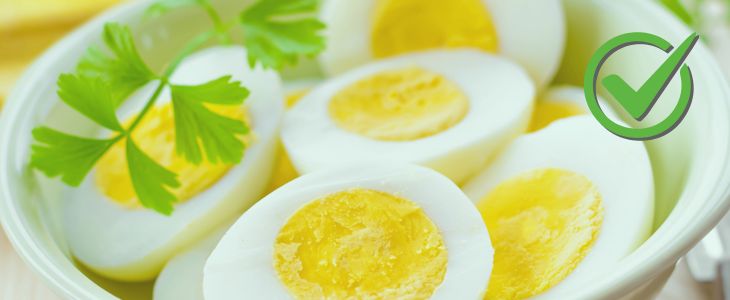
Recommended foods with high cholesterol and those to avoid: Eggs are recommended
Eggs are among the most nutritious foods you can eat, especially as a healthy source of protein. Although each egg contains a little more than 200 mg of cholesterol, studies suggest that egg consumption does not raise cholesterol levels, and furthermore – their consumption helps protect the heart due to their high content of HDL, known as the good cholesterol. Researchers indeed showed that LDL levels (the bad cholesterol) may rise with excessive egg consumption, but at the same time claim that eating 1-2 eggs a day is safe for generally healthy individuals. 
 
2. Yellow cheese – Recommended for consumption
 
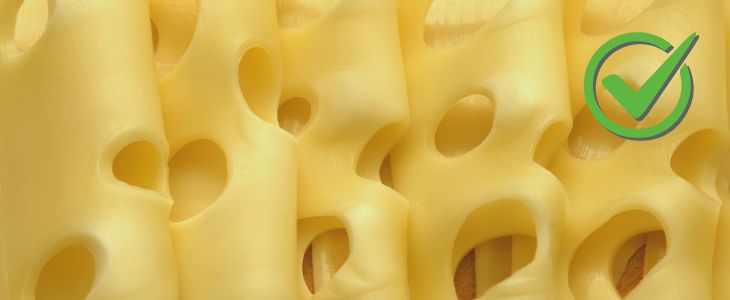
Recommended foods with high cholesterol and those to avoid: Yellow cheese is recommended

Each gram of yellow cheese contains about 1 mg of cholesterol, so it's very easy to calculate and know how much cholesterol you're getting by consuming it. It's also important to remember that it is an excellent source of calcium and other nutrients. A study conducted over 12 weeks with the participation of 139 people showed that eating 80 grams of yellow cheese daily (a quantity considered high) did not raise the LDL levels of the participants compared to eating the same amount of low-fat cheese or the same caloric amount of bread with jam. Therefore, if you want to eat a small sandwich to satisfy you between meals, there’s no need to worry about yellow cheese. The cholesterol level in it won’t harm you compared to other options for making such a sandwich. 
 
3. Grass-fed beef – Recommended for consumption
Grass-fed beef is raised in a natural environment, in open fields, without antibiotics, hormones, or growth stimulants, and its advantages include lower cholesterol content. Studies also show it contains more omega-3 fatty acids and has anti-inflammatory qualities. Steak is generally perceived as food that’s not recommended for those with high cholesterol, but in 115 grams of grass-fed beef steak, there are only about 60 mg of cholesterol, so this amount is not really significant as long as it’s combined correctly with other foods throughout the day. 
 
4. Organ meats – Recommended for consumption
Some organs are rich in cholesterol, such as hearts and liver, but they are also very nutritious. For example, 150 grams of hearts contain about 350 mg of cholesterol, but also a high amount of a powerful antioxidant called Coenzyme Q10, which actually protects the heart and blood vessels, along with vitamin B12, iron, and zinc. A study conducted in 2017 among 9,000 participants showed that those who consumed unprocessed meat, including organ meats, were at a lower risk of heart disease than those who consumed the least amount of such foods. 
 
5. Sardines – Recommended for consumption
Besides being very healthy due to their vitamin and calcium content, sardines are also considered an excellent source of protein, and in a 90-gram serving of sardines, there are about 130 mg of cholesterol. However, they also contain about 63% of the recommended daily amount of vitamin D, about 137% of the recommended daily amount of vitamin B12, and 35% of the recommended daily amount of calcium, so despite the high cholesterol content, the benefits are significant. 
 
6. Full-fat yogurt – Recommended for consumption
In 245 grams of full-fat yogurt – the kind that is not reduced in fat – there are about 31 mg of cholesterol. Many people fear that daily consumption of it will negatively affect the cholesterol levels in their body, but in fact, studies have shown that fermented and full-fat dairy products actually lower LDL levels and blood pressure, and actually protect the body from strokes, heart disease, and even diabetes. Therefore, there is no reason to fear full-fat natural yogurt.


7. Fried foods- Avoid
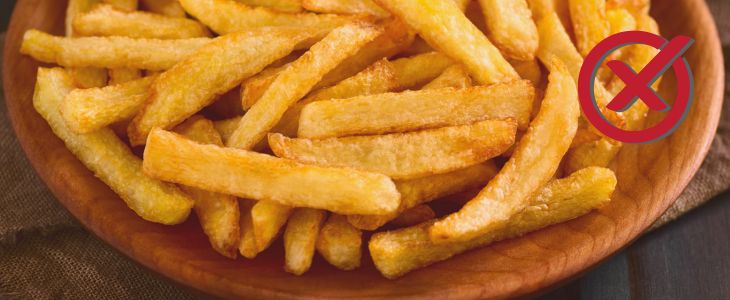
Recommended foods with high cholesterol and those to avoid: French fries are not recommended
Any type of food that has been fried may contain high amounts of cholesterol, and it is recommended to avoid this cooking method. The reason is trans fats which can increase the risk of heart disease and harm health in various other ways. In general, fried food has been linked in studies to an increased risk of heart disease.  
 
8. Fast food – Avoid
 
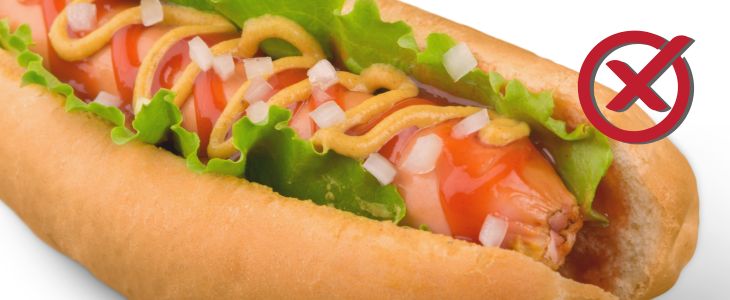
Recommended foods with high cholesterol and those to avoid: Hot dog is not recommended
Consuming fast food puts you at high risk for various chronic diseases, including heart disease, diabetes, and obesity. According to studies people who regularly consume fast food also tend to have higher cholesterol levels, as well as higher abdominal fat, more inflammation, and higher blood pressure. 
 
9. Processed meat – Avoid

Processed meat, like sausages, for example, is considered a food with a very high cholesterol level that is not recommended to consume at all in the diet. A study conducted on a massive scale with more than 614,000 participants found that those who consumed about 50 grams of processed meat daily had a 42% higher risk of heart disease.
 
 
10. Desserts- Avoid
 
Recommended foods with high cholesterol and those to avoid: Pastries are not recommended 
 Cookies, cakes, pastries, and the like are foods that often come with a high amount of cholesterol, as well as sugar, unhealthy fats, and of course, calories. Researchers have shown that there is a link between consuming large amounts of sugar and obesity, diabetes, heart disease, and certain types of cancer. Moreover, these foods do not contain substances that the body needs to thrive, such as vitamins, minerals, proteins, and healthy fats. 
 
How to lower blood cholesterol levels? 
If it’s important for you to keep your body as cholesterol-free as possible, there are a few things you can do that are more important than the food itself that you choose: 
 
Consume more fiber: Studies show that consuming dietary fiber helps lower LDL levels. 
 
Exercise: Studies show that keeping an active body lowers cholesterol levels. 
 
Try to lose weight: Researchers have proven that losing weight reduces cholesterol levels and heart disease risk factors by 5-10%. 
 
Consider quitting smoking: If you smoke, it’s important to know that studies have shown that smoking increases cholesterol levels. 
 
Eat more fruits and vegetables: According to studies people who eat more fruits and vegetables tend to have lower cholesterol levels.


This is only for your information, kindly take the advice of your doctor for medicines, exercises and so on.   


Labels: , , , , , , , , ,

Wednesday, February 26, 2025

You’ll Go Nuts Knowing the Health Benefits of Hazelnuts

When we talk about healthful nuts, the first candidates we usually think of are almonds, pistachios, or walnuts. But there’s one underrated nut that doesn’t get as much attention as it should – the hazelnut. These delicious red-brown nuts have a buttery, sweet flavor and are popularly used in baking and desserts. But did you know that hazelnuts have unsaturated fats and are extremely rich in protein, vitamins, and other nutrients? In fact, they make a great addition to your diet because of the multiple health benefits they offer.

1. They are highly nutritious

Health Benefits of Hazelnuts, nutritious  

Hazelnuts, also called filberts or filbert nuts, come from the Corylus tree that’s primarily cultivated in Turkey, Italy, Spain, and the United States.

Although these oblong nuts are high in calories, they are chock-a-block with essential nutrients along with healthy fats. Additionally, hazelnuts are a good source of dietary fiber. One ounce (28 grams) of hazelnuts contains: 
Calories: 176 
Total fat: 17 grams 
Protein: 4.2 grams 
Carbs: 4.7 grams 
Fiber: 2.7 grams 
Vitamin E: 21% of the Reference Daily Intake (RDI) 
Thiamin (vitamin B1): 12% of the RDI 
Magnesium: 12% of the RDI Copper: 24% of the RDI 
Manganese: 87% of the RDI. 
 
A study published in The Journal of Nutrition showed that adding hazelnuts to your diet can boost the levels of key micronutrients, such as vitamin E and magnesium, in the body. While vitamin E helps boost the immune system, magnesium is known to lower blood pressure and has anti-inflammatory benefits. 
 
2. They can help reduce weight 
Hazelnuts are a good source of protein. So, if you are a vegetarian and are looking for a healthy source of protein, filbert nuts are a good choice. Moreover, since they are also packed with healthy fats and fiber, they will help you keep fuller for longer. That’s one of the best tricks to use if you are trying to lose weight. 
 
Also, a 2018 study published in the European Journal of Nutrition found a correlation between nut consumption, lowered weight gain, and a reduced risk of obesity. In the study, the participants who regularly consumed nuts were found to be less likely to become overweight than those who didn’t. 
 
3. May help lower cholesterol
Eating hazelnuts regularly can help lower cholesterol levels. A 2013 study found that a hazelnut-enriched diet helps decrease low-density lipoprotein (LDL) cholesterol, which is associated with a higher risk of heart problems. The researchers noted that the nuts should be incorporated into the daily diet without change in total caloric intake to make the best use of its health benefits.


4. Will support healthy bowel movements 
As mentioned above, hazelnuts are a good source of dietary fiber. A low fiber diet can contribute to constipation while eating plenty of fiber can improve regular bowel movements and help prevent constipation. This happens because soluble fiber slows digestion, and allows more water to remain in your stool, making it softer and easier to pass through the intestines. 
 
The American Dietetic Association recommends that men aged 19 to 50 should get at least 38 grams of fiber in their daily diets, and women in the same age group should get 25 grams. 
 
A 28-g serving (or about 20 whole kernels) of hazelnuts contains about 2.7 g of dietary fiber.


5. May help lower blood sugar levels
 Research suggests that hazelnuts can help reduce blood sugar levels. In a 12-week study, people with metabolic syndrome (a group of risk factors for heart disease, diabetes, and other health problems) were given a combination of walnuts, almonds, and hazelnuts. At the end of the 12 weeks, the participants showed a significant reduction in fasting insulin levels. 
 
Furthermore, oleic acid, which is the main fatty acid in hazelnuts, has been shown to have a beneficial effect on insulin sensitivity and blood sugar. 
 
6. Good for the heart
Eating hazelnuts can boost heart health, research suggests. We have already mentioned how a diet rich in these nuts helps decrease LDL or “bad” cholesterol. A large amount of fiber and monounsaturated fatty acids in these nuts help reduce LDL cholesterol while increasing the high-density lipoprotein (HDL) or “good” cholesterol. High levels of HDL cholesterol in the body have been associated with a lower risk for heart disease and stroke, as it absorbs LDL cholesterol and carries it back to the liver.

Studies also indicate that eating about 29 to 69 grams of hazelnuts per day can be great for improving one’s overall heart health. 
 
 
7. Can help decrease inflammation
Regular consumption of hazelnuts has been linked with a reduction of inflammation in the body due to their high healthy fat content. Studies have shown that eating 60 grams of hazelnuts every day for 12 weeks can be useful in decreasing inflammatory markers in overweight and obese people. 
 
Another study, which analyzed how eating hazelnuts affected inflammation, found that consuming 40 grams of hazelnuts can reduce the inflammatory response in healthy people. 
 
That being said, these studies also conclude that simply eating hazelnuts might not be enough for reducing inflammation; one must also have a healthy diet overall. How to add hazelnuts to your diet


How to add hazelnuts to your diet
Hazelnuts have a sweet, nutty, and mild flavor and are popularly consumed as a snack. You can buy them raw from the supermarket and then roast or ground them to enjoy as your evening snack. Alternatively, hazelnuts can also be used in the following ways: 
 
* Add these nuts to your salads to make them more flavorful. 
 
* Chop and use them in desserts like pastries, pies, truffles, biscotti, cookies, tarts, and macaroons. 
 
* Add raw, roasted, or toasted hazelnuts into a bowl of yogurt, oatmeal, or muesli. 
 
* Sprinkle some finely chopped hazelnuts to a few slices of grilled pineapple or apple for a light and nutritious dessert. 
 
* Add them to quinoa, risotto, or any other grain-based dish.


This is only for your information, kindly take the advice of your doctor for medicines, exercises and so on.   


Labels: , , , , , , , , , , ,

Saturday, December 28, 2019

15 Easy Healthy Eating Habits for your family

This isn't my idea, I read it somewhere, thought of sharing with you all some very healthy ideas posted by a great lady.
Eating healthy should be a way of life, not a special diet! It should be something you can do effortlessly. As a family, we need to ensure our kids get the right foundation of good eating habit otherwise they will have to make huge adjustments to their lifestyle as they grow up. Here are 15 simple, easy and effortless healthy eating habits. I practice these with my family and I hope you can pick a few to share with your family too
It’s often surprising when my friends raise an eyebrow at me using the word healthy. You know with me being a Cake Decorator and Food Blogger. Especially with all those dessert recipes!
The truth is that healthy eating does not mean you eat just boring food. Nor does it mean you have to completely eliminate all desserts or your favorite food?  It bothers me when people associate healthy eating habits with just a basket of green veggies. Veggies are just one part of healthy eating there is so much more you can do to promote good health in your family. Even drinking water is an important part of maintaining good health.
Being a professional cake decorator means we have cakes and frosting around all the time, not to mention we love desserts. My husband’s family has a history of high cholesterol!! My family comes with a history of Arthritis. Which means I have to be extra careful with keeping the balance. I believe the key is to maintain these easy healthy eating habits regularly. And the best way to do that is to make it part of a routine.
So; today I wanna share with you a few ‘ (15) Easy Healthy Eating Habits’ and tricks I use with my family that you may find work for yours too.

1. Be Creative with water (yup this has to be the first for me)

 I know!! I hear you! It’s so difficult to drink water at times, especially when you are busy and especially when you have to drink it out of the tap. It’s even more difficult to get kids to drink water. Here’s what I do and it works for us.

  • Place a jug of water in the living room – add a few cucumber slices and a sprig of mint. Kids like drinking water outta jug more than just from the tap.
  • Or add your favorite fruit slices like lemon, oranges or apples in the water pitcher. Fruits have a nice way of adding a subtle flavor and making water more desirable
  • Make a diluted Iced lemon tea with honey in summer – it is so refreshing.
  • Green Tea is a great way to drink up. In our home, it’s usually green tea with no sugar!! So it’s just like drinking water but with the added benefits of green tea.
  • Straws!! Creative straws!! Yup works with kids all the time!

2. Encourage fruits in the family with a few simple changes

The best snack you can eat is fruits but what we don’t always do is keep it in front where we can see it. Here’s what works for us.
  • Wash the fruits and place the fruit basket on the dining table. Kids love to pick an apple or banana even when they are not hungry – if they see it.
  • Take a break during the day, especially during those afternoons when you wanna binge. Grab a plate, get some fruits out of the fridge – slice them up. You will be surprised how inviting cut fruits are especially to the kids.
  • When my kids give me any issues with fruit? I usually blend some fresh fruit juices such as bananas and strawberries. Watermelon in summer, melon, and apples etc.
  • When you serve it – make it look fancy – kids love things that look pretty – I use some fancy smoothie glasses and straws.

3. Get your family into a routine – Add special diet days

The one thing that works great for our family is routine. Plan days ahead of time. This makes planning easy for me and the rest of the family usually knows what to expect.
For example; this is how lunch usually works for us. So I have to plan ahead and take busy cake days into account.

  • Sunday is ‘fish day’ – A lighter meal to start the first day of the week (see my fish recipes here)
  • Monday is ‘chicken day’ – so I make things like Schnitzel, baked chicken etc. (see my chicken recipes here)
  • Tuesday is –  Pasta day cause my kids love pasta – so it’s some kinda pasta like meatballs, mushrooms, veggies (see my pasta recipes here)
  • Wednesday is often – Asian food – so I make either noodles, Japanese teriyaki chicken, Thai veggie curry, Indian food, etc.
  • Thursday is hummus day!! Yep, my family loves hummus so we have to have hummus once a week. We throw in some Falafel too! (see Middle Eastern recipes here)
  • Friday is the weekend for us so – mama cooks what the kids decide they wanna eat.
    At some point, we were learning – food from different parts of the world so the kids could explore countries. Japanese, Mexican, Thai.
    Then we moved on to Ingredients – so we’d pick a special veggie that the kids got to choose. Parsnip, radish.
  • Saturday is ‘leftover day’ – we always have leftovers from Fridays. It’s also my way to teach kids to appreciate food and not waste food.
As for dinners.
  • There is always a salad on the table.
  • Winter usually calls for soups and
  • We get creative with leftovers. Leftover chicken goes into the sandwiches and wraps.
  • Plus we love sandwiches and wraps with things like salmon, chicken, Tuna Patties, Cilantro Fish-cakes
  • Every second Thursday we have Pizza; yes regular as well as whole wheat Pizza!

4. Get creative with veggies

How many times have we heard people tell us that veggies are important in our diet? Easier said than done especially with kids, isn’t it?
  • I find that in every family there are little loops that we can work on. 
  • For example – In our family, we love wraps and Sandwiches. So often I will add the veggies in the chapati or tortilla wrap and sometimes you won’t even know it’s there like in my sweet potato chapati. My Aadi would claim he does not like sweet potato but he loves these so now he has stopped saying – I don’t like sweet potato. I think good habits start without thinking first.
  • Wraps are always the best. Sometimes it’s – Chicken and avocado with salad or an omelet with tomatoes, onions, and herbs. Kids don’t go looking in.. as long as it’s a wrap they are happy.
  • I never serve mayonnaise or store-bought salad dressing!! because our choice of sandwich spread is usually mashed Avocado, olive spread, or pesto or even roasted garlic and peppers spread.
    Our salad dressing is usually Olive oil, yogurt & mustard dressing and often the kid’s favorite avocado & yogurt dressing.
  • Another great way to get kids to eat veggies is Soup!! In our home soups are huge….. which means in winter I can make soup every day and the kids won’t complain. That is why this blog has so many soup recipes.
  • Adding veggies to your Lasagna sheets like the kale and spinach is a fun way to get veggies in. Try adding them in the pasta with the meat – Instead of meat pasta throw in some mushrooms and peas.
  •  Roast veggies like potatoes instead of deep-frying -A great way of making veggies fun is to roast them. They taste amazing. Try oven-baked chips or Oven-baked potato wedges or oven-baked potato chips.
  • Be creative with Salads – I love to add fruit and nuts to the salad like a few toasted pecan, walnuts, raisins, dates and cranberries can really add so much more to a salad.

5. Substitute Oil for butter

  • Often we think adding butter makes things tastier but we don’t realize that adding butter means also adding too much-saturated fat in our diet. Which is not good for your family’s health as it raises cholesterol and the risk of heart diseases.
  • When you can – try to substitute oil for butter.
  • In fact, make it olive oil and you’ll be adding a ton more flavor.
  • Coconut oil is another way to add healthy fat to your diet.
  • As a rule of thumb for every 1 tbsp butter, you can use 3/4 tbsp oil.
  • Try using the olive oil spray when you can, especially when baking potatoes and such. It really makes a big difference.
  • I usually never add butter (just canola oil) to our eggs, and omelets and honestly, we don’t miss anything.

6. Add Brown Sugar instead of White Sugar

  • I believe, as a rule of thumb adding more brown and green to your diet is always a good thing. right?
  • Brown sugar not just adds more taste to your dishes because it contains molasses but being less refined it’s also less sweet compared to white sugar.
  • In fact, I do substitute brown sugar even in my cakes and cupcakes when I make for the family!!! My kids love these scrumptious brown sugar cupcakes so much

7. Add more whole wheat where you can? Pasta, rice, chapati 

Again adding more brown instead of white is a lot better! But the trick to doing it right is to take it slow. Many folks just decide to make a switch when they should actually do it slowly. Doing it slow works best both for your bowels as well as psychologically.
  • In our home, we now only buy Brown pasta. It’s become a part of our diet that we hardly know any different.
  • The brown rice is still a bit difficult with my kids so I only substitute the white rice for brown in pilafs and pulao. When it comes to plain rice we still stick to the white rice.
  • As I said before we love wraps so making tortilla was huge – now we make only chapati or whole wheat tortilla.

8. Once in a while indulge in meals that are different and choose a healthy option

(for us it’s the food like cauliflower rice, quinoa, and whole-wheat couscous)
  • Quinoa is fairly new to our family. Personally, I like quinoa and it’s so easy to enjoy. I often make the same rice pilaf recipe using quinoa instead of rice.
  • Couscous is more easy to incorporate into your diet. The best part – whole wheat is no different to cook than the regular couscous.
  • I will often substitute cauliflower rice for regular rice in my diet

9.Plan snacks ahead of time.

Snacks are the one thing that usually throws diet outta the window. Often it’s that odd time when you are hungry that you end up picking the wrong thing to just satisfy the craving.
If you have small kids – then the most common phrase in the house is… “Mama – I’m hungry” Often they just want to munch or eat!! Kids have a high metabolism so they do need to eat.
I usually keep leftovers for kids’ snacks. Like freeze leftover whole wheat pizzas, chapatis, etc.

  • Unless your family is allergic to nuts – dry fruit and nuts make a great snack. They work great with the sweet cravings; they are good fat and they even get you munching.
  • I usually make Filo filled mashed potatoes or filo samosa in the freezer that my kids like to heat a bit in the microwave for an easy snack. So when I have leftover mashed potatoes they become filo samosas!!
  • There is always pizza in the freezer – Yes; I make whole-wheat pizza.
  • Chapati or tortilla is another great thing to have in the freezer – Often when Aadi comes from basketball or swimming practice he will eat chapati with peanut butter or Nutella or pastrami and cheese, sometimes even an omelet.
  • Granola bars/bites – Some people are not a big fan of granola but  love snack bars. Which is actually – the same homemade fruit and nut Granola + some rice Krispies combined with some melted chocolate.

10. Balance your desserts with your meals

When it comes to desserts – I’m always first in Que. Heck, I’d rather have dessert than a meal. But of course, I can’t afford it!!
Often you get people go, cold turkey and say – Oh no more desserts for me from now on cause I’ve been having too many desserts lately. The problem with this attitude is that you can’t keep it off. You stay off desserts for a few days and then go binge so much that you end up eating more. Instead, plan your desserts with your meals and decide what you want to give your body. Enjoy it and don’t eat with guilt!!
  • Desserts don’t have to always be decadent chocolate or fat loaded. An apple pie is a great dessert; so is a nice bowl of fruit and yoghurt with honey.
  • The truth is you can eat all three if you do it once in a while? If you indulge in high-calorie dessert today, eat something more modest to balance it off on other days.
  • We have the dessert made only on the weekend. During the week – the kids know they are allowed chocolate after every meal and that’s something that they do on their own.
  • Often the dessert is fruit based – like Blackberry tart, quick apple tart, egg-less vanilla pastry cream-based desserts such as strawberry tart.

11. Salad goes to the dinner table first 

Here’s a little trick I do before dinner every day!! I know the kids are hungry so when I get dinner ready I make the salad first! I take it and keep on the dining table. For my kids, the best salad is cucumber sticks, carrot sticks, cherry tomatoes. Almost all the time the salad gets over before I get the rest of the stuff like soups, sandwiches or wraps. Bread usually goes last on the table.

12. Get Kids in the kitchen-Let them help.

Make it a time to promote food
Both my kids love helping in the kitchen. Often they like making cupcakes, cakes but I also get them to make homemade pasta, breakfast parfait, chapati, peeling the potatoes, mixing batters, etc. Things they are capable of doing.
I use this time to chat about the food they like. Share information about food so they understand what we eat, why we eat and what is good to eat. If you pick the right conversation you will find that they will ask questions and explore more.
That’s how I got the kids into the trend of making food from different parts of the world. ‘Mama this week we will make Chinese Food’. What is Chinese food? OR Japanese Food. If you get kids to understand food it makes them better at choosing their foods too. And hopefully, in the future, they will make the right choices that are good for them.
Curiosity in the kitchen gets the kids not just to learn about food but also the helping gets them to eat the food.

13. It’s an attitude – Make healthy eating a natural process – not a big deal.

When you try to force something new it becomes difficult.
  • Instead, go with the flow. What is the worst that can happen? you will take longer to add that brown rice in your family meals but when you do it will be a welcome meal, not a compromise.
  • And if one person says I don’t like something – never force them to eat it. I know my neighbor whose kids hate broccoli and she makes it a big deal – now they hate it even more. So what if your kids don’t like broccoli – find another veggie that is just as healthy and acceptable to them.
    If you force kids they will avoid that food not just as kids but even when they grow up because of the unpleasant association they have with food. I hated a few veggies which I was forced to eat as a kid when I was in the boarding school.  I started eating them now with my own kids!
  • When I started adding brown pasta to our diet – the first time Aadi noticed the difference. So I told it was brown pasta because it’s tastier and because it has more nutrition for our body. I think he wouldn’t be as convincing if I told him it’s healthy!

14. Lead by example 

I know some of my friends cook food for the kids separately! The kid’s food is often more enriched – with the belief that kids can afford it!  My personal take on food is about
  • Eating as a family and about everyone eating the same food.
  • I do not believe that we should cook food with butter and cheese for the kids just to convince them to eat it.
  • Kids may not eat something at one point but eventually, they do try because they see their parents eating it.
  • Broccoli is delicious. My Rhea used to eat broccoli until she saw the movie “Inside Out” where they associated broccoli with disgust!! Kids learn from these examples we give them.
  • Kids have the tendency to go on and off certain veggies at a time. I noticed this with my Aadi; at some times he enjoys beans and then for a few weeks he does not want to touch them on the table.  That’s ok. If you let it be he will come back to it on his own if not, he’ll resist.
  • Let kids know they have a choice and hope they will choose right because they learn from us.

15. Shop Wisely 

Last but the most important. Shop what you think you must eat, not what you think you may need.
  • For example, don’t buy both brown and white pasta so when you have to choose the brown always get left behind. Instead, just buy brown and that’s what you will cook. Eventually; it will become a norm and not a second thought.
  • If you don’t want your family to eat certain food don’t stock it. Stocking is having second thoughts, and when you have second thoughts you give in.
  • Don’t buy aerated drinks these are really not good for the family and the only way to get rid of this habit is not to bring it home.
  • Over-shopping – Buy what you need for the week. When you over shop you end up using more just because you have it. For example, buy snacks that you think are just enough for the week. If you buy snacks for two weeks you will end up using it because it’s at home.
  • Read the labels when you shop!! This is more important now than ever before? Simple things we eat and give our kids are loaded with additives on labels we can’t even pronounce. I think reading labels is an important part of eating healthy today.

Conclusion

Never underestimate the intelligence of kids. Ziv always says this especially when he sees crappy kids programs. A few years ago we use to be so bothered with Aadi’s habit to eat lots of processed meats like pastrami, sausages, and ketchup. We’d always tell him how unhealthy these were but while he ate a lot of good food (even broccoli) to compensate for it – it bothered us that we could not get thru him the right message.
At the time Aadi was about 7 1/2 and one of his favorite thing to watch was – ‘how it’s made’ videos on YouTube. One day he stumbled on the video – how salami is made, how sausages are made – he watched with disgust!!
He came out of the study room and said – Eewww I wanna puke. I’m never eating processed food ever again. He went to the freezer picked up the bag of frozen sausages and put it in the dustbin. He’s never asked for it again. He’s ketchup from a big blob on the plate went to a small tbsp size which he ate sparingly.
Of course, we thought – kids…! eventually he’d go back to it but NO!! He still does not eat sausages or unhealthy processed cold supermarket meat!!
Over here having (hot dogs) sausage in a roll bread with ketchup for birthday party’s is very common and all the kids enjoy it. He won’t touch it. He will come home hungry and say mama I didn’t eat at the party because they had sausages for dinner.

So you see. Trust your kids. We are the best example for our kids. If we eat right so will our kids.
I hope you found a few easy healthy eating habits in this post you can use for your family. I’d love to hear any tips you may have for me or my visitors. I’m sure we can all learn from each other.

Labels: , , , , , , , , ,

Friday, November 22, 2019

5 reasons why you must eat kaju katli/ Cashewnut barfi, without any guilt this festive season

With Diwali on its way, while most people are looking forward to the celebrations, some are worried about the consequences it will leave on their waist-line. Diwali is an Indian festival where delicious mithai are made and distributed as a sign of love and support among people. While most Indian mithais are rich in sugar and could present a health risk, Kaju Katli is not like the others. It is made from healthy cashews and milk. The fats present in Kaju katli consist of 25 per cent saturated fats and the rest 75 per cent are healthy oleic acid fats. Here are some of the health benefits of eating Kaju Katli this Diwali.

Keeps blood pressure under control: Cashew-rich homemade kaju katli, not only has negligible amount of sodium in it, but are also rich in potassium, which can help in controlling blood pressure.

Has cholesterol reducing properties: If consumed in moderation, then eating Kaju katli could reduce your cholesterol level. Filled with cashew, Kaju katli, is rich in omega-3 fatty acids and other unsaturated fats like oleic acid, which can help in reducing bad cholesterol from the body.

People with diabetes can also have kaju katli: Nuts inside Kaju-katli have a low glycaemic index, which makes Kaju Katli safe for people with diabetes. Along with this, Kajiu Katli is rich in magnesium and calcium, which can lower the risk of diabetes.For the white and green kaju katli fudge, make a thick sugar syrup in a pan with 35 ml water + 40 gms sugar-free sugar. Add 65 gm cashewnut powder and 10 gms coconut milk powder. Divide this into 2 parts- mix white colour in one and green in the other.For the orange crumble, add 40 gm oats or almond flour, 40 gms sugar-free sugar, 25 gms butter, 10 gm cashewnut powder and mix together to make a crumble. Add orange colour. Mix and spread in a baking tray and bake at 150 degree celsius for 10 minutes.To assemble, take the half baked tart. Fill it with green fudge and flatten. Layer the white fudge and flatten. Finally, place the orange crumble on top. Bake at 150 degrees Celsius for 10 minutes. Cut and serve.

Improves strength: Forget your whey-protein powder, delicious Diwali sweets will help you with your protein intake. According to National Institute of Health (NIH), USA, 100 mg of cashew can contain up to 36 per cent of your daily recommended amount of protein. Cashews also contain magnesium, which helps in absorption of calcium in the body, thus improving bones and muscles strength.

Improves heart health: According to NIH, omega-3 fatty acids, found in cashew can help in lowering triglycerides levels, reducing the risk of developing a heart condition.
this is only for your information, kindly take the advice of your doctor for medicines, exercises and so on.     
https://gscrochetdesigns.blogspot.com. one can see my crochet creations  
https://gseasyrecipes.blogspot.com. feel free to view for easy, simple and healthy recipes    
https://kneereplacement-stickclub.blogspot.com. for info on knee replacement


Labels: , , ,