Sunday, August 02, 2026

World Lung Cancer Day 2026: When Does A 'Smoker's Cough' Turn Dangerous? Watch For These Signs

A cough that lingers for weeks is easy to brush off, especially if you’ve smoked for years. Many people simply assume it as just another consequence of lighting up but while not every persistent cough points to something serious, there are times when it may be your body’s way of signalling that something needs medical attention.

According to the latest GLOBOCAN estimates, nearly one in ten Indians is at risk of developing cancer before the age of 75, while about seven in every hundred face the risk of dying from the disease before reaching that age. India recorded 1.41 million new cancer cases and 916,827 deaths in 2022, while more than 3.25 million people were living with a cancer diagnosis made within the previous five years.

The burden is already increasing. According to estimates presented in the WHO Global Status Report on Cancer 2026, India had approximately 1.6 million new cancer cases in 2024, with around 900,000 deaths. 

These numbers highlight why a chronic cough in someone who smokes should never be ignored out of hand. Yet experts consistently stress that a smoker’s cough itself is far more often a sign of airway irritation or chronic bronchitis than of cancer. The challenge lies in knowing when the familiar cough has changed enough to warrant a closer look.

What Is a Smoker’s Cough?

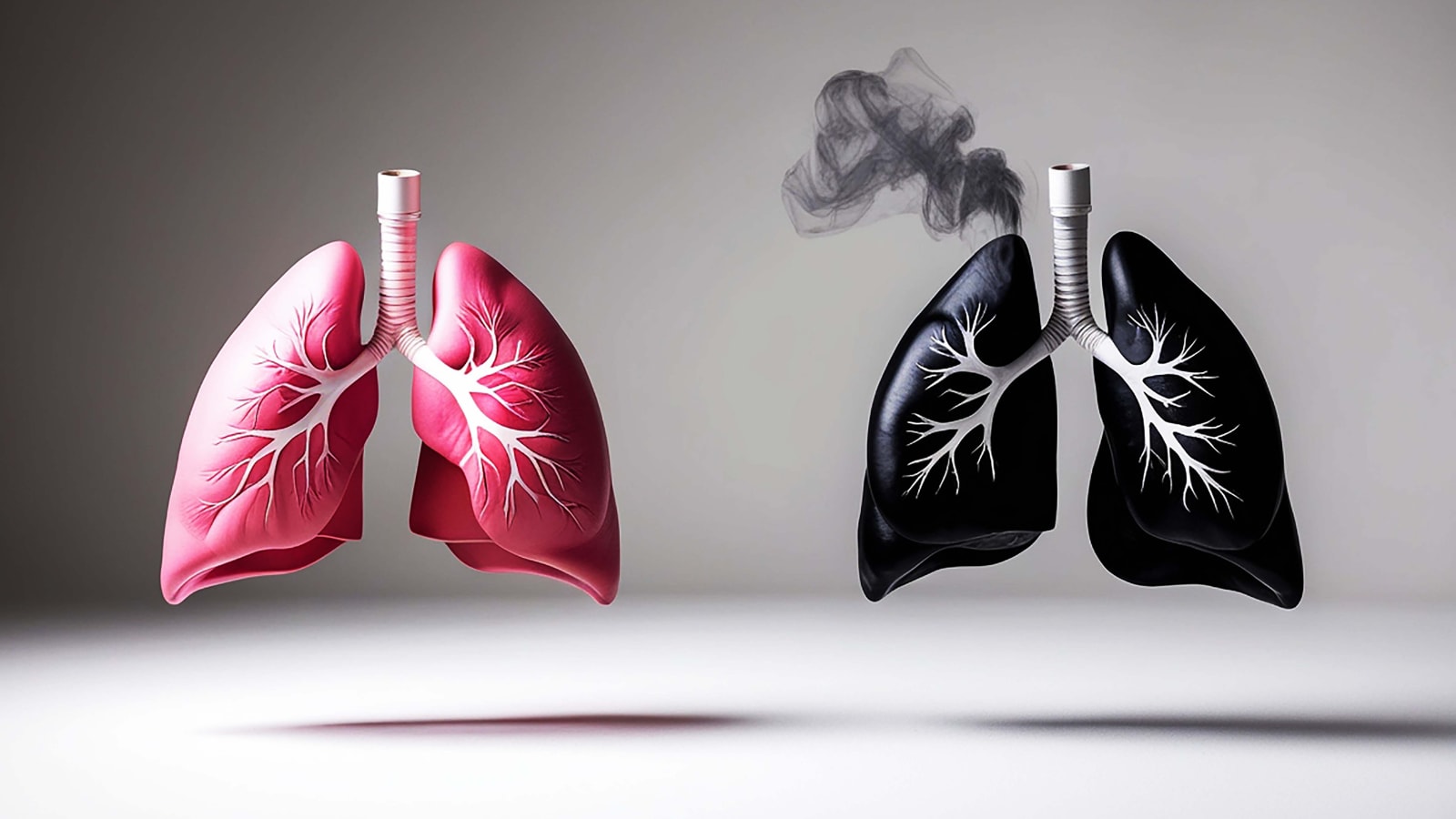
A smoker’s cough is a chronic cough that develops from repeated exposure to tobacco smoke. Smoke damages the tiny hair-like structures called cilia that normally sweep mucus and debris out of the airways. With the cilia impaired, mucus builds up, triggering the body’s reflex to cough it clear. The result is often a cough that is worse in the morning, may produce clear, white, yellow, or even green phlegm, and can sound deep, wet, or raspy.

When these cilia stop working efficiently, mucus and irritants accumulate in the airways. The body responds by triggering a cough to clear them out. This cough is often worse in the morning because mucus builds up overnight.

Some smokers also notice increased coughing after quitting smoking. This is usually because the cilia begin recovering and start clearing accumulated mucus from the lungs.

Over time, the same irritation can lead to chronic bronchitis, a form of COPD. Banner Health pulmonologists note that the cough can start dry and hacky and later become more productive as damage accumulates. It can appear while a person is still smoking or linger for weeks or months after quitting, as the lungs slowly recover and clear accumulated mucus.

Can A Smoker’s Cough Be A Sign Of Lung Cancer?

In the overwhelming majority of cases, no. Dana-Farber Cancer Institute experts emphasize that a chronic cough in a smoker is a signal that tobacco is harming the lungs, but it is not proof of cancer. Many people live with a smoker’s cough for years without developing malignancy. The cough is more commonly linked to chronic bronchitis or other smoking-related irritation.

However, experts caution that a persistent cough that changes in character or does not improve should never be dismissed, especially in people with a history of smoking.

A new cough that does not go away, a long-standing cough that changes in character or intensity, or one accompanied by other warning signs deserves prompt medical attention. There is no distinctive “lung cancer cough sound." A cancer-related cough may be dry or productive, and it can closely resemble a typical smoker’s cough. Only evaluation by a clinician and, when indicated, imaging or further tests, can determine the cause.
 

When Should You Worry About Your Coughing?

Pay attention if your usual cough becomes more frequent or severe, lasts several weeks without improvement, or starts producing blood or rust-colored mucus. Other red-flag symptoms include:

  • Persists for more than three weeks
  • Becomes more frequent or noticeably worse
  • Produces blood or blood-streaked mucus
  • Causes chest pain while coughing or breathing
  • Is accompanied by persistent hoarseness
  • Leads to unexplained weight loss
  • Occurs with increasing breathlessness or wheezing
  • Is associated with repeated chest infections that keep returning

When Should Smokers Get Screened for Lung Cancer?

Not everyone with a smoker’s cough needs lung cancer screening. However, people at high risk may benefit from annual low-dose CT (LDCT) screening, which has been shown to detect lung cancer earlier than chest X-rays in eligible individuals.

Screening recommendations vary by country but generally include adults with a significant smoking history who currently smoke or have quit within the past several years. Speak with your healthcare provider to determine whether you meet the eligibility criteria.

Can Quitting Smoking Help Reduce A Smoker’s Cough?

Yes, although coughing may temporarily increase after quitting, this is often a sign that the lungs are beginning to clear accumulated mucus as the cilia recover. Over time, quitting smoking can:

  • Reduce airway inflammation
  • Improve lung function
  • Lower the risk of chronic bronchitis and COPD
  • Significantly reduce the risk of developing lung cancer
  • Improve overall respiratory and cardiovascular health

The earlier someone quits, the greater the health benefits, though stopping smoking at any age is beneficial. A smoker’s cough is the body’s way of responding to damage.

Most of the time it reflects chronic irritation rather than cancer, yet it is also a reminder that the lungs are under stress. Listening to changes, seeking timely medical advice, and most importantly quitting smoking give the best chance of protecting long-term lung health. If that familiar morning hack has started to feel different, or if it has simply worn out its welcome, schedule a conversation with your doctor.


This is only for your information, kindly take the advice of your doctor for food, medicines, exercises and so on.   


Labels: , , , , , , , , , ,

Wednesday, January 08, 2020

Researchers discover a way to restore strength of cardiac muscles in aging fruit flies

Researchers may have discovered a way to turn back the clock on aging heart muscles in fruit flies, a development that could lead to new therapies for older humans with heart disease.

Hua Bai, an assistant professor of genetics, development and cell biology at Iowa State University, led a study, published recently in the academic journal Autophagy, that explores the genetic mechanism that causes fly cardiac muscles to deteriorate with age. Bai said the research team restored much of the cardiac function in middle-aged flies, which experience many of the same heart maladies as middle-aged humans.

The researchers' approach starts with autophagy, a cellular "cleanup process" that removes and recycles damaged proteins and organelles. The autophagy process slows with age, which can lead to the weakening of cardiac muscles. Bai's research team looked at a key genetic pathway conserved in virtually all organisms on Earth related to autophagy that balances organism growth with nutrient intake. This pathway, called mechanistic target of rapamycin (or mTOR), has long been linked to tissue aging, Bai said. One of two complexes that underlie the mTOR pathway, referred to as mTORC2, decreases with age as autophagy declines. But the researchers found that transgenically boosting mTORC2 strengthens heart muscles of older fruit flies.
"Boosting the complex almost fully restored heart function," Bai said.


Implications for treatment in humans
The discovery that enhancing mTORC2 slows the decline of the critical autophagy process could have big implications for how doctors treat patients with heart disease, one of the leading causes of the death in the United States. While flies and humans might seem to be worlds apart evolutionarily, Bai said the two species' hearts age in a similar fashion. By middle age, cardiac muscles in both species tend to contract with less strength and regularity.

The fly model can be useful for developing drug target discoveries that could have a big impact on human health."     Hua Bai, assistant professor of genetics, development and cell biology at Iowa State University

The researchers arrived at their conclusions after conducting thousands of video recordings on cardiac muscles in fruit flies of various ages. High-resolution, high-speed cameras measured the activity of the flies' cardiac muscles. The experiments showed that boosting mTORC2 could restore a five-to-six-week-old fly's heart function to that of a fly between one and two weeks old. That's like restoring a middle-aged heart to how it functioned during young adulthood, Bai said.

Because flies live only between two and three months, it's much easier for scientists to study aging and longevity in flies than in more long-lived species, he said. And the ability to manipulate the fly genome also makes them ideal for genetic study and a common model organism, he said.


this is only for your information, kindly take the advice of your doctor for medicines, exercises and so on.     
https://gscrochetdesigns.blogspot.com. one can see my crochet creations  
https://gseasyrecipes.blogspot.com. feel free to view for easy, simple and healthy recipes    
https://kneereplacement-stickclub.blogspot.com. for info on knee replacement
 

Labels: , , , , , , , , , , ,

Friday, December 27, 2019

IIT Hyderabad researchers unravel functioning of DNA repair proteins

Researchers are seeking to understand the workings of the DNA damage repair proteins. Certain types of chemicals produced naturally in the body can cause damages in DNA and if not fixed fast, may trigger cell death.

Researchers have unraveled the working of a protein that repairs damaged DNA.


Nature has evolved techniques to not only protect DNA, but also to repair damaged DNA so that catastrophic damage can be averted. In humans, one such repair mechanism involves activation of a special class of proteins called 'DNA' repair proteins.


With increasing awareness of the impact of DNA damage on almost all diseases and maladies, there is a worldwide effort to understand how these repair proteins work, both as an academic exercise and as the foundation for therapeutic interventions.


The results of the study has been published recently.


What makes matter a living being, be it a bacterium or man is the DNA. DNA is the file blueprint of the life-form and encodes the directions that the life-form must take in order to become bacterium, rose, lion or man. It is this essential for the survival of every cell and is usually kept well protected within the nucleus of cells and in some non0nuclear parts like the mitochondria.


Any damage to DNA can result in outcomes that can range from unperceivable mild changes, such as the sudden appearance of a harmless mole, to catastrophic diseases, such as cancer. The retention of DNA integrity is therefore essential for proper function and survival of all organisms. Protection of DNA is daunting because of the possibility of damage by external sources and the intrinsic instability of DNA itself.


" Our laboratory at IIT Hyderabad seeks to understand the working of the DNA damage repair proteins. Certain types of chemicals produced naturally in the body can cause damages in DNA and if not fixed fast, may trigger cell death", explains Dr. Anindya Roy.


Researchers discovered mechanism by which these DNA repair proteins assemble when DNA is under threat. They studies the action of one specific protein called alkB homolog 3 or ALKBH3. It has been known that ALKBH3 repairs alkylated DNA containing 1-methyladenosine and 3.methylcytosine through oxidative demethylation, but the mechanism has hitherto remained unclear.


The researchers unraveled the mechanism by which ALKBH3 brings about demethylation.


We've found that ALKBH3 has a direct protein-protein interaction with another protein called RAD51C and this interaction stimulates ALKHB3-mediated repair of methyl-adduct located within 3'-tailed DNA adds the Dr. on the technical aspects of their discovery.


The team is fascinated by the universality of the mechanism-- it is just as applicable to the bacterium as it is to the humans. " The knowledge gained from our studies might, in the long term, be beneficial from a cancer therapeutic perspective", hopes Dr. Roy, as the team proceeds with work on understanding how DNA repair works.


this is only for your information, kindly take the advice of your doctor for medicines, exercises and so on.     
https://gscrochetdesigns.blogspot.com. one can see my crochet creations  
https://gseasyrecipes.blogspot.com. feel free to view for easy, simple and healthy recipes    
https://kneereplacement-stickclub.blogspot.com. for info on knee replacement
 

Labels: , , , , , , , , , ,

Thursday, August 22, 2019

Myths about atypical heart attack symptoms for women squashed

Quashing the myth that women tend to have 'atypical' symptoms during a heart attack, a new study has found that the women who suffer heart attacks show identical key symptoms as men.
The study published  emphasised the need for both sexes to recognise and act on the warning signs.


"Our concern is that by incorrectly labelling women as having atypical symptoms, we may be encouraging doctors and nurses not to investigate or start treatment for coronary heart disease in women," said a cardiology research nurse  and first author of the study.

"Both men and women present with an array of symptoms, but our study shows that so-called typical symptoms in women should always be seen as a red flag for a potential heart attack," she added.

Researchers recorded the symptoms of people attending the Emergency Department (ED) at Edinburgh Royal Infirmary who had a blood test called a troponin test.

This test is used when doctors suspect a person is having a heart attack and measures a protein released by damaged heart cells during a heart attack.

Between 1st June 2013 and 3rd March 2017, doctors in the ED ordered the troponin test for 1,941 people. Of these people, 274 were diagnosed as having a type of heart attack known as an NSTEMI (90 women and 184 men). This is the most common type of heart attack and occurs when the coronary artery is partially blocked.

Chest pain was the most common symptom for both men and women, with 93 per cent of both sexes reporting this symptom. A similar percentage of men and women reported pain that radiated to their left arm (48 per cent of men and 49 per cent of women).

More women had pain that radiated to their jaw or back and women were also more likely to experience nausea in addition to chest pain (33 per cent vs 19 per cent).

Less typical symptoms such as epigastric pain (heartburn), back pain, or pain that was burning, stabbing or similar to that of indigestion were more common in men than women (41 per cent in men vs 23 per cent in women).

Previous research has suggested that women and men report different heart attack symptoms. However, the symptoms were often recorded after a heart attack diagnosis was confirmed, which may introduce bias.

This study aimed to avoid this by asking an independent research nurse to interview and record the symptoms of all patients arriving at the ED with a possible heart attack before they were given a diagnosis.


THIS IS ONLY FOR INFORMATION, ALWAYS CONSULT YOU PHYSICIAN BEFORE HAVING ANY PARTICULAR FOOD/ MEDICATION/EXERCISE/OTHER REMEDIES.                                    PS- THOSE INTERESTED IN RECIPES ARE FREE TO  VIEW MY BLOG-                                                                                           https://gseasyrecipes.blogspot.com/                                                                                                                                                FOR INFO ABOUT KNEE REPLACEMENT, YOU CAN VIEW MY BLOG-                                                                       https:// kneereplacement-stickclub.blogspot.com/                                                                                                                     FOR CROCHET DESIGNS                                                                                                   
                                https://gscrochetdesigns.blogspot.com

Labels: , , , , , , , , ,