Wednesday, July 27, 2022

5 Home Remedies For Treating Varicose Veins

According to a number of studies, about 25 percent of all women and 10 percent of men are affected by varicose veins. Varicose veins are dilated and 'puffed up' veins that are usually in the legs that can be painful and have an unpleasant appearance. But don't stop reading here, because there are a number of at-home remedies for treating varicose veins that could help you, or someone you know with the condition, avoid expensive and painful surgical procedures. 
 
Varicose veins are usually genetic, so if someone in your family has had them, there is a greater chance that you will too. They are caused when the valves in the veins that push blood throughout your circulatory system weaken and become 'flappy', causing fluid to accumulate in the veins. The common signs for the development of varicose veins are tenderness around the area of an enlarged vein, swelling of the legs, a tightening or itching sensation in the legs and a feeling of heaviness in the legs.
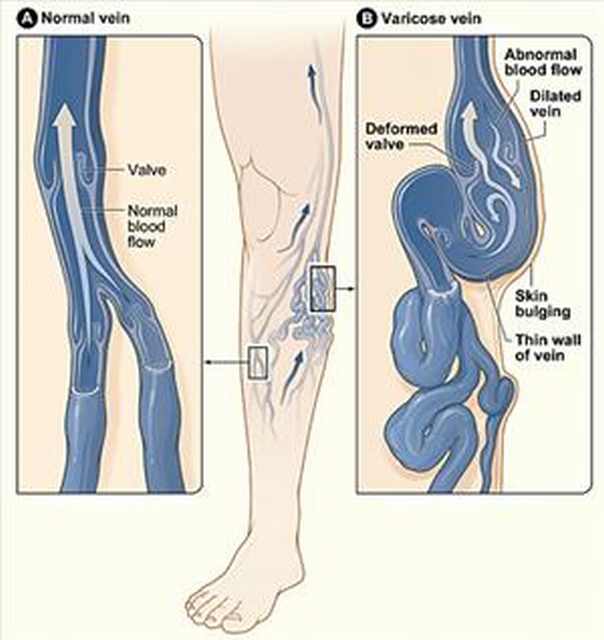
varicose veins 
Although varicose veins are usually benign, meaning that they do not put your health at risk, their puffed up appearance is startling or discomforting for some, and therefore many doctors recommend cosmetic surgery to remove them. Yet these surgeries can be expensive and keep you off your feet, so it's best to try out some of these simple and completely natural remedies first.

1. Keep Your Feet Up Just like on any long flight or an extended period sitting down, the blood rushes to your legs and causes them to feel heavy. The feeling with varicose veins is similar, and those that have the condition may experience swelling if they spend the day seated or on their feet. To remedy this uncomfortable feeling, it is best to recline with your legs elevated for anywhere up to an hour. This allows the blood to flow away from the legs and ankles and back towards the heart to decrease swelling and the feeling of heaviness. 2. Ice Your Veins Applying ice or a cold pack to your varicose veins can help minimize their appearance and reduce the swelling around the vein. This is because the application of cold restricts the blood flow to the area of application, making the appearance of the swollen veins less apparent. It is also recommended to take a cold or lukewarm bath every so often to keep your blood flow healthy and your veins and vessels working hard. 
 
3. Exercise 
Regularly performing cardiovascular exercise, either running, walking at a fast pace, biking or swimming, keeps your blood flowing as it should and prevents the pooling of liquids in your veins. It is recommended to perform at least 15 minutes of cardiovascular exercise every day (with approval from your doctor), and not just to stay fit. It has been shown that regular exercise can reduce the severity and appearance of varicose veins. 
 
4. Flex Your Feet 
Even if you aren't able to get in a full cardiovascular workout, doing a few leg raises or ankle circles will help keep your varicose veins in check. When you contract the muscles in your feet, the blood is forced upward out of your legs and towards the heart. By pointing and flexing your feet a few times, circling your ankles, or doing heel slips where you slide your heels back and forth can keep your circulation in check and blood out of your varicose veins.

5. Try A Compression Stocking  
There are special compression socks and stockings that can be purchased at most pharmacies that will help improve circulation in your legs. As explained above, when pressure is applied to the lower legs, the blood is pushed up towards the heart and won't pool in your veins. You can get weaker compression stockings, 20mm Hg, or stronger ones at 60 mm Hg (the stronger versions usually require a prescription from a doctor). They come in a variety of colors and shapes for different parts of the leg and are usually comfortable enough (in the weak and mild versions) for everyday use. 
 
If you or someone you know has varicose veins, you should consult your doctor to determine if you have a higher chance to experience clotting. These natural remedies will help mediate many of the effects of varicose veins, but there is no guarantee that they will completely disappear. There is no harm in trying!

This is only for your information, kindly take the advice of your doctor for medicines, exercises and so on.   

https://gscrochetdesigns.blogspot.com. one can see my crochet creations  
https://gseasyrecipes.blogspot.com. feel free to view for easy, simple and healthy recipes    
https://kneereplacement-stickclub.blogspot.com. for info on knee replacement


Labels: , , , , , , ,

Friday, November 19, 2021

Home remedies for varicose veins

Varicose veins occur when a person’s veins become swollen and enlarged. In some people, they can cause pain and discomfort. A range of home treatments may help to reduce the appearance and pain of varicose veins.

Many adults will experience varicose veins at some point. There are several medical treatments for this condition, though a person may also wish to try natural home remedies to relieve their symptoms.

In this article, we look at 10 natural ways to treat varicose veins at home.

Varicose veins have a dark blue or purple appearance and may bulge out from underneath the skin.

Varicose veins can develop when small valves in the veins become weak. These valves usually stop blood flowing backward through the veins, and when they are damaged blood can pool in the veins. This causes twisted and swollen veins that also become very visible.

Varicose veins can be noticeable because of their dark blue or purple appearance, they also often bulge out from underneath the skin.

Other symptoms of varicose veins include:

  • burning or throbbing sensation in the legs
  • uncomfortable legs that feel heavy or achy
  • muscle cramps that can be more noticeable at night
  • swelling of the feet and ankles
  • dry or itchy skin that appears thinner over the varicose vein

If a person has varicose veins, they can try the following home remedies to help manage the condition and improve symptoms:

1. Exercise

Regular exercise encourages better blood circulation in the legs, which helps to push along the blood that has collected in the veins. Exercise also helps to lower a person’s blood pressure, which is another contributing factor to varicose veins.

Low-impact exercises help to get the calf muscles working without excessive strain. Effective, low-impact exercises include:

  • swimming
  • walking
  • cycling
  • yoga

2. Compression stockings

Compression stockings are available from most pharmacies and can help by applying pressure to the legs. This aids the muscles and veins to move blood toward the heart.

A study from 2018 found that people who used knee-high compression stockings with a pressure of 18 to 21 mmHg for one week, reported a reduction in the pain and aching associated with varicose veins.


3. Plant extracts

A review study from 2006 suggests that horse chestnut extract, Aesculus hippocastanum L., may help to reduce leg pain, heaviness, and itching in people with chronic venous insufficiency, which is a major cause of varicose veins. Aesculus hippocastanum L. is available to purchase in health stores and online.

A review study  reports that sea pine extract, Pinus maritima, and Butcher’s broom extract, Ruscus aculeatus, may both reduce leg swelling, or edema, that is often associated with varicose veins. 

Plant extracts and essential oils should be diluted in carrier oils before being applied topically or used in a diffuser for aromatherapy.

4. Dietary changes

Potassium-high foods, such as almonds and pistachio nuts, can help varicose veins by reducing water retention in the body.

Salty or sodium-rich foods can cause the body to retain water, so cutting down on salty food can minimize water retention. Foods high in potassium can help to reduce water retention.

Foods that are high in potassium include:

  • almonds and pistachio nuts
  • lentils and white beans
  • potatoes
  • leafy vegetables
  • some fish, such as salmon and tuna

Foods with fiber help to keep the bowels moving and prevent constipation. This may be important, as straining can aggravate damaged valves or make them worse.

Foods that are high in fiber include:

  • nuts, seeds, and legumes
  • oats, wheat, and flaxseed
  • whole-grain foods

People who are overweight are more likely to experience varicose veins, therefore, shedding any excess pounds can reduce the pressure on the veins and alleviate swelling and discomfort.

5. Eat more flavonoids

Adding foods that contain flavonoids may also help a person to shrink their varicose veins.

Flavonoids improve blood circulation, which will keep the blood flowing, and make it less likely to pool in the veins. They also help to reduce blood pressure in the arteries and can relax blood vessels, all of which can reduce varicose veins.

Foods that contain flavonoids include:

  • vegetables, including onions, bell peppers, spinach, and broccoli
  • citrus fruits and grapes, cherries, apples, and blueberries
  • cocoa
  • garlic

6. Herbal remedies

According to the National Institute of HealthTrusted Source, taking grape seed extract, Vitis vinifera, orally may help to reduce swelling in the lower legs and other symptoms of chronic venous insufficiency, though there is currently limited evidence for its effectiveness.

A person prescribed with blood-thinning medication should avoid taking grape seed extract, as a dietary supplement, as it can interact with the medication and increase the risk of bleeding.

7. Choose non-restrictive clothing

Wearing tight-fitting clothes can restrict blood flow. A person may find that their circulation is improved by wearing loose-fitting clothes that do not restrict the blood supply to the lower body.

Wearing flat shoes instead of high heels may also help with varicose veins in the legs.

8. Keep the legs elevated

Keeping the legs elevated, ideally at the same height as the heart or above it will help to improve circulation. This reduces the pressure in the leg veins and gravity will help the blood to flow smoothly back to the heart.

A person should aim to keep their legs elevated if they are going to be sitting down for long periods of time, such as during work or rest.

9. Massage

Gently massaging the affected areas can help to keep the blood moving through the veins. A person can use gentle massage oils or moisturizer for optimal effects.

It is crucial to avoid pressing directly onto the veins, however, as this may damage fragile tissues.

10. Keep moving

Avoid sitting for long periods of time. If a person has to sit for long periods of time for work, they should aim to get up and move around or change position frequently to keep the blood flowing smoothly.

Avoid sitting with crossed legs, as this can further restrict blood flow to the legs and feet, which may add to circulation problems.

This is only for your information, kindly take the advice of your doctor for medicines, exercises and so on.   

https://gscrochetdesigns.blogspot.com. one can see my crochet creations  
https://gseasyrecipes.blogspot.com. feel free to view for easy, simple and healthy recipes    
https://kneereplacement-stickclub.blogspot.com. for info on knee replacement


Labels: , , , , , , , , , ,