Thursday, November 06, 2025

After 60 Years, Diabetes Drug Found to Unexpectedly Impact The Brain

Metformin has been prescribed to people with type 2 diabetes to manage blood sugar for more than 60 years, but scientists haven't been exactly sure how it works. A new study suggests it works directly in the brain, which could lead to new types of treatment.

The study, carried out by researchers from the Baylor College of Medicine in the US, identifies a brain pathway that the drug seems to work through, in addition to the effects it has on biological processes in other areas of the body.

"It's been widely accepted that metformin lowers blood glucose primarily by reducing glucose output in the liver," says Makoto Fukuda, a pathophysiologist at Baylor. "Other studies have found that it acts through the gut."

"We looked into the brain as it is widely recognized as a key regulator of whole-body glucose metabolism. We investigated whether and how the brain contributes to the anti-diabetic effects of metformin."

Previous work by some of the same researchers had identified a protein in the brain called Rap1 as having an impact on glucose metabolism, particularly in a part of the brain called the ventromedial hypothalamus or (VMH).
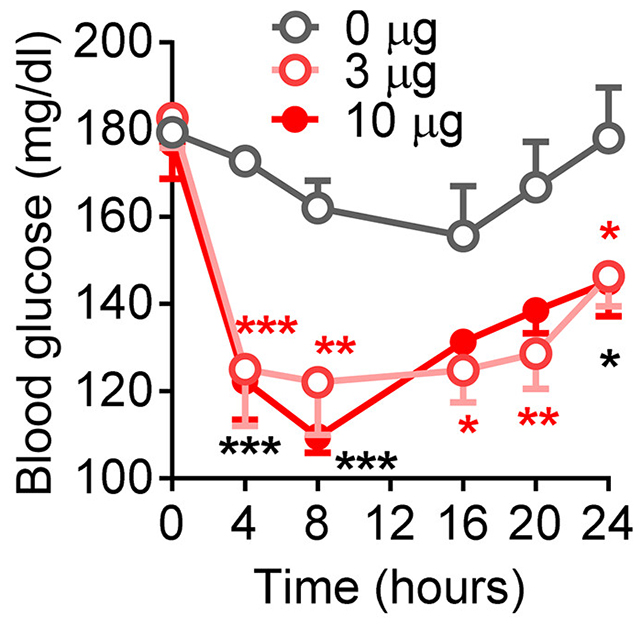
 Metformin injection chart  

Direct brain injections of metformin lowered blood glucose in mice. (Lin et al., Sci. Adv., 2025)

In the new study, tests on mice showed metformin traveling to the VMH, where it helps tackle type 2 diabetes by essentially turning off Rap1.

When the researchers bred mice without Rap1, metformin then had no impact on a diabetes-like condition – even though other drugs did. It's strong evidence that metformin works in the brain, through a different mechanism than other drugs.

The team was also able to take a close look at the specific neurons metformin was changing activity in. Further down the line, that could lead to more targeted treatments that take aim at these neurons specifically.

We also investigated which cells in the VMH were involved in mediating metformin's effects," says Fukuda.

"We found that SF1 neurons are activated when metformin is introduced into the brain, suggesting they're directly involved in the drug's action."

Metformin is safe, long-lasting, and relatively affordable. It works by reducing the glucose produced by the liver and increasing how efficiently the body uses insulin, helping to manage the symptoms of type 2 diabetes.

Now we know it very probably works through the brain, as well as the liver and the gut. Clearly, this needs to be shown in human studies as well, but once that's established, we might be able to find ways to boost metformin's effects and make it more potent.

This also ties into other interesting studies that have found the same drug can slow brain aging and improve lifespan. With a better understanding of how metformin works, we may see it used for a broader range of purposes in the future.

"This discovery changes how we think about metformin," says Fukuda. "It's not just working in the liver or the gut, it's also acting in the brain."

"We found that while the liver and intestines need high concentrations of the drug to respond, the brain reacts to much lower levels."

The research has been published in Science Advances


This is only for your information, kindly take the advice of your doctor for medicines, exercises and so on.   


Labels: , , , ,

Sunday, December 22, 2019

Alcoholism is linked to brain pathways

A reccent scientific study states that alcoholism may be due to dysfunction in a specific brain pathway that normally helps keep drinking in check.

Difficulty saying no to alcohol, even when it could clearly lead to harm, is a defining feature of alcohol use disorders. This study takes us a step further in understanding the brain mechanisms underlying compulsive drinking, said a researcher.


Some complex human behaviours including emotion, anxiety and motivation are regulated by the outer layers of the brain-cortex that are primarily responsible brain processes like decision-making. Unlike other addictive substances like cocaine, alcohol has very broad effects on the brain.


Another researcher said, we want to understand how the brain normally regulates drinking, so we can answer questions about what happens when this regulation isn't happening as it should.


The researchers used mice as the subject of experimentation for conducting the research.


Current treatments just aren't effective enough, nearly half of all people treated for AUD ( Alcohol use disorder) relapse within a year of seeking treatment, he said.


For decision effective treatments for alcoholism, scientists first need to understand the difference in the wiring of a normal person's brain and an alcoholic's brain.


this is only for your information, kindly take the advice of your doctor for medicines, exercises and so on.     
https://gscrochetdesigns.blogspot.com. one can see my crochet creations  
https://gseasyrecipes.blogspot.com. feel free to view for easy, simple and healthy recipes    
https://kneereplacement-stickclub.blogspot.com. for info on knee replacement


Labels: , , , , , , , , , , ,

Saturday, January 13, 2018

Genes that may lead to obesity identified

You can blame your genes for your obesity as researchers have found 13 genes that carry variations associated with body mass index (BMI).

The researchers identified 14 genetic variations in 13 genes, including a risky copy variation – a phenomenon in which sections of the genome are repeated – that causes carriers to weigh 15 pounds more, on average, than individuals who do not carry the variation.

The gene is called MC4R and approximately 1 in 5,000 individuals carries this risk copy, which causes the gene not to produce any of the protein needed to inform the brain to stop eating.

“Our study has identified genes that play a crucial role in the neuronal control of body weight. They act in the brain in pathways that may affect people’s food intake, hunger and satiety,” said the lead author of the study.

“Individuals who inherit these genetic variations may find it harder to eat less or stop eating, as compared to those who did not inherit these variations.”

For the study, the researchers focused on a specific set of genetic variations that are likely to affect the function of genes and their proteins — an approach that expedited the discovery of the causal genes that affect body weight.

It involved more than 250 research institutions. Genetic data from more than 700,000 individuals and 125 different studies were combined to form the largest genetic association study to date.

The researchers also identified two variants that may affect the function of a gene called GIPR.

By knowing the genes and the biological pathways through which they work, researchers believe they are a few steps closer to understanding why some people gain weight more easily than others, which is critical for developing effective treatments.

THIS IS ONLY FOR INFORMATION, ALWAYS CONSULT YOU PHYSICIAN BEFORE HAVING ANY PARTICULAR FOOD/ MEDICATION/EXERCISE/OTHER REMEDIES.    
 
PS- THOSE INTERESTED IN RECIPES ARE FREE TO VIEW MY BLOG-                      
HTTP:GSEASYRECIPES.BLOGSPOT.COM/
FOR INFO ABOUT KNEE REPLACEMENT, YOU CAN VIEW MY BLOG-                                                                       
HTTP://KNEE REPLACEMENT-STICK CLUB.BLOGSPOT.COM/
FOR CROCHET DESIGNS

HTTP://MY CROCHET CREATIONS.BLOGSPOT.COM

Labels: , , , , , , , , , ,