9 Health Benefits of Cumin Anyone Can and Should Enjoy
Cumin is one of the best-known and most widely used spices in Israeli cooking and in many cuisines around the world. It's used to season soups, legumes, vegetables, meat and baked goods, giving dishes a warm, deep and slightly nutty flavor. The spice comes from the dried seeds of the cumin plant, whose scientific name is Cuminum cyminum, and it belongs to the Apiaceae (umbellifer) family, which also includes parsley, coriander and fennel. In addition to its rich flavor, cumin also has a long history of use in traditional medicine, mainly for easing digestive problems. In recent years, studies have examined cumin powder, extracts and essential oil, but it's important to distinguish between traditional use and a medical effect proven in clinical studies. These studies revealed that there is a justified basis for using cumin as a natural remedy to ease various problems, and after you read about its 9 health benefits, it's likely you too will want to eat more foods with this wonderful spice.
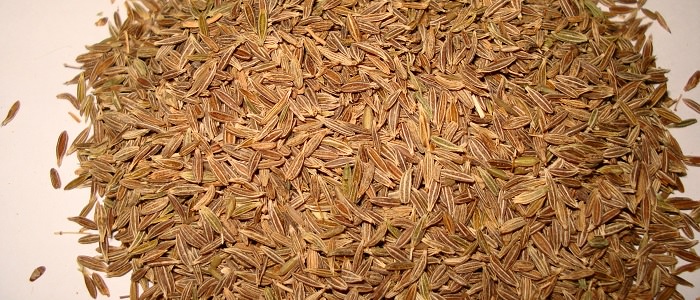
1. It provides a surprising amount of iron relative to the serving size
Cumin is considered one of the spices richer in iron. A single teaspoon of cumin seeds contains about 1.4 mg of iron. That's a decent amount for a serving weighing only about two grams. The recommended daily intake for adult men and for women over the age of 50 is usually 8 mg of iron. So a teaspoon of cumin can supply them with about 17% of the recommended daily amount. Women of childbearing age usually need a higher amount, so that same teaspoon will supply them with a lower percentage of the daily requirement. That said, cumin should not be seen as a treatment for iron deficiency or anemia. The iron it contains is non-heme iron, whose absorption in the body is more limited. You can improve its absorption when you eat it as part of a meal that contains vitamin C, for example in a tomato stew, in a salad with peppers or alongside lemon juice.
2. It contains essential minerals and healthy plant compounds
Besides iron, a teaspoon of cumin provides small amounts of calcium,
magnesium, phosphorus, potassium and manganese. The amounts aren't large
enough to make cumin a primary source of these minerals, but they add
to its nutritional value as part of a varied diet. Cumin seeds also
contain various aromatic and plant compounds, including cuminaldehyde,
flavonoids and terpenes. Cuminaldehyde is one of the substances
responsible for cumin's characteristic aroma and flavor. In laboratory
studies, some of these compounds were found to have antioxidant
activity, but results observed in a test tube don't necessarily prove
that eating the spice will prevent disease in the human body. In a
clinical study conducted among people with metabolic syndrome,
participants who received capsules of cumin essential oil for eight
weeks showed improvement in several measures related to the body's
antioxidant system. Among other things, an increase was found in the
activity of the enzyme superoxide dismutase and in total antioxidant
capacity.
3. It may help reduce salt use
Cumin contains very little sodium. A teaspoon of cumin seeds contains
only about 3.5 mg of sodium, compared with hundreds of milligrams in a
small amount of table salt, in soup powders and in industrial seasoning
blends. There's no need to give up salt entirely to enjoy a balanced
diet, but many people consume more sodium than recommended, mainly
through processed food, sauces, snacks, cheeses and ready-made dishes.
Using cumin alongside other spices, such as paprika, garlic, coriander,
black pepper or turmeric, can give a dish a more complex flavor and
reduce the sense that it's missing salt. It's important to check the
ingredient list when buying a ready-made blend that contains cumin,
because while the cumin itself is low in sodium, blends for seasoning
meat, shawarma, meatballs and the like may contain a large amount of
salt.
4. It may ease bloating and digestive discomfort
The use of cumin to ease digestive problems is well known in the
traditional medicine of the Middle East, India and other regions. It was
used, among other things, after heavy meals and to relieve gas, a
feeling of fullness and mild stomachaches. In a preliminary study
conducted among people with irritable bowel syndrome, participants
received cumin extract for four weeks. During the period of use they
reported a decrease in abdominal pain, bloating, a feeling of incomplete
evacuation and urgency in bowel movements. Some participants also
showed an improvement in the frequency and texture of their stools. That
said, it should be noted that the study had a significant limitation:
it had no control group, which means it's impossible to know for certain
whether the improvement stemmed from the cumin, from other changes in
the participants' behavior, from the expectation that the treatment
would help, or from natural fluctuations in irritable bowel symptoms.
5. It may support the weight-loss process
Eating cumin on its own doesn't burn fat and can't make up for
overeating, but several studies have examined whether this spice can
help as part of a structured weight-loss program. In a controlled trial
conducted among women who were overweight or obese, all the participants
received nutritional counseling intended to help them lose weight. Half
of them were asked to consume three grams of cumin powder a day in
yogurt, while the second group received yogurt without cumin. After
three months, the group that consumed cumin showed greater reductions in
weight, body mass index, waist circumference, fat mass and body fat
percentage. That said, it's important to emphasize that all the
participants received a weight-loss nutrition plan.
6. It may help balance blood sugar levels
Cumin's effect on blood sugar levels has been studied mainly among
people with type 2 diabetes, prediabetes, overweight or other metabolic
disorders. Some studies pointed to an improvement in fasting blood sugar
levels or in measures related to insulin activity, while other studies
found no significant effect. But a recent and especially encouraging
finding emerged lately from a meta-analysis published in 2026, which
found a decrease in fasting blood sugar levels among people who received
cumin supplements. The researchers noted that the effect appeared more
pronounced in some of the studies conducted among adults over the age of
50 and among people with type 2 diabetes. That said, they emphasized
that these are preliminary data analyses, which don't make it possible
to determine exactly whom the supplement suits or what dose is worth
taking.
7. It may have a positive effect on blood lipid levels
Several studies have found a possible effect of eating cumin on
cholesterol and triglyceride levels. In a trial conducted among
overweight women, the group that consumed cumin powder showed a greater
reduction in total cholesterol, LDL cholesterol and triglyceride levels,
along with an increase in HDL cholesterol levels. The 2026
meta-analysis mentioned in the previous section also found that cumin
supplements were associated with a decrease in triglyceride levels and a
certain increase in HDL levels. That said, the results varied
considerably between studies, especially where HDL was concerned. Such
high variability suggests that the effect is not uniform, and it may
depend on the participants' age, their health condition, the dose, the
length of treatment and the form of the supplement. People with high
cholesterol or triglycerides can certainly use cumin in cooking, but
they should not stop medications or delay medical treatment on the basis
of small studies on cumin supplements.
8. It may contribute to concentration and cognitive function
Iron plays a central role in producing hemoglobin, the protein in red
blood cells that carries oxygen from the lungs to the body's tissues,
including the brain. When a significant iron deficiency develops, and
especially iron-deficiency anemia, fatigue, weakness, reduced energy,
difficulty concentrating and memory problems may appear. Since a
teaspoon of cumin provides a nice amount of iron, regularly including
the spice in various dishes can contribute to daily iron intake and thus
help prevent such effects, especially as part of a diet that also
contains legumes, green vegetables, whole grains and additional iron
sources.
9. It contains compounds with antioxidant activity
Cumin seeds contain a variety of plant compounds, including flavonoids,
polyphenols, terpenes and cuminaldehyde - one of the main substances
responsible for the spice's characteristic smell and flavor. In
laboratory studies, some of these compounds were found to be capable of
neutralizing free radicals and reducing oxidation processes. Free
radicals are formed in the body as part of natural processes, but their
excessive accumulation may contribute to oxidative stress and to damage
to the fats, proteins and genetic material in cells. That said, it's
important to distinguish between antioxidant activity measured in a
concentrated extract under laboratory conditions and the effect of an
ordinary amount of cumin within a meal. The existing studies show that
cumin has an interesting chemical composition and antioxidant potential,
but there still isn't enough clinical evidence to determine that
consuming it alone prevents diseases or slows the aging process.
How to use cumin in cooking?
You can buy cumin as whole seeds or as ground powder. Whole seeds
usually keep their aroma longer, especially when you toast them briefly
in a dry pan and grind them close to cooking time. Avoid prolonged
toasting, because the seeds may burn and take on a bitter taste. Ground
cumin is more convenient to use and suits soups, legume stews, rice,
meatballs, fish and roasted vegetables. You can start with a quarter to
half a teaspoon for a small pot and add to taste. Its flavor is
dominant, so a large amount isn't needed to notice it.
In summary
Cumin is not a miracle cure, but it definitely deserves a place in the
menu of anyone trying to maintain a healthy diet. It adds plenty of
flavor with almost no calories or sodium, provides a decent amount of
iron relative to the serving size, and contains additional minerals and
plant compounds. It also combines well with vegetables and legumes and
can make it easier to prepare nutritious, satisfying home-cooked meals.
Human studies point to the possibility that cumin and supplements based
on it may help to some extent with weight loss and waist circumference,
with improving some blood lipid measures, with balancing blood sugar and
with reducing certain digestive symptoms. That said, the evidence is
still not strong or consistent enough to present cumin as a perfect
treatment. The safest and simplest way to enjoy it is to use it as a
spice as part of a varied diet. In that case, even without far-reaching
promises, its rich flavor and nutritional contribution give enough
reasons to keep it within reach - your body will definitely thank you
for it!