Monday, May 08, 2023

Knowing these Blood Clot Symptoms Could Save Your Life!


Blood clots are clumps of congealed blood. They usually don’t do any harm to our health as they help stop the bleeding when we cut ourselves. However, when they appear in our deep veins, they can be extremely dangerous. 
 
This dangerous kind of clot is known as deep vein thrombosis (DVT), and it can cause serious traffic jams in your blood circulation. There can also be deadly consequences if a blood clot breaks away from the place it started and reaches your heart or lungs. Below are 10 warning signs of DVT that should not be ignored! 
 
1. A Racing Heart
If you have a blood clot in your heart, you might feel it flutter in your chest. In this case, tachycardia can be caused by a low level of oxygen in your lungs. As a result, your heart tries to make up for the shortage and starts to beat faster and faster. 
 
2. Shortness of Breath
If you suddenly realized that it has become difficult for you to take deep breaths, it might be a symptom of a blood clot in your lung, which is called a pulmonary embolism.

3. Coughing without Any Reason 
If you occasionally have unexpected attacks of dry coughing as well as shortness of breath, chest pain, and increased heart rate, it could be a pulmonary embolism. You might also cough up blood and mucus. 
 
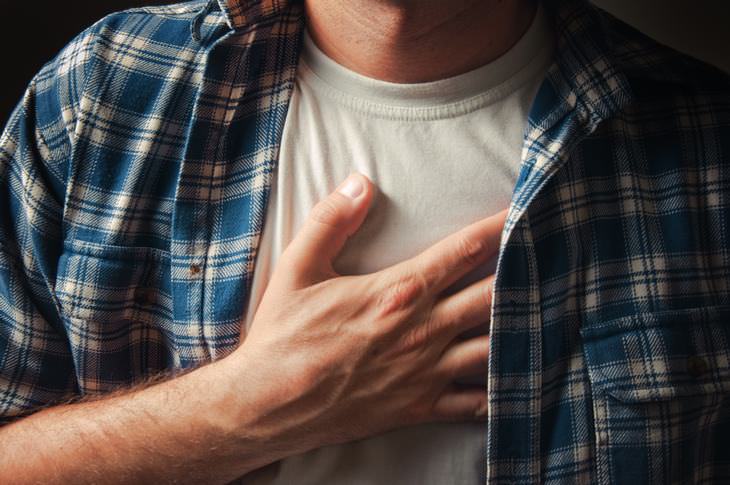
4. Chest Pain
If you have chest pain when you breathe deeply, it could be a symptom of a pulmonary embolism. The pain in your chest will usually be sharp and stabbing, and you might easily think that you’re having a heart attack. The main difference between the two is that a pulmonary embolism always gets worse with breathing. In any case, you should call 911 immediately as they both can be fatal. 
 
5. Red or Dark Discoloration on a Leg  
Red or dark spots on your skin that appear without reason could be a symptom of a blood clot in your leg. You might also feel tenderness and warmth in this area and pain while stretching your toes upward. 
 
6. Arm or Leg Pain  
Although you usually need to have several symptoms in order to diagnose DVT, the only sign of this serious condition might be pain. Pain from a blood clot can be easily mistaken for muscle cramp, but this kind of pain usually occurs when you’re walking or flexing your feet upward. 
 
7. Swelling in a Limb 
If you have suddenly noticed that one of your ankles has become bloated, it could be a sign of DVT. This condition is an emergency as the clot may break free at any moment and start traveling towards your vital organs.  
 
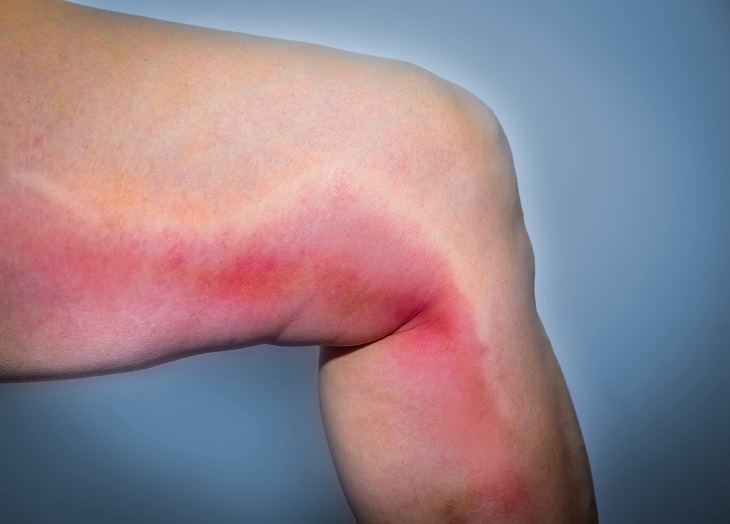
8. Red Streak on Your Skin
 Blood Clots
 
Have you noticed red streaks suddenly appearing along your veins? Do they feel warm when you touch them? If so, this might not be a normal bruise, and you need to seek immediate medical attention. 
 
9. Vomiting  
This could be a sign that you have a blood clot in your abdomen. This condition is called mesenteric ischemia, and it is usually coupled with severe abdominal pain. If your intestines don’t get enough blood supply, you might also experience nausea and blood in your stool. 
 
10. Partial or Complete Blindness in an Eye 
Painless loss of vision in one of your eyes is usually a sign of central retinal occlusion. It’s considered a serious medical emergency, especially if you have vertigo and problems with keeping your balance.


This is only for your information, kindly take the advice of your doctor for medicines, exercises and so on.   

https://gscrochetdesigns.blogspot.com. one can see my crochet creations  
https://gseasyrecipes.blogspot.com. feel free to view for easy, simple and healthy recipes    
https://kneereplacement-stickclub.blogspot.com. for info on knee replacement
https://cancersupportindia.blogspot.com  for infor on cancer and health related topics
https://GSiyers home remedies.blogspot.com   is the latest addition to my blogs. I'm going to add posts there, do give me your valuable feed back on my blogs. Thanks a lot, take care, be healthy and be happy.

Labels: , , , , , , , , , ,

Friday, April 30, 2021

9 Warning Signs of a Blood Clot

Wouldn't it be great to know if you're going to get sick ahead of time, allowing you to do something about it before it actually hits you? While it's not always possible, with illnesses like the flu or a cold, your body does give you warning signs in certain situations. Below, we take a look at how a blood clot begins to form and what you can do about it:

What Is a Blood Clot? 
A blood clot can be defined as a clump of blood. There are instances where this is beneficial. When you cut yourself, for instance, the texture of the blood changes from liquid to a more gel-like state. This enables the blood to coagulate into a more solid state which stops the blood flow. However, there are times when blood clots are more serious, particularly when it forms inside your major veins. This is called Deep Vein Thrombosis (DVT). If left untreated, this can be harmful as it can travel through your veins and into your heart and lungs. A blood clot that lies in the lungs is called a Pulmonary Embolism (PE) which can be fatal and requires medical attention.

Warning Signs 
The signs of a blood clot depend on the exact type of blood clot you're experiencing. Nevertheless, it's important to recognize the signs before they get worse. Below are nine warning signs you should look out for:
blood clot
1. Racing Heart: 
A blood clot in your lungs may be limiting the flow of oxygen in your lungs and causing your heart to race. This occurs because the heart is trying to compensate for the shortage and may start beating rapidly. 
 
2. Chest Pain: 
Many people with PE believe that it's actually a heart attack because the pain appears similar. One of the hallmark signs that it could be a blood clot is the sharp, or stabbing pain that that feels worse when you take a deep breath. The pain may get worse with every breath you take. 
 
3. Shortness of Breath
A blood clot in your lung may make it difficult to breathe due to the slowing of oxygen flow. You may also feel suddenly faint, as though you are going to pass out.

4. Unexplained Cough: 
A cough is generally associated with a cold or strep throat. But a dry cough with no logical explanation that seems to have come out of nowhere could be a sign of PE. Seek immediate help if you cough up mucus or blood. 
 
5. Skin Discoloration: 
DVT may cause a patch or streak of redness on our arm or leg and might feel warm or tender when touched. 
 
6. Sudden Swelling:  
If you notice your ankle or shin suddenly becoming swollen it could be a sign of DVT. This may happen if the flow of blood in the legs is being blocked, causing blood to pool behind the clot and puff up.

7. Arm or Leg Pain: 
This may feel like muscle cramping. So pay attention if the pain is worse when you walk or when you flex your foot upward. The skin around the pain may be red, swollen, or warm. 
 
8. Vomiting: 
If you suffer from Mesenteric Ischemia (a blood clot in your abdomen) you may feel nauseous and throw up. This is usually accompanied with bad pain in the abdominal area. 
 
9. Impaired Vision: 
Can't see well out of one of your eyes? It may be a sign of central retinal artery occlusion, particularly if loss of vision is coupled with vertigo and balance problems.

This is only for your information, kindly take the advice of your doctor for medicines, exercises and so on.     

https://gscrochetdesigns.blogspot.com. one can see my crochet creations  
https://gseasyrecipes.blogspot.com. feel free to view for easy, simple and healthy recipes    
https://kneereplacement-stickclub.blogspot.com. for info on knee replacement

Labels: , , , , , , , , , , ,

Wednesday, March 17, 2021

Symptoms of a Dangerous Blood Clot

Blood clots are clumps of congealed blood. They usually don’t do any harm to our health as they help stop the bleeding when we cut ourselves. However, when they appear in our deep veins, they can be extremely dangerous.

This dangerous kind of clot is known as deep vein thrombosis (DVT), and it can cause serious traffic jams in your blood circulation. There can also be deadly consequences if a blood clot breaks away from the place it started and reaches your heart or lungs. 
 
Below are 10 warning signs of DVT that should not be ignored! 
 
1. A Racing Heart
 If you have a blood clot in your heart, you might feel it flutter in your chest. In this case, tachycardia can be caused by a low level of oxygen in your lungs. As a result, your heart tries to make up for the shortage and starts to beat faster and faster. 
 
2. Shortness of Breath 
If you suddenly realized that it has become difficult for you to take deep breaths, it might be a symptom of a blood clot in your lung, which is called a pulmonary embolism.

3. Coughing without Any Reason 
If you occasionally have unexpected attacks of dry coughing as well as shortness of breath, chest pain, and increased heart rate, it could be a pulmonary embolism. You might also cough up blood and mucus.

4. Chest Pain  
If you have chest pain when you breathe deeply, it could be a symptom of a pulmonary embolism. The pain in your chest will usually be sharp and stabbing, and you might easily think that you’re having a heart attack. The main difference between the two is that a pulmonary embolism always gets worse with breathing. In any case, you should call 911 immediately as they both can be fatal. 
 
5. Red or Dark Discoloration on a Leg 
Red or dark spots on your skin that appear without reason could be a symptom of a blood clot in your leg. You might also feel tenderness and warmth in this area and pain while stretching your toes upward. 
 
6. Arm or Leg Pain 
Although you usually need to have several symptoms in order to diagnose DVT, the only sign of this serious condition might be pain. Pain from a blood clot can be easily mistaken for muscle cramp, but this kind of pain usually occurs when you’re walking or flexing your feet upward. 
 
7. Swelling in a Limb 
If you have suddenly noticed that one of your ankles has become bloated, it could be a sign of DVT. This condition is an emergency as the clot may break free at any moment and start traveling towards your vital organs. 
 
8. Red Streak on Your Skin
Blood Clots
Have you noticed red streaks suddenly appearing along your veins? Do they feel warm when you touch them? If so, this might not be a normal bruise, and you need to seek immediate medical attention. 
 
9. Vomiting  
This could be a sign that you have a blood clot in your abdomen. This condition is called mesenteric ischemia, and it is usually coupled with severe abdominal pain. If your intestines don’t get enough blood supply, you might also experience nausea and blood in your stool.

10. Partial or Complete Blindness in an Eye 
Painless loss of vision in one of your eyes is usually a sign of central retinal occlusion. It’s considered a serious medical emergency, especially if you have vertigo and problems with keeping your balance.

This is only for your information, kindly take the advice of your doctor for medicines, exercises and so on.     

https://gscrochetdesigns.blogspot.com. one can see my crochet creations  
https://gseasyrecipes.blogspot.com. feel free to view for easy, simple and healthy recipes    
https://kneereplacement-stickclub.blogspot.com. for info on knee replacement

Labels: , , , , , , , , , , , ,