Monday, March 25, 2024

When Memory Loss isn’t Normal – 5 Vital Signs

 Memory loss isn't a one-size-fits-all condition; it encompasses a wide range of forgetfulness, impacting both short- and long-term memory, as well as skills like name recall and routine routines like teeth brushing. Occasional forgetfulness is a common part of the aging process, with around 40% of people aged 65 and above facing age-related memory challenges. But how do you distinguish between normal lapses and potentially serious cognitive concerns? 

 It is important to recognize, however, that certain types of memory loss are abnormal and may be indicative of larger problems. Identifying these red flags can help you take proactive measures to address any potential issues and maintain your cognitive function. 


1. Struggling to learn new things
memory loss

As technology continues to evolve at a rapid pace, it is imperative that we learn and adapt constantly. Take, for example, the evolution of devices like cell phones, computers, and cars, which now feature backup cameras, GPS, and electric power. If you discover that acquiring new knowledge is a struggle, experts recommend taking it seriously. 
 
Neurologists say that it's normal in contemporary society to receive a new device and be unable to figure it out. It's natural to need some time to adjust to a new phone or laptop, but if it's becoming an impossible chore, you should consult your doctor. 
 
 
2. Difficulty with once-familiar tasks
forgetful

When tasks that were once a breeze become a struggle, it might become a cause of concern. For example, forgetting recipes that once seemed second nature can be an indication of abnormal forgetfulness, as neurologists suggest. Another notable area of concern is financial matters, where issues like double-paying bills, a lack of comprehension of financial concepts, or even forgetting how to make accurate changes at stores can surface. 
 
If someone is truly struggling and finding everyday tasks increasingly difficult, this should be a sign that something is wrong. While memory lapses may not be the sole factor, many daily activities, including personal hygiene, keeping appointments, and running errands, may also be impacted. Regularly missing medical appointments and unintentionally burning food due to forgetfulness are additional distressing signs to watch for.

 
3. Quickly forgetting conversations
forgetful
It's perfectly normal to forget some conversations occasionally. But when should you be genuinely concerned? If you immediately forget discussions, say neurologists. When you engage in a discussion, it's natural to think that you'll remember some of it. However, if an hour has passed and you can't recollect the chat, you should be concerned. Also, a warning sign is when they fail to remember it by the day's end.


4. Repeating the same stories  
 
Occasionally sharing stories or facts more than once is normal, but if this becomes a habit, it may indicate an abnormality. Neurologists warn that repeated questions or stories within the same day, or sometimes within mere minutes, could be a sign of unusual memory loss. 
 
 
5. Finding yourself disoriented in places you know well
lost
It's absolutely normal to experience momentary confusion when navigating a long-forgotten location or exploring an unfamiliar area. However, losing your way in familiar places frequently may occasionally indicate unusual memory decline. 
 
Several neuroscientists believe that disorientation in your hometown may be a red flag, such as having difficulty finding your way to the supermarket or returning from an appointment. If you or someone you care about experiences this, it should raise concerns. 
 
 
What can cause memory loss?
memory loss

Stay calm. Memory loss doesn't always point to conditions like Alzheimer's or dementia. It's important to determine the root cause of your forgetfulness, as it might be reversible with the right treatment. 
 
When memory problems are reported, neurologists often focus on examining a patient's medications first. Memory loss can be linked to specific medications, infections such as UTIs, stress, fatigue, and depression, but addressing the root cause often restores memory function. Keep in mind that certain prescription drugs may also impact memory. 
 
Memory loss can also be progressive in nature, meaning it will gradually affect you more, including the types of memories it affects. Timely diagnosis is essential, as it allows for the potential effectiveness of early treatment with medications.


Apart from medications, hearing impairment can significantly influence your ability to navigate your surroundings effectively and gather adequate information to participate in conversations. This can lead to a perceived memory decline, both subjectively and in the perception of others. Therefore, it's crucial to obtain hearing aids as soon as possible to address hearing loss. Delaying this solution will make it more difficult to utilize them effectively in the future. 
 
Healthcare experts also stress that prioritizing your overall health will help reduce the likelihood of problematic memory issues. Managing existing medical conditions, especially conditions like diabetes and high blood pressure, has a direct impact on brain health. Furthermore, they stress the significance of integrating regular physical activity and a balanced diet into your routine. Prioritizing your physical and mental wellness will help you maintain memory function and avoid future issues.
 

This is only for your information, kindly take the advice of your doctor for medicines, exercises and so on.   

https://gscrochetdesigns.blogspot.com. one can see my crochet creations  
https://gseasyrecipes.blogspot.com. feel free to view for easy, simple and healthy recipes    
https://kneereplacement-stickclub.blogspot.com. for info on knee replacement
https://cancersupportindia.blogspot.com  for infor on cancer and health related topics
https://GSiyers home remedies.blogspot.com   is the latest addition to my blogs. I'm going to add posts there, do give me your valuable feed back on my blogs. Thanks a lot, take care, be healthy and be happy.
 

Labels: , , , , , , , , , ,

Friday, July 29, 2022

Can Loud Noises Harm Your Ears? The Causes of Hearing Loss

Hearing loss is often considered normal, especially if you’re over 50. So you may think that a decline in hearing is nothing to be concerned about. This is simply untrue, as hearing loss can develop for a myriad of reasons - some more concerning than others. To give you a fuller picture of this often neglected symptom, let’s review the main causes, types, and signs of hearing loss. 
 
How Hearing Works  
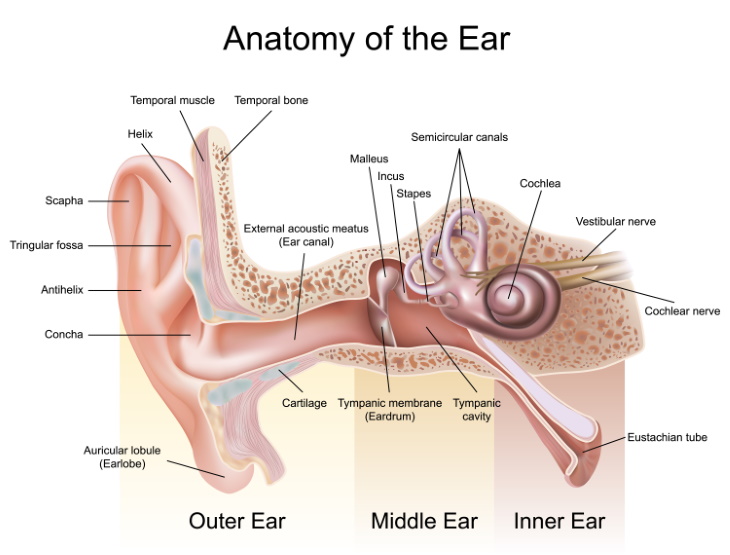
The human ear is an incredibly complicated structure. If any part of the ear isn’t working as it should, this could lead to a decline in hearing. Hence, in order to understand how hearing loss can occur, we must first learn how our ears transform sounds into information that can be interpreted by the brain. 

Causes of Hearing Loss Ear Anatomy

Hearing starts when a sound wave travels from the outer ear to the eardrum - a thin skin seal that divides the outer ear from the middle ear. 
 
The sound wave makes the eardrum vibrate, and these vibrations are also picked up and amplified by the 3 ossicle bones in the middle ear called the hammer, anvil, and stirrup. The vibrations of the structure in the middle ear trigger a series of chemical reactions in the cochlea, a snail-shaped part in the inner ear. It is the cochlea’s job to transform sound wave vibrations into electrical stimuli that can be readily perceived by the brain. 
 
Any of the structures in the outer, middle, and inner ear, as well as the nerves and brain structures responsible for hearing, can be implicated in hearing loss. It is for this reason that a variety of health conditions and lifestyle changes can affect your hearing.

The Signs of Hearing Loss
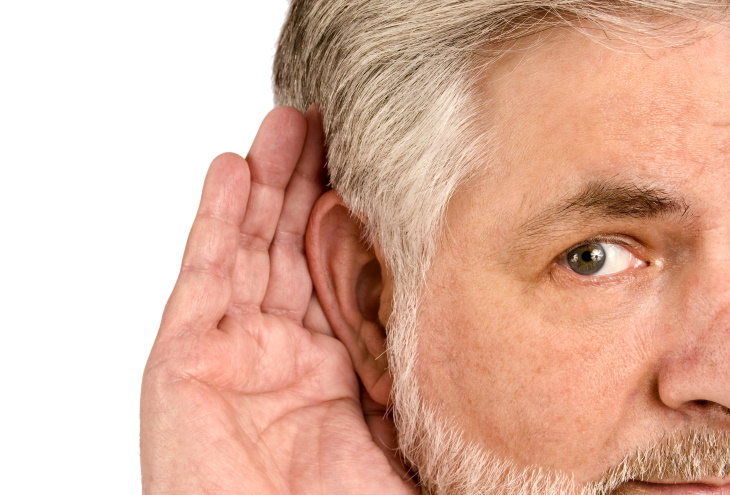
Causes of Hearing Loss man hearing
One would think that hearing loss should be quite easy to spot. 
 
However, due to the often gradual nature of hearing loss and absence of pain, many people are unaware that their hearing is getting worse. This is a topic we discuss at length in the article 5 Subtle Signs of Hearing Loss. Briefly, some of the first signs patients can notice are: 
 
You frequently ask people to repeat what they said 
 
Compared to others, you always turn up the volume on the TV 
 
People often seem to speak incoherently or mumble to you 
 
It’s difficult for you to follow a conversation, especially on the phone or in crowded public spaces 
 
High-pitched sounds, like telephone ringing or birds chirping, are difficult for you to hear 
 
You often feel dizzy or off balance 
 
You feel pressure or fluids in the ear 
 
Tinnitus - a feeling of ringing in the ears 
 
 Earache. 
 
In children, hearing loss is often difficult to notice. If a child is never startled by loud sounds, doesn’t speak by age 1, or is not responsive to their name, they could be experiencing hearing loss. 
 
The Types of Hearing Loss
The American Speech-Language-Hearing Association (ASHA) distinguishes between 3 types of hearing loss:
 
Conductive hearing loss - when sound waves can’t get to the middle ear, such as when there’s buildup of earwax that leads to muffled hearing. Ear infections, allergies, tumors, and foreign objects can also cause this type of hearing loss. Once the cause has been treated, hearing can often be restored. 
 
Sensorineural hearing loss - when the inner ear or the nerves are damaged. This type of hearing loss is usually permanent. 
 
Mixed hearing loss occurs when both the middle ear, the inner ear, and/or the nerve connections are damaged. 
 
Depending on whether or not hearing loss occurs in one or both ears, it can also be either unilateral or bilateral.
 
The Causes of Hearing Loss 
Now that you know what to look for and what structures could be involved in the loss of hearing, let’s examine the possible causes of this condition.  
 
1. Age-related hearing loss 
Age is one of the primary causes of hearing loss. In fact, it’s so common that this type of hearing loss has its own name - presbycusis. Estimates by the National Institute on Deafness and Other Communication Disorders (NIDCD) suggest that 25% of adults aged 65-74 experience hearing loss.

Age-related hearing loss develops gradually and is bilateral. You may first notice that you keep turning up the volume on the TV or that people’s speech sounds unclear. Though experiencing some hearing loss with age is normal, it’s certainly beneficial to seek relief if the symptoms are getting uncomfortable. 
 
Presbycusis belongs to a type of hearing loss called sensorineural, which means that the issue lies with age-related changes in the inner ear, the middle ear, or the nerves that connect the ear and the brain. 
 
Age-related hearing loss can also coincide with serious underlying health conditions like diabetes and Alzheimer’s disease. So, make sure to report this symptom to your physician, especially if hearing loss develops quickly or abruptly.
 
2. Illnesses that cause hearing loss  
 
A number of health conditions, including autoimmune diseases, cancers, and other illnesses can lead to hearing loss: 
 
Meniere’s disease  
An inner ear condition that causes dizziness, tinnitus, sensitivity to loud sounds, and fluctuating hearing loss in both ears. The cause of Ménière's disease is unknown, and it usually affects people aged 30-50 years old. Over time, it causes some degree of permanent hearing loss.

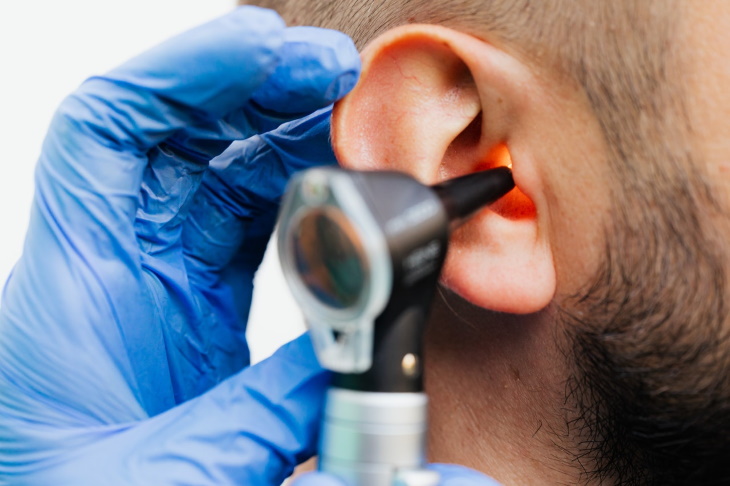
Causes of Hearing Loss ear exam
Autoimmune inner ear disease  
A rapid and permanent loss of hearing loss that occurs when the immune system starts attacking the inner ear. Seeing a doctor as soon as possible will help preserve your hearing with minimal damage. 
 
Otosclerosis  
A disease that affects the middle ear, limiting the movement of the ossicle bones. The condition can be treated with surgery. 
 
Ear infections 
Both viral and bacterial infections can result in hearing loss, but they rarely cause permanent damage. An example of this is swimmer's ear (otitis externa), which is a bacterial ear infection caused by water accumulating in the outer ear canal. This condition can lead to muffled hearing and loss of hearing, even though it’s typically temporary.

Seek immediate medical treatment whenever an adult or child exhibits signs of an ear infection:
 - Earache 
- Itching and irritation around the ear 
- Discharge oozing out of the ear 
- The feeling of fullness or pressure in the ear
 - Hearing problems 
- Fever 
- Fatigue. 
Tumors ​
 
Hearing loss can be caused by cancerous and benign tumors. For example, an acoustic neuroma can cause unilateral hearing loss. This is a non-cancerous tumor that develops near the cochlear nerve connecting the inner ear with the brainstem. As this slow-growing tumor grows, it can push on the nerve, causing hearing problems, tinnitus, and a feeling of fullness in your ear. You need medical attention to treat an acoustic neuroma.

3. Ototoxic drugs
Many medications used to treat infections, heart disease, and cancer can impact your hearing. Anything from over-the-counter medications like large doses of aspirin to common antibiotics and other prescription drugs, such as diuretics (e.g. lasix or ethacrynic acid), and certain chemotherapy treatments can result in hearing loss. 
 
These medications are known as “ototoxic drugs.” All in all, the ASHA counted over 200 such medications.  
 
4. Head injury

Causes of Hearing Loss man with headache
There’s a reason why we’re always told not to stick a cotton swab inside the ear canal while we are cleaning the ears. Any damage to the eardrum can rob you of hearing in one ear. But a ruptured eardrum is just one of many injuries that could result in hearing loss. 
 
Any accident, be it a traumatic brain injury or damage to the middle ear can lead to permanent hearing loss. That’s why any head injury, even if it’s merely inserting a cotton swab a bit too far, is always considered a medical emergency. 
 
5. Noise-induced loss of hearing

Causes of Hearing Loss man in headphones and glasses
This is a question many of us wonder - can a very loud noise really make you permanently lose your hearing? Unfortunately, it can. Loud noises can damage the tiny hair cells located in the inner ear, making it increasingly difficult for your ear to convert sounds into electrical signals for the brain. 
 
While most cases of noise-induced loss of hearing happen gradually as you are exposed to loud sounds like traffic, loud music, or construction, the condition can also develop suddenly as a result of hearing a very loud sound, such as an explosion. 
 
Noise-induced hearing loss is painless, but it can be bothersome nonetheless. Luckily, it’s also largely avoidable, provided that you limit your exposure to noise by using earplugs and maintaining a moderate volume when using your headphones.

6. Hereditary hearing loss
Hearing problems are often passed down from generation to generation. Experts identify 400 known genetic syndromes that have hearing loss as one of the symptoms. These inherited hearing problems can be present at birth, or they can become apparent over time. 
 
If someone in your family is experiencing genetic hearing loss, you may develop the condition too, even though you may experience significantly lesser symptoms, as the degree of hearing loss tends to vary from one person to another. 
 
When to See a Doctor 
Contact your healthcare provider immediately if you have hearing loss, especially if any of these other signs are present: 
 
Signs of infection, such as a high fever and fatigue 
 
Sudden hearing loss or deafness 
 
Dizziness or balance problems 
 
 Persistent tinnitus - ringing in the ears 
 
Earache.


This is only for your information, kindly take the advice of your doctor for medicines, exercises and so on.   

https://gscrochetdesigns.blogspot.com. one can see my crochet creations  
https://gseasyrecipes.blogspot.com. feel free to view for easy, simple and healthy recipes    
https://kneereplacement-stickclub.blogspot.com. for info on knee replacement


Labels: , , , , , , , , , ,