Friday, July 29, 2022

Can Loud Noises Harm Your Ears? The Causes of Hearing Loss

Hearing loss is often considered normal, especially if you’re over 50. So you may think that a decline in hearing is nothing to be concerned about. This is simply untrue, as hearing loss can develop for a myriad of reasons - some more concerning than others. To give you a fuller picture of this often neglected symptom, let’s review the main causes, types, and signs of hearing loss. 
 
How Hearing Works  
The human ear is an incredibly complicated structure. If any part of the ear isn’t working as it should, this could lead to a decline in hearing. Hence, in order to understand how hearing loss can occur, we must first learn how our ears transform sounds into information that can be interpreted by the brain. 
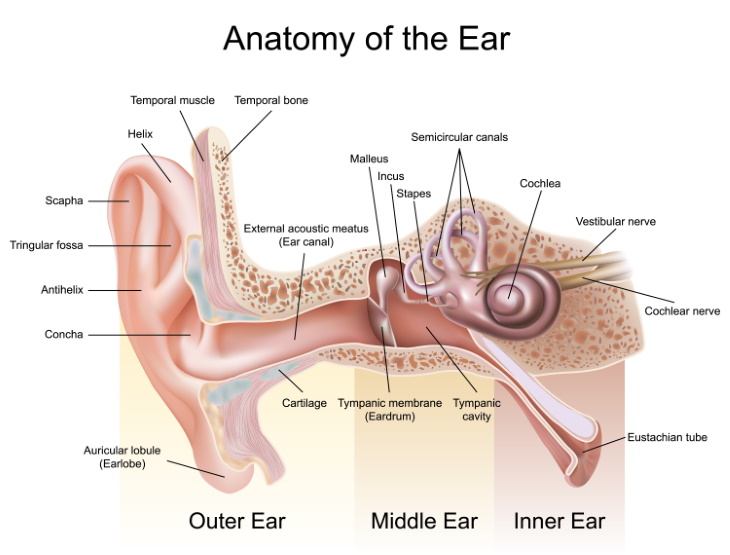
Causes of Hearing Loss Ear Anatomy

Hearing starts when a sound wave travels from the outer ear to the eardrum - a thin skin seal that divides the outer ear from the middle ear. 
 
The sound wave makes the eardrum vibrate, and these vibrations are also picked up and amplified by the 3 ossicle bones in the middle ear called the hammer, anvil, and stirrup. The vibrations of the structure in the middle ear trigger a series of chemical reactions in the cochlea, a snail-shaped part in the inner ear. It is the cochlea’s job to transform sound wave vibrations into electrical stimuli that can be readily perceived by the brain. 
 
Any of the structures in the outer, middle, and inner ear, as well as the nerves and brain structures responsible for hearing, can be implicated in hearing loss. It is for this reason that a variety of health conditions and lifestyle changes can affect your hearing.

The Signs of Hearing Loss
Causes of Hearing Loss man hearing
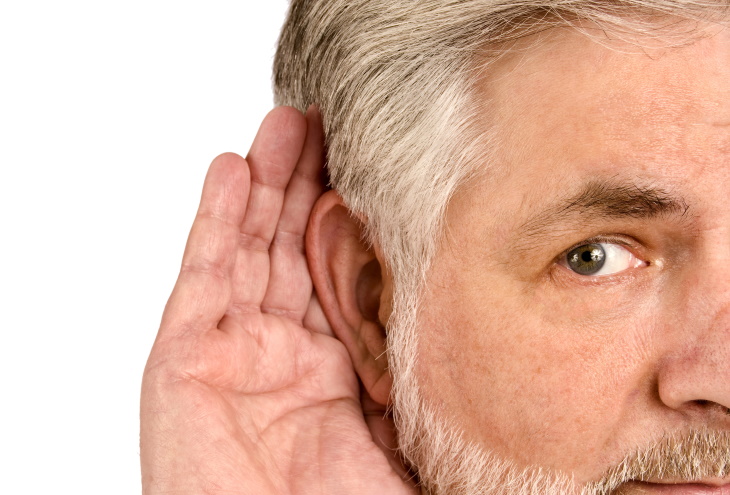
One would think that hearing loss should be quite easy to spot. 
 
However, due to the often gradual nature of hearing loss and absence of pain, many people are unaware that their hearing is getting worse. This is a topic we discuss at length in the article 5 Subtle Signs of Hearing Loss. Briefly, some of the first signs patients can notice are: 
 
You frequently ask people to repeat what they said 
 
Compared to others, you always turn up the volume on the TV 
 
People often seem to speak incoherently or mumble to you 
 
It’s difficult for you to follow a conversation, especially on the phone or in crowded public spaces 
 
High-pitched sounds, like telephone ringing or birds chirping, are difficult for you to hear 
 
You often feel dizzy or off balance 
 
You feel pressure or fluids in the ear 
 
Tinnitus - a feeling of ringing in the ears 
 
 Earache. 
 
In children, hearing loss is often difficult to notice. If a child is never startled by loud sounds, doesn’t speak by age 1, or is not responsive to their name, they could be experiencing hearing loss. 
 
The Types of Hearing Loss
The American Speech-Language-Hearing Association (ASHA) distinguishes between 3 types of hearing loss:
 
Conductive hearing loss - when sound waves can’t get to the middle ear, such as when there’s buildup of earwax that leads to muffled hearing. Ear infections, allergies, tumors, and foreign objects can also cause this type of hearing loss. Once the cause has been treated, hearing can often be restored. 
 
Sensorineural hearing loss - when the inner ear or the nerves are damaged. This type of hearing loss is usually permanent. 
 
Mixed hearing loss occurs when both the middle ear, the inner ear, and/or the nerve connections are damaged. 
 
Depending on whether or not hearing loss occurs in one or both ears, it can also be either unilateral or bilateral.
 
The Causes of Hearing Loss 
Now that you know what to look for and what structures could be involved in the loss of hearing, let’s examine the possible causes of this condition.  
 
1. Age-related hearing loss 
Age is one of the primary causes of hearing loss. In fact, it’s so common that this type of hearing loss has its own name - presbycusis. Estimates by the National Institute on Deafness and Other Communication Disorders (NIDCD) suggest that 25% of adults aged 65-74 experience hearing loss.
Age-related hearing loss develops gradually and is bilateral. You may first notice that you keep turning up the volume on the TV or that people’s speech sounds unclear. Though experiencing some hearing loss with age is normal, it’s certainly beneficial to seek relief if the symptoms are getting uncomfortable. 
 
Presbycusis belongs to a type of hearing loss called sensorineural, which means that the issue lies with age-related changes in the inner ear, the middle ear, or the nerves that connect the ear and the brain. 
 
Age-related hearing loss can also coincide with serious underlying health conditions like diabetes and Alzheimer’s disease. So, make sure to report this symptom to your physician, especially if hearing loss develops quickly or abruptly.
 
2. Illnesses that cause hearing loss  
 
A number of health conditions, including autoimmune diseases, cancers, and other illnesses can lead to hearing loss: 
 
Meniere’s disease  
An inner ear condition that causes dizziness, tinnitus, sensitivity to loud sounds, and fluctuating hearing loss in both ears. The cause of Ménière's disease is unknown, and it usually affects people aged 30-50 years old. Over time, it causes some degree of permanent hearing loss.

Causes of Hearing Loss ear exam
Autoimmune inner ear disease  
A rapid and permanent loss of hearing loss that occurs when the immune system starts attacking the inner ear. Seeing a doctor as soon as possible will help preserve your hearing with minimal damage. 
 
Otosclerosis  
A disease that affects the middle ear, limiting the movement of the ossicle bones. The condition can be treated with surgery. 
 
Ear infections 
Both viral and bacterial infections can result in hearing loss, but they rarely cause permanent damage. An example of this is swimmer's ear (otitis externa), which is a bacterial ear infection caused by water accumulating in the outer ear canal. This condition can lead to muffled hearing and loss of hearing, even though it’s typically temporary.

Seek immediate medical treatment whenever an adult or child exhibits signs of an ear infection:
 - Earache 
- Itching and irritation around the ear 
- Discharge oozing out of the ear 
- The feeling of fullness or pressure in the ear
 - Hearing problems 
- Fever 
- Fatigue. 
Tumors ​
 
Hearing loss can be caused by cancerous and benign tumors. For example, an acoustic neuroma can cause unilateral hearing loss. This is a non-cancerous tumor that develops near the cochlear nerve connecting the inner ear with the brainstem. As this slow-growing tumor grows, it can push on the nerve, causing hearing problems, tinnitus, and a feeling of fullness in your ear. You need medical attention to treat an acoustic neuroma.

3. Ototoxic drugs

Many medications used to treat infections, heart disease, and cancer can impact your hearing. Anything from over-the-counter medications like large doses of aspirin to common antibiotics and other prescription drugs, such as diuretics (e.g. lasix or ethacrynic acid), and certain chemotherapy treatments can result in hearing loss. 
 
These medications are known as “ototoxic drugs.” All in all, the ASHA counted over 200 such medications.  
 
4. Head injury
Causes of Hearing Loss man with headache
There’s a reason why we’re always told not to stick a cotton swab inside the ear canal while we are cleaning the ears. Any damage to the eardrum can rob you of hearing in one ear. But a ruptured eardrum is just one of many injuries that could result in hearing loss. 
 
Any accident, be it a traumatic brain injury or damage to the middle ear can lead to permanent hearing loss. That’s why any head injury, even if it’s merely inserting a cotton swab a bit too far, is always considered a medical emergency. 
 
5. Noise-induced loss of hearing

Causes of Hearing Loss man in headphones and glasses
This is a question many of us wonder - can a very loud noise really make you permanently lose your hearing? Unfortunately, it can. Loud noises can damage the tiny hair cells located in the inner ear, making it increasingly difficult for your ear to convert sounds into electrical signals for the brain. 
 
While most cases of noise-induced loss of hearing happen gradually as you are exposed to loud sounds like traffic, loud music, or construction, the condition can also develop suddenly as a result of hearing a very loud sound, such as an explosion. 
 
Noise-induced hearing loss is painless, but it can be bothersome nonetheless. Luckily, it’s also largely avoidable, provided that you limit your exposure to noise by using earplugs and maintaining a moderate volume when using your headphones.

6. Hereditary hearing loss
Hearing problems are often passed down from generation to generation. Experts identify 400 known genetic syndromes that have hearing loss as one of the symptoms. These inherited hearing problems can be present at birth, or they can become apparent over time. 
 
If someone in your family is experiencing genetic hearing loss, you may develop the condition too, even though you may experience significantly lesser symptoms, as the degree of hearing loss tends to vary from one person to another. 
 
When to See a Doctor 
Contact your healthcare provider immediately if you have hearing loss, especially if any of these other signs are present: 
 
Signs of infection, such as a high fever and fatigue 
 
Sudden hearing loss or deafness 
 
Dizziness or balance problems 
 
 Persistent tinnitus - ringing in the ears 
 
Earache.


This is only for your information, kindly take the advice of your doctor for medicines, exercises and so on.   

https://gscrochetdesigns.blogspot.com. one can see my crochet creations  
https://gseasyrecipes.blogspot.com. feel free to view for easy, simple and healthy recipes    
https://kneereplacement-stickclub.blogspot.com. for info on knee replacement


Labels: , , , , , , , , , ,

Monday, November 01, 2021

Living with Lupus: Learning to love and listen to my body

I was 23 years old when my ex-boyfriend, under the influence of drugs and alcohol, ran me over with a truck travelling at around 45mph as I crossed a street one evening in Fort Lauderdale. I spent the next year of my life recovering from my injuries, and the next two decades making peace with the suffering it unleashed and learning to love my body again.

You see, being hit was my “trigger”, and I would soon learn how triggers are intimately tied to the onset of symptoms in people who are genetically predisposed to autoimmune diseases. For some, their trigger could be a pregnancy, a stressful event such as a divorce or death in the family, or a severe illness such as COVID. Simply put, a trigger is something that taxes the immune system to the point where it goes haywire. My trigger was 3,000 pounds of steel crashing into me. And I have been trying to outrun the aftermath ever since.

“You have Lupus. A disease that is going to cause you physical and emotional pain every single day of your life. There’s no cure by the way. Your previous life doesn’t exist any longer. So, suck it up, buttercup, and learn how to deal with it. Our time is up. Good luck,” is what my doctor should have told me at the moment of my diagnosis.

Label me a straight shooter – a quality you tend to pick up in a large, boisterous Italian family where speaking the truth, however uncomfortable it may be, is considered an act of love – but I believe I could have better prepared myself for the journey that is chronic illness if the rheumatologist who handed me the diagnosis almost two decades ago had been more forthcoming. Perhaps I could have pointed myself in the right direction in that pivotal moment, a healing path of finding solutions, rather than becoming a prisoner of confusion. Instead, her words were vague and emotionless, as though she were reading dinner options off a menu for the 100th time.

I have often wondered what the finality of a diagnosis feels like for a doctor and how it differs from a patient. Is it similar to a math equation, where symptoms + test results + physical exam = diagnosis, and once solved they immediately move on to the next problem (patient)? Because for patients, moving on seems impossible at that moment. We stand paralysed, feet cemented to the ground with a line of demarcation running between them – one side representing life before and the other, life after the diagnosis.

It is an overwhelming yet vindicating moment full of infinite unknowns.

About three months into my hospital recovery from being run over, the strange symptoms that had ebbed and flowed throughout most of my life exposed themselves. This time the pattern was different; they didn’t play hide and seek with one another, one peeking around the corner waiting for the other to hide again before showing its face. This time they banded together and made their presence known all at once. The fevers partnered with the pain, the rashes erupted with the mouth and nose sores, while the stroke and blood clot in my lung made a grand entrance. Add this to an already lacerated liver, broken ribs, head injury and multiple fractures from being hit, and it was clear my body had switched to full revolt mode.

The two specialists who had been running endless tests on me entered my room. I stared at the rheumatologist’s perfectly shaped French bob, its blue-black colour illuminated by the fluorescent hospital lights. She reminded me of Veronica from the Archie comic books. Her hair swayed slightly from side to side as she spoke, the words “autoimmune condition”, “chronic”, and “potentially fatal” shooting from her mouth like bullets. Each terrifying one tore into me. And yet, like most moments of diagnosis for millions of people around the world, it was bittersweet.

This moment had been 23 years in the making. My body was now demanding that attention be paid to the problem it had been carrying for most of my life.

The truth is, my body hadn’t worked properly since the day I was born. It bewildered my young mom, who often reflects, “You were the most perfect little baby, I couldn’t even fathom that you would have so many health problems.” It started with an allergy to breast milk, and then subsequently every substitute – which back in the late 1970s was a pitiful list of options. Allergies turned into severe asthma and by the age of four, my first severe attack landed me in hospital for weeks. It would be the first of dozens upon dozens of hospital visits.

There were clear signs of autoimmune issues, but you didn’t hear about autoimmune disease often in the 1980s. There was no internet or e-book readers you could scour for information with the tap of a finger, no patient advocates sharing their stories and highlighting potentially obscure symptoms that could help an undiagnosed person begin travelling down the path to an answer. Instead, there were staggered trips to the doctor, when my single mother with no health insurance could afford it, only to be handed a stack of prescriptions and some version of a “she’s just a sickly child, delicate, and needs to rest” diagnosis.

And then hell disguised as paradise kicked my suffering into high gear.


When I was eight, we moved from Queens, New York to Fort Lauderdale so my grandparents could help take care of me. Florida had all the makings of a postcard: palm trees, sandy beaches, warm waters, orange groves and an abundance of sunshine. But, unbeknown to us, we had moved into an environment that would almost kill me.

Up to 70 percent of Lupus patients have disease activity triggered and worsened by the UV rays in sunlight. That year, I started showing classic signs of Lupus – severe reactions within minutes of sun exposure (continually brushed off as sun poisoning by physicians), mouth sores, constant fevers, severe fatigue, hair loss, sores on my scalp, and anaemia.

Going to school was like walking into a lion’s den. At lunch, I ate alone because others feared I was contagious and the school nurse often called my mom to pick me up as I had a fever and “shouldn’t be around other children”. The doctors, meanwhile, dismissed my symptoms – blaming my anaemia on a limited diet, my fatigue on the anaemia, and never digging any deeper as the medical system ultimately failed another person it was designed to help.

Lupus – a chronic inflammatory autoimmune disease that affects more than five million people worldwide, and for which there is no cure – was never mentioned. Despite the fact that a few of its most common symptoms include rashes, joint and muscle pain, fevers, sores, fatigue, blood issues (including anaemia), and sensitivity to the sun, it was never even considered as a possibility. The first time I heard the word Lupus was the moment I was diagnosed with it.

I often wonder how much suffering could have been avoided if my family physician had run simple blood tests instead of brushing my mom off for years. I think of all the stress she endured working two or three jobs in order to pay for my doctor appointments and roster of medication, only to get nowhere. And I remember the times, late at night, when she would cry in the bathroom, believing me and my brother couldn’t hear her.

For years, we were both perpetually exhausted, and could see no end in sight.

Sadly, this isn’t unusual for the one in five people who live with an autoimmune disease. It took 15 years for my diagnosis, but the American Autoimmune Related Diseases Association (AARDA) currently estimates it takes patients three or more years, and four or more physicians, to receive an accurate diagnosis. For Lupus, that time frame gets pushed to an average of six years.

The reason: autoimmune diseases are tricky.

There are more than 100 types of autoimmune disease according to the AARDA and the symptoms of each can overlap with the others. Lupus has been nicknamed “the great mimicker” because so many of its symptoms can be found in countless other diseases, leading a physician to rule out the most common possibilities first. If they aren’t well versed in the plethora of symptoms of autoimmune diseases, these possibilities may be overlooked – sometimes for years.

A while back, I met Ron Rocca, the president and CEO of Exagen Inc, who created a breakthrough testing system called AVISE to help Lupus patients get quickly and accurately diagnosed. When I asked what drove him to create this system, he answered, “Every patient deserves the dignity of a diagnosis.”

His words cut through me, because patients are often shown anything but dignity when they are suspended in that purgatory-like state of pre-diagnosis. There, where we are often alone, we are dismissed, misdiagnosed and judged because our outer appearance doesn’t match what society has decided a sick person should “look like”.

When the diagnosis does come, we rarely discuss the suffering that led up to it. But a diagnosis doesn’t magically wipe that slate of torment clean. It takes time to unpack the years of damage, trauma and medical PTSD; of being called “hypochondriacs” and “attention seekers”; of being ridiculed and not believed by those closest to us; of being brought to financial ruin as we’ve searched for answers; of losing our independence, our careers, our marriages, our confidence, our trust in our own ability to care for ourselves and, sometimes, our desire to keep on living because we cannot imagine enduring another day of this pain.

We are often a shell of ourselves by the time we are finally diagnosed. And then, completely unprepared for the journey we are about to embark on, we must navigate a new unknown.

If there is one thing I have learned, it is that chronic illness is not for the weak. It will push you to your limits – physically, emotionally and even spiritually.

But it doesn’t have to be this way. And that is where awareness and advocating for yourself come into play.

It is easy to see how common symptoms of Lupus – such as fatigue, fevers and muscle and joint pain, coupled with shortness of breath and painful breathing – can easily be mistaken for COVID-19, or a plethora of other illnesses, and why autoimmune diseases may not be at the forefront of a physician’s mind at the moment. But if you are experiencing symptoms, I recommend journaling. Most autoimmune symptoms wax and wane, so you may not connect your recent fatigue with your rash from a few months ago, or your intermittent chest or joint pain. You might brush off hair loss or exhaustion as stress from this past year and a half when our world changed. Write it all down – no matter how insignificant or erratic any symptom may seem.

Years ago, I pencilled symptoms on a paper calendar, whereas today I track them on my phone. Use technology to your advantage and take photos or videos of symptoms such as sores, bruises, rashes, tremors and swelling to show your physician because it is unlikely you will have them at the exact moment of your next appointment. In those first few terrifying months of COVID, when I lost my sight completely in one eye, it was photos and videos I took that helped a physician start me on the road to a diagnosis of optic neuritis due to Lupus. So log and capture everything.

Also, do your own research and speak up. If you have the financial means, seek out second or third opinions. If you cannot do this, advocate for yourself to your physician. Discuss the possibility of autoimmune, chronic and/or rare diseases and demand additional testing.

And, in the midst of all of this, pay close attention to your mental health. Because like water, the ramifications of illness will seep into every area of your life. Speaking with a neutral party such as a counsellor or therapist can help you navigate the flurry of emotions you are likely experiencing. If you are not insured or cannot afford a therapist, research universities in your area with graduate psychology programmes. They will have students completing therapy residencies who need to log hours with patients before they work in the field. These appointments are usually discounted and in some cases, free.

No matter what, don’t give up on yourself. You are not “crazy” or imagining things. Symptoms are burning red flags your body is waving to tell you that something isn’t right. Your body needs you to fight for answers because even though it may not feel like it, your body is fighting.

Years ago, I used to think my body had betrayed me. But today I understand that it suffered unimaginable pain and damage and yet it still kept fighting, crawling, clawing and gasping every step of the way. Now I pour love into it – through food, supplements, medication, therapy, prayer, rest and massage. Each day I make time to sit in silence and listen to what my body is trying to tell me. She has a lot to say. As I breathe in, I remind myself that she fought for me for 23 years despite being dismissed, ridiculed and turned away. Failing her again is not an option.

This is only for your information, kindly take the advice of your doctor for medicines, exercises and so on.   

https://gscrochetdesigns.blogspot.com. one can see my crochet creations  
https://gseasyrecipes.blogspot.com. feel free to view for easy, simple and healthy recipes    
https://kneereplacement-stickclub.blogspot.com. for info on knee replacement


Labels: , , , , , , , , , , ,