Tuesday, July 06, 2021

The 5 Stages of Parkinson’s Disease - Signs and Symptoms

Parkinson’s disease is one of the most mysterious and poorly understood diseases of all. The disease affects the nervous system and impairs a person’s range of movement, motor control, and cognition. These symptoms develop and worsen over a long period of time, usually following a certain pattern. It’s important to note that being diagnosed with Parkinson’s is not a sentence, as timely treatment can reduce and delay the progression of tremors, movement limitations, and other symptoms of the disease.
Understanding how the disease unfolds is crucial for patients and family members alike - it will give you a general idea of the expected symptoms when they’re likely to start, and how they may impact your day-to-day activities.  
 
What is Parkinson’s disease?
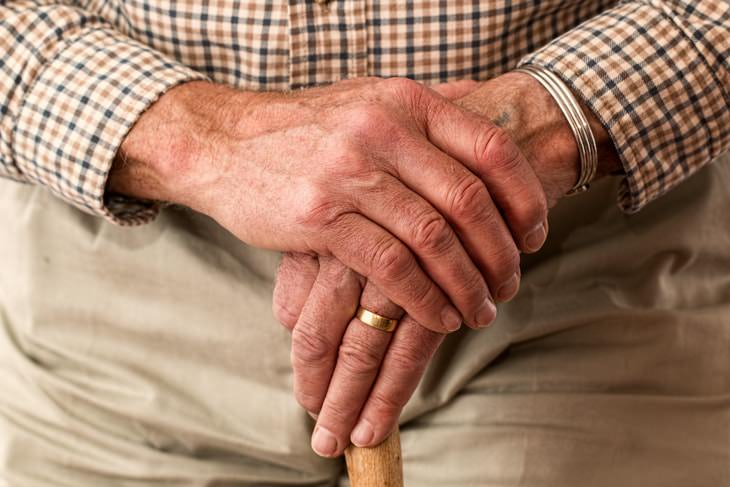
Stages of Parkinson’s Disease hands of older man with cane
Parkinson's disease is what is known as a neurodegenerative disorder, which is a progressive disorder of the brain or peripheral nervous system. Hand tremors may be the emblematic symptom of the disease, but research confirms that Parkinson’s primarily affects a specific brain area called substantia nigra, and not individual nerves in the body. 
 
According to The Parkinson’s Foundation, 1 million Americans and 10 million people worldwide suffer from the disease. Although the specific cause of the disease remains unknown, scientists point out an array of risk factors that can increase your risk of developing Parkinson’s: 
 
Genetics - 10-15% of Parkinson’s patients have a family member also suffering from the disease. 
 
Age - Typically, Parkinson’s develops after age 50-60. Young Onset Parkinson’s disease is rare - it accounts for only about 4% of patients in the US. 
 
Gender - Men are twice as likely to develop Parkinson’s than women. 
 
Environment - Chemical occupational hazards, head injury, and exposure to pesticides and herbicides may also contribute to one’s risk of developing Parkinson’s disease. 
 
The 5 stages of Parkinson’s disease  
Stages of Parkinson’s Disease sad woman reading
Parkinson’s symptoms typically follow a specific pattern, but it does progress at different speeds for different patients. Some patients may never experience all the symptoms of the disease, whereas others may have all the severe symptoms. One person may develop severe tremors but little to no cognitive decline while another one could only experience dementia and balance issues. 
 
Symptoms develop gradually, but 10 years after being diagnosed, most people will experience at least one major issue related to Parkinson’s. The Hoehn and Yahr scale is used to divide symptoms into 5 stages ranging from mild to severe. It helps doctors, patients, and caretakers evaluate the progression of the disease.

Stage One  
Early on, Parkinson's disease may be barely noticeable. A person may feel stiffness or a slight tremor in one hand, but these early symptoms are often too vague. Your arms may not swing as much when you walk and your legs may feel heavy. You may feel that your speech became softer or somewhat slurred, and your writing turns smaller and more crowded. 
 
Family members and friends may notice a change in posture. They may also point out that your facial expressions have become less pronounced and your face shows little emotion. At this stage, most people are completely functional, and prescription medications usually help diminish any apparent symptoms.

Stage Two 
Stage Two of Parkinson’s is the moderate stage where symptoms start to progress, but a person is still independent in their daily tasks, although some complicated activities may be challenging. The progression to Stage Two is slow - it can take months or years. At this stage, a person will usually notice stiffness and muscle rigidity in both sides of the body, but they typically don’t have trouble balancing. The changes in posture and walking become more apparent, and the person may experience speech difficulties.

Stage Three
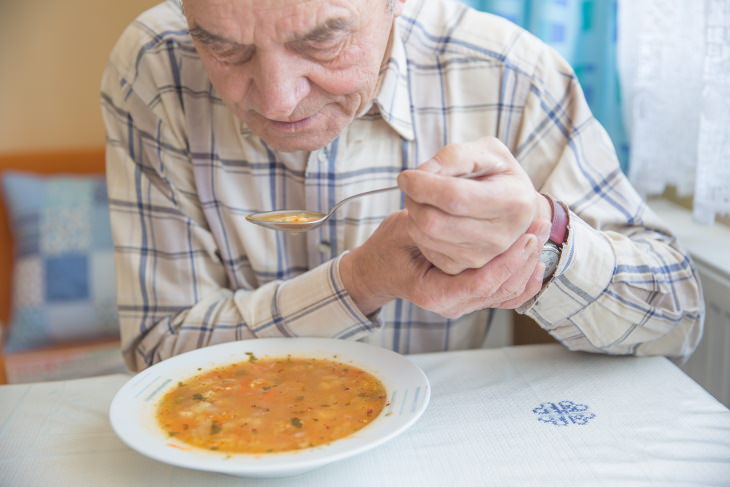
Stages of Parkinson’s Disease man with Parkinson's eating soup
The middle stage of Parkinson’s disease is Stage Three. It usually takes between 3 and 7 years for a patient to develop Stage-Three Parkinson’s. At this stage, a person’s movements and speech become significantly slower and one starts experiencing problems with balance. When you start to walk or need to change direction, you may feel like your feet are stuck to the floor. Your steps may become smaller too. 
 
Most individuals are completely independent at this stage, but tremors and stiffness may make some activities, such as eating soup or tying shoelaces, a bit troublesome. Medications may be prescribed in higher doses or more frequently. 
 
Stage Four 
When a patient reaches Stage Four of Parkinson’s, they are sadly no longer independent and require assistance standing and moving around, which may involve a cane or walker. Some patients never get to this stage. Other daily activities may become significantly troublesome due to tremors, pain, and posture issues throughout the body. It usually takes a full decade for a person to develop Stage Four Parkinson’s disease. 
 
Stage Five 
This is the severest and most debilitating form of Parkinson’s. Patients at this stage require constant care and assistance, as stiffness in the legs makes it very difficult or impossible for them to walk. Apart from being confined to a wheelchair or bedridden, almost half of patients at this stage experience cognitive and mental difficulties too.

Dementia, confusion, hallucinations, and delusions are all symptoms a patient may experience at this point. Patients may behave irrationally because they can’t think clearly or they may see or hear things that aren’t there. 
 
Even though certain symptoms are associated with specific stages of the disease, some symptoms can appear at any stage or even years before the more typical symptoms of Parkinson’s. Constipation, drooling, loss of smell, forgetfulness and depression are just a few of such symptoms.
 
Ways to reduce your risk of Parkinson’s disease 
 
Due to the fact that the cause of Parkinson's remains unknown, there are no certain ways to prevent this disease. Some research has shown that aerobic exercise, lower cholesterol levels, higher levels of vitamin D and uric acid in the blood are all associated with a lower risk of Parkinson’s later in life. 
 
Some evidence suggests that those who take NSAIDs (non-steroidal anti-inflammatory drugs) are less likely to develop Parkinson’s disease. Finally, there are also a few studies that show that people who smoke and consume caffeinated beverages actually have a lower incidence of Parkinson’s, but more research is needed to confirm those claims.

This is only for your information, kindly take the advice of your doctor for medicines, exercises and so on.   

https://gscrochetdesigns.blogspot.com. one can see my crochet creations  
https://gseasyrecipes.blogspot.com. feel free to view for easy, simple and healthy recipes    
https://kneereplacement-stickclub.blogspot.com. for info on knee replacement

Labels: , , , , , , , , , , ,

Monday, June 01, 2020

The Comprehensive Guide to Alzheimer's Disease


Alzheimer’s disease is a debilitating neurodegenerative disease that affects some 50 million people around the world. Due to the terribly massive reach of this affliction, it’s very uncommon for a person to go through life without being affected by it, whether directly or through interpersonal relationships with sufferers or caregivers.

That’s why it’s important to be fully aware of the way in which Alzheimer’s works, which is why we created this comprehensive guide, which will inform you about every aspect of this disease, as well as how you can effectively prevent and manage it.
 
We will continue to update this page with new studies and research information, as well as personal cases and examples. Please visit us here again to check for updates.

What Is Alzheimer’s Disease?
 Alzheimer’s is a disease that forms within a sufferer’s brain, and which slowly begins to impact their memory and thinking skills. In the long run, Alzheimer’s usually ends up impacting a person's ability to carry out even the simplest of tasks, such as eating and speaking and will inevitably drastically reduce their quality of life and cause them to become dependent on others.
Most sufferers of Alzheimer’s are over the age of 65, and the risk of getting it increases as you age. However, it’s important to note that developing Alzheimer’s certainly isn’t an inevitable part of aging, which is why it’s important to take plenty of steps throughout your life to prevent it.

Can Alzheimer's be cured?
Unfortunately, Alzheimer’s disease still has no cure, however, there are many treatments available that can help slow down its development or suppress some of the symptoms altogether.

The Difference Between Alzheimer’s & Dementia
Alzheimer’s disease and dementia are two terms that are often used interchangeably by people since there’s a common misconception that they both refer to the same condition. However, Alzheimer’s disease is actually just one of the many paths that can lead to dementia.

This is because dementia is merely an umbrella term for a group of symptoms that affect a sufferer’s thought processes and memory. When a person is diagnosed with dementia, they are simply being told that they are suffering from a particular set of symptoms. The next step would then be to work out exactly what causes these symptoms to appear in the first place.

The most common reason for the onset of dementia is, in fact, Alzheimer’s disease, since it has been estimated to be responsible for as many as 70% of dementia cases. However, there are many other causes of dementia, including Huntington’s disease, Parkinson’s disease, Creutzfeldt-Jakob disease, and Wernicke-Korsakoff syndrome.

Another key difference is that, in certain cases, dementia can be a temporary and reversible condition, while Alzheimer’s disease has been found to be a permanent condition, which only ends up getting worse, as time goes by.

The 3 Main Types of Alzheimer’s Disease
Nearly everyone who suffers from Alzheimer’s disease will eventually begin to experience the same symptoms, including confusion, memory loss, trouble with once-familiar tasks, and difficulty in making decisions. However, there are 3 main types of Alzheimer’s disease, and their differences lie in the way that they are contracted:
1. Late-Onset Alzheimer’s
By far the most common form of the disease, at around 95% of all cases, Late-Onset Alzheimer’s is the kind that occurs in people over the age of 65. It may or may not be genetically-linked, since researchers have yet to find a particular gene that causes it, despite their suspicions.
2. Early-Onset Alzheimer’s
This kind of Alzheimer’s is a lot less common and only accounts for around 5% of all cases. It occurs in people who are under the age of 65, typically in their 40s or 50s, and people who suffer from Down syndrome have a higher risk of getting it.
Scientists have found that early-onset Alzheimer’s has an even greater effect on the brain than its late-onset counterpart, and has linked its formation to a DNA defect contained within chromosome 14. A muscle twitch known as myoclonus is also more common for sufferers of early-onset Alzheimer’s.
3. Familial Alzheimer's Disease (FAD)
This is a rare form of Alzheimer’s that is 100% genetic, which accounts for less than 1% of all Alzheimer’s cases. In affected families, members of at least two generations have typically had this kind of Alzheimer’s, and many cases of early-onset Alzheimer’s are actually linked to FAD.

The Stages & Symptoms of Alzheimer’s Disease
Alzheimer’s disease is a condition that gradually gets worse over time, and that’s why its symptoms are often split into 3 sections: early, middle, and severe stages.
In the early stages of Alzheimer's a person may:
• Find it hard to remember things
• Ask the same questions repeatedly
• Get lost in familiar places
• Lose things or place them in unusual places
• Have trouble handling money and paying bills
• Take longer than they normally would to finish daily tasks

Once Alzheimer's has progressed to the middle stages, the symptoms, particularly memory loss and confusion, grow worse. Other symptoms include:
• Difficulty learning new things and coping with new situations
• Trouble carrying out tasks that involve many steps, such as getting dressed
• Impulsive behavior
• Forgetting the names of common things
• Hallucinations, delusions or paranoia
• Problems recognizing family and friends
• Wandering away from home
 
Once Alzheimer's has progressed to the more severe stages, symptoms include:
• Total lack of communication
• Spending a lot more time asleep
• Weight loss
• Trouble swallowing
• Incontinence
• Complete dependence
 
This is only for your information, kindly take the advice of your doctor for medicines, exercises and so on.     

https://gscrochetdesigns.blogspot.com. one can see my crochet creations  
https://gseasyrecipes.blogspot.com. feel free to view for easy, simple and healthy recipes    
https://kneereplacement-stickclub.blogspot.com. for info on knee replacement


Labels: , , , , , , , , , , ,