How to Act in 10 Different Medical Emergencies
We also recognize that life often throws challenges at us, our loved ones, and unfortunate passers-by, some of which are life-threatening. And in the case of a medical emergency, it’s definitely better to be safe than sorry. The 10 life-threatening conditions we describe today are anything but uncommon, and if you find yourself witnessing any of these emergencies, after reading this article, you’ll know exactly how to act.
1. In any Medical Emergency (Especially Suspected Stroke), Call Emergency Medical Services (EMS) Immediately
If you find someone in a state of medical
emergency, the first thing you should do is call the emergency medical
services. EMS professionals are trained to give step by step
instructions to bystanders and they will send an ambulance to the
location, if necessary.
An immediate call is absolutely necessary, as complications can be
prevented and lives can be saved with timely treatment. For example, if
you suspect a patient may be suffering from a stroke, it’s crucial for
them to get medical attention within 3 hours, or else complications and
even death can be unavoidable.
Here is how to identify a stroke.
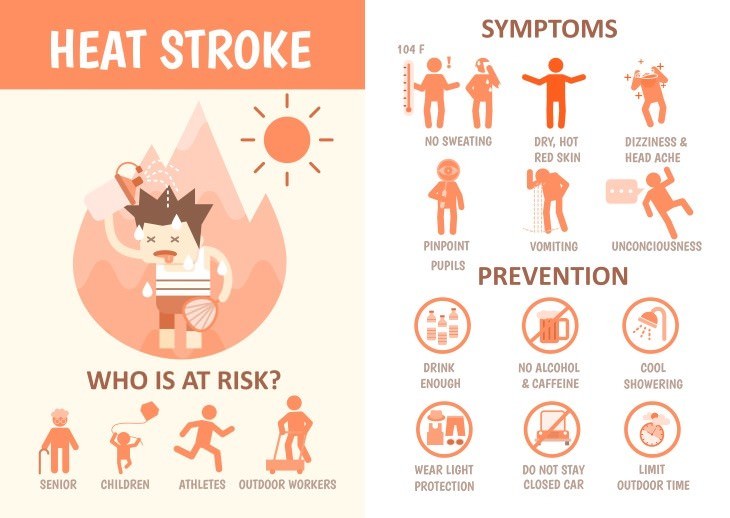
2. How to Act if You Suspect a Heat Stroke
With the onset of summer, people usually
spend significantly more time outdoors, underestimating the irreversible
damage the scorching sun can cause. One of the worst, and yet common
emergencies brought about by the sun is a heat stroke, or the inability
of our body to stop the rapid rise of its internal temperature.
A person experiencing heat stroke will typically have a body temperature
of over 40°C (104°F), but be unable to sweat, feel confused, dizzy,
start vomiting or lose consciousness.
A patient suspected of having heat stroke should be immediately moved
out of the sun and cooled down by any means possible, e.g.:
1. Transferring them into a cool shower or a tub filled with cool water.
2. Putting ice packs or cold towels on their neck, groin, and armpits.
If a person is conscious, let them drink cool (but not icy cold) water.
If, however, they faint and they have no pulse, they don’t seem to
breathe or move, CPR needs to be performed. A heat stroke is a medical
emergency and it can cause organ failure, brain damage, and death, so
don’t take it lightly.
3. Know How to Perform CPR Properly
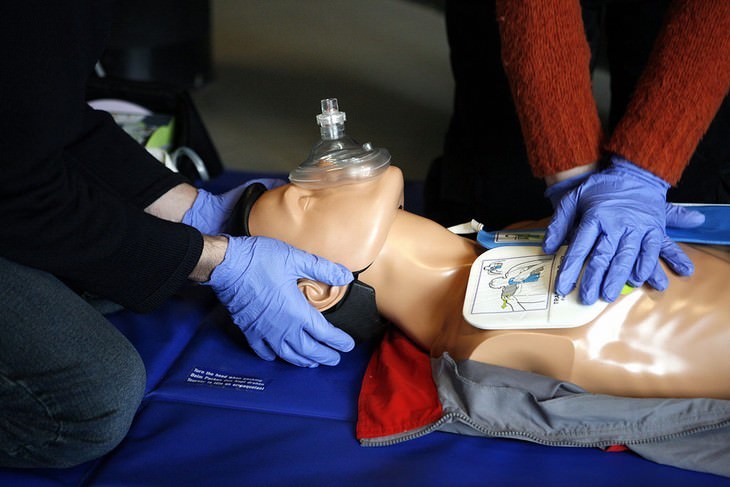
If a person is unconscious and
unresponsive, they have no pulse and don’t seem to breathe,
performing cardiopulmonary resuscitation (CPR) as soon as possible is
necessary to stimulate blood circulation, as they are likely in a state
of cardiac arrest. Otherwise, they are at risk of suffering brain damage
in as soon as 4 minutes, or even death.
If you’re the only bystander, you should focus on constant chest
compressions until the emergency unit’s arrival, as some air will pass
through the lungs automatically and won’t allow the lungs to collapse.
If, however, other people can help, too, they can perform rescue
breathing as well.
4. If Someone is Choking, Know How to Perform the Heimlich maneuver
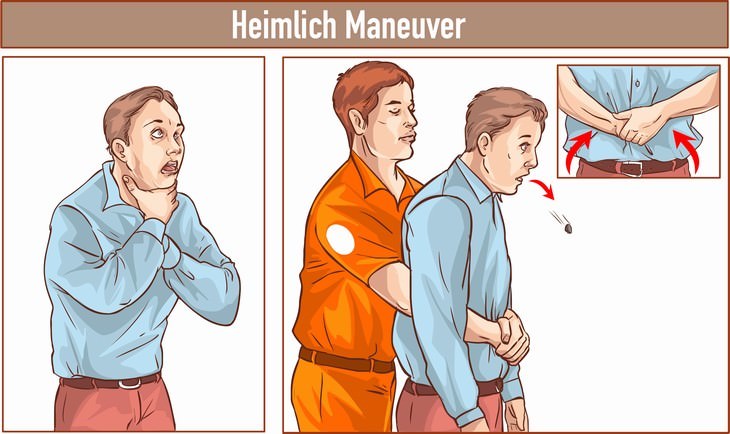
Illustrated in the image above is the
Heimlich maneuver, a movement aimed to push out the object obstructing
the airway. Start by wrapping your arms around the patient from behind
and then doing a few rapid thrusts towards their belly button (and not
their ribs, contrary to popular belief) until they spit out the object.
Note that this technique is applicable only to adults and older kids, an
alternative method that can be used on kids
below the age of 1 year. see in my next post
5. Know When to Use an EpiPen for a Person with Extreme Allergies
Extreme allergic reactions and asthma can
bring about a life-threatening condition called anaphylaxis, where the
swelling of the tissue obstructs breathing and can cause death. For this
purpose, most people with extreme allergies carry with them a device
called an EpiPen, which is a shot of epinephrine.
A person experiencing anaphylaxis will usually have hives on their face
and body, a swollen tongue or throat, and may even lose consciousness
(anaphylactic shock). If the latter happens, you have to administer
epinephrine immediately, but in other cases, it’s best to call EMS
first, as an epinephrine shot may be dangerous to patients with other
coexisting conditions.
Read the instructions on how to use the EpiPen before administering it,
as the procedure can differ depending on the manufacturer.
6. Actions You Can Take if Someone has Seizures
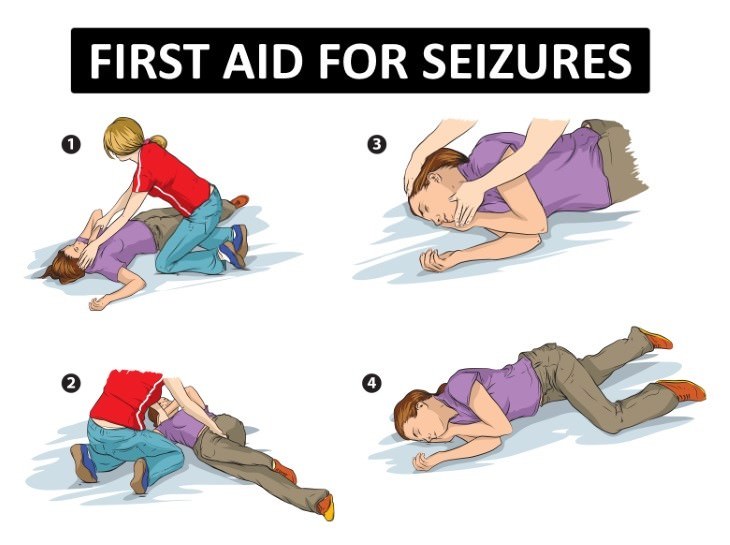
Unfortunately, there’s nothing you can do
to stop a person from having a seizure, but you have to ensure the
patient’s safety during the seizure and prevent them from choking on
their saliva or vomit. To do so, clear out the space around the patient
having a seizure and make sure there are no sharp objects around,
nothing can fall on them or cause any other injuries.
To ensure the patient is breathing, place them on their side like shown
in the picture above. You can also put an item of clothing or a towel
under their head to prevent injuries. Most seizures will stop on their
own and don’t require medical attention, but if it’s the person’s first
seizure or several seizures occur, contacting an EMS service is
necessary.
7. Know How to Use an Automated External Defibrillator (AED)
These portable devices commonly found in
public areas near water fountains or restroom areas are a simplified
version of the defibrillators used in hospitals. As an addition to CPR,
an AED can be used to bring the heart back to a normal rhythm.
AEDs are equipped with voice instructions
8. The Use of the Head Tilt-Chin Lift Maneuver
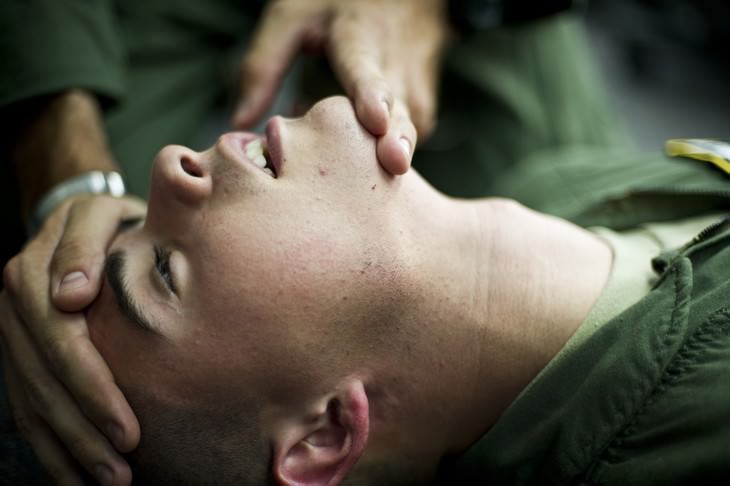
This technique is useful for any scenario
in which the patient isn’t breathing properly, be it anaphylaxis or an
accompanying technique to CPR. By lifting the patient’s chin up and
tilting their head back like illustrated in the photo above, you’re
allowing the air to pass through their throat more easily and are
preventing the tongue and soft tissues from obstructing the airways.
9. How to Prevent Blood Loss
Having a first aid kit in your car or bag
while traveling is essential not only for scratches, burns and
preventing infections, but chiefly to make sure you can stop, dress and
clean up a bleeding wound, the most dangerous scenario of the ones
listed.
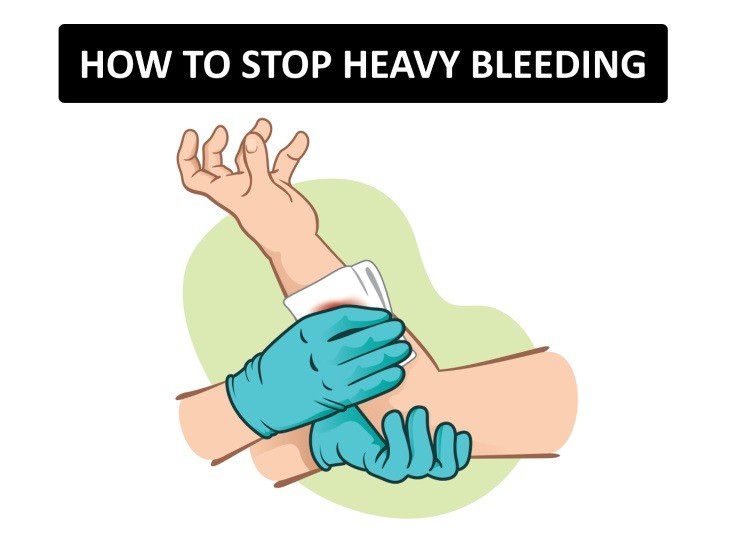
While you wait for the paramedics to arrive, you have to press on the
wound constantly to prevent as much blood loss as possible, or else the
patient can enter a life-threatening state of hypovolemic shock (this is
when there’s so little blood in the body the heart can’t pump blood).
It may also be beneficial to clean the wound and place a clean skin
dressing on top of it, constantly pressing on the wound with clean hands
while you wait for an ambulance. For techniques of treating sprains,
burns and other injuries, read this article.
10. What to Do if You Suspect Hypothermia
When your body has the temperature below
95°F (35°C) and cannot replenish the lacking body heat, this may lead to
a life-threatening condition called hypothermia. Exposure to cold
weather, cold water, and extremely low indoor temperatures can all cause
hypothermia, especially if you’re dehydrated or exhausted.
Symptoms of hypothermia include:
A weak pulse
Shallow breathing
Slurred speech
Drowsiness and confusion
Lack of coordination
Memory loss
Loss of consciousness.
A person experiencing hypothermia needs urgent medical attention, but
before the medics arrive, you should protect the patient from the cold
and wind by covering them with coats and blankets, not letting them
touch the cold ground, and, ideally, bringing them indoors.
If their clothes are wet, you have to replace them with dry ones. Apply
warm compresses (such as hot packs, electric blanket or hot water
bottles wrapped in cloth) on their neck, armpits, and groin. Warm
nonalcoholic drinks way also be beneficial. Finally, if the person is
unconscious and unresponsive, do CPR.
DON'T give the person a hot bath, put them near a heat source or try to
warm their limbs, as this can strain the heart and lungs. Also make sure
they don't have alcohol or smoke, as both can hinder rewarming.