Saturday, March 01, 2025

When Is an Eye Infection a Cause for Concern?

Eye infections are usually easy to spot because of persistent itching, apparent redness, and other bothersome symptoms. The tricky part is knowing to distinguish a simple case of pink eye from a dangerous eye infection that has the potential to cause permanent vision loss. The human eye is an extremely complex organ that consists of 10 general components, any of these parts can become the breeding ground for various germs - bacteria, viruses, and even fungi. 

While minor eye infections can heal on their own, others can inflict serious damage and need urgent medical care. In this article, we review 6 common types of eye infections and the signs of a dangerous eye infection.

6 Common Types of Eye Infections 

Conjunctivitis
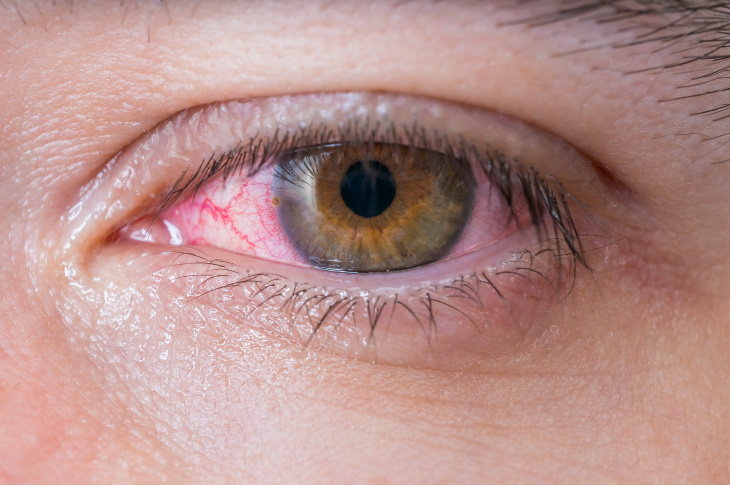
Eye Infections Conjunctivitis
Also known as pink eye, conjunctivitis is the infection of the conjunctiva, a thin clear membrane that protects the eyelid. Pink eye is by far the most widespread and well-recognized eye infection. Most cases of pink eye are caused by viruses, but bacterial and allergic conjunctivitis are also common

In most cases, conjunctivitis is easy to spot because it makes the eye turn pinkish and produces a viscous discharge that is the thickest when you wake up. The good news is, most cases of pink eye will go away on their own within days or a few weeks, although you may need to get antibiotic eye drops to clear up bacterial conjunctivitis. 
 
Read more about pink eye remedies here - 4 Simple Tips to Get Rid of Pink Eye at Home. see this in the Home remedies post where I'll be putting it next
 
Blepharitis 
Blepharitis is an inflammation of your eyelids. It occurs when the tiny oil glands at the base of your lashes get clogged up. Patients with blepharitis experience burning in the eyes and they may notice dandruff-like flakes or crusts along the waterline and lashes. Blepharitis can also make your eyes sensitive to light and cause blurry vision. 
 
People with oily skin, dandruff, and rosacea are more likely to get this condition. Since most cases are bacterial, you’ll likely need special eye drops to recover from blepharitis. 
 
Styes and Chalazia
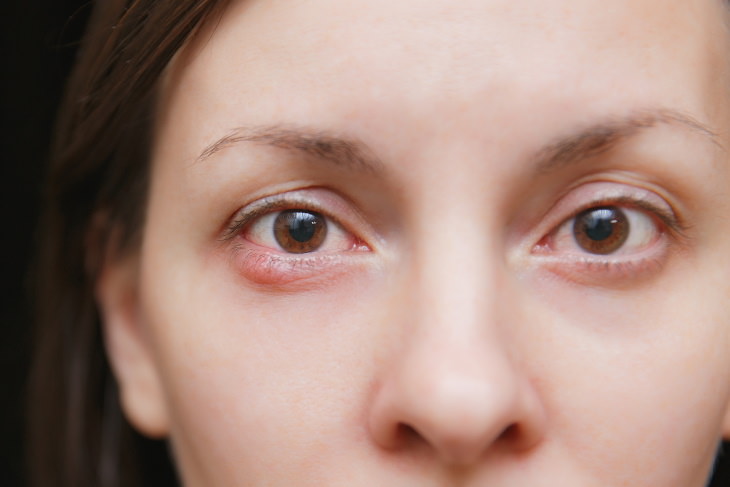
 Eye Infections Stye
Both of these conditions affect the eyelids and look very similar, although a chalazion is a blocked oil gland and a stye is an infection of the eyelash follicle. The conditions appear as swelling or red bumps on the eyelids that are itchy and painful to the touch. 
 
Both styes and chalazia are usually not an emergency and can be treated at home by applying a clean, warm, damp compress to the affected eye for 20 minutes several times a day. It should disappear in about a week. However, some chalazia can grow so large that they limit your vision and may require surgical removal. 
 
Keratitis 
Keratitis affects the cornea, a transparent domed membrane of the pupil and iris. Any type of germ, be it a virus, bacterium, fungi, or parasite can trigger keratitis, and the dangerous condition can cause lasting vision damage if ignored. Note: severe dry eye can also lead to keratitis.

Corneal infections are extremely painful and accompanied by redness, swelling, blurry vision, and light sensitivity. Keratitis is a medical emergency that requires urgent diagnosis and treatment. If you don’t treat keratitis, it will get worse and may lead to blindness. 
 
Uveitis
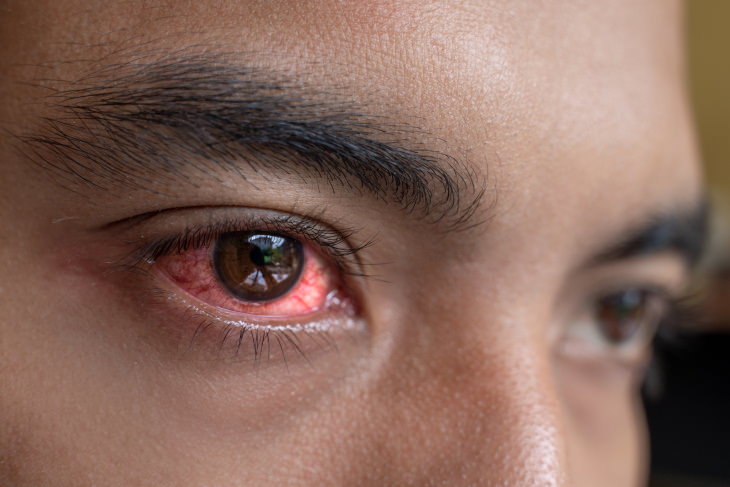
Eye Infections man with red eyes
Uveitis is an inflammation of the center of the eyeball - the uvea - that supplies blood to the retina, the part of your eye that perceives visual information. Eye injuries, viruses, and immune conditions like rheumatoid arthritis make you more likely to develop uveitis. 
 
The condition causes light sensitivity, blurry vision, “floaters” in the visual field, and redness that can come and go. Uveitis doesn’t always cause pain - so it’s more likely to be reported later. If you experience any of these symptoms, seek medical help, as uveitis can damage vital tissues and cause blindness.


Endophthalmitis 
Our eyeballs are filled with two types of fluids that help maintain the shape of the eye. When those fluids become infected, a condition called endophthalmitis develops. This can happen as a result of eye injury or as a complication of eye surgery. Endophthalmitis is characterized by blurry vision, pain, redness in and around the eye, sensitivity to lights, and partial or complete vision loss. 
 
Since the condition can develop very fast, these symptoms shouldn’t be ignored and always requires urgent medical care to prevent blindness or vision loss. 
 
What are the common symptoms of an eye infection?
We have already outlined some of the main symptoms of eye infections above, but here is a concise list that may further help you. Note that symptoms can occur in both eyes or one eye only. We marked the signs that require emergency care as urgent. 
 
What you may feel: 
Pain 
Itchiness 
Burning 
A feeling that there is something in your eye 
Light sensitivity 
Your eyelid is painful or tender when you touch it 
Fever 
Swollen lymph nodes on the neck. 
 
What you may see
Your eyes produce more tears 
Yellow, clear, or green discharge 
Crustiness around the eyelashes or corner of the eye T
he "whites" of your eyes are pink or red 
Swollen or red eyelids 
Hypopyon - a yellow or greenish substance at the bottom of the iris (the colored part of the eye), (urgent) Cloudy cornea (urgent). 
Changes in vision:
Blurry vision (urgent) 
“Floaters” in the visual field 
Vision loss (urgent).


This is only for your information, kindly take the advice of your doctor for medicines, exercises and so on.   


Labels: , , ,

Sunday, October 24, 2021

Guide to Eye Infections - Types, Causes, Worrying Symptoms

Eye infections are usually easy to spot because of persistent itching, apparent redness, and other bothersome symptoms. The tricky part is knowing to distinguish a simple case of pink eye from a dangerous eye infection that has the potential to cause permanent vision loss. The human eye is an extremely complex organ that consists of 10 general components, any of these parts can become the breeding ground for various germs - bacteria, viruses, and even fungi.

While minor eye infections can heal on their own, others can inflict serious damage and need urgent medical care. In this article, we review 6 common types of eye infections and the signs of a dangerous eye infection.  
 
6 Common Types of Eye Infections 
 
Conjunctivitis  Eye Infections Conjunctivitis
Also known as pink eye, conjunctivitis is the infection of the conjunctiva, a thin clear membrane that protects the eyelid. Pink eye is by far the most widespread and well-recognized eye infection. Most cases of pink eye are caused by viruses, but bacterial and allergic conjunctivitis are also common. 
 
In most cases, conjunctivitis is easy to spot because it makes the eye turn pinkish and produces a viscous discharge that is the thickest when you wake up. The good news is, most cases of pink eye will go away on their own within days or a few weeks, although you may need to get antibiotic eye drops to clear up bacterial conjunctivitis.
 
Blepharitis 
Blepharitis is an inflammation of your eyelids. It occurs when the tiny oil glands at the base of your lashes get clogged up. Patients with blepharitis experience burning in the eyes and they may notice dandruff-like flakes or crusts along the waterline and lashes. Blepharitis can also make your eyes sensitive to light and cause blurry vision. 
 
People with oily skin, dandruff, and rosacea are more likely to get this condition. Since most cases are bacterial, you’ll likely need special eye drops to recover from blepharitis. 
 
Styes and Chalazia 
Eye Infections Stye
Both of these conditions affect the eyelids and look very similar, although a chalazion is a blocked oil gland and a stye is an infection of the eyelash follicle. The conditions appear as swelling or red bumps on the eyelids that are itchy and painful to the touch. 
 
Both styes and chalazia are usually not an emergency and can be treated at home by applying a clean, warm, damp compress to the affected eye for 20 minutes several times a day. It should disappear in about a week. However, some chalazia can grow so large that they limit your vision and may require surgical removal.

Keratitis  
Keratitis affects the cornea, a transparent domed membrane of the pupil and iris. Any type of germ, be it a virus, bacterium, fungi, or parasite can trigger keratitis, and the dangerous condition can cause lasting vision damage if ignored. Note: severe dry eye can also lead to keratitis. 
 
Corneal infections are extremely painful and accompanied by redness, swelling, blurry vision, and light sensitivity. Keratitis is a medical emergency that requires urgent diagnosis and treatment. If you don’t treat keratitis, it will get worse and may lead to blindness.  
 
Uveitis  Eye Infections man with red eyes
Uveitis is an inflammation of the center of the eyeball - the uvea - that supplies blood to the retina, the part of your eye that perceives visual information. Eye injuries, viruses, and immune conditions like rheumatoid arthritis make you more likely to develop uveitis. 
 
The condition causes light sensitivity, blurry vision, “floaters” in the visual field, and redness that can come and go. Uveitis doesn’t always cause pain - so it’s more likely to be reported later. If you experience any of these symptoms, seek medical help, as uveitis can damage vital tissues and cause blindness. 
 
Endophthalmitis 
Our eyeballs are filled with two types of fluids that help maintain the shape of the eye. When those fluids become infected, a condition called endophthalmitis develops. This can happen as a result of eye injury or as a complication of eye surgery. Endophthalmitis is characterized by blurry vision, pain, redness in and around the eye, sensitivity to lights, and partial or complete vision loss. 
 
Since the condition can develop very fast, these symptoms shouldn’t be ignored and always requires urgent medical care to prevent blindness or vision loss. 
 
What are the common symptoms of an eye infection?  
We have already outlined some of the main symptoms of eye infections above, but here is a concise list that may further help you. Note that symptoms can occur in both eyes or one eye only. We marked the signs that require emergency care as urgent.  
 
What you may feel: 
Pain 
 
Itchiness 
 
Burning 
 
A feeling that there is something in your eye 
 
Light sensitivity 
 
Your eyelid is painful or tender when you touch it 
 
Fever 
 
Swollen lymph nodes on the neck.  
 
What you may see: 
Your eyes produce more tears 
 
Yellow, clear, or green discharge 
 
Crustiness around the eyelashes or corner of the eye 
 
The "whites" of your eyes are pink or red 
 
Swollen or red eyelids 
 
Hypopyon - a yellow or greenish substance at the bottom of the iris (the colored part of the eye), (urgent) 
 
Cloudy cornea (urgent). 
 
Changes in vision: 
Blurry vision (urgent) 
 
“Floaters” in the visual field 
 
Vision loss (urgent). 
 
What are the causes of eye infections?
Eye Infections contact lenses
Contact lens wearers, smokers, and people with weakened immune systems have a higher risk of eye infections. The most common causes of eye infections are as follows: 
 
- Contaminated contact lenses - storing contacts improperly is one of the most common causes of eye infections ranging from pink eye to keratitis. The same can happen if you wear contacts too long or sleep in your contacts. 
 
- Eye injuries or complications of eye surgery, such as cataract removal. 
 
- Using expired or contaminated eye makeup.  
 
- Washing your face with contaminated water. 
 
- Not washing your hands after frequenting public spaces, especially restrooms. 
 
- Other people - you can get conjunctivitis by coming in contact with other people 
who have it. 
 
In summary, there are so many common eye infections most of us have never even heard of. While some of these infections - like styes or conjunctivitis - are no cause for concern and will go away on their own, others can develop very quickly and lead to permanent vision loss. If you experience blurry vision, severe pain, persistent redness, or vision loss, seek emergency care immediately.

This is only for your information, kindly take the advice of your doctor for medicines, exercises and so on.   

https://gscrochetdesigns.blogspot.com. one can see my crochet creations  
https://gseasyrecipes.blogspot.com. feel free to view for easy, simple and healthy recipes    
https://kneereplacement-stickclub.blogspot.com. for info on knee replacement


Labels: , , , , , , , , , , ,

Thursday, February 04, 2021

Vitamin D deficiency and your eyes - Here is what you need to know

Vitamin D is an essential nutrient required by the body to carry out bodily functions. Deficiency of the same can lead to damage to the body due to certain dysfunctions being caused due to the same. It can give rise to issues related to cardiovascular health, bone health, and brain health. Several diseases have been associated with the deficiency of vitamin D. Some common diseases include asthma, multiple sclerosis, osteoporosis, dementia and even cancer. Eye health also depends on the holistic wellness of the body. Any disruption to the body will also affect the eyes. 

Vitamin D and eyes

Just like any other body organ, the eyes also need to be looked after. When talking about nutrient deficiencies, the eyes can suffer serious damage if not enriched with enough nutrients. Deficiency of vitamin D can cause the following eye dysfunctions:

  • Macular degeneration
  • Dry eye syndrome
  • Uveitis

What is macular degeneration?

Macular degeneration, also known as age-related macular degeneration (AMD) is a condition that results in vision loss over a period of time due to the deterioration of eye health due to factors such as ageing and nutrient deficiency. The condition arises when macula or the central portion of the retina deteriorated over time and eventually wears down.

What is dry eye syndrome?

Just like the name suggests, the dry eye syndrome is a condition in which there is insufficient production of tears from the eyes. This can be extremely harmful to the eyes as it can result in no layer of covering over the eyes which can make it prone to inflammation and scarring on the cornea. The symptoms of this condition include redness of eyes, pain, blurry vision and a burning sensation. The common causes of the dry eye syndrome include ageing, allergies and eye fatigue. According to the study reported in PubMed Central, called "Dry eye in vitamin D deficiency: more than an incidental association​", it was shown that vitamin D deficiency could be a cause of dry eye as well.

What is uveitis?

Uveitis is an eye condition in which the uvea or the tissue located in the eyewall goes through inflammation. The common symptoms include pain, redness of eyes and blurred vision. If not treated on time, this condition can cause permanent damage to eyes and vision loss.

How to get vitamin D

The most obvious way of getting vitamin D is through sunlight. Apart from that, you can obtain vitamin D from foods such as tuna, spinach, salmon, walnuts, scallops and avocado.

This is only for your information, kindly take the advice of your doctor for medicines, exercises and so on.     

https://gscrochetdesigns.blogspot.com. one can see my crochet creations  
https://gseasyrecipes.blogspot.com. feel free to view for easy, simple and healthy recipes    
https://kneereplacement-stickclub.blogspot.com. for info on knee replacement


Labels: , , , , , , , , , , , , ,