Monday, July 12, 2021

Climate Affects Evolution of Human Brain, Body Shape, Says A Recent Study

Evolution is a slow change in the body design of an organism over a long period of time. It helps an organism to survive in its surroundings. Now, according to recent research, scientists have found a connection between environment and evolution. The research was done on 300 human fossils of the Homo genus and was combined with climate models to identify its role in human evolution.

The evolution of humans is a subject of interest for scientists as well as non-scientists. It makes each and everyone curious because this is something mysterious. There are several theories as to how humans evolved and reached the era that they are in at present, but additions to them keep coming in making this particular field of science a matter of interest.
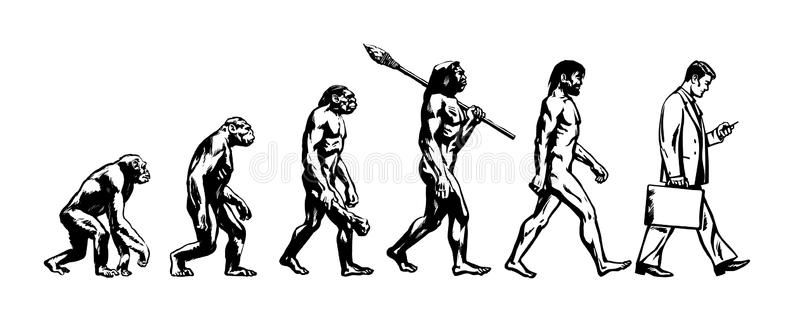
One way of observing evolution is to see the changes in body size and structure over millions of years. And according to a new study, these changes have been affected by climate.

Researchers from Cambridge University and Tübingen University in Germany have published their study in the journal Nature. The study states various hypotheses that indicate the role of environmental, demographic, social, dietary, and technological factors behind human evolution.

The researchers identified temperature as a major predictor of body size variation in Homo Sapiens in the last one million years. They determined what temperature, precipitation, and climate conditions the fossils might have been subjected to during their time when they were alive.

The paper released states, “Throughout the past four million years, human evolution is broadly characterized by a trend of increasing body mass and structure, with an even greater relative increase in brain size, associated with changes in behavior, diet, and demographic expansion.”

Researchers said that body and brain size were two essential biological traits of the adaptive strategy of species. These studies have refined and expanded earlier estimates of variation between body and brain size.

If we look at the last two million years, the estimated body size among most Homo species has increased from an average of 50 to 70 kilograms. To establish the influence of climate, researchers considered long-term, glacial-interglacial climate variations which are a result of changes in the Earth’s orbit around the Sun and greenhouse gases emissions, such as carbon dioxide. They found larger bodyweight in colder environments and a smaller bodyweight in warmer environments. The observations are in line with those seen in animals like bears that live in freezing conditions.

Researchers were also able to successfully establish a link between brain size and climate conditions. The paper said, “We found a relationship with long-term rainfall variability, where brain size was found to decrease with increasing levels of long-term rainfall.”

However, the analyses done by researchers detected no association of temperature with brain size, suggesting that brain size in Homo Sapiens was less influenced by environmental variables than the body size during the time period of the past one million years. Behavioral changes were also observed in response to hunting strategies in more open environments.

This is only for your information, kindly take the advice of your doctor for medicines, exercises and so on.   

https://gscrochetdesigns.blogspot.com. one can see my crochet creations  
https://gseasyrecipes.blogspot.com. feel free to view for easy, simple and healthy recipes    
https://kneereplacement-stickclub.blogspot.com. for info on knee replacement


Labels: , , ,

Monday, February 22, 2021

Some COVID-19 patients experience persistent chronic fatigue six months after infection, finds study

A team of scientists from Germany has recently revealed that almost 50% of patients present with moderate to severe chronic fatigue syndrome six months after severe acute respiratory syndrome coronavirus 2 (SARS-CoV-2) infection. 

Background

Infection with SARS-CoV-2 is associated with a wide variety of symptoms, ranging from mild fever and cough to severe pulmonary and cardiovascular complications. Although almost 80% of coronavirus disease 2019 (COVID-19) patients remain asymptomatic or mildly symptomatic, a growing pool of evidence indicates that a significant fraction of COVID-19 patients present with persistent symptoms referred to as ‘long COVID’. Most commonly reported symptoms of long COVID are fatigue, cognitive impairment, and post-exertional malaise (worsening of symptoms after minor physical or mental exertion).

In the current study, the scientists have investigated mild to moderate COVID-19 patients who present with persistent fatigue and other related symptoms. They have also investigated whether these patients meet the diagnostic criteria for chronic fatigue syndrome/myalgic encephalomyelitis (ME/CFS), which is a neurological disease characterized by severe mental and physical fatigue, chronic pain, and sleep disorder.

Study design

A total of 42 COVID-19 patients presented with moderate to severe intensity chronic fatigue, exertion intolerance, cognitive dysfunction, and pain six months after SARS-CoV-2 infection were investigated in the study. All participants were diagnosed with mild to moderate COVID-19. A team of experienced clinical immunologists, rheumatologists, neurologists, and cardiologists was involved for an accurate diagnosis of ME/CFS in these patients based on the Canadian Consensus Criteria. The intensity and duration of post-exertional malaise (symptoms lasting for more than 14 hours) was considered to be the main diagnostic criterion for ME/CCFS.

Important observations

Of all enrolled patients, 32 had mild COVID-19 and 10 had moderate COVID-19 because of pneumonia. The numbers of male and female patients were 29 and 13, respectively, and the average age of the patients was 36 years (age range: 22 – 62 years).

Of 42 enrolled patients, 19 met the diagnostic criteria for ME/CFS and were found to have severe fatigue and functional impairment, severe stress intolerance, and hypersensitivity to noise, light, and temperature. The scientists categorized these patients as Chronic COVID-19 Syndrome/Chronic Fatigue Syndrome (CCS/CFS). The rest of the patients who were not diagnosed with ME/CFS mainly because of the relatively shorter duration of post-exertional malaise (2 – 10 hours) were referred to as CCS. The patients with ME/CFS showed significantly reduced hand grip strength than those without ME/CFS.

After 6 months of SARS-CoV-2 infection, all participants were found to have fatigue with different intensities. The most commonly observed symptoms were post-exertional malaise, cognitive impairment, and muscle pain. Although patients without ME/CFS exhibited less severe symptoms, most of them had severely impaired daily life activities. The majority of enrolled patients (n=28) were either unable to work or required a reduced work schedule because of post- Covid-19 symptoms.

In the study cohort, autonomic dysfunction was observed in most of the patients, with no significant difference in symptom intensity between patients with and without ME/CFS. The increase in systolic and diastolic blood pressure at standing position was significantly lower in patients with ME/CFS than those without it. Among patients with ME/CFS, four were diagnosed with postural tachycardia syndrome.         

Regarding biochemical parameters, only two patients in the entire study cohort showed mildly elevated C-reactive protein levels, indicating the absence of robust inflammatory response. Almost 50% of patients showed increased levels of interleukin 8 (IL-8), which is a clinical feature of severe COVID-19 patients. Moreover, a low level of mannose-binding lectin was observed in 22% of patients, indicating impaired immune functioning. An indication of autoimmune disorder was noticed in the study cohort as elevated levels of antinuclear antibody were found in 3 ME/CFS patients and 6 non-ME/CFS patients.

Study significance

The study reveals that even mildly affected COVID-19 patients can develop a severe chronic syndrome characterized by moderate to severe fatigue and exertion intolerance. Because most of the post-COVID symptoms considered in this study did not differ significantly between patients with and without ME/CFS, the scientists suggest that chronic COVID-19 syndrome is a more appropriate terminology than ME/CFS in defining long-term symptoms related to SARS-CoV-2 infection.

This is only for your information, kindly take the advice of your doctor for medicines, exercises and so on.     

https://gscrochetdesigns.blogspot.com. one can see my crochet creations  
https://gseasyrecipes.blogspot.com. feel free to view for easy, simple and healthy recipes    
https://kneereplacement-stickclub.blogspot.com. for info on knee replacement


Labels: , , , , , , , , , , , , , ,

Tuesday, May 05, 2020

Coronavirus sensor you stick at the top of your chest can track symptoms

It looks like a Band-Aid, but it's a flexible wireless sensor that sits where your throat and chest meet, picking up coughing and breathing problems associated with COVID-19. The device, announced Monday, can monitor early signs of coronavirus infection and the progression of the illness.

Developed in hard-hit Chicago by Northwestern University and the Shirley Ryan AbilityLab, the device adheres to the skin below your suprasternal notch -- the little well at the base of your throat where airflow is closest to the skin and where tracheostomies are performed. This patch, however, is noninvasive and is related to a sensor for monitoring speech and swallowing in recovering stroke patients. That design was tuned to track coughing and breathing problems that are central to COVID-19.


"We don't use a microphone," says Professor John Rogers, director of Northwestern University's Center on Bio-Integrated Electronics. "There are problems with microphones with ambient noise and tremendous invasions of privacy. We use a high-bandwidth, tri-axis accelerometer to measure movement of the surface of the skin" to capture details of breathing and coughing, not unlike a digital stethoscope.

The patch also detects heart rate and temperature.

Once a day you peel it off and place it on a wireless charger, which triggers the patch to sync its stored data with a nearby iPad. From there the data is uploaded to a HIPAA-compliant cloud where a proprietary AI algorithm examines it for anomalies related to COVID-19. The device has no external ports for power or connectivity, making it easier to disinfect.

AI has taken something of beating lately for promising more than it could deliver in health diagnosis.

"We like AI, but we're not wedded to it. We're wedded to things that work," says Rogers. "We use digital filtering algorithms that look for particular signatures in the data. We're looking for trends, not an absolute gold standard measurement. And we have a good understanding of the underlying physics."

At this early stage, the data is double-checked by a trained human before any indications are forwarded to medical providers. Twenty-five test subjects have been wearing the device for two weeks so far, generating about 1,500 hours of history and one terabyte of data.
Arun Jayaraman, research scientist at Shirley Ryan AbilityLab

Missing from the sensor patch is a blood oxygen perfusion sensor, but Rogers suggests that is coming in the near future. Fingertip pulse oximeters, which measure oxygen perfusion, are the latest personal health product to be snapped up after some reports indicated that low blood oxygen was a hallmark of onset of COVID-19.

A lab at Northwestern's Chicago campus is currently producing dozens of new patches a week. It has the ability to scale to hundreds of devices a week before making the patch available for volume manufacturing via license.

Beyond this pandemic, the Northwestern COVID-19 sensor joins an array of activity trackers, glucose monitors and blood-pressure sensors that suggest we'll soon wear a clinic's worth of medical sensors to get in front of health issues before they turn serious.

"I think that demands a hardware platform that is virtually imperceptible," says Rogers. "Health care in general will be improved when you move from episodic monitoring of status to continuous. I've always thought that makes sense."

The information contained in this article is for educational and informational purposes only and is not intended as health or medical advice. Always consult a physician or other qualified health provider regarding any questions you may have about a medical condition or health objectives.

This is only for your information, kindly take the advice of your doctor for medicines, exercises and so on.     

https://gscrochetdesigns.blogspot.com. one can see my crochet creations  
https://gseasyrecipes.blogspot.com. feel free to view for easy, simple and healthy recipes    
https://kneereplacement-stickclub.blogspot.com. for info on knee replacement


Labels: , , , , , , ,

Thursday, January 23, 2020

How To Fall Asleep In Under One Minute

Whether or not you’re having trouble falling asleep at night, you’ll love to discover these Insomnia tips to fall asleep.

Today we are going to show you what is getting in the way of your rest, how to turn your bedroom into a sleep cave and also things you can change right now that will have immediate results.


image.png
image.png
These great tips  show a few more ways you can make it easier to fall asleep at night. For example, a relaxing hot bath might be something that you think will work in your favor but the opposite is actually true.

Taking a bath or hot shower raises your body temperature and therefore can irritate your body. 
 Journaling before bed is another excellent way to get in to sleep mode. Scheduling in sleep and maintaining regular sleep time will get your body into the habit.
image.png
insomnia tips to fall asleep

It involves taking four deep breaths and holding your tongue in a certain position in your mouth. These deep breaths are a sequence of breathing that helps your body relax.

It also clears your mind since you need to be so focused on your breathing. It’s a method that many people have tried and continue to use successfully to get themselves to sleep at night.

This is only for your information, kindly take the advice of your doctor for medicines, exercises and so on.     
https://gscrochetdesigns.blogspot.com. one can see my crochet creations  
https://gseasyrecipes.blogspot.com. feel free to view for easy, simple and healthy recipes    
https://kneereplacement-stickclub.blogspot.com. for info on knee replacement
 

Labels: , , , , , , , ,