Thursday, March 12, 2026

7 Causes of Wrist Pain

 The wrist may be only a small part of your musculoskeletal system, but it’s one of the most complex and delicate structures in the human body. The wrist anatomy consists of several joints, eight bones, tendons, ligaments, nerves, and blood vessels all crammed in a very narrow area. 

 That’s why diagnosing wrist pain can be quite tricky. This is not to say that it is not necessary, as we use our wrists a lot - from grabbing and holding onto objects to complex movements like writing and typing. Therefore, wrist pain can be quite debilitating and certainly interferes with one’s daily life. 

We review several major causes of wrist pain in this informative guide.

The 
Symptoms of Wrist Pain
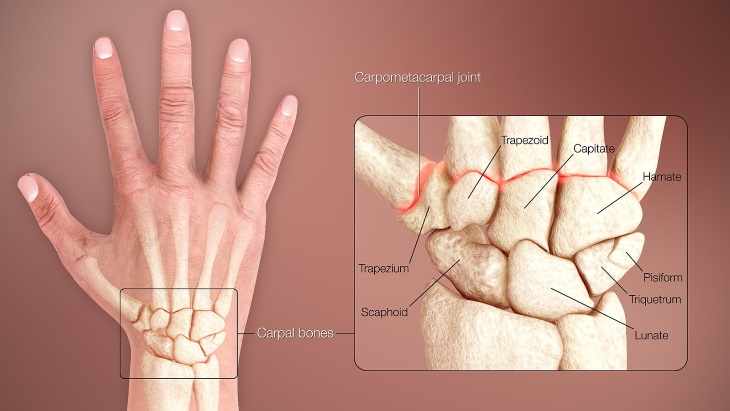
 Wrist Pain Causes Wrist anatomy


Researchers suggest that around 10% of all people suffer from wrist pain. Depending on the underlying cause, the type of wrist pain one can experience varies from tightness and lack of mobility to sharp pain: 

Sharp and sudden pain in the hand 

Difficulty moving the wrist or gripping objects 

Swollen wrist or fingers 

Redness or warmth around the wrist 

Numbness or a pins and needles sensation in the hand 

Symptoms that get worse at night. 

Read on to learn about the common medical causes of wrist pain.

1. Arthritis

 Wrist Pain Causes elderly man with joint pain

Arthritis refers to joint inflammation that leads to swelling, stiffness, and pain. It's a very widespread issue, and contrary to popular belief, arthritis can affect adults of any age. There are many types of arthritis, but three particular forms known to affect the wrists are: 

Rheumatoid arthritis - an autoimmune disease that damages and wears down the joints, typically in both wrists. Painful swelling and reduced mobility are common symptoms. 

Gout - a form of arthritis where sharp uric acid crystals build up in joints and cause pain and swelling. 

Osteoarthritis - the degenerative type of arthritis associated with wear and tear and advanced age. When the cartilage that surrounds the joints degrades, bones rub against each other, leading to pain and swelling.

Depending on the form of arthritis, causes and treatments vary tremendously.

2. Carpal Tunnel Syndrome
Wrist Pain Causes wrist pain

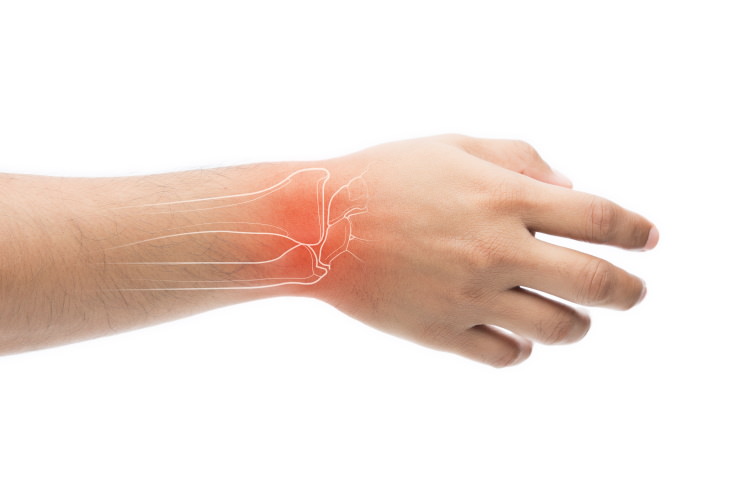
 Carpal tunnel syndrome is an extremely painful disease that affects 5% of the population. Anyone, particularly office workers, artists, and manual laborers can be affected by the condition. Carpal tunnel syndrome occurs when the median nerve (the nerve connecting the wrist and the palm) is compressed as a result of friction or inflammation. Symptoms can develop in one or both wrists and tend to get worse at night. One can experience pain, weakness, numbness, or a pins and needles sensation in the palms and fingers (except for the pinkie).

Mild cases of carpal tunnel syndrome are treated by wearing a wrist brace, applying hot or cold compresses, and taking over-the-counter anti-inflammatory (NSAID) medications (e.g. ibuprofen, acetaminophen, or naproxen) to reduce the pain. More serious cases may require steroid medication or even injury. 

3. Ganglion cysts  Wrist Pain Causes Ganglion cyst
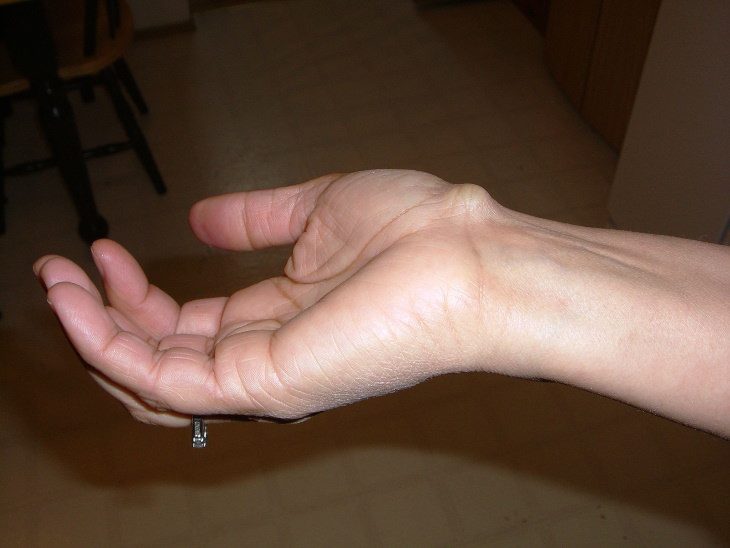
If the wrist pain you’re experiencing is accompanied by an apparent bump on your wrist, a ganglion cyst could be to blame. Ganglion cysts are benign lumps filled with fluid. These cysts typically appear on the back of the wrist or hand, and they can either be painless or quite bothersome. The cause of these cysts is unknown, but the American Academy of Orthopaedic Surgeons points out that they appear more often in individuals aged 15-40, women, and gymnasts. 

Ganglion cysts can sometimes go away on their own, so your doctor may instruct you to wait and observe. Wearing a splint, draining the ganglion cyst, or surgically removing it may also be instructed by a doctor.

4. Carpal boss Wrist Pain Causes Carpal boss
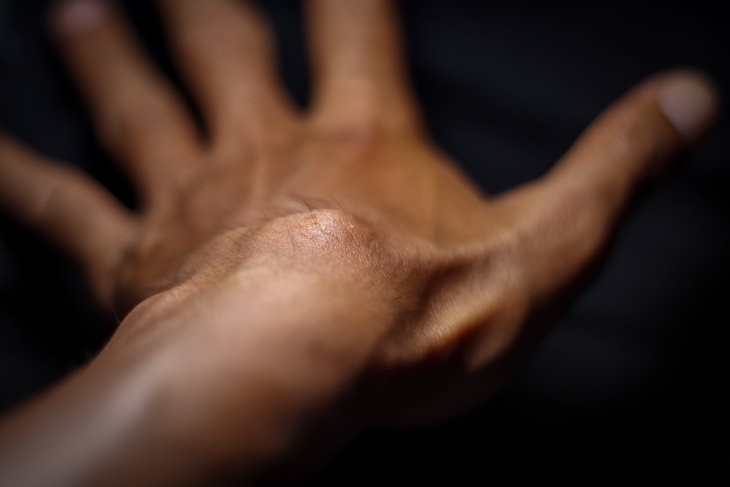
A bump on the back of your hand or wrist that’s accompanied by wrist pain may also be a sign of a carpal boss. Also known as a carpometacarpal boss, this is a bony lump that forms where your finger bones meet the bones of the forearm. Unlike a ganglion cyst that’s mobile and somewhat squishy, carpal bosses are firm and immobile bumps.

The causes of a carpal boss are yet to be discovered. It usually occurs in younger adults - between 20 and 40 years of age - according to the American Society for Surgery of the Hand. Apart from at-home treatments like wearing a splint and taking over-the-counter pain relievers, your doctor may recommend steroid injections into the boss or even surgery if the condition is extremely bothersome.

5. Wrist injuries

 Wrist Pain Causes injury

A wrist injury is one of the most widespread causes of wrist pain. Protective yourself with your hands as you fall is a common way to injure this area of the body. Swelling, bruises, or disfigured joints in the area are all known symptoms of injury. But remember that an injury can occur even if pain following the fall is the only symptom; this is because nerves and other soft tissues can become injured too. 

Sprains are a common ligament injury of the wrist. When a ligament is overly stretched or partially torn, you will experience pain while moving the wrist, as well as swelling, bruising, or tingling. Wearing a splint, keeping your wrist elevated, resting, cold compresses, and taking NSAIDs to relieve pain can all help heal the sprain faster.

That being said, we highly recommend that you see a doctor and get an X-ray when you experience pain after a fall or any other potentially traumatic event to the wrists. As we already mentioned, the wrist is a very delicate area, and even seemingly-minor trauma could lead to fractures and other serious injuries. If the bones or ligaments don’t heal well, you may be left with chronic wrist pain. 

6. Wrist tendonitis

Inflammation of the tendons, also known as tendonitis, is another extremely common cause of wrist pain. In the wrist area, tendons connect the muscles of the forearms with the hand and finger bones. It is these tendons that allow the hands to flex and extend. When any of these tendons become inflamed, the result is tendonitis. The symptoms of tendonitis are: 

Morning stiffness 

Dull pain 

 Grinding sensation when moving the wrist 

In some cases, minor warmth or swelling. 

Tendonitis usually occurs with overuse of the wrists. This can happen with repetitive wrist movements (like typing, writing, playing golf, or tennis) or as a result of injury. At-home care of tendonitis is similar to other conditions that cause wrist pain: rest, immobilization with a splint, icing, hand exercises, and taking NSAIDs. 

When these home treatments are not effective, a professional may advise you to get steroid injections directly into the wrist or, in rare cases, surgery.

7. Cubital tunnel syndrome
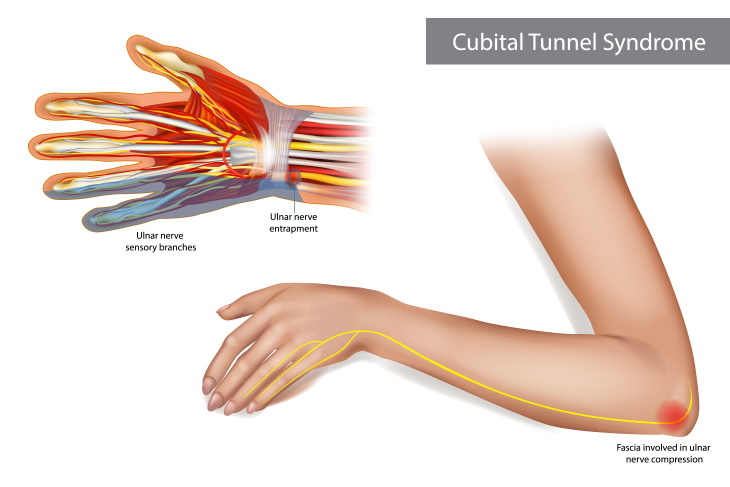
 

 Wrist Pain Causes Cubital tunnel syndrome

So you’ve heard about carpal tunnel syndrome already, but what is this cubital tunnel syndrome? Also known as ulnar neuropathy, this condition occurs when the ulnar nerve that goes through your arm gets pinched at the bend right behind the elbow. Sufferers describe the pain they experience when the ulnar nerve is compressed as “being hit in the funny bone,” but the pain may also extend downward and cause pain, numbness, and tingling in the wrist or even the ring and pinky fingers.

There are many causes of cubital tunnel syndrome, but the treatment is mainly symptomatic: rest, immobilization with a splint, icing, hand exercises, and NSAIDs. Those suffering from cubital tunnel syndrome are advised against leaning on the affected elbow, as this may increase the pain. Padding the elbow with a soft cushion may also be helpful. Depending on the severity of the condition, symptoms may go away quickly. But in some cases, they never fully resolve on their own, and surgery is required. 

There are several less common causes of wrist pain too. Here are just a few: 

De Quervain’s tenosynovitis - a painful condition caused by inflammation in the tendons surrounding the thumb. 

Kienbock's disease - an illness that affects young adults and triggers the destruction of one small bone in the wrist. 

Benign or cancerous tumors in the wrist. 

Wrist bursitis - the inflammation of the liquid-filled sacs that protect the joints. 

Systemic lupus erythematosus - a systemic autoimmune disease that can affect the joints. 

Minor wrist pain can go away on its own, but you consult your physician if you’re experiencing signs of an infection (fever, warmth, redness), injury (swelling, bruising, deformity, and inability to move the joint), neuropathy (tingling, numbness, sharp pain) or you become gradually less and less capable of using the wrist to carry objects and completing everyday tasks.

In some cases, wrist pain can be a medical emergency. If you have a high fever, your wrist feels warm to the touch, and looks red, seek emergency medical help immediately. This could be a sign of septic arthritis, which is a quickly-developing infection that requires hospital care. Extreme pain and a bluish color to your hand or fingers are also symptoms that require emergency care. 

As you can see, quite a wide range of medical conditions can potentially cause wrist pain. Your doctor will be able to arrive at a specific diagnosis with the help of imaging and a variety of medical tests. Take care!

This is only for your information, kindly take the advice of your doctor for medicines, exercises and so on.   


Labels: , , , , , , , , , ,

Tuesday, November 04, 2025

The MOST Common Types of Arthritis and How They Differ

Did you know that the most modest classification of the medical term “arthritis” includes at least 50 types of conditions? Some classifications differentiate between over 100 types of arthritis. Still, most people can only name two: osteoarthritis and rheumatoid arthritis. Knowing what the term arthritis means helps us understand so many types of arthritis that exist. 
 
The word arthritis is derived from the Greek arthr- for joint and -itis, medical terminology for inflammation. So, essentially, any kind of inflammatory joint condition can be defined as arthritis, irrespective of the cause. This also explains why the reported 50 million adults and 300,000 children suffering from arthritis across the US may experience varying symptoms and require different treatments. 
 
Understanding what kind of arthritis you or a family member has can help you manage the condition more effectively and choose the best treatments. These are the 8 most common types of arthritis.

1. Osteoarthritis
 Arthritis Types Osteoarthritis
 
 
Osteoarthritis is the type most of us think of when we are asked to describe arthritis, and rightfully so. After all, osteoarthritis is the most common kind of arthritis. According to the CDC, it affects 32 million Americans. 

Also known under the name degenerative arthritis, this condition usually begins after age 50. This condition occurs when the cartilage that lubricates your joints dissolves, making the bones rub together. The excessive friction, in turn, produces the all-too-familiar symptoms of the condition: 
- Joint inflammation 
- Morning stiffness
- Pain 
- Limited mobility 
- Bone injury 
- Osteophytes, bony lumps (bone spurs) that appear around the joints or spine. 
 
Like most types of arthritis, osteoarthritis is diagnosed through joint imaging, bloodwork, and a physical exam.
 
2. Thumb arthritis
Arthritis Types Thumb arthritis
A common subtype of osteoarthritis is thumb arthritis. It affects the joint at the base of your thumb called the carpometacarpal joint, and it can be confused with carpal tunnel syndrome. The condition manifests itself through persistent stiffness, swelling, or pain at the base of your thumb.


Women above age 40 are more likely to suffer from this condition. Thumb arthritis requires early treatment because it can be really debilitating and limiting to patients. The severe hand pain patients experience interferes with one’s ability to grasp items and complete everyday tasks like opening jars or doors. 

A simple way to test for thumb arthritis is by touching the tip of your index finger and thumb so that it makes an O shape. If the resulting shape resembles a D more than an O, this could indicate thumb arthritis.

3. Rheumatoid Arthritis
 Arthritis Types  Rheumatoid arthritis
 
 
Rheumatoid arthritis is the second most common form of arthritis. Despite popular belief, rheumatoid arthritis usually occurs between the age of 30 and 50. Rheumatoid arthritis tends to become rarer as you get older. Unlike osteoarthritis, rheumatoid arthritis is an autoimmune condition, meaning that it begins when the immune system mistakenly attacks its own healthy tissues.

Apart from the joints, rheumatoid arthritis can damage other body parts, such as the heart, blood vessels, lungs, skin, and vision. The symptoms of rheumatoid arthritis are different from those of osteoarthritis. For example, patients suffering from this condition may experience fatigue, loss of appetite, and fever years before the joint symptoms appear.

A frequent symptom of rheumatoid arthritis is Sjögren’s syndrome - a condition when your eyes and mouth are always very dry. Joint symptoms of rheumatoid arthritis tend to begin in smaller joints, namely the fingers and the toes. 

Other symptoms of rheumatoid arthritis coincide with other types namely -
 
-Morning stiffness 
 
- Tender and swollen joints that can be warm to the touch 
 
- Firm bumps under the skin, commonly around the elbows.

4. Gout
 Arthritis Types Gout
 
 
Gout is a type of arthritis that occurs when urate crystals accumulate inside the joins. These crystals cause sudden attacks of pain, swelling, redness, and extreme tenderness in one or a few joints, most commonly the big toe. A gout attack can develop within a few hours and may continue for days or even weeks.

Almost 4 percent of the adult American population suffers from gout, and anyone can get it, although men are slightly more likely to get it than women. A diet with too much protein may also increase the level of uric acid in the blood, which could lead to more urate crystal deposits in the joints.

Gout requires treatment to reduce the pain and minimize joint damage. The affected joint can also become infected, which requires urgent medical care.


5. Psoriatic arthritis
 Arthritis Types Psoriatic arthritis
 
Psoriatic arthritis is a type of arthritis that arises in patients suffering from psoriasis. The autoimmune skin condition is poorly understood, but it has a genetic component and usually develops in people aged 30-59. Psoriasis looks like red scaly patches or white dots on fingernails, and it can spread to the joints. 

Although the condition is the most likely to affect the fingers, making them swell up and turn pink, any part of the body, including the spine, can be plagued by psoriatic arthritis. Joint swelling, stiffness, and pain are the most common signs of the disease, and these symptoms can come and go, just like the psoriatic skin rash itself. 
 
6. Juvenile arthritis
Arthritis Types Juvenile arthritis
Juvenile idiopathic arthritis is the most common type. This is a group of autoimmune disorders that affect children 16 years old and younger. Like most arthritis types, juvenile idiopathic arthritis causes swelling, pain, and stiffness in the joints, as well as fatigue and fevers. 
 
Swollen lymph nodes and skin rashes are less common but can occur as well. Unfortunately, the condition often causes complications, such as misaligned joints, bone damage, eye damage, and it may affect the child’s growth. If a child exhibits any of the symptoms mentioned above for over a week, seek medical care. 
 
 
7. Ankylosing spondylitis
 
Arthritis Types  Ankylosing spondylitis

Ankylosing spondylitis is another terrifying form of arthritis that makes the lumbar vertebrae fuse together. It is more common in men than women, but the exact cause of ankylosing spondylitis is unknown. The symptoms of the condition vary a lot and can begin as early as late adolescence or in your 40s. 
 
The condition starts with a feeling of stiffness or pain in the lower back, but over time, it spreads to the shoulder, hips, and ribcage too. The symptoms typically worsen during periods of inactivity, such as sleep or long periods of sitting. The complications of the disease include eye damage, problems breathing, and even heart damage. 
 
8. Systemic lupus erythematosus
 
Arthritis Types  Systemic lupus erythematosus

Systemic lupus erythematosus is one of the most commonly misdiagnosed health conditions of all. Lupus is an autoimmune disease that affects the entire body, including your internal organs and brain. It often damages the joints and other connective tissue in your body. Joint pain due to lupus usually begins in the hands and feet, and then spreads to other areas. 
 
This condition is more prevalent among women than men, and it can cause anything from fatigue, joint pain, and chest pain to hair loss, skin rashes, and mouth sores. With lupus, diagnosing it as early as possible to prevent severe damage to the internal organs is crucial. It is done through a physical exam and blood tests.


This is only for your information, kindly take the advice of your doctor for medicines, exercises and so on.   


Labels: , , , , , , , ,

Tuesday, August 10, 2021

Identify 8 Types of Arthritis

Did you know that the most modest classification of the medical term “arthritis” includes at least 50 types of conditions? Some classifications differentiate between over 100 types of arthritis. Still, most people can only name two: osteoarthritis and rheumatoid arthritis. Knowing what the term arthritis means helps us understand so many types of arthritis that exist.
 
The word arthritis is derived from the Greek arthr- for joint and -itis, medical terminology for inflammation. So, essentially, any kind of inflammatory joint condition can be defined as arthritis, irrespective of the cause. This also explains why the reported 50 million adults and 300,000 children suffering from arthritis across the US may experience varying symptoms and require different treatments. 
 
Understanding what kind of arthritis you or a family member has can help you manage the condition more effectively and choose the best treatments. These are the 8 most common types of arthritis

1. Osteoarthritis Arthritis
Arthritis Types Osteoarthritis 
Osteoarthritis is the type most of us think of when we are asked to describe arthritis, and rightfully so. After all, osteoarthritis is the most common kind of arthritis. According to the CDC, it affects 32 million Americans.
Also known under the name degenerative arthritis, this condition usually begins after age 50. This condition occurs when the cartilage that lubricates your joints dissolves, making the bones rub together. The excessive friction, in turn, produces the all-too-familiar symptoms of the condition: 
- Joint inflammation 
- Morning stiffness 
- Pain 
- Limited mobility 
- Bone injury 
 - Osteophytes, bony lumps (bone spurs) that appear around the joints or spine. 
 
Like most types of arthritis, osteoarthritis is diagnosed through joint imaging, bloodwork, and a physical exam.
 
2. Thumb arthritis
Arthritis Types Thumb arthritis
A common subtype of osteoarthritis is thumb arthritis. It affects the joint at the base of your thumb called the carpometacarpal joint, and it can be confused with carpal tunnel syndrome. The condition manifests itself through persistent stiffness, swelling, or pain at the base of your thumb. 
 
Women above age 40 are more likely to suffer from this condition. Thumb arthritis requires early treatment because it can be really debilitating and limiting to patients. The severe hand pain patients experience interferes with one’s ability to grasp items and complete everyday tasks like opening jars or doors. 
 
A simple way to test for thumb arthritis is by touching the tip of your index finger and thumb so that it makes an O shape. If the resulting shape resembles a D more than an O, this could indicate thumb arthritis. 
 
3. Rheumatoid arthritis
Arthritis Types  Rheumatoid arthritis
Rheumatoid arthritis is the second most common form of arthritis. Despite popular belief, rheumatoid arthritis usually occurs between the age of 30 and 50. Rheumatoid arthritis tends to become rarer as you get older. Unlike osteoarthritis, rheumatoid arthritis is an autoimmune condition, meaning that it begins when the immune system mistakenly attacks its own healthy tissues. 
 
Apart from the joints, rheumatoid arthritis can damage other body parts, such as the heart, blood vessels, lungs, skin, and vision. The symptoms of rheumatoid arthritis are different from those of osteoarthritis. For example, patients suffering from this condition may experience fatigue, loss of appetite, and fever years before the joint symptoms appear. 
 
A frequent symptom of rheumatoid arthritis is Sjögren’s syndrome - a condition when your eyes and mouth are always very dry. Joint symptoms of rheumatoid arthritis tend to begin in smaller joints, namely the fingers and the toes. 
 
Other symptoms of rheumatoid arthritis coincide with other types, namely: 
- Morning joint stiffness 
- Tender and swollen joints that can be warm to the touch - Firm bumps under the skin, commonly around the elbows.

4. Gout
Arthritis Types Gout
Gout is a type of arthritis that occurs when urate crystals accumulate inside the joins. These crystals cause sudden attacks of pain, swelling, redness, and extreme tenderness in one or a few joints, most commonly the big toe. A gout attack can develop within a few hours and may continue for days or even weeks. 
 
Almost 4 percent of the adult American population suffers from gout, and anyone can get it, although men are slightly more likely to get it than women. A diet with too much protein may also increase the level of uric acid in the blood, which could lead to more urate crystal deposits in the joints. 
 
Gout requires treatment to reduce the pain and minimize joint damage. The affected joint can also become infected, which requires urgent medical care.

5. Psoriatic arthritis
Arthritis Types Psoriatic arthritis
Psoriatic arthritis is a type of arthritis that arises in patients suffering from psoriasis. The autoimmune skin condition is poorly understood, but it has a genetic component and usually develops in people aged 30-59. Psoriasis looks like red scaly patches or white dots on fingernails, and it can spread to the joints. 
 
Although the condition is the most likely to affect the fingers, making them swell up and turn pink, any part of the body, including the spine, can be plagued by psoriatic arthritis. Joint swelling, stiffness, and pain are the most common signs of the disease, and these symptoms can come and go, just like the psoriatic skin rash itself.  
 
6. Juvenile arthritis
Arthritis Types Juvenile arthritis
Juvenile idiopathic arthritis is the most common type. This is a group of autoimmune disorders that affect children 16 years old and younger. Like most arthritis types, juvenile idiopathic arthritis causes swelling, pain, and stiffness in the joints, as well as fatigue and fevers. 
 
Swollen lymph nodes and skin rashes are less common but can occur as well. Unfortunately, the condition often causes complications, such as misaligned joints, bone damage, eye damage, and it may affect the child’s growth. If a child exhibits any of the symptoms mentioned above for over a week, seek medical care.
 
7. Ankylosing spondylitis
Arthritis Types  Ankylosing spondylitis
Ankylosing spondylitis is another terrifying form of arthritis that makes the lumbar vertebrae fuse together. It is more common in men than women, but the exact cause of ankylosing spondylitis is unknown. The symptoms of the condition vary a lot and can begin as early as late adolescence or in your 40s. 
 
The condition starts with a feeling of stiffness or pain in the lower back, but over time, it spreads to the shoulder, hips, and ribcage too. The symptoms typically worsen during periods of inactivity, such as sleep or long periods of sitting. The complications of the disease include eye damage, problems breathing, and even heart damage.

8. Systemic lupus erythematosus
Systemic lupus erythematosus is one of the most commonly misdiagnosed health conditions of all. Lupus is an autoimmune disease that affects the entire body, including your internal organs and brain. It often damages the joints and other connective tissue in your body. Joint pain due to lupus usually begins in the hands and feet, and then spreads to other areas. 
 
This condition is more prevalent among women than men, and it can cause anything from fatigue, joint pain, and chest pain to hair loss, skin rashes, and mouth sores. With lupus, diagnosing it as early as possible to prevent severe damage to the internal organs is crucial. It is done through a physical exam and blood tests.


This is only for your information, kindly take the advice of your doctor for medicines, exercises and so on.   

https://gscrochetdesigns.blogspot.com. one can see my crochet creations  
https://gseasyrecipes.blogspot.com. feel free to view for easy, simple and healthy recipes    
https://kneereplacement-stickclub.blogspot.com. for info on knee replacement


Labels: , , , , , , , , ,