Sunday, March 28, 2021

Weight loss: 5 times you should absolutely avoid eating carbs

Should you stop having carbs to lose weight faster?
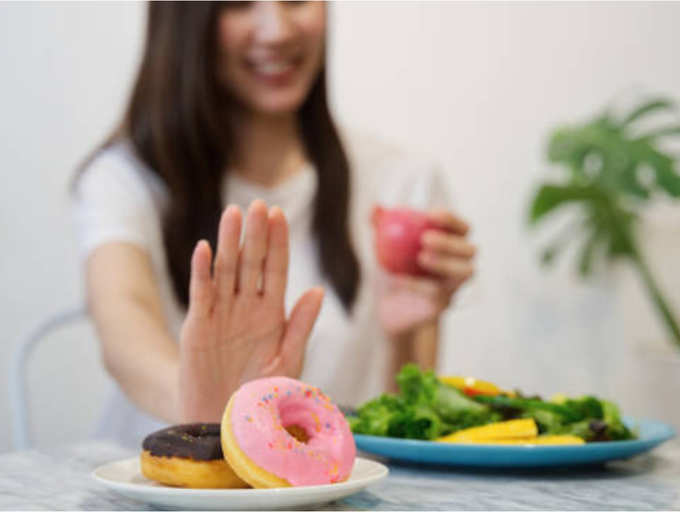
Good or bad, carbs aren't really your enemy and it's extremely tough to go a day without having them.

However, there are times you should absolutely be avoiding them.

Consuming a low-carb diet is considered ideal for losing weight and achieving many other fitness goals. In fact, complex carbohydrates can also fill you up with energy and stabilize your moods. The key is to choose the good carbs which are nutrient-dense, and not refined.

The best way to have carbs for weight loss

Hence, with the right quantity of protein, multivitamins and fats, you should be having some carbs on a daily basis. That being said, if you are on a mission to lose weight, there are some special times you must absolutely go no-carb. We tell you about a few of them:

Before you head to your workout
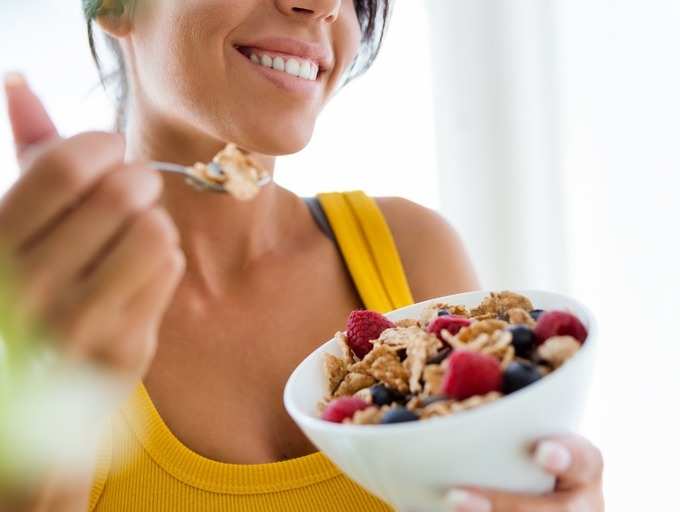
Pre-workout meals can fuel you with all the energy you need to burn calories. While you may think carbs are the best way to gain instant energy, having a big load of carbs can induce nausea, especially if you are following an intense workout. Snacking on something that's hydrating or protein-rich can be a better option, as it would aid recovery and muscle building. In the same way, you shouldn't be opting for an instant carb-loaded meal after finishing your workout. Choose something healthy which will help you get the optimum results and make the most out of your workout.

First thing in the morning
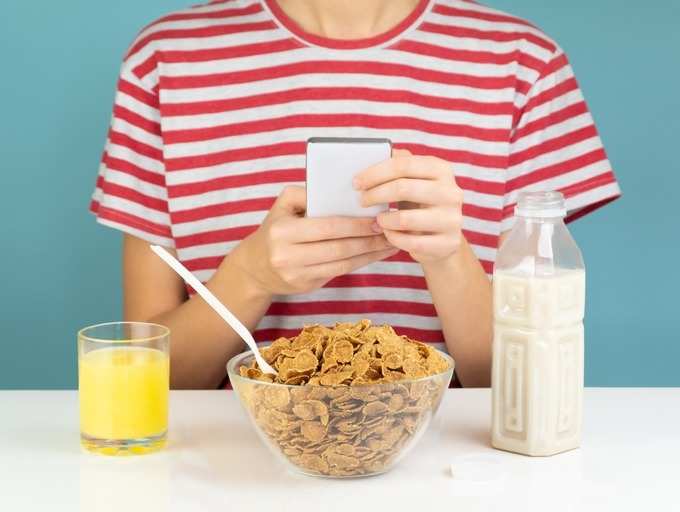
We all know that heavy carbs are best avoided at night, but having them first thing in the morning is not ideal too. Confused? We tell you why

Many of us may be habitual to eating cereals or bread right after getting up. However, a lot of these carb sources are refined or pack in high sugar and fructose which can spike up insulin levels. If you happen to eat a late, loaded breakfast, heavy carbs can make you feel sluggish and land in a 'food coma'. Instead, opt for something that also contains some fats and protein, which will also keep you fuller for longer.

When you are eating out of boredom
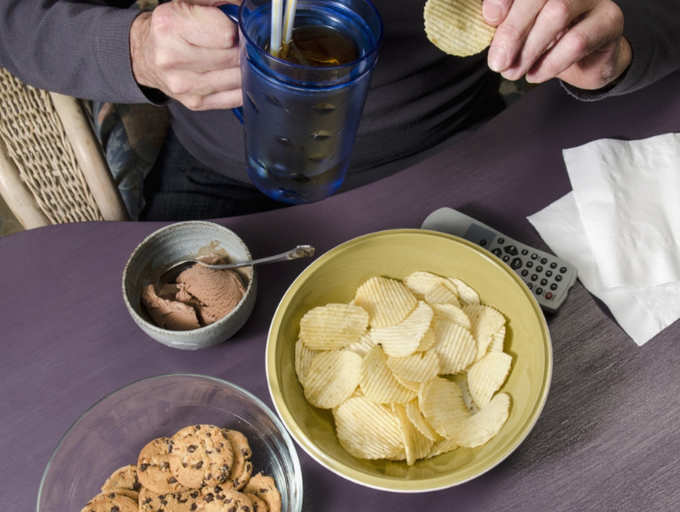
Stress eating, munching out of boredom or nibbling something while watching series is a common habit, which, unfortunately also makes many prone to weight gain.

Unmanaged munching can lead to cravings. If you happen to eat carbs late at night, it can cause sudden insulin spikes and may not be well-digested by the body too. The same goes for your afternoon slump or low-energy bouts. Opt for healthier snacking options, such as nuts and seeds, muesli or salads! Sometimes, water might do the trick too!

If you haven't slept well

If you haven't slept well

When you are short on sleep, your hormones are all out of whack and your metabolism off-balance, which may make you crave something comforting like a carb-rich meal. This is the time to resist your urge and have something packed with proteins or having low glycemic index instead if you are looking to lose off inches from your waistline. Bad sleep could also trigger high cortisol, which may make you have more sugar than you want, which is bad too.

On their own

On their own

Lastly, while you do have to pick good quality carbs in your diet, it's equally important to pair them well. If you have them unaccompanied, you can end up disturbing your GI tract, overdoing the quantity as well. Sometimes, certain forms of carbs such as sugary products can upset the stomach and put you off your fitness track. Therefore, pair them well and try and score a bit of every nutrient group on your plate.


This is only for your information, kindly take the advice of your doctor for medicines, exercises and so on.     

https://gscrochetdesigns.blogspot.com. one can see my crochet creations  
https://gseasyrecipes.blogspot.com. feel free to view for easy, simple and healthy recipes    
https://kneereplacement-stickclub.blogspot.com. for info on knee replacement

Labels: , , ,

Sunday, December 31, 2017

Difference between hunger and emotional hunger

Most people misunderstand the word ‘foodie’ and claim that their incessant eating is justified as they fall in the said category. Well, it is one thing to love food and explore different tastes and textures and totally another when food becomes your favourite stress buster. You seldom realise that your eating is triggered by your brain to counter impending stress. There is a term for this called ‘stress eating’ or ‘emotional eating.’  Here are some signs that can help you decide if you are one.

You feel hungry suddenly: Do you know the difference between hunger and emotional hunger? Physical hunger doesn’t make you go crazy with craving and it dawns slowly and steadily. But emotional hunger grips you suddenly and you are forced to give in to your desires. You fail to realise that you had a full course meal an hour or so before. However, if you haven’t eaten for long say five to six hours at a stretch then your hunger pangs are real.

You crave specific foods: When you are hungry even a simple dal-chawal seems like heaven, but emotional hunger pave the way for healthy eating. All you want is your plateful of pakoras, pizzas and pastries. There is a reason for this unusual craving. When you are stressed your body releases a hormone called cortisol that leads to binging. It increases appetite and also induces cravings for sugary and salty foods. It influences your food choices by binding to the receptors in the brain that trigger a craving for oily and sugary food. 

You don’t pay attention to food: Ever heard the term ‘mindless eating?’ That’s exactly what you do. Even before you are aware, you have finished one full plate of chicken biriyani, corn fritters and scooped out the whole bowl of blackcurrant ice-cream. And the worst part is you didn’t even spend enough time to relish the food and enjoy its real goodness. If it were true hunger, you would have been aware of what you are doing. 

You are never satisfied: All that food in your stomach just makes you feel stuffed, bloated and uncomfortable, and you are never satisfied or happy about your eating anymore.

You can’t get food out of your head: If you love food, you will make every attempt to eat healthily and give your body the right kind of nutrients. But once emotional eating overcomes your sanity you will eat anything and everything that comes your way — mostly high in sugar, carbohydrates and fats. And all you are thinking is what to order for your next meal. 

You feel guilty at the end: Because deep down you know that you are not doing yourself a great favour in being an emotional eater. You feel more stressed out, sad and uncomfortable, all of which are bound to make you guilty and also ruin the real love for food that you have (if you have any).
Here is what you can do to help yourself
If any of these signs are similar to what you face, then step back and take measures to control your eating habits. Here is how:

Know your triggers well: This is an essential part of your self-help therapy. But to do this you need to be very true to yourself. Little introspection and analysis about your lifestyle and your emotional health can help you know your triggers – workload, petty fights, boredom or just chronic stress anything can be your trigger.

Take a break: When the sudden hunger pangs get the better of you, get up and take a break. Walk around the corridor or reach out for your buddy whose cubical is at the opposite end. If you are at home and want to eat all of a sudden start doing your laundry or sort your wardrobe. Sure this will be a great diversion for you and laundry is something that is never ever done.

Be true to your feelings: If you are feeling low, unhappy, de-motivated – be true to these feelings there is no point in ignoring these emotions and trying to gulp them with extra cheese in your pizza. Instead, get help — either talk it out to people who are around you, pick up a hobby that gives you intellectual stimulation, or just try and spend some me-time to de-stress and compose your thoughts. Remember, this has to be a commitment to yourself and not a one-time effort.

Get enough sleep: There are two hormones in your body that regulate hunger and fullness — ghrelin and leptin. Ghrelin stimulates appetite while leptin sends signals to the brain when you are full. However, lack of sleep can make your ghrelin levels go up, and your leptin levels go down. So you crave more food and overeat.

Maintain a diet diary: It is difficult for an emotional eater to maintain a diet diary as it reflects one’s dishonesty. This is a reason why most emotional eater will never maintain a diet diary. Because cheat meals aren’t a part of one’s daily diet. But if you can start having one, it can save you from falling prey to overeating.

Pamper yourself: Do you realise how you slipped from your priority list with time? You are not your priority anymore, one reason why stress has the power to get on to you. If you give yourself a little attention and love thyself, handling stress would come easy to you. So, go for that vacation, staycation, trekking or indulge in exotic spa treatments to rejuvenate yourself.

Get help: Your emotional eating could also be a sign that there are other mental health issues that are vying for attention. If all the self-help methods fail you, don’t waste time sulking, get up and get help. Go for a counseling soon.

THIS IS ONLY FOR INFORMATION, ALWAYS CONSULT YOU PHYSICIAN BEFORE HAVING ANY PARTICULAR FOOD/ MEDICATION/EXERCISE/OTHER REMEDIES.    
 
PS- THOSE INTERESTED IN RECIPES ARE FREE TO VIEW MY BLOG-                      

HTTP:GSEASYRECIPES.BLOGSPOT.COM/
FOR INFO ABOUT KNEE REPLACEMENT, YOU CAN VIEW MY BLOG-                                                                       
HTTP://KNEE REPLACEMENT-STICK CLUB.BLOGSPOT.COM/
FOR CROCHET DESIGNS

HTTP://MY CROCHET CREATIONS.BLOGSPOT.COM

Labels: , , , , , , ,