Tuesday, January 10, 2023

Get Rid a Short Breath In 5 Minutes wth These Techniques

Everyone has experienced shortness of breath at least once in their life, be it after intensive exercise, due to anxiety or as a result of a health condition. Many otherwise healthy people can sometimes experience shortness of breath after climbing stairs, running or other unusually-demanding physical activities. 
 
In the end, breathlessness can catch you by surprise anywhere anytime. Luckily, there are things you can do to relieve dyspnea (the scientific term for shortness of breath). Here are 4 effective relief techniques that can help you get rid of this annoying symptom fast. And the best thing about them is - no special equipment needed. 
 
1. Pursed Lip Breathing

This simple method will let you slow down your breathing when you’re feeling short of breath, which will help you start breathing more deeply and effectively. You can do it anywhere anytime, and it is particularly effective at boosting the circulation of air in your lungs, which makes it especially helpful after strenuous activities, be it lifting things, climbing stairs or bending forward.  
 
Here’s how you can do this exercise: 
 
Step 1. Relax your neck and shoulders. 
Step 2. Counting to 2, slowly and steadily breathe in through your nostrils, mouth closed.  
Step 3. Round your lips, as if you’re about to blow on a dandelion.  
Step 4. Counting to 4, slowly breathe out while maintaining the shape of the lips. Repeat for at least 10 rounds.

2. Leaning Forward with the Support of a Table  
This technique is optimal for when you’re at home. You will need a table, a chair and a pillow to do it. It’s very simple and can really soothe your lungs and calm your breath and heartbeat. It will also relax your body, which yields in an overall calming effect. 
 
This is how you do it: 
Step 1. Sit on a chair facing a table, keep your feet on the floor. Place a pillow on the table in front of you. 
Step 2. Lean with your chest forward. Place your arms on the table and rest your head on the pillow. You can slowly move your head from side to side, as if shaking it to say “no”, but slower. This tilt will massage your forehead and let your neck relax, opening up the airways even more. Breathe as slowly as you can and try to relax. Stay in this position as long as you need, but no less than 5 minutes.
 
3. Standing With a Supported Back
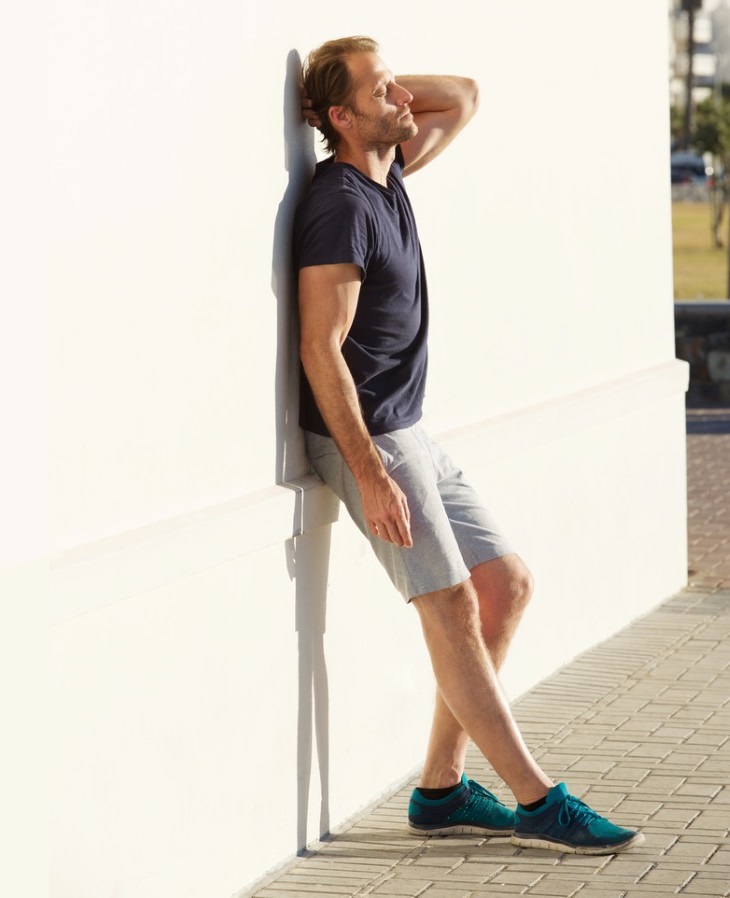
shortness of breath exercises stand supported back

If you got caught by surprise by a sudden attack of breathlessness, and you have nothing around you, but a wall, do not fear. A wall will do, as simply standing with the support of any vertical object can help you relax your airways as well. 
 
Instructions: 
Step 1. Stand with your back next to a wall, resting your lower, upper back and hips against the wall. 
Step 2. With your feet about shoulder width apart, place your hands on the thighs, tilting your head a tiny bit forward. Try to relax and breathe as slowly as you can. 
Step 3. Dangle and move your arms slowly in front of you. This will relax your upper body and may help normalize your breathing faster.  
 
4. Diaphragm Breathing
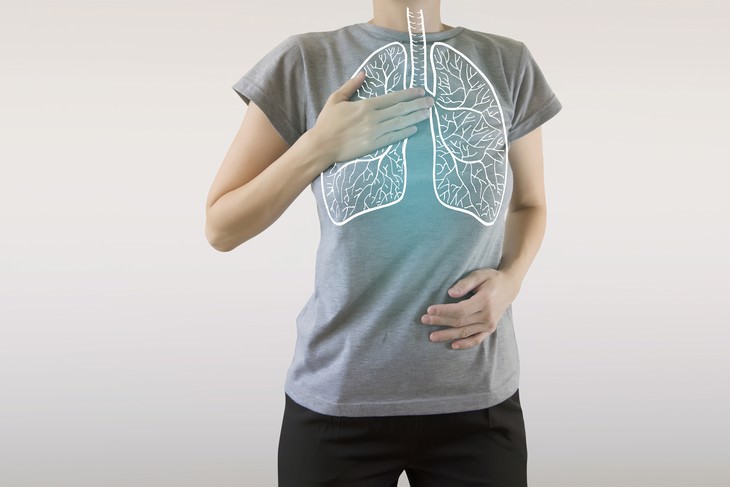
shortness of breath exercises Diaphragm Breathing
When your lungs are stressed and compressed, you’re trying to catch your breath, but you can’t seem to normalize your breathing pattern, try diaphragm breathing. It will help you switch gears and breathe normally faster. It’s best to do this exercise at home.

Here’s how you do it: 
Step 1. Sit on a chair with your knees bent comfortably and upper body relaxed.  
Step 2. Put one hand on your belly and breathe in through the nose. Pay attention to how you belly is inflating and deflating as you breathe.  
Step 3. On an exhale, activate your abdominal muscles and notice how your belly is flatter. Round your lips and breathe out through your mouth. 
 
Tip: You should focus on the exhale more than on the inhale. Do this exercise for 5 minutes. 
 
Extra! Sleep In a Comfortable and Supported Position  
It is not uncommon for people to experience shortness of breath during sleep. It can even wake you up during the night, which is not only annoying, but also terribly disruptive for your sleep. Both of the following sleeping positions will help your airways relax, which will assist breathing. 
 
Position 1. Sleep on your side, placing a pillow or blanket between your legs and keep the head elevated by a pillow just enough to maintain a straight spine from the lower back to the neck.  
 
Position 2. Lie down on your back. Place a pillow under your knees, to keep them slightly bent. Rest your head on another pillow, so that it won’t strain your neck. 
 
If you persist waking up during the night because you experience breathlessness, we highly recommend you to visit a doctor, as you might be suffering from sleep apnea. In general, dyspnea can be a symptom of a serious underlying condition, so if you experience it often, consider a consultation with a doctor.

This is only for your information, kindly take the advice of your doctor for medicines, exercises and so on.   

https://gscrochetdesigns.blogspot.com. one can see my crochet creations  
https://gseasyrecipes.blogspot.com. feel free to view for easy, simple and healthy recipes    
https://kneereplacement-stickclub.blogspot.com. for info on knee replacement

https://GSiyers home remedies.blogspot.com     is my latest addition to my blogs. I'm going to add posts there, do give me your valuable feed back on my blogs. Thanks a lot, take care, be healthy and be happy.

Labels: , , , ,

Friday, January 07, 2022

Deep Breathing Techniques Lessen the Impact of COVID-19

With another wave of COVID-19 engulfing the world, many are asking themselves, “Is there really nothing else I can do to reduce the impact of Covid on my body?” By now, we’re all very well aware of the hygienic and social-distancing practices that can lessen our risk of getting the dreaded disease, and medical interventions like vaccines and (more recently) an antiviral treatment both play a massive role of their own .

But if you still feel like you’re not doing enough to reduce your risk of COVID-19, we’ve got a list of deep breathing techniques that may further strengthen your respiratory system and improve your outcome before and even during a Covid infection. These breathing exercises can effectively supplement the above-listed primary interventions for COVID-19. Equally important, deep breathing helps you regain more control of your wellbeing and relieve the stress you may be currently experiencing. 
 
How do deep breathing techniques lessen the impact of COVID-19? 
In previous articles, we’ve written extensively about the ways deep breathing can help fight stress and anxiety and even aid weight loss, but let’s not forget the primary system involved as you’re performing these healing exercises - the respiratory system.

Practicing breathing exercises, especially abdominal breathing, expands your lung capacity, clears the lungs of mucus and fluids, and makes you breathe more efficiently. 
 
As you know, COVID-19 commonly presents itself through inflammation in the airways and lungs, as evident from common symptoms of Covid like difficulty breathing, coughing, or even pneumonia. Since COVID-19 causes mucus to build up in the airways, lungs, or both, it can affect airflow, which, in turn, could end up causing shortness of breath or even more severe issues like asthma attacks or the life-threatening acute respiratory distress syndrome (ARDS) that occurs when fluids leak inside the lungs. 
 
Deep breathing can reduce your risk of developing these severe effects, especially if you already suffer from a chronic inflammatory respiratory condition like asthma or chronic obstructive pulmonary disease (COPD). 
 
Regular breathing exercises also strengthen the diaphragm - a flat dome-shaped muscle under the lungs that controls their expansion and contraction. Abdominal breathing is also said to improve the flow of lymph in the body, which could potentially improve immune function and lower your risk of respiratory illnesses. Studies confirm that breathing exercises like pursed-lip breathing improve the efficiency of breathing and reduce shortness of breath.  
 
Which breathing techniques are best?
COVID-19 Breathing Exercises
In order to observe results, it’s essential to practice deep breathing regularly. Think of deep breathing as an exercise for your lungs. And just like any exercise, it takes time for you to build the strength you need to feel a difference. You can use the breathing techniques we list below every day, and they should also be helpful for those who currently have COVID-19 (but we highly encourage you to double-check that with your doctor first). 
 
Also keep in mind that any other aerobic activities that make you breathe faster, such as swimming, riding a bike, yoga, or fast walking can also train your breathing and strengthen your respiratory system. So you can switch up dedicated breathing exercises with sports activities to make things more fun.

1. Pursed-lip breathing 
Pursed-lip breathing is a simple but effective method that increases the amount of oxygen you get into your lungs and relieves shortness of breath. You can do it anywhere anytime, and it will be helpful for both strengthening the lungs to lower the risk of getting the novel coronavirus and to remedy breathlessness caused by COVID-19. 
COVID-19 Breathing Exercises woman deep breathing
Here’s how you can do this exercise: 
Step 1. Relax your neck and shoulders.  
Step 2. Counting to 2, slowly and steadily breathe in through your nostrils, mouth closed. 
Step 3. Round your lips, as if you’re about to blow on a dandelion. 
Step 4. Counting to 4, slowly breathe out while maintaining the shape of the lips. 
Repeat for at least 10 rounds.
2. Yawn-to-smile breathing  
This (dare we say) fun breathing technique urges the diaphragm to expand fully and also activates the entire upper body by stretching the chest muscles, the arms, and the shoulders. The Johns Hopkins University School of Medicine suggests that this type of breathing exercise is especially helpful for the first stages of Covid recovery, and Healthline also suggests that it’s beneficial for long-haul COVID-19. This is when your symptoms persist for weeks or months after being clear of the coronavirus. One in four patients experience long-haul symptoms that may include any of the following: 
breathlessness and coughing 
headaches and brain fog 
chest pain muscle aches and difficulty exercising. 
 
Here’s how you can do this exercise: 
Step 1. Sit on the floor or in a chair with the back straight and hands resting on the thighs.  
Step 2. Extend the arms upwards, about shoulder-width apart or wider. You’ll feel a pleasant stretch in the back and shoulder muscles.  
Strep 3. Mimicking a yawn, open your mouth as wide as you can. 
Step 4. Now turn that yawn into a big smile and count to 3. Finish by bringing the arms back to the initial position. 
Repeat this exercise for 1 minute.

3. Belly breathing  
As we already mentioned, deep breathing through the belly engages the diaphragm. Learning to breathe while engaging this muscle is known to reduce stress, clear the lungs, improve lung capacity, and deepen your breathing. Learning this technique is rather easy and safe for anyone willing to give it a go. Like any exercise, it takes practice and time, so don’t worry if you don’t see results right away. 
 
If you have active COVID-19, ask for your doctor’s permission to do any breathing exercise, including this one, as some patients may actually feel that strenuous breathing exercises worsen their symptoms.  
 
Here’s how you can do this exercise: 
Step 1. Sit in a chair with your knees bent comfortably and the upper body relaxed.  
Step 2. Put one hand on your belly and breathe in through the nose. Pay attention to how the belly is inflating and deflating as you breathe.  
Step 3. On an exhale, activate your abdominal muscles and notice how your belly is flatter. Round your lips and breathe out through your mouth. 
 
Tip: You should focus on the exhale more than on the inhale. 
Do this exercise for 5 minutes.

This is only for your information, kindly take the advice of your doctor for medicines, exercises and so on.   

https://gscrochetdesigns.blogspot.com. one can see my crochet creations  
https://gseasyrecipes.blogspot.com. feel free to view for easy, simple and healthy recipes    
https://kneereplacement-stickclub.blogspot.com. for info on knee replacement

Labels: , , , , , , , ,