45 Creative Uses For Your Orange Peels
Health Benefits
1. Lowers Blood Pressure
Orange rinds can be used to lower blood pressure. They have been a part
of Chinese herbal medicines for thousands of years for this purpose.
2. Suppresses Depression and Anxiety
Orange oil can be used to naturally relieve anxiety and depression by
taking a bath or rubbing just a bit on the temple and forehead area.
3. Improves Heart Health
Orange peel contains a compound called nobiletin, which has been found
to lower a person's risk of inflammation and heart disease.
4. Lowers Bad Cholesterol
The nobiletin present in orange peel also exerts a positive influence on
your health by lowering levels of LDL cholesterol (bad cholesterol) in
the body.
5. Aids in Weight Loss
Since orange peel is low in calories and
high in fiber, it is very useful in preventing you from exceeding your
recommended daily calorie intake. It also forms adipose tissue, which
helps to prevent obesity.
6. Eases Respiratory Issues
Consuming orange peel results in your lungs being cleansed, since it
helps to break down and expel any trapped phlegm.
7. Protects You From Cancer
Research shows that eating orange peel can protect you from a number of
different cancers including breast cancer, skin cancer, and colorectal
cancer.
8. Prevents Digestive Issues
The non-soluble polysaccharides found in orange peel help prevent
constipation, heartburn, nausea, and excess acid forming from in the
stomach.
9. Improves Oral Health
Rub an orange peel against the inside of your mouth and teeth to freshen
up your breath, whiten your teeth, and even reduce their sensitivity.
10. Gets Rid of a Hangover
If you overdid it last night, you can ease today's struggle by mixing
salt and orange peel in some boiling water for around 20 minutes. Once
it cools, you should drink the whole concoction to help reduce the
effects of your hangover.
Beauty Treatments & Applications
11. Natural Skin Bleaching
The Vitamin C that orange peels contain
helps to lighten dark spots and blemishes on the skin. Simply rub the
skin right onto your skin or mash it into a paste instead.
12. Body Scrub
Wrap up some orange peels in gauze pads and rub them on your skin while
you are in the shower. The scrub will brighten your skin and give it a
great smell.
13. Bath Oil
Extract the oil from the orange peels by grinding up the peels and
fermenting them with vodka or alcohol for about 3 days. Strain the oil
and add a few drops to your bath. Orange oil is known for its
anti-inflammatory properties as well as its ability to improve skin tone
and texture.
14. Bath Powder
You can also add orange peels to your bath in powder form instead.
Simply dry out the orange peels completely and then grind them down to
powder in the food processor, then sprinkle only a bit in your bath.
15. Glowing Skin Application
To get skin that is glowing and
healthy-looking, simply crush some orange peel powder, dried neem
leaves, pomegranate peel and lemon juice, and mix it all together. When
the concoction has set, simply rub it into your skin, and sit back and
admire the results.
16. Face Mask
You can make an orange face mask by mixing equal proportions of milk and
orange powder together until you've got a thick paste. When it's ready,
apply it to your face and wash it off after about half an hour. This
mask will remove dead skin cells and excess oil from your face.
17. Hair Care
Add crushed orange peel to some water and leave it there overnight. From
the following day, you'll be able to add this mixture to your hair to
help rid yourself of dandruff, while cleaning and conditioning your hair
at the same time.
18. Lip Balm
To make orange peel lip balm, first, you'll need to add some almond oil,
and an equal amount of sugar and orange peel powder to a bowl. Mix it
together and let it set before applying to your lips.
Cleaning Uses
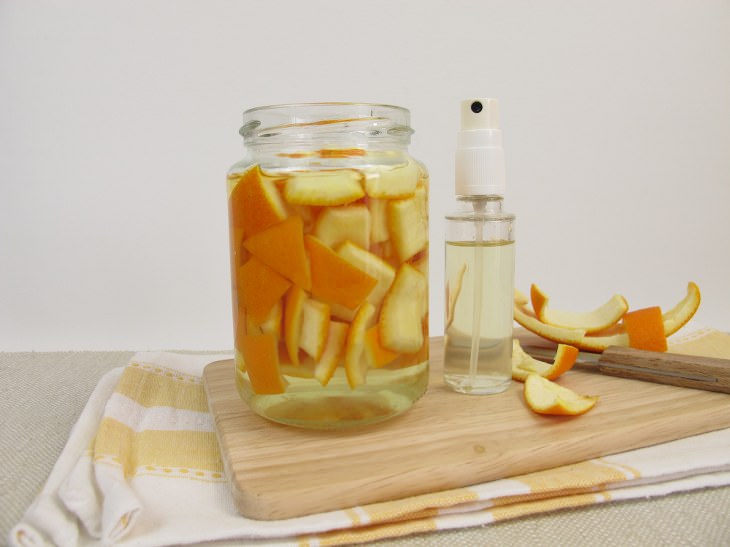
19. Citrus Cleaner
You can make your own citrus cleaner by
infusing vinegar with orange peels and a bit of boiling water. Trust us,
it works wonders!
20. Create a Natural Sponge
Orange peels can be used as a sponge too! Before the peel completely
dries out, it contains a number of essential oils that are helpful in
degreasing surfaces as well as pots and pans. If your sink or counter is
full of grease, use an orange peel to scrub it down.
21. Deodorizer
It's no secret that the smell of a freshly peeled orange can clear out a
room. Place the peels at the bottom of your garbage bin, or hang them
from a string in your bathroom for a constant fresh scent.
22. Garbage Disposal Cleaner
A great way to clean out your garbage disposal is by putting orange
peels down the disposal. Place them in the disposal and run it until
clear, then run some water down after it. The citrus will get rid of any
scents coming from the disposal.
23. Air Freshener
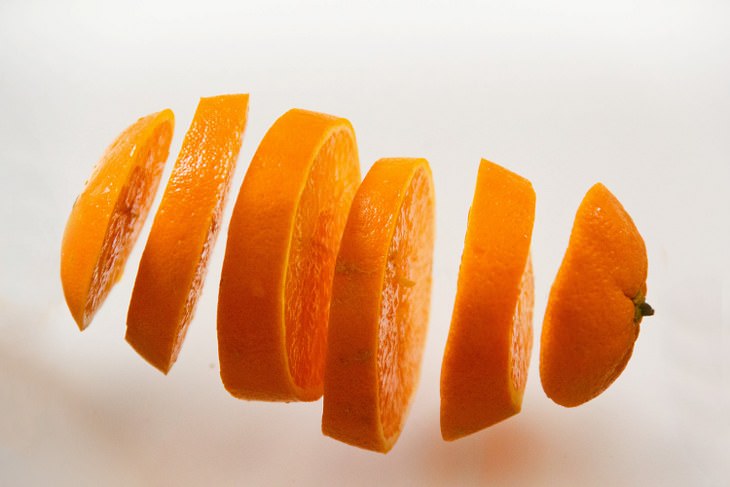
Boil orange peels in hot water to help
freshen the air in the kitchen. You can also add a cinnamon stick or
mint into the mix if you want to recreate the smell of air fresheners.
If you have a fire going at home, place a paper bag filled with dried
orange peels into the fire and your house will smell wonderful.
24. Refrigerator Deodorizer
Orange is also an excellent deodorizer for your refrigerator. Cut an
orange in half and remove the fruit from the inside (eat it!). Then,
fill up half the orange with salt and put it in a small bowl in your
refrigerator for up to a week or two.
25. Shine Wood
You can use the white underside of an orange peel to breathe new life
into dull-looking wooden furniture. Simply rub it onto any wooden
surface, and give it a rinse with a damp cloth when you're done.
26. Freshen Up Smelly Shoes
Place some dry orange peels into small sachets, and then place them into
the worst offenders on your shoe rack. The peel will absorb the odors
naturally, making your life more pleasant and fragrant!
DIY Projects
27. Orange Peel Candle

Make a candle at home with orange peels
infused inside. Simply add finely shredded pieces of orange peel to the
wax and other ingredients to make your home smell fresh and fruity!
28. Topiary Tree
Make your own topiary tree with orange peels for a fantastic smelling
piece of home decor. With enough effort, it will look amazing, too!
29. Make a Bird Feeder
To make a natural bird feeder that birds will love, cut an orange in
half and remove the fruit. Take the orange half and poke 3 evenly spaced
holes near the cut section of the peel. There, attach a sturdy piece of
string and hang it from a tree. Fill the empty orange peel with
birdseed and wait for your flying visitors to pile in!
30. Orange Peel Boats
Here's an idea that kids will certainly love! Cut an orange in half,
remove the fruit and use the halves as little boats in the bathtub or
out on the lake!
31. Orange Peel Jewelry
Make fragrant and fun jewelry with the little princesses you know,
entirely out of orange peels! This activity is a perfect way to get kids
to love fruit!
Natural Repellants
32. Mosquito Repellant
If you are looking for a natural way to
repel mosquitos, take fresh orange peels and rub them all over your
skin. The citrus smell will repel the mosquitos.
33. Slug Repellant
If you have a slug problem in your garden, try spreading some orange
peels on top of the soil to keep them at bay.
34. Ant Repellant
Place orange peels in problem areas of your house where you usually
experience an ant problem. Orange oil can also be used instead of peels.
35. Keep Cats Away
If you want to keep stray cats away from your home, place orange peels
outside. If you have a cat at home that tends to get into things it
shouldn't, you can rub the peels or place them (or rub orange oil) near
the dear things in your home (like your sofa).
Recipes & Cooking
36. Orange Zest

This is probably the most self-explanatory
of all the uses for orange peels. Zesting an orange peel with a zester
is a great way to add a sweet and tangy taste to your meat marinades or
favorite baked goods. Orange zest can even taste great in your morning
cup of coffee or afternoon cup of tea!
37. Make Orange Peels Dipped in Chocolate
A wonderful delicacy, candied orange peels are a popular after-meal
snack in a number of European cultures, and they are quite easy to make
too! Just melt some chocolate and cover one or all sides in a sugared
orange peel.
38. Make Orange Peel Candy
Candied orange peels are made by boiling a dried orange peel in sugar
for about an hour. You can then cover them in chocolate as mentioned
above, or roll them around in sugar for an even sweeter taste!
39. Orange Peel-Infused Olive Oil
If you want to give your salads a kick, place one dried orange peel in
your olive oil to make your greens all the more zesty and exciting!
40. Make Orange Tea

No need for tea bags here! Dry out a few
orange peels and place them in hot water next time you are craving a
warm 'orangey' beverage. Orange tea is also great for when you are
feeling congested - the citrus will open up your sinuses. Add cinnamon
sticks and aniseed stars to give it a spicy kick!
41. Make a Tangy Orange Sauce
To make a deliciously sweet sauce to accompany meat, poultry or
vegetarian dishes, simply combine half a teaspoon of salt with a cup of
brown sugar and 2 tablespoons of cornstarch. Then, stir in 4 teaspoons
of grated orange peel, 2 cups of orange juice and a cup of water. Cook
this mixture over low heat for around 10 minutes, stirring constantly
until thick and transparent.
42. Make an Orange Zest Cake
Here's a dessert that sure to wow your friends and family!
Ingredients:
• 1 tbsp grated orange zest
• 1/4 cup orange juice
• 2 tbsp butter
• 1/4 cup milk
• 2 eggs
• 1 1/2 cups flour
• 3/4 cup sugar
• 2 tsp baking powder
Method:
1. Mix all of the ingredients together and beat thoroughly for around 3
minutes.
2. Add it all to a greased pan and bake at 180°C (356°F) for
approximately 30 to 40 minutes.
3. Remove from the oven, and let it cool on a wire rack, until it is
ready to eat.
Other Uses
43. Making Compost
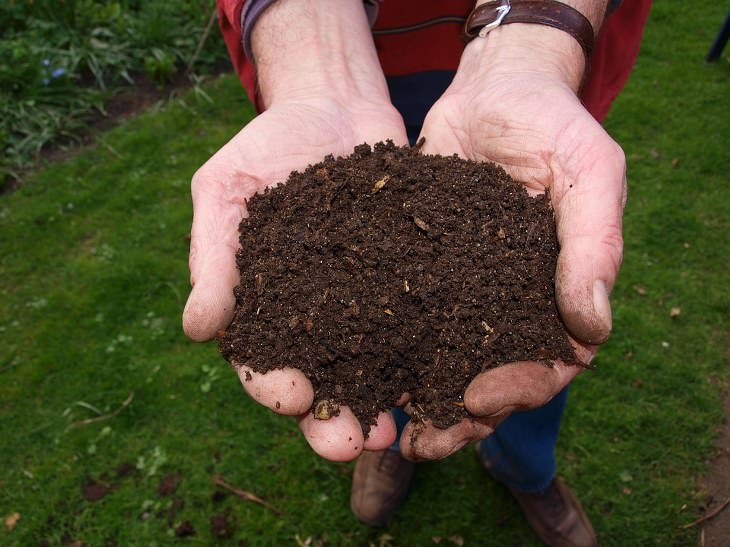
Orange peel is full of nitrogen and other
potent nutrients, which is why it makes brilliant composting material.
It will enrich your soil, making your gardening efforts as fruitful as
can be!
44. Start a Fire
Oranges can also be used to start a fire! Use a dried orange peel as
kindling the next time you are on a camping trip or use it to make your
hearth fires fragrant and bright.
45. Preserve Brown Sugar
Add your orange peels to brown sugar to help draw the moisture away and
keep it from solidifying. This simple practice will save you a lot of
money and frustration in the long run!
General Tips & Advice
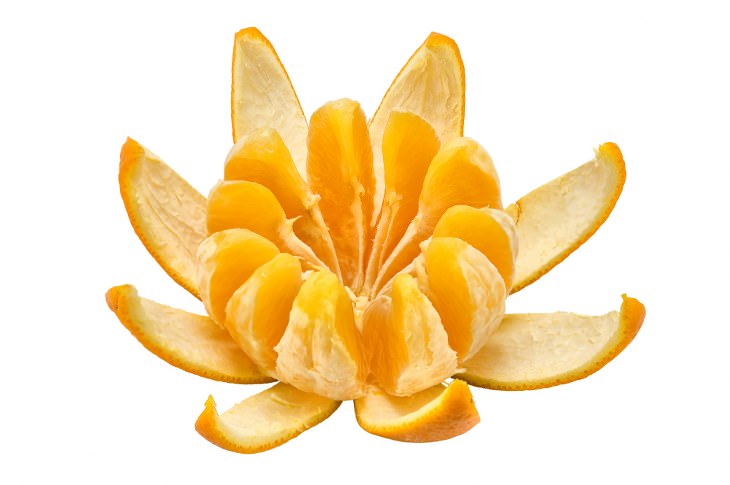
When working with orange peel, you should usually wash, clean and dry it first.
• Never store unpeeled oranges for an extended period of time.
• Orange peels should not be stored in a refrigerator, but in a cool, dry place instead.
• Always try and choose oranges that have thin skin for the best results.