Tuesday, November 16, 2021

Lessons I Learned By Dealing With Negativity

We all experience negative thoughts at times. Unfortunately, our social and environmental conditioning can lead us to treat them as things to be fought against, avoided, or a sign of our weakness. As a result, the negative thoughts are often coupled with anger towards ourselves. These negative thoughts can keep us "stuck in our own heads", and hinder us from moving forward with our lives in a positive manner. With that being said, there's much to learn from these so-called negative thoughts. They can teach us some very important lessons, and it is our fear of negativity itself that keeps us from learning these lessons. Next time your mind wanders into negative thinking, don't try to suppress such thoughts. Instead, use them as a ladder to haul yourself back up. Here are the seven most important lessons you can learn from negative thoughts:

1. If you’re lost, negativity can be your compass 
Being angry at yourself in times of crisis can cause you to become lost in a sea of thoughts, and even forget how you got to this state in the first place, thus preventing you from avoiding it next time. Instead, try using your negative thoughts as a compass - think of why you became angry in the first place to try and find the source of your frustration, and remind yourself where you want to be. You can guide your search with questions such as: 
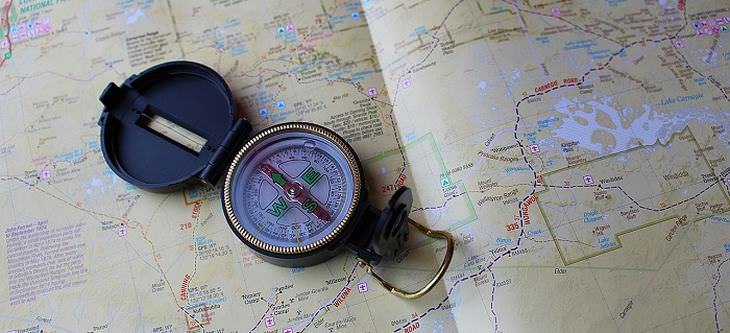
what negativity teaches us
When did I become angry with myself? 
Has this sort of thing happened in the past? 
Were my reactions to this situation different last time? 
If I acted differently, was I more or less frustrated?

Another way of using negative thoughts as a compass is by mapping out your fears or the obstacles in the way of you feeling better. Try asking yourself: 
 
Am I mad at myself because there’s something I could have done differently? 
If so, can I avoid this type of obstacle next time?
Are there other ways to approach this problem? 
What can I do differently next time?

2. Falling into familiar holes doesn’t become less painful 
Imagine walking down the street and suddenly falling into a hole. The first time it happens, you’ll be mad at the city for its negligence. The second time, you’ll be mad because it still hasn't fixed the problem despite the risk. The third time, you’ll be mad at yourself because you didn't remember that there was a hole there. Why did you fall into that hole time after time? Most likely it's because you weren’t looking where you were heading and were too busy blaming others, thus avoiding your own responsibility. 
 
The best way to deal with such “holes” in your life is in stages - by covering the hole if you can, finding a way around the hole while it’s still there, or looking forward to avoid falling into that hole (or others) in the future. Instead of blaming others for your predicament, take responsibility for what you can do differently, and do it.

3. Your best friend is you 
Negativity turns you into your own judge, jury, and executioner. As proof, we still remember certain mistakes we made in the past that others have already forgotten. However, we tend to ignore the most important lesson that each negative thought carries with it - just as we are our own harshest judges, we are also our own best friends. 
 
Instead of running in circles, finding yourself guilty time and time again, try looking at the problem impartially, as if a friend is telling you about their problem and asking you for your opinion. What your advice be? Is it really a problem that cannot be overcome? When you look at an issue from the sideline, you can often find a solution more easily. If you keep practicing this lesson, you’ll find it easier to connect with yourself and stop judging yourself so harshly.

4. No one knows everything  
Many of our negative thoughts originate from the false assumption that they are indisputable facts. We can be sure that there is only one reason for our failings, or that people act a certain way because of one specific reason. These assumptions can be completely wrong, making them into the feet we use to trip ourselves over when dealing with future problems. 
 
If we think that a colleague has no time for us because they don’t like us, we won’t be able to communicate with them positively in the future, even if their reason was that they were busy, or weren’t feeling well when we approached them. Such an incident can lead us to analyze our relationship with others incorrectly, as well as causing us to make the same mistakes time and time again in the future. In quite the same way, being rejected when applying for a job can make us think we’re not talented enough when that position may have been made redundant for a variety of reasons. 
 
Try reminding yourself that in any negative situation, some things that you’re not aware of and are beyond your control may have taken place. Remember that nobody is omniscient, and that’s perfectly fine.

5. If you think you’re drowning in negativity, you’re probably wrong 
Do you think that everything bad that happens to you is the result of personal malice, and that bad things keep happening to you all the time? It may be time to stop for a moment and remind yourself that the worst thing that is happening is what you’re doing to yourself. Every negative thought provides us with two options - to fall into despair, or to learn and grow. Sadly, most of us choose the first option. 
 
In order to help yourself see the situation from a broader perspective, assign every negative thought a couple of new friends - factual proof, and a different interpretation. Factual proof forms the basis of assessing your situation (for example, if a friend is mad at you, what are we basing our understanding of that anger on?), at the same time, even if you’re sure that your interpretation is correct, train yourself to come up with an alternative, logical interpretation of the situation. It might just be the right interpretation after all.

6. Some positive thoughts are disguised as negative ones  
Not all thoughts that begin in a negative tone are necessarily negative themselves. It may surprise you, but if you think about it, you’ll find out that it is indeed the case. You may be imagining the worst possible scenario about something that may happen to someone you hold dear, but this thought is actually a positive thought, originating from a place of love and care for that person. 
 
Try and express as many negative thoughts in a positive way and you may find out that people who originally reacted to these thoughts in a negative way now react to them differently after they understand the source of your fears or anger. what negativity teaches us.

7. To move forward, stop collecting trash  
After you’ve sifted through your negative thoughts and learned as much as you can from them, you can divide them into negative thoughts that can help you, and those that are nothing but “trash”. In other words, don’t let the trashy thoughts take up space in your head – they’ll only slow you down and make you feel unhappy. 
 
 No one likes to live in a house that is filled with trash, and the same goes for you and your mental space. Instead of punishing yourself by preoccupying yourself with these unnecessary thoughts, which exact a heavy toll on your mental state, try disposing of them as soon as you can. If a negative thought pops up, treat it as a memo to clear your mind up and make room for positivity instead.

This is only for your information, kindly take the advice of your doctor for medicines, exercises and so on.   

https://gscrochetdesigns.blogspot.com. one can see my crochet creations  
https://gseasyrecipes.blogspot.com. feel free to view for easy, simple and healthy recipes    
https://kneereplacement-stickclub.blogspot.com. for info on knee replacement

Labels: , , , , , , , ,

Friday, August 27, 2021

Simple Tricks Experts Use To Stay Resilient, Hopeful, And Happy During The Toughest Times

How are you? Seriously, check in with yourself. What was the answer? “Fine”? “Not great, but I don’t want to complain because people have it worse”? “Ready to blast off to space”? It’s no secret that 2020 has felt like an active volcano, in which spewing news cycles are followed by simmering states of despair.

Now for the good: There’s a ton of actions you can take to Keep. Moving. Forward. So fantasize for a minute here. If you want to learn to play tennis, you’d (in an alternate universe) call Roger Federer. Biz advice? You might want to play cricket, call Dhoni. But for a heavy mental health and attitude overhaul, you gotta go to the top stars of the mind. These powerhouses—we’re talking psychologists, mindfulness gurus, and more—own the type of resilience, hopefulness, and grit we need.

You can reignite your happiness and see this world for the beautiful place it can be. So the next time you’re asked, “How are you?” the fitting response will be, “Amazing.”

Slate a worry break.

“Schedule time in your calendar to feel bad and overwhelmed and all of those things,” says a, psychologist and emotional fitness consultant. “That frees up your mind the rest of the time to experience the good vibes coming your way.”


Think of one good learning from people around you.

“It’s a trick I learned from my maid, who was happy in spite of her poverty, losing her husband. She had a large heart to share with others whatever she had. Above all, she was very smart being illiterate, but worldly wise, who saved money to invest in land, then selling land to invest in a house and so on. Today, she is worth more than 20 lakhs rupees, but still goes about happily doing her work. Single-handedly got her 3 kids married, then invested in life insurance in her name and sons. Making her grandkids study now, as the local government is giving free books, uniform, which she got for them to go to school ! I learned to be positive and keep smiling in all adversities.


Ditch downer thoughts.

Or just get sharper at recognizing and reframing them. This will “declutter your mind so it becomes a room you want to spend time in,” says Jay Shetty. Spot the thought patterns you don’t like (I’m lonely); stop and reflect (This extra alone time doesn’t have to mean I'm isolated and distant; it can be synonymous with strength and reflection); swap and upgrade your thinking (This is a period of solitude, and I’ll come out of it better able to engage).


Quit the comparison game.

Reminder: Pain is not a competition. “We become afraid to talk about losses that feel less significant compared with those of others—we tell ourselves we should just be grateful,” says psychotherapist Lori Gottlieb, author of Maybe You Should Talk to Someone. But when you ignore your hurt? “It will come out in other ways, like short-temperedness, too much time on the Internet—whatever numbs the feeling.” The fix: Have the type of grace for yourself that you’d have for a bud. “If a friend said to you, ‘I really miss going to my exercise class,’ you would hear and comfort her. We need to respond with that same compassion for ourselves.” It’ll feel good, trust.

“Many coping mechanisms are perfectly healthy,” says Angela Duckworth, PhD, psychologist behind Grit: The Power of Passion and Perseverance—including humor. “So it’s okay to acknowledge your situation and watch the funny TV show,” she says.


Take a recess.

Play is an undervalued pillar of emotional fitness, Anhalt says. The definition: Play is all about a meeting of the minds and letting yourself think outside of what feels possible or logical—as in brainstorms or word games with friends.


Build your discomfort resilience.

Instead of, say, never getting on a plane again post-pandemic, change the narrative by closing your eyes and letting your ideal scenario play out (a technique called visualization). Make the imagery as evocative as possible (your travel is smooth, masks are still everywhere, you’re six feet apart from other flyers). Why it works: Picturing yourself taking an action activates the same regions of the brain as performing it IRL, explains Terri Bacow, PhD, a clinical instructor at Icahn School of Medicine at Mount Sinai in New York City. Our brains often perceive things we imagine as being equivalent to real memories. So envision it, then jump right in.


Go to your safe space.

Life feeling out of control? “Think about a place in time where you felt comfortable and relaxed, and float yourself back there,” says trauma specialist Laurie Nadel, PhD. That could be a vacation spot, your garden, or even a favorite chair. Hang out for a few minutes to restore a sense of security. You can do this multiple times a day.


Follow positive thought leaders.

“I basically save every post from the Instagram feed of Diego Perez (@yung_pueblo), a meditation teacher and poet who often writes about resiliency.” —Jordan Galloway, WH fitness director

There’s power in hashing out a loss with that special person who’s been through a hardship similar to yours. A sense of social connectedness is the top predictor of how a person deals with a loss, says Laura Goorin, PhD, a clinical psychologist in Manhattan. And while any bond is worthwhile, Goorin confirms that having like-minded friends can be especially potent: “It’s powerful to have peers going through exactly the same thing,” she says.

Surrender to the moment.

Ingber also suggests asking yourself: “Where am I now physically? What can I feel? The breeze on my skin?” This way, you don’t stew in the “life was better when…” state.

Change your view of the present.

If you’ve lost any crucial parts of your identity—whether that comes from an injury, a job loss, the end of a relationship, a move—consider other positives of the current moment. “It may not be the year for making money, but it may be the year for your meditation practice or your creativity,” says Ingber. When you try this, “it shows you that you are none of these things you thought defined you.”

Kaitlan Collins, the 28-year-old CNN White House Correspondent, is up at 6 a.m. daily on email, then hustles to the White House to pursue stories, do TV hits, or sit for briefings in the West Wing—sometimes going all-out until 2 a.m. How she keeps her brain firing on all cylinders through the chaos: “I make time to check in with friends and call my nana every single day,” Collins says. “I also read something that helps me escape, and lately that’s been Sally Rooney novels.”


Create a self-esteem file.

When someone gives you positive feedback, or you’re proud of yourself, add it to a Word doc or journal. “It’s compelling to see this amazing data center of proof that you are good, valuable, and making a difference,” says Anhalt. Open it in moments of self-doubt or defeat.


Engage at your capacity.

With so many important causes to focus on at any given time , do what you can handle in that moment to show support a cause to avoid burnout. (Reminder: Making sure you have the emotional reserves that allow you to show up is as important as the work itself.) Need a break? Take a day and write about or sit with your feelings.


Have some self-love.

When work or current events become draining, “I remind myself that whatever’s going on will pass,” Collins says. “I’m going to go back to work and life the next day and have all new questions and experiences.”


Repeat this quote to help quell anxiety:

“Trust future you to handle future problems.” In other words, whatever happens in the future will be handled…then, says Anhalt. No use worrying about it now.


Reignite your passion.

“I think people are happiest when they are in pursuit of a meaningful goal. When we lose that sensation, we feel purposeless and not useful,” says Duckworth. Her pro advice: Think back to endeavors you felt great doing, and ask yourself why. “Did you love working with your hands? Or the sense of teamwork? Then find a different way to the same end.”


Don’t skimp on self-care.

There’s no such thing as overdosing on self-compassion, Duckworth says. “In fact, when people feel cared for, that’s when they take care of other people,” she explains. “You’ve heard it before, but it’s so true: You can’t give and make a difference if your cup is empty.”

Send good vibes.

Bring to mind someone you’re indifferent to (i.e., a security guard at your kid’s school), or maybe someone you take for granted. You may not even know their name. Wish them well in your head with a series of phrases (May you be safe, happy, and healthy…), kind of like a greeting card you’re not actually sending. This practice, called Loving Kindness, is designed to help us pay attention differently, says a teacher of Buddhist meditation. “You don’t have to force a special feeling,” she says. “You’ll notice more awareness and connection, like when you see that person again.” Doing this technique regularly can dial up love for yourself and others.


Give yourself T.I.M.E.

Use the acronym to help you remember the four things you should incorporate into every day to maintain a positive headspace, Shetty recommends: thankfulness, inspiration, meditation, exercise.


Make a don't-do list.

You don't need more to stress about today, Nadel points out. "So take one or two things that you don't really have to do today—like a customer service phone call that will make you have to sit on the phone for 20 minutes—off of your to-do list," she explains. "Then actively give yourself the instruction not to do it or think about it on a given day when you need a mental break," she explains. Guess what? You just carved out 20 minutes for self-care—so call a friend or listen to music instead.

Get out in nature.

Expose yourself to the great outdoors every day to reap some mental health benefits—there is a strong body of scientific literature to show that spending time in a green space can have positive effects on your mental well-being. Harris lives by this rule daily: "I really made it a huge priority to walk in Central Park pretty much every day," he says. "Even if I'm doing a phone call, I try to do it while walking through the park if I can." 

It is best to keep you ears open to the various birds chirping, try to identify by their sounds. Feed them, then they'll become your good friends and give a call each day at the same time to remind you that they're hungry ! Learn how the birds never give up, they painstakingly build their nests, making umpteen rounds gathering grass, and other material to make their nest. Then, a strong gust of wind blows it away, does the bird give up, NO, it will start it all over again. Learn NEVER GIVE UP from those tiny birds.

“The trick I use to get over professional setbacks–like an injury or losing a race—is the same one I use when I lose in some way in my personal life. I give myself a time frame of 48 hours to feel all the feelings. After that, I ask myself, What can I take from this, and how can I adjust, adapt, and get better? Overcoming a setback gives me a boost of confidence that there’s more room for growth in the next opportunity.” —Desiree Linden, professional distance runner and Brooks Running athlete

Replace normal with now.

You've heard the term "new normal" over and over—but Nadel recommends thinking of a rough period (like the pandemic) as your "new now" instead. "This isn't normal—and we shouldn't expect that it's normal," she says. "Telling yourself you have to fully accept this as your new status quo causes you to live in fear and anger—a toxic cocktail." On the flip side, if you think of this time as the new now, you become more accepting that circumstances are ever-changing and not permanent.

I, personally feel this is the time for one to introspect, think of those things one likes, what one is good at, go ahead and start doing those things that give you happiness. Keep your mind and body busy, there are umpteen sites where you can learn whatever subjects you want at your own pace, you get your degree if you want. Those who are good at teaching, can start online tuition and earn at their own time, be your own master ! Develop your hobbies or learn something new, there is no age limit to keep learning things, as knowledge is so vast. Good luck to all.

Many have told me that they're getting into depression. I'm truly surprised, as with present technology, you can view and talk to your near and dear ones each day for free ! When I was young, even to make a call to other state, one had to book and keep waiting, it wasn't cheap either.

One should learn to be happy with whatever you've, make the most of it, as during pandemic, I was really surprised to see so many ladies who have put their small stalls on the road side, selling whatever snacks they're good at, and all have regular clientele too. 

Everything is possible if one wants to. This is what I call MIND OVER MATTER.


This is only for your information, kindly take the advice of your doctor for medicines, exercises and so on.   

https://gscrochetdesigns.blogspot.com. one can see my crochet creations  
https://gseasyrecipes.blogspot.com. feel free to view for easy, simple and healthy recipes    
https://kneereplacement-stickclub.blogspot.com. for info on knee replacement


Labels: , , , , , , , ,