Wednesday, February 04, 2026

Leave These 7 Types of Bumps and Blemishes Alone

As tempting as it may be to pick at that unsightly zit on your face, skin-care experts agree that when it comes to bumps and blemishes, a hands off approach is your best bet. Popping a zit causes your skin to break apart, making it vulnerable to infection and permanent damage like scarring and broken blood vessels. So, keep your complexion fresh and flawless with these handy tips: 
Ingrown hair
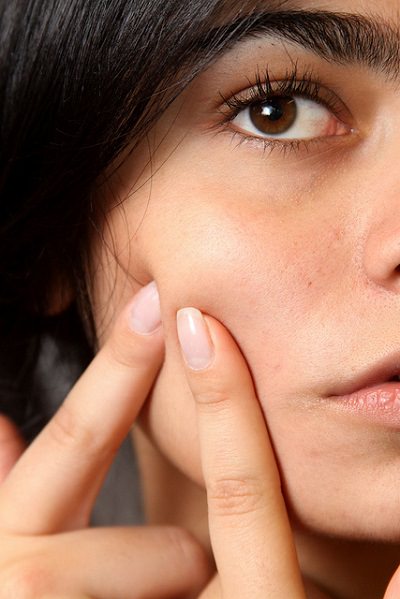
 7 types of bumps and blemishes: dark skinned woman popping a pimple
 
As frustrating as ingrown hairs may be, it is not worth picking at them. Ingrown hairs occur when the hair shaft becomes trapped beneath the skin's surface. The red bumps that follow tend to be itchy and inflamed, though using tweezers or manual force to pluck them out will break the skin, can lead to further inflammation and infection. At times, doing so may also lead to dangerous complications like a staph infection or sepsis (bacteria that can cause a multitude of diseases) further down the road. 
 
Treat it: Apply hydrocortisone, which reduces redness, itchiness and irritation, and wash the affected area with an exfoliating cleanser, helping the hair reach the skin's surface.


Milia  
7 Types of Bumps and Blemishes
 
Tiny white bumps are often known as milia. They appear on your face and refuse to pop no matter how hard you try. These bumps often appear to be hard, white cysts under the skin, so much so that picking at them has little to no effect. In fact, trying to pop milia will only leave your skin red, irritated and inflamed. The difference between this kind of pimple, compared to others, is that milia is not actually dirt, oil or grime, but trapped skin cells. 
 
Treat it: Schedule an appointment with your dermatologist who will most likely extract it with a heated sterilized tool. 
 
Keratosis Pilaris 
 
Better known as chicken skin, this skin condition occurs as a build-up of the protein keratin (which protects the skin, hair and nails from infection and other harmful environmental toxins. The buildup forms a plug that blocks the opening of a hair follicle. Picking at the lesions can cause it to worsen and increase effects like redness and the potential for scarring as well. 
 
Treat it: Use a chemical exfoliant that contains salicylic acid or glycolic acid, which will help calm inflammation down. If it doesn't go away, be sure to visit a dermatologist.

Cold sores
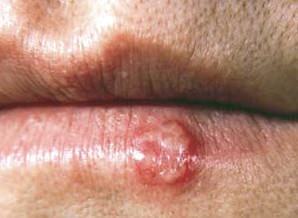
Touching these pesky bumps can cause them to spread, leading to the formation of another sore. Popping them also releases a blister-like fluid that contains the same virus, which can spread to other areas. As irritating as they may be, these blisters are caused by the herpes simplex virus which can be transmitted from one area of the body to another, through touching. 
 
Treat it: Small sores generally heal over time with over-the-counter treatments. However, if you notice cold sores that are more frequent or spreading, seek professional treatment. Bear in mind that until the cold sore has become dormant, avoid kissing anyone, including your significant other.

Cystic Acne 
This type of pimple forms a red, tender nodule that is both painful and hard to treat. The inflammation that accompanies cystic acne can hinder the healing process, leading to permanent scarring that is difficult to eliminate. 
 
Treat it: To treat the situation properly and eliminate scarring book an appointment with your dermatologist.
 
Blackheads 
While blackheads are not as unsightly as red and inflamed spots, they can cause havoc on our complexion, especially when they colonize in pairs or groups. Just like whiteheads, blackheads are pores that become clogged with oil - except that the oil has oxidized after being exposed to the air, giving it a black or brownish hue. Squeezing blackheads forces the bacteria even deeper, causing trauma to the skin. 
 
Treat it: Work the oil and dirt out of your face by using an exfoliating face wash.

Whiteheads
 whiteheads
 
While whiteheads may seem pretty easy to pick at, when squeezed whiteheads release a mix of acne bacteria, oil and skin cells. Therefore a tiny pop can result in spreading that bacteria throughout your face. Picking at a whitehead also forces the bacteria deep into your skin and it can also transfer more bacteria from your fingers to your face. 
 
Treat it: Allow the acne to clear on its own. Your body knows how to repair this damage by producing collagen - a substance that gives the skin support.


This is only for your information, kindly take the advice of your doctor for medicines, exercises and so on.   


Labels: , , , , , ,

Thursday, January 12, 2023

How to Get Rid of Milia Safely

You look in the mirror and there they are: a bunch of tiny, hard white spots on your face, possibly with a faint blue tint. They don’t look or feel like a typical zit or whitehead, so what could they be? Most likely, they're something called milia, or tiny pockets of dead skin.

“Milia are made of keratin,” says Farah Moustafa, MD, dermatologist and director of laser and cosmetics at Tufts Medical Center in Boston. They commonly develop on the cheeks, eyelids and the nose. As your skin naturally exfoliates old cells so that new ones can develop, the cells can get trapped, harden and become cystic — that’s milia. “Think of them as pimples with nowhere to go,” says Joshua Zeichner, MD, a dermatologist and the director of Cosmetic and Clinical Research in Dermatology at Mount Sinai Hospital in New York City.

These benign cysts — sometimes called “milk spots”— are very common in infants; about 50% of babies have them at birth, according to the Cleveland Clinic. But they can show up on anyone at any age. 

What causes milia in adults?

According to Dermatology Advisor, there are different types of milia, including neonatal milia, the type that shows up on infants' skin. The most common type in adults is primary milia; there are two other types that are less common, one that occurs in clusters on your skin and another that's caused by trauma to the skin.

Besides the process of skin cells being trapped during the natural process of exfoliation, milia can also occur because of other factors. “They may be due to sun damage or from heavy skin care products,” Dr. Zeichner says. Oil-based makeup or cleansers can be a culprit, if they clog your pores.

Skin damage from an injury or a rash, or prolonged use of corticosteroids, can also be a possible cause. Additionally, certain medical conditions can cause milia to form. “Milia can be a secondary symptom of a blistering skin condition, like a burn,” explains Dr. Moustafa. “They can also happen because of an autoimmune disease or genetic condition.” You can also get milia if you don’t cleanse your skin regularly, and you may be more prone to develop them if you have rosacea or dandruff.

The first thing you may wonder is whether you should see a doctor if you have milia. Most often, there's no need to. “Milia are completely harmless and are strictly a cosmetic issue,” says Dr. Zeichner.

Often times, they'll simply go away on their own. But if yours are sticking around, and they bug you, don’t try any of the “milia removers” you see online – they’re completely ineffective, experts say. 

How to get rid of — and prevent — milia:

Don't try to remove them yourself.

It's never a good idea to try a pop milia like a pimple (you also shouldn't be popping your pimples!). "Never poke or prod milia,” advises Dr. Moustafa. “And avoid scrubbing milia with any kind of gritty exfoliant.”

Focus on gentle cleansing.

Here's the best daily remedy to try: “Gentle skin care,” says Dr. Moustafa. “Look for one with mild exfoliating properties, like glycolic or lactic acid.” Wash your face the right way, following advice from the American Academy of Dermatology: Using a gentle cleanser and your fingertips, wash with lukewarm water, avoiding scrubbing and rinse with lukewarm water and pat dry with a soft towel. Also, make sure your skin has a chance to breathe and be free of makeup every once in a while.

Try topical retinoid cream.

If you have a predisposition to milia, your dermatologist may recommend you try a topical retinoid if you have a recurrence. “This can help by removing cells in the outer skin layer, encouraging eventual release of the milia from your skin,” says Dr. Zeichner. “Retinols are among the best ingredients to help turn over skin cells, and keep milia at bay,” explains Dr. Moustafa. “Retinols are often prescription-based, but you can try a non-Rx product with adapalene gel, a type of retinoid, at bedtime.”

Always wear sunscreen.

This is a golden rule even if you don't have milia, but sun damage can be a common contributor. Be sure to properly apply at least an SPF 30 sunscreen to your skin 30 minutes before heading outside. Birnur K. Aral, Ph.D., the Good Housekeeping Institute's Beauty, Health & Sustainability Lab executive director, suggests applying a nickel-size dollop to your face. For sprays, she suggests spraying the sunscreen all over skin, then rubbing it in. “I recommend using a sunblock that’s non-greasy and has the word ‘non-comedogenic’ on the label,” says Dr. Moustafa. The term “non-comedogenic” is used by cosmetic companies to describe a product that promises not to clog your pores. These products are less likely to cause skin issues like milia because they aren’t thick, creamy or oily. Choose a liquid or gel formula for best results.

Visit a dermatologist for professional removal.

To actually remove milia, you need to have them extracted from your skin. “This means when a dermatologist physically creates an opening with a needle or a scalpel blade,” says Dr. Zeichner. “Never do this yourself. Trying to remove milia the wrong way can lead to infections or scars.” And he adds, “Milia around the eyes are particularly difficult to address, because of their proximity to your eyeball.”

The actual process of removing milia is called de-roofing. A dermatologist uses a needle to remove the flap that’s trapping the keratin in your skin and pluck out the keratin itself. The procedure isn’t covered by insurance, though, and can be a bit pricey, ranging from $200-$500 on average. 

Products to Consider Adding to Your Skincare Routine to Prevent Milia

Skin Renewing Nightly Exfoliating Treatment


 Acne Treatment Gel

Clear Face Sunscreen


This is only for your information, kindly take the advice of your doctor for medicines, exercises and so on.   

https://gscrochetdesigns.blogspot.com. one can see my crochet creations  
https://gseasyrecipes.blogspot.com. feel free to view for easy, simple and healthy recipes    
https://kneereplacement-stickclub.blogspot.com. for info on knee replacement

https://GSiyers home remedies.blogspot.com     is my latest addition to my blogs. I'm going to add posts there, do give me your valuable feed back on my blogs. Thanks a lot, take care, be healthy and be happy.

Labels: , , , , , , , , , ,