Wednesday, February 04, 2026

Leave These 7 Types of Bumps and Blemishes Alone

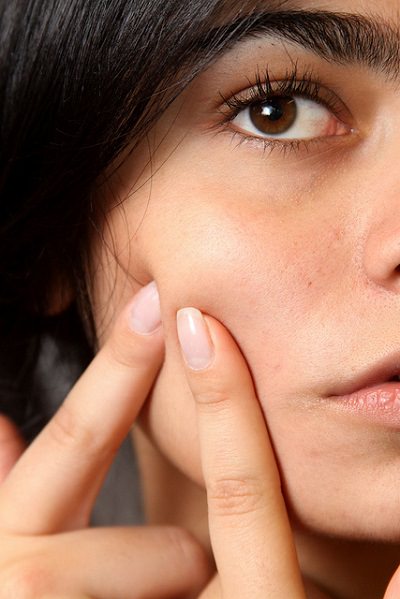
As tempting as it may be to pick at that unsightly zit on your face, skin-care experts agree that when it comes to bumps and blemishes, a hands off approach is your best bet. Popping a zit causes your skin to break apart, making it vulnerable to infection and permanent damage like scarring and broken blood vessels. So, keep your complexion fresh and flawless with these handy tips: 
Ingrown hair
 7 types of bumps and blemishes: dark skinned woman popping a pimple
 
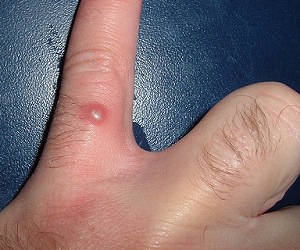
As frustrating as ingrown hairs may be, it is not worth picking at them. Ingrown hairs occur when the hair shaft becomes trapped beneath the skin's surface. The red bumps that follow tend to be itchy and inflamed, though using tweezers or manual force to pluck them out will break the skin, can lead to further inflammation and infection. At times, doing so may also lead to dangerous complications like a staph infection or sepsis (bacteria that can cause a multitude of diseases) further down the road. 
 
Treat it: Apply hydrocortisone, which reduces redness, itchiness and irritation, and wash the affected area with an exfoliating cleanser, helping the hair reach the skin's surface.


Milia  
7 Types of Bumps and Blemishes
 
Tiny white bumps are often known as milia. They appear on your face and refuse to pop no matter how hard you try. These bumps often appear to be hard, white cysts under the skin, so much so that picking at them has little to no effect. In fact, trying to pop milia will only leave your skin red, irritated and inflamed. The difference between this kind of pimple, compared to others, is that milia is not actually dirt, oil or grime, but trapped skin cells. 
 
Treat it: Schedule an appointment with your dermatologist who will most likely extract it with a heated sterilized tool. 
 
Keratosis Pilaris 
 
Better known as chicken skin, this skin condition occurs as a build-up of the protein keratin (which protects the skin, hair and nails from infection and other harmful environmental toxins. The buildup forms a plug that blocks the opening of a hair follicle. Picking at the lesions can cause it to worsen and increase effects like redness and the potential for scarring as well. 
 
Treat it: Use a chemical exfoliant that contains salicylic acid or glycolic acid, which will help calm inflammation down. If it doesn't go away, be sure to visit a dermatologist.

Cold sores
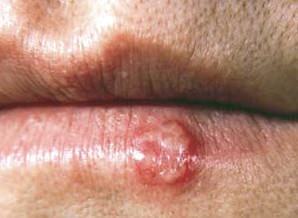
Touching these pesky bumps can cause them to spread, leading to the formation of another sore. Popping them also releases a blister-like fluid that contains the same virus, which can spread to other areas. As irritating as they may be, these blisters are caused by the herpes simplex virus which can be transmitted from one area of the body to another, through touching. 
 
Treat it: Small sores generally heal over time with over-the-counter treatments. However, if you notice cold sores that are more frequent or spreading, seek professional treatment. Bear in mind that until the cold sore has become dormant, avoid kissing anyone, including your significant other.

Cystic Acne 
This type of pimple forms a red, tender nodule that is both painful and hard to treat. The inflammation that accompanies cystic acne can hinder the healing process, leading to permanent scarring that is difficult to eliminate. 
 
Treat it: To treat the situation properly and eliminate scarring book an appointment with your dermatologist.
 
Blackheads 
While blackheads are not as unsightly as red and inflamed spots, they can cause havoc on our complexion, especially when they colonize in pairs or groups. Just like whiteheads, blackheads are pores that become clogged with oil - except that the oil has oxidized after being exposed to the air, giving it a black or brownish hue. Squeezing blackheads forces the bacteria even deeper, causing trauma to the skin. 
 
Treat it: Work the oil and dirt out of your face by using an exfoliating face wash.

Whiteheads
 whiteheads
 
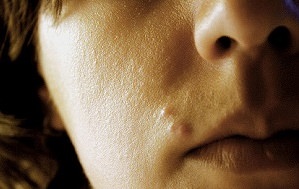
While whiteheads may seem pretty easy to pick at, when squeezed whiteheads release a mix of acne bacteria, oil and skin cells. Therefore a tiny pop can result in spreading that bacteria throughout your face. Picking at a whitehead also forces the bacteria deep into your skin and it can also transfer more bacteria from your fingers to your face. 
 
Treat it: Allow the acne to clear on its own. Your body knows how to repair this damage by producing collagen - a substance that gives the skin support.


This is only for your information, kindly take the advice of your doctor for medicines, exercises and so on.   


Labels: , , , , , ,

Monday, May 12, 2025

Got Tiny Red Spots on Your Arms? You Need to Read This...

Got Tiny Red Spots on Your Arms? You Need to Read This...Discovering small red bumps on your arms can be quite alarming. Do you have chicken pox? Could it be acne? Is it a rash? Luckily, dots that are typically found on the backs of your arms (often known as 'chicken skin') are generally completely harmless.


This skin condition, known as keratosis pilaris, is pretty common, and occurs frequently in women and young children, and they often appear during puberty or pregnancy. The visible bumps are caused by a keratin buildup, which is the tough protein that protects your skin from infections and harmful substances.

Thanks to this buildup, a scaly plug gets formed, which blocks the hair follicle's opening, causing patches of bumpy skin to develop. Keratosis pilaris may be genetically transferred, or it may actually be a side effect of a number of other skin disorders, and in some cases may also show up on a person's buttocks or legs.


So far, there doesn't seem to be an effective cure for this condition, but there are quite a few ways to manage it. First of all, never directly scrub or scratch the area, since you'll only end up making these bumps a lot worse.


A dermatologist  recommends that "when you come out of the shower, pat yourself dry—don’t rub or scrub.” Moisturizing is essential, but you should try to avoid fragrant soaps. Look out for specialty creams or lotions that contain lactic acid, hydroxy acid, salicylic acid or urea to help loosen and get rid of dead skin cells.

Creams that contain vitamin A (topical retinoids) are also helpful, as they will promote cell turnover and prevent hair follicles from getting clogged. If over-the-counter remedies don't clear up the problem, you might want to consider paying a visit to a dermatologist. If the condition is really getting you down, then laser treatment might be a viable option, however, most cases of keratosis pilaris are more of a cosmetic nuisance than an actual medical concern.


This is only for your information, kindly take the advice of your doctor for medicines, exercises and so on.   

Labels: , , , , , ,

Sunday, April 03, 2022

How to Treat Keratosis Pilaris

Discovering small red bumps on your arms can be quite alarming. Do you have chicken pox? Could it be acne? Is it a rash? Luckily, dots that are typically found on the backs of your arms (often known as 'chicken skin') are generally completely harmless.
This skin condition, known as keratosis pilaris, is pretty common, and occurs frequently in women and young children, and they often appear during puberty or pregnancy. The visible bumps are caused by a keratin buildup, which is the tough protein that protects your skin from infections and harmful substances.

Thanks to this buildup, a scaly plug gets formed, which blocks the hair follicle's opening, causing patches of bumpy skin to develop. Keratosis pilaris may be genetically transferred, or it may actually be a side effect of a number of other skin disorders, and in some cases may also show up on a person's buttocks or legs.

So far, there doesn't seem to be an effective cure for this condition, but there are quite a few ways to manage it. First of all, never directly scrub or scratch the area, since you'll only end up making these bumps a lot worse.

Janellen Smith, a dermatologist at UC Irvine Health recommends that "when you come out of the shower, pat yourself dry—don’t rub or scrub.” Moisturizing is essential, but you should try to avoid fragrant soaps. Look out for specialty creams or lotions that contain lactic acid, hydroxy acid, salicylic acid or urea to help loosen and get rid of dead skin cells.

Creams that contain vitamin A (topical retinoids) are also helpful, as they will promote cell turnover and prevent hair follicles from getting clogged. If over-the-counter remedies don't clear up the problem, you might want to consider paying a visit to a dermatologist. If the condition is really getting you down, then laser treatment might be a viable option, however, most cases of keratosis pilaris are more of a cosmetic nuisance than an actual medical concern.


This is only for your information, kindly take the advice of your doctor for medicines, exercises and so on.   

https://gscrochetdesigns.blogspot.com. one can see my crochet creations  
https://gseasyrecipes.blogspot.com. feel free to view for easy, simple and healthy recipes    
https://kneereplacement-stickclub.blogspot.com. for info on knee replacement

Labels: , , , , , ,