Sunday, May 10, 2026

8 Body Parts That Reveal Personality Traits

 Even though the shape of our bodies is largely based on genetics, there are still many of our body parts that can actually give off messages regarding our personalities, many of which are bound to surprise you!

1. The Face Shape Body Parts

The human face has a highly complex structure that can speak volumes about the personal and social functions of a person. In fact, research has found that people with a narrow facial structure tend to be emotionally quotient while those with long faces are known to be very intelligent. Persons with wider faces are also more likely to be prejudiced, emotionless, and successful.


 2. Nose Shape
 

According to a study carried out by the Journal of Craniofacial Surgery in 2013, the tissue that connects the bones and forms your nose can give off a number of signals about a person's personality. For example, big nostrils are a sign of a spendthrift, while small nostrils are the sign of a person who is committed to their family. 

They also found that people with nose clefts have issues with commitment, and pointy-nosed people know how to handle money wisely. What's more, people with shorter noses tend to be very sensitive and loyal, while long-nosed people are usually hardworking and ambitious. 

3. Eye Shape
Body Parts

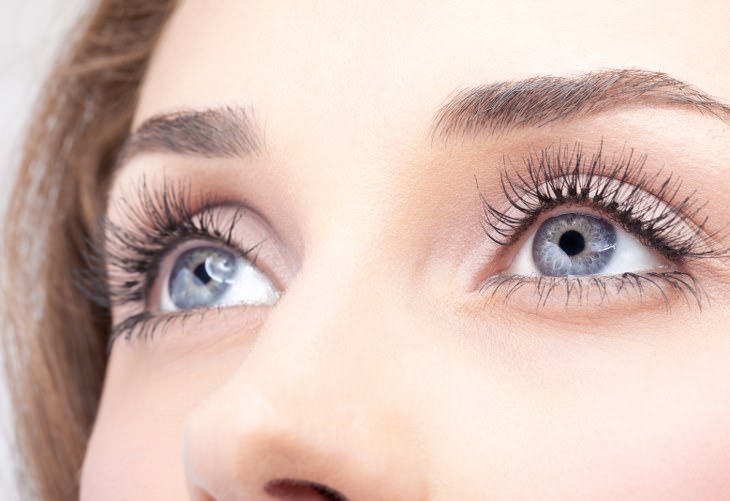
Face-reading experts believe that your eye shape can accurately show hidden qualities of your character due to the skull's bone structure: 

• People with big eyes are usually open-minded, smart, and friendly. 

• Wide-eyed people tend to be more emotional, and are usually detail-oriented and cautious. 

• Small, wide eyes usually symbolize introverted perfectionists. 

• People with deep-set eyes are often mysterious, observant, and passionate. 

• Almond-shaped eyes convey romance, while people with close-set eyes tend to be highly persistent people.

4. Eye Color 

 Science has found that both your eye structure and personality are connected to the brain's frontal lobe, which is responsible for forming our personality. In fact, it is said that people with lighter eyes are more outgoing and social, while those with darker eyes tend to be mysterious and introverted. 

Additionally, people with extremely dark brown eyes tend to be secretive and introverted, while those with light brown eyes tend to be natural-born leaders. When it comes to blue eyes, darker hues are an indication of sensitivity, while lighter ones show a lot of inner strength. 

5. Cheekbones

Body Parts

According to a study found in Science Direct, people with big cheekbones and high testosterone levels tended to be more aggressive and more likely to resort to violence. What's more, persons with high cheekbones were found to be more arrogant.


6. Lips

Lips are able to expose your emotional side and show others how you act in personal relationships. For example, people with wide lips are often outgoing and generous, while those with thinner lips often end up being loners. What's more, persons with big lips usually put others first, while those with smaller lips tend to be more independent in their relationships. 

7. Hands

Body Parts

To find out what your hands say about your personality, simply raise your dominant hand in front of your face, with the palm facing towards you. If your fingers are very close to each other (less than 0.5 cm), this indicates that you're well-organized and cautious, However, if they are further than 0.5cm from each other, then this shows that you love to explore and experiment new things.

8. Fingers 

Your fingers can also speak volumes about your character:

• If your index finger and ring finger are as long as each other, this shows that you are a good communicator. 

• If your ring finger is longer than your index finger, this indicates that you are a charming person, as well as a risk-taker. 

• If your index finger is longer than your ring finger, this shows that you were born to lead others.


This is only for your information, kindly take the advice of your doctor for medicines, exercises and so on.   


Labels: , , , , , , , , , , ,

Tuesday, October 21, 2025

Early signs of breathing problems in babies every parent must watch for

Babies, especially new-borns and infants, have delicate, developing respiratory systems, making them particularly vulnerable to breathing difficulties. Because they cannot verbalize discomfort, parents need to rely on visual and behavioural cues to detect potential respiratory distress early.

Paediatric and neonatology experts stress that recognising these warning signs can prevent serious complications and ensure timely medical intervention.

Changes in Breathing Patterns

Dr Poonam Sidana, Director of Neonatology and Paediatrics at CK Birla Hospital (R), Delhi, explains that one of the first indications of trouble is a change in a baby’s breathing pattern. “For newborns, it’s normal to breathe quickly and irregularly, with brief pauses followed by normal breathing,” she says. “However, parents should be alert if the breathing seems faster than usual or irregular beyond what is expected for their age.”

Signs such as a gentle rise and fall of the chest that becomes erratic, or the chest and tummy moving differently, creating a hollow space known as “chalna,” may also indicate distress. Babies who are restless, fussy, or unable to feed properly could be showing early symptoms of respiratory problems.

Visual Cues of Respiratory Distress

Dr Anjali Saxena, Pediatrician at Rainbow Children’s Hospital, Malviya Nagar, outlines five early warning signs parents should watch for:

Rapid or Laboured Breathing: Noticeable chest movements, flaring nostrils, or unusually fast breathing—more than 60 breaths per minute in newborns or over 40 in older infants—can indicate the lungs are struggling to get enough oxygen.

Chest Retractions: Visible pulling in of the skin around the ribs, collarbone, or below the breastbone with each breath signals that the baby is using extra muscles to breathe.

Wheezing, Grunting, or Noisy Breathing: Whistling, rattling, or grunting sounds may point to airway blockage, infections like bronchiolitis or pneumonia, or asthma-like episodes.

Bluish Tint Around Lips or Fingertips: Cyanosis—a bluish or greyish discoloration of the lips, tongue, or nails—indicates dangerously low oxygen levels and requires immediate medical attention.

Unusual Sleepiness or Irritability: Babies who are lethargic, unusually drowsy, or excessively fussy may not be getting enough oxygen, even if other signs appear mild.

Preventive Measures

Dr Sidana adds that in older children, difficulty speaking full sentences, changes in awareness, or laboured breathing with noticeable head nodding are late-stage indicators. “The tongue, lips, or palms might take on a bluish colour, and feeding problems often accompany respiratory distress,” she notes.

Parents are advised to ensure good air quality at home, avoid smoke exposure, and keep the baby’s nose clear. Early detection and prompt medical intervention are key to preventing severe complications and helping infants breathe easier.

 By staying vigilant and recognising these signs, parents can safeguard their child’s respiratory health, ensuring that minor breathing issues do not escalate into serious emergencies.


This is only for your information, kindly take the advice of your doctor for medicines, exercises and so on.   


Labels: , , , , , , , , , ,

Sunday, August 03, 2025

The Next Time You Put Sunscreen, Don’t Forget These Spots

Spending time outside in the sun is great for your mental and physical health. Health experts say that soaking in the sun outdoors doesn’t just get you a good dose of vitamin D, it also helps reduce stress and keeps you physically active. 

As summer hits its peak, many of us will be heading out a little more to spend some time in the sun, albeit with precautions because of the pandemic. 
 
Now, we don't need to remind you to apply sunscreen lotion on your body during the summer season to protect your skin from the harmful rays of the sun. Sunscreens are great. They filter or screen the sun's ultraviolet (UV) rays and prevent sunburn and even skin cancer. The sun’s UV rays are the major cause of skin cancer and doctors say that sunscreens are a terrific tool to decrease your risk of skin cancers and skin pre-cancers. The Skin Cancer Foundation states that daily use of SPF (Sun Protection Factor) 15 sunscreen can reduce your risk of developing certain types of skin cancers by about 40 percent, and lower your melanoma risk by 50 percent. They can also help prevent premature skin aging caused by the sun.

However, while you may be slathering your skin with sunscreen, are you sure you are protecting all the critical parts of your body? Usually, we tend to apply sunscreen lotion on our face, hands, arms, legs, and chest. But dermatologists say that there are some common portions on our bodies that many people forget to apply sunscreen to. Let’s take a look at some of them. 
 
1. Ears 
Research has shown that skin cancer can occur in any part of the ear. This includes the middle part (also known as the conchal bowl), which is reasonably protected from the sun. Precancerous abrasions too are commonly found in this area. So even if you are wearing a hat or a baseball cap while being out in the sun, your ears might be exposed. Make sure to thoroughly cover the top, back, and middle parts of the ears with sunscreen. This is particularly essential for people with shorter hair as their ears have higher chances of being exposed to the sun. 
 
2. Eyelids 
Dermatologists say that eyelids are possibly the most overlooked when it comes to sun protection. It’s estimated that almost 3% of all skin cancers develop here. You can, of course, protect your eyelids in summer by wearing sunglasses. But what if you forgot them? Or what if you fall asleep on the beach without them? That can be dangerous as your eyelids can get severely burned. Experts recommend getting an ophthalmologist-approved SPF 30 lotion and applying it gently on this delicate area. 
 
3. The tops of your feet
Sunscreen, areas,  tops of your feet

While the soles of our feet are protected against the sun’s ultraviolet light with a thick layer of dead skin cells, the top part tends to be highly exposed during the summer season as many of us prefer to wear sandals, flip flops, or skin-bearing footwear when out instead of shoes. And that’s one part that often gets neglected when we are putting on sunscreen. So if you don’t want to have a nasty red and painful sunburn on the top of your feet, or get some ugly sandal or shoe pattern marks there, always cover the area properly with sunscreen. 
 
4. Scalp 
Your hair does provide a bit of protection from UV rays, but you still need to be extra careful. Particularly if you have thinning hair or are bald. Getting a sunburn on your head can be quite painful and annoying as the scalp begins to peel and it looks like you have a horrible case of dandruff. It’s hence better to protect yourself by spraying some sunscreen on the top of your head whenever you plan on being outside for a long time. Sure, it might make your hair a little greasy and goopy, but at least you will have that extra layer of protection. You can wear a hat, of course, but not everyone is comfortable with that. 
 
Dermatologists recommend a gel-based sunscreen to more effectively cover and protect this area.

5. Around the eyes and the lips
Sunscreen, areas, lip balm 
Apart from protecting your eyelids with sunscreen, it’s equally important to apply the lotion around the eyes and lips. These are vulnerable areas and are often neglected while applying sunscreen as people usually focus on the cheeks, the nose, and the forehead. But this often leads to cases of fine and ugly lines around the eyes and the lips in many people after their day out in the sun. 
 
According to the Skin Cancer Foundation, the majority of lip cancers appear on the lower lip, and the leading risk factor for it is UV radiation from the sun. Lip balms with SPF protection should help. Or simply coat your lips finely with a good sunscreen. 
 
6. The lower leg 
The lower part of the leg doesn't sunburn frequently and that’s why it’s usually the last area that people put sunscreen on or just neglect it. However, doctors report that a very high rate of skin cancer occurs in the lower leg. This happens because it tends to get exposed with shorts and skirts. While rubbing sunscreen on your lower legs, be sure to also cover the back of your knees as that’s another tender spot that’s commonly forgotten. 
 
7. Around the armpits 
Another place that’s usually overlooked while wearing sunscreen is the armpits. The folds of skin on the shoulder and arm area surrounding the armpits are also often forgotten during sunscreen application. But getting a sunburn there would be a super painful experience as you wouldn’t be able to even move your hands around comfortably. Even if you do apply the lotion to your armpits and underarms, it can wear off in the summer because of sweating. So remember to keep applying sunscreen to these areas throughout the day. 
 
 
Bottom Line:
Skin cancers can occur anywhere. Even in the areas that don’t get sun. So never forget to put a thick layer of sunscreen on all exposed skin whenever you head out on a hot summer day. If you are outside for a long time, then it’s important to reapply the lotion about every two hours. The Centers for Disease Control and Prevention (CDC) recommends using a broad-spectrum sunscreen with an SPF of 15 or higher. Also, make sure you check the sunscreen’s expiration date before using it. 

This is only for your information, kindly take the advice of your doctor for medicines, exercises and so on.   


Labels: , , , , , , , ,