Saturday, January 09, 2021

Everything You Need to Know About Potassium Deficiency

The lack of fruits and vegetables is one of the major weaknesses of the flawed Western diet, as it can lead to widespread nutritional deficiencies. For example, did you know that 98% of Americans are not getting enough potassium from their diets according to a 2014 nationwide survey? This is pretty alarming because potassium is a mineral that we need to get from foods every day as the human body doesn’t produce it on its own.

In fact, the importance of potassium for our health and wellbeing is underestimated way too often. Not getting enough potassium from food can lead to several dangerous symptoms ranging from digestive issues to extreme fatigue, heart issues, and muscle cramps that can be misdiagnosed and mistreated. In this article, we explain why potassium is so important for our bodies, how to detect a potassium deficiency and its causes, and how healthy eating habits can help you maintain adequate potassium levels. 
 
What role does potassium play in the body?

Potassium Deficiency potassium rich foods
Potassium is what is known as an electrolyte - a mineral that is dissolved in water and helps conduct electrical impulses in the body. It’s the third most abundant mineral in the body, and it works alongside other electrolytes, such as sodium and magnesium to accomplish a variety of functions, namely:
 
Helps regulate blood pressure 
Conducts nerve impulses 
Balances water and pH in the body Is important for digestion 
Plays a role in muscle contractions, including heart rhythm. 
 
Getting enough potassium from our diet has a variety of positive outcomes for our health, and those who get enough of it have lower blood pressure, less water retention, a reduced incidence of stroke, osteoporosis, and kidney stones. Most health organizations recommend getting between 3.500 and 4.700 mg of potassium every day. Since fruit and vegetables are the richest sources of potassium, those of us who adhere to a Western diet high in processed foods and very low in fresh produce are not able to get enough of the mineral from our diet. This could ultimately lead to a potassium deficiency, known as hypokalemia.

Symptoms of potassium deficiency 
The symptoms of potassium deficiency vary depending on the severity of the deficiency and range from mild to severe, which is exactly the order in which we list them below.

Fatigue and muscle weakness 
 Fatigue and general weakness are usually the first noticeable signs of potassium deficiency. Because potassium is involved in muscle contractions, a lack of the mineral may cause muscle weakness. A scarcity of potassium in the brain may also lead to mood changes and mental health issues. There’s also some evidence to suggest that inadequate levels of potassium in the body may increase blood sugar levels, which can also contribute to the feeling of fatigue. 
 
Digestive issues 
We have muscles in our gut, too. These muscles stimulate contractions that help food travel through the digestive tract. Since potassium is involved in all muscle contractions, a lack thereof may lead to indigestion and constipation. In severe cases, the gut may even become paralyzed. 
 
Muscle cramps 
Uncontrollable muscle movements and painful spasms in the muscles can also be a symptom of moderate potassium deficiency. Patients who experience this symptom don’t have enough potassium to control muscle movements. In severe cases, a person may experience muscle aches and stiffness, which are a very alarming sign, as it means that your muscle cells don’t get enough oxygen and start leaking and degrading.

Heart palpitations 
If your heart starts racing or skips a beat without a reason, it may be a sign of a moderate to severe potassium deficiency. The same symptom is fine when you’re doing physical activities or feeling anxious, but when it occurs while you’re resting, it could point to arrhythmia, a heart condition that is linked to many serious heart conditions. 
 
Shortness of breath 
Severe potassium deficiencies can lead to breathing difficulties, as this mineral is the messenger from the brain that tells our lungs to expand and contract. When potassium levels are critically low, patients may experience difficulty breathing, in rare cases, to the point that the lungs stop working altogether.

The causes of a potassium deficiency  
The good news is that a diet that is slightly low in potassium is rarely the cause of a severe deficiency and mostly accounts for milder cases of hypokalemia. There are certain medications and conditions, however, which together with a diet low in potassium can lead to a severe potassium deficiency. A sudden loss of fluids can lead to hypokalemia, for example, so excess sweating, diarrhea, and vomiting are often the cause of the condition.
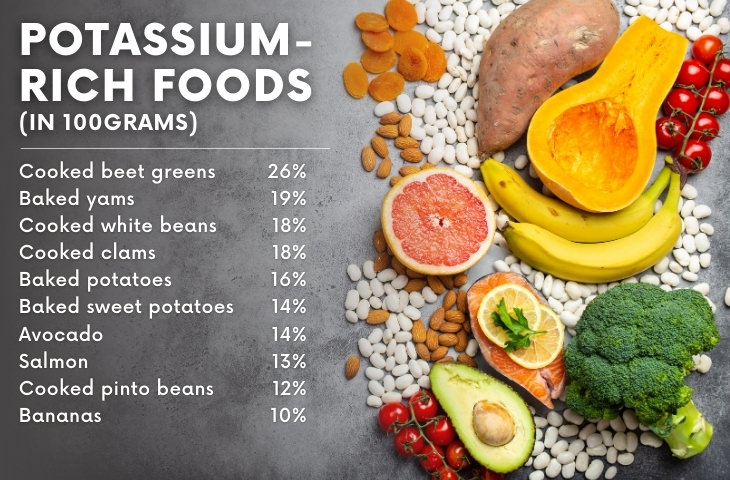
Potassium Deficiency potassium rich foods list 
Certain medications, such as diuretics that are commonly used to treat hypertension can likewise make you lose a lot of water (and potassium). Other conditions that disrupt the body’s ability to absorb nutrients, such as Inflammatory bowel disease (IBD), as well as kidney disease and the use of some antibiotics are also known to lead to hypokalemia. 
 
If you are in either of these high-risk groups and you’re experiencing any of the symptoms we mentioned above, consider asking for a test from your doctor to make sure your potassium levels are in check. While mild cases of potassium deficiency are best addressed with a potassium-rich diet, severe cases may require supplementation. Do not, however, take potassium supplements on your own, especially if you’re a senior or someone suffering from kidney problems, as they may damage your kidneys. 
 
The safest way to maintain adequate levels of potassium is by including many potassium-rich foods in your diet every day. In the image above, we list the amount of potassium present in 100 grams of 10 common foods with relation to the Recommended Daily Allowance (RDA) of the mineral. 
 
This is only for your information, kindly take the advice of your doctor for medicines, exercises and so on.     

https://gscrochetdesigns.blogspot.com. one can see my crochet creations  
https://gseasyrecipes.blogspot.com. feel free to view for easy, simple and healthy recipes    
https://kneereplacement-stickclub.blogspot.com. for info on knee replacement


Labels: , , , , , , , , ,

Friday, March 06, 2020

All About Electrolyte Disorders

 Understanding electrolyte disorders

Electrolytes are elements and compounds that occur naturally in the body. They control important physiologic functions.

Examples of electrolytes include:

    calcium
    chloride
    magnesium
    phosphate
    potassium
    sodium

These substances are present in your blood, bodily fluids, and urine. They’re also ingested with food, drinks, and supplements.

An electrolyte disorder occurs when the levels of electrolytes in your body are either too high or too low. Electrolytes need to be maintained in an even balance for your body to function properly. Otherwise, vital body systems can be affected.

Severe electrolyte imbalances can cause serious problems such as coma, seizures, and cardiac arrest.
Symptoms of electrolyte disorders

Mild forms of electrolyte disorders may not cause any symptoms. Such disorders can go undetected until they’re discovered during a routine blood test. Symptoms usually start to appear once a particular disorder becomes more severe.

Not all electrolyte imbalances cause the same symptoms, but many share similar symptoms.

Common symptoms of an electrolyte disorder include:

    irregular heartbeat
    fast heart rate
    fatigue
    lethargy
    convulsions or seizures
    nausea
    vomiting
    diarrhea or constipation
    abdominal cramping
    muscle cramping
    muscle weakness
    irritability
    confusion
    headaches
    numbness and tingling

Call your doctor right away if you’re experiencing any of these symptoms and suspect you might have an electrolyte disorder. Electrolyte disturbances can become life-threatening if left untreated.
Causes of electrolyte disorders

Electrolyte disorders are most often caused by a loss of bodily fluids through prolonged vomiting, diarrhea, or sweating. They may also develop due to fluid loss related to burns.

Certain medications can cause electrolyte disorders as well. In some cases, underlying diseases, such as acute or chronic kidney disease, are to blame.

The exact cause may vary depending on the specific type of electrolyte disorder.
Types of electrolyte disorders

Elevated levels of an electrolyte are indicated with the prefix “hyper-.” Depleted levels of an electrolyte are indicated with “hypo-.”

Conditions caused by electrolyte level imbalances include:

    calcium: hypercalcemia and hypocalcemia
    chloride: hyperchloremia and hypochloremia
    magnesium: hypermagnesemia and hypomagnesemia
    phosphate: hyperphosphatemia or hypophosphatemia
    potassium: hyperkalemia and hypokalemia
    sodium: hypernatremia and hyponatremia

Calcium

Calcium is a vital mineral that your body uses to stabilize blood pressure and control skeletal muscle contraction. It’s also used to build strong bones and teeth.

Hypercalcemia occurs when you have too much calcium in the blood. This is usually caused by:

    kidney disease
    thyroid disorders, including hyperparathyroidism
    lung diseases, such as tuberculosis or sarcoidosis
    certain types of cancer, including lung and breast cancers
    excessive use of antacids and calcium or vitamin D supplements
    medications such as lithium, theophylline, or certain water pills

Hypocalcemia occurs due to a lack of adequate calcium in the bloodstream. Causes can include:

    kidney failure
    hypoparathyroidism
    vitamin D deficiency
    pancreatitis
    prostate cancer
    malabsorption
    certain medications, including heparin, osteoporosis drugs, and antiepileptic drugs

Chloride

Chloride is necessary for maintaining the proper balance of bodily fluids.

Hyperchloremia occurs when there’s too much chloride in the body. It can happen as a result of:

    severe dehydration
    kidney failure
    dialysis

Hypochloremia develops when there’s too little chloride in the body. It’s often caused by sodium or potassium problems.

Other causes can include:

    cystic fibrosis
    eating disorders, such as anorexia nervosa
    scorpion stings
    acute kidney failure

Magnesium

Magnesium is a critical mineral that regulates many important functions, such as:

    muscle contraction
    heart rhythm
    nerve function

Hypermagnesemia means excess amounts of magnesium. This disorder primarily affects people with Addison’s disease and end-stage kidney disease.

Hypomagnesemia means having too little magnesium in the body. Common causes include:

    alcohol use disorder
    malnutrition
    malabsorption
    chronic diarrhea
    excessive sweating
    heart failure
    certain medications, including some diuretics and antibiotics

Phosphate

The kidneys, bones, and intestines work to balance phosphate levels in the body. Phosphate is necessary for a wide variety of functions and interacts closely with calcium.

Hyperphosphatemia can occur due to:

    low calcium levels
    chronic kidney disease
    severe breathing difficulties
    underactive parathyroid glands
    severe muscle injury
    tumor lysis syndrome, a complication of cancer treatment
    excessive use of phosphate-containing laxatives

Low levels of phosphate, or hypophosphatemia, can be seen in:

    acute alcohol abuse
    severe burns
    starvation
    vitamin D deficiency
    overactive parathyroid glands
    certain medications, such as intravenous (IV) iron treatment, niacin (Niacor, Niaspan), and some antacids

Potassium

Potassium is particularly important for regulating heart function. It also helps maintain healthy nerves and muscles.

Hyperkalemia may develop due to high levels of potassium. This condition can be fatal if left undiagnosed and untreated. It’s typically triggered by:

    severe dehydration
    kidney failure
    severe acidosis, including diabetic ketoacidosis
    certain medications, including some blood pressure medications and diuretics
    adrenal insufficiency, which is when your cortisol levels are too low

Hypokalemia occurs when potassium levels are too low. This often happens as a result of:

    eating disorders
    severe vomiting or diarrhea
    dehydration
    certain medications, including laxatives, diuretics, and corticosteroids

Sodium

Sodium is necessary for the body to maintain fluid balance and is critical for normal body function. It also helps to regulate nerve function and muscle contraction.

Hypernatremia occurs when there’s too much sodium in the blood. Abnormally high levels of sodium may be caused by:

    inadequate water consumption
    severe dehydration
    excessive loss of bodily fluids as a result of prolonged vomiting, diarrhea, sweating, or respiratory illness
    certain medications, including corticosteroids

Hyponatremia develops when there’s too little sodium. Common causes of low sodium levels include:

    excessive fluid loss through the skin from sweating or burns
    vomiting or diarrhea
    poor nutrition
    alcohol use disorder
    overhydration
    thyroid, hypothalamic, or adrenal disorders
    liver, heart, or kidney failure
    certain medications, including diuretics and seizure medications
    syndrome of inappropriate secretion of antidiuretic hormone (SIADH)

Diagnosing electrolyte disorders

A simple blood test can measure the levels of electrolytes in your body. A blood test that looks at your kidney function is important as well.

Your doctor may want to perform a physical exam or order extra tests to confirm a suspected electrolyte disorder. These additional tests will vary depending on the condition in question.

For example, hypernatremia (too much sodium) can cause loss of elasticity in the skin due to significant dehydration. Your doctor can perform a pinch test to determine whether dehydration is affecting you.

They may also test your reflexes, as both increased and depleted levels of some electrolytes can affect reflexes.

An electrocardiogram (ECG or EKG), an electrical tracing of your heart, may also be useful to check for any irregular heartbeats, rhythms, or ECG or EKG changes brought on by electrolyte problems.
Treating electrolyte disorders

Treatment varies depending on the type of electrolyte disorder and on the underlying condition that’s causing it.

In general, certain treatments are used to restore the proper balance of minerals in the body. These include:


Intravenous (IV) fluids

Intravenous (IV) fluids, typically sodium chloride, can help rehydrate the body. This treatment is commonly used in cases of dehydration resulting from vomiting or diarrhea. Electrolyte supplements can be added to IV fluids to correct deficiencies.


Certain IV medications

IV medications can help your body restore electrolyte balance quickly. They can also protect you from negative effects while you’re being treated by another method.

The medication you receive will depend on the electrolyte disorder you have. Medications that may be administered include calcium gluconate, magnesium chloride, and potassium chloride.


Oral medications and supplements

Oral medications and supplements are often used to correct chronic mineral abnormalities in your body. This is more common in if you’ve been diagnosed with ongoing kidney disease.

Depending on your electrolyte disorder, you may receive medications or supplements such as:

    calcium (gluconate, carbonate, citrate, or lactate
    magnesium oxide
    potassium chloride
    phosphate binders, which include sevelamer hydrochloride (Renagel), lanthanum (Fosrenol), and calcium-based treatments such as calcium carbonate

They can help replace depleted electrolytes on a short- or long-term basis, depending on the underlying cause of your disorder. Once the imbalance has been corrected, your doctor will treat the underlying cause.

Although some of the supplements can be purchased over the counter, most people with electrolyte disorders get a prescription for supplements from their doctor.


Hemodialysis

Hemodialysis is a type of dialysis that uses a machine to remove waste from your blood.

One way to get the blood to flow to this artificial kidney is for your doctor to surgically create a vascular access, or an entrance point, into your blood vessels.

This entrance point will allow a larger amount of blood to flow through your body during hemodialysis treatment. This means more blood can be filtered and purified.

Hemodialysis can be used when an electrolyte disorder is caused by sudden kidney damage and other treatments aren’t working. Your doctor may also decide on hemodialysis treatment if the electrolyte problem has become life-threatening.
Risk factors for electrolyte disorders

Anyone can develop an electrolyte disorder. Certain people are at an increased risk because of their medical history. Conditions that increase your risk for an electrolyte disorder include:

    alcohol use disorder
    cirrhosis
    congestive heart failure
    kidney disease
    eating disorders, such as anorexia and bulimia
    trauma, such as severe burns or broken bones
    thyroid disorders
    adrenal gland disorders

Preventing electrolyte disorders

Follow this advice to help prevent electrolyte disorders:

    stay hydrated if you’re experiencing prolonged vomiting, diarrhea, or sweating
    visit your doctor if you’re experiencing common symptoms of an electrolyte disorder

If the electrolyte disorder is caused by medications or underlying conditions, your doctor will adjust your medication and treat the cause. This will help prevent future electrolyte imbalances
.

This is only for your information, kindly take the advice of your doctor for medicines, exercises and so on.     

https://gscrochetdesigns.blogspot.com. one can see my crochet creations  
https://gseasyrecipes.blogspot.com. feel free to view for easy, simple and healthy recipes    
https://kneereplacement-stickclub.blogspot.com. for info on knee replacement
 

Labels: , , , , , , , , , ,