Wednesday, October 06, 2021

These easy activities can prevent the progression of dementia, as per study

How to stop dementia from progressing?

Dementia is a group of symptoms that can range from memory loss to impaired thinking and problem-solving abilities that usually occurs in old age. Alzheimer's is the most common cause of progressive dementia, which according to a recent study can be prevented through different activities.

According to a study conducted by Richmond Villages Willaston, it was found that providing independence to dementia patients in their day to day functions not only helped them live well, but also made them manage their condition better and more efficiently.

That said, researchers highlight 5 such activities that promote independence in patients and also prevent disease progression.

Decluttering or sorting out

Surely a person with dementia is not capable of handling all the household chores. However, they can help declutter, meaning they can help remove all non-essential and unnecessary items from overcrowded places.

Fran Vandelli, the lead researcher of the dementia study said, “Removing trip hazards is important for all older people, as our balance and sight decrease with age."

“It’s particularly helpful for those with dementia who can struggle with their sense of depth or perception, putting them at higher risk of falls," he adds.

He further notes, “Given people with dementia may struggle to find things, decluttering makes it easier to find what they need – helping them stay independent for longer.”

Mopping
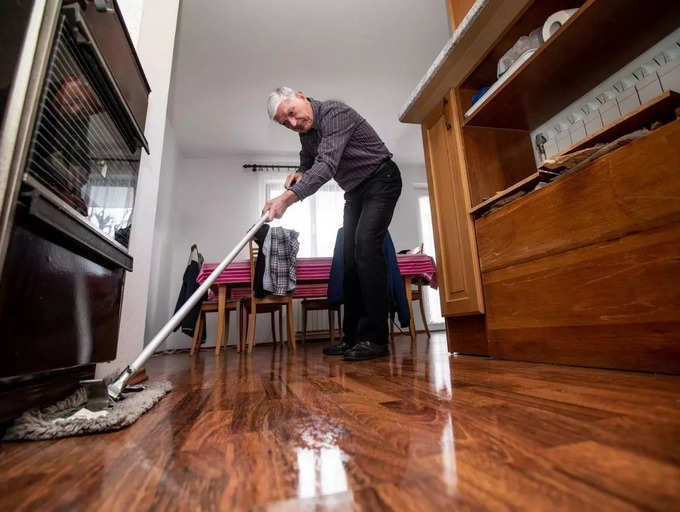
Being physically active can reduce the risk of many chronic illnesses. Those with dementia can also benefit from it.

As per Fran, “Mopping is great cardio, with an hour burning off up to 170 calories - equivalent to 15 minutes jogging on a treadmill!"

“Cardiovascular exercises are particularly good for preventing vascular dementia – a common form triggered by a lack of blood circulation in the brain,"

Another benefit of mopping constitutes the strengthening of our core, reducing the risk of injuries.

Gardening

Apart from mopping, gardening can also be a good way to exercise. It can help manage stress levels and limit feelings of anxiety.

“Gardening and being outdoors can help people manage depression, which can exhibit similar symptoms to dementia such as difficulty concentrating, disturbed sleep, confusion, and memory lapses," says Fran.

He adds, "As a result, depression can make the symptoms of dementia seem worse.”

Cooking meals
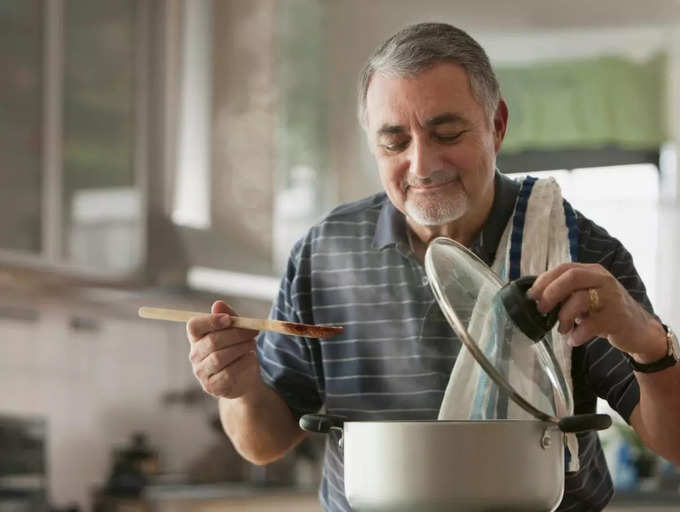
Home-cooked meals are a great way to avoid processed foods that are bad for our cardiovascular health.

“For people living with dementia, cooking and baking can be a good way to get enjoyment – retaining those important feelings of purpose and independence," explains Fran.

It not only helps people with dementia stay on their feet but also prevents cognitive decline.

Making tea and drinking with friends and family

Research shows that withdrawal from society can lead to cognitive decline. That said, it is important to keep dementia patients active and engaged. Therefore, let them make you some tea and enjoy it together.

According to Fran, “As well as maintaining our social skills, staying hydrated will defend you from UTIs and constipation."

“Both of these can cause delirium, intensifying the symptoms of dementia," he adds.

This is only for your information, kindly take the advice of your doctor for medicines, exercises and so on.   

https://gscrochetdesigns.blogspot.com. one can see my crochet creations  
https://gseasyrecipes.blogspot.com. feel free to view for easy, simple and healthy recipes    
https://kneereplacement-stickclub.blogspot.com. for info on knee replacement


Labels: , , , , , , , , , , ,

Monday, July 19, 2021

Want to Be Happier? Science Says Buying a Little Time Leads to Significantly Greater Life Satisfaction

 In 1930, the influential economist John Maynard Keynes assessed how technological and economic advances had reduced the number of hours the average person worked. He predicted that within two generations, most people would work only three hours a day.

Working hard wouldn't be a problem. Filling all that free time would, for most people, be the problem.

While Keynes got a lot of things right, he swung and missed on that one. Technological advances have not freed up the average person's time. Neither have broader economic advances.

Nor has increased wealth. In fact, some studies show that the more money people make, the less time they think they have.

Add it all up, and money can't buy you happiness. 

Unless, purposefully and consciously, you use a little money to buy a little time.

In a 2017 study published in Proceedings of the National Academy of Sciences, researchers surveyed thousands of people who sometimes paid other people to perform tasks they didn't enjoy or didn't want to do. Like mowing the lawn. Or cleaning the house. Or running errands. Stuff they needed to do, but didn't particularly want to do.

Unsurprisingly, people who were willing to spend a little money to buy a little time were happier and felt greater overall life satisfaction than those who did not.

Correlation isn't always causation, though. Maybe the people who spend money to buy time are happier simply because they have the money to buy time? 

Nope. While relatively wealthy people who spent money to buy a little time were happier than relatively wealthy people who did not, people at the bottom end of the economic spectrum who spent money to buy a little time were happier than those at the bottom end of the economic spectrum who did not.

No matter how much you make, no matter how wealthy you are, buying a little time makes you happier. (With a couple of catches; more on that in a moment.)

Just to prove the causation point, the researchers conducted a further experiment. One week, participants were given $40 and told to spend it on any item or items they chose. The only restriction was that they had to use the money to buy "things." 

The next week, participants were given $40 and told they had to spend it on freeing up time. Cleaning. Maintenance. Delivery. Paying someone to do something they didn't want to do so they could use that time to do something they did want to do.

You've already guessed the result: When the participants bought time instead of things, they felt happier, less stressed, and more satisfied.

There is a catch. The researchers found that "spending too much money on time saving services could undermine perceptions of personal control by leading people to infer that they are unable to handle any daily tasks, potentially reducing well-being."

Granted, most of us can't afford to spend so much money buying time that we feel inadequate or incapable. But still: Making a conscious decision about which tasks to occasionally farm out is key. 

And why you decided to farm out that task. If someone always cuts your grass, then you've likely made that your new normal. You probably still feel too busy. You probably still feel time is scarce.

The key to buying time is to consciously decide how you will use the time your money freed up. Buying time will make you happier only if it feels intentional and purposeful--not because you don't have the time, but because you want to use the time you have differently.

Instead of cutting the grass, you might decide (again, to make this work you have to decide) to spend the time with family or friends. Or working on that side project you can't seem to get to. Or reading. Or working out.

In short, doing something you enjoy--doing something you want to do--with the time you bought.

That's when money can buy you a little happiness.

No matter how much you make.

This is only for your information, kindly take the advice of your doctor for medicines, exercises and so on.   

https://gscrochetdesigns.blogspot.com. one can see my crochet creations  
https://gseasyrecipes.blogspot.com. feel free to view for easy, simple and healthy recipes    
https://kneereplacement-stickclub.blogspot.com. for info on knee replacement


Labels: , , , , , , , ,